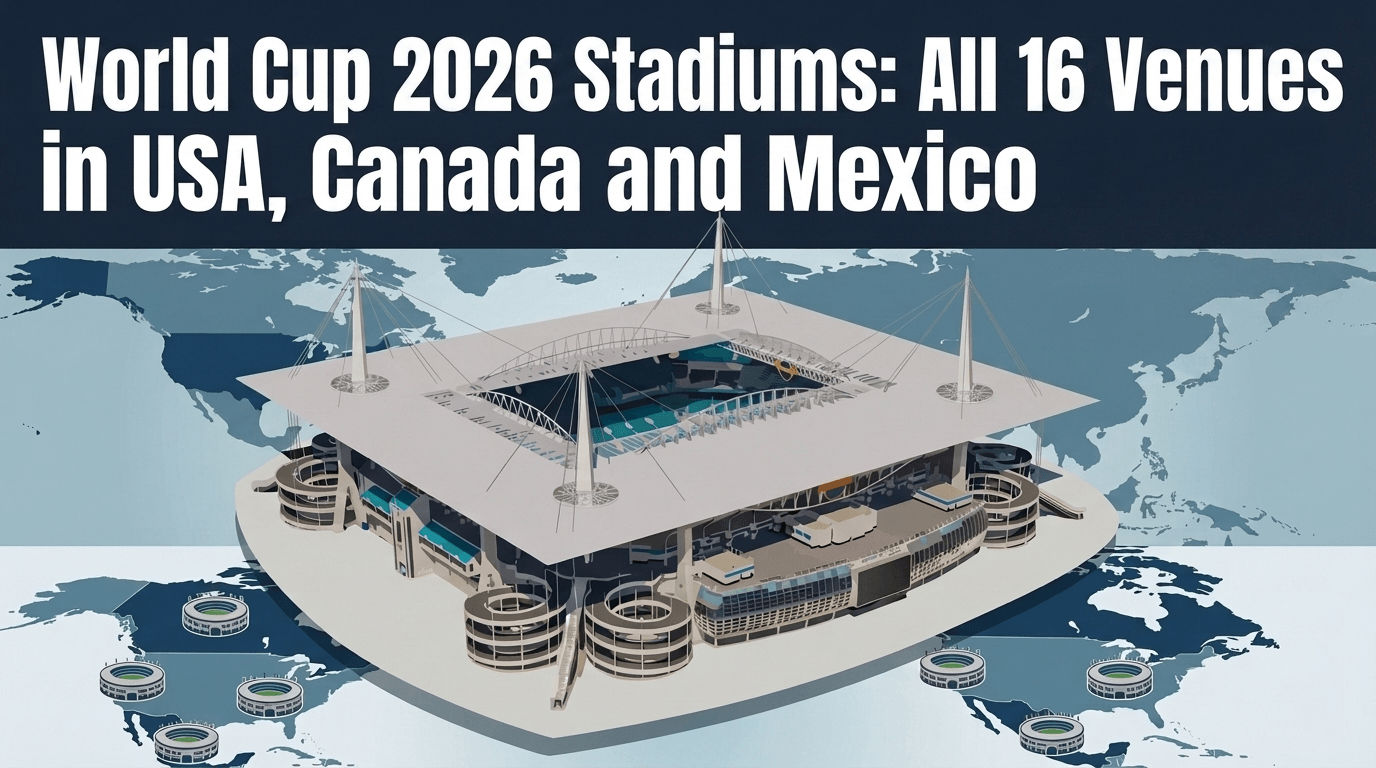
Sixteen world cup 2026 stadiums. Three countries. Fifty-three thousand kilometres of continent. No World Cup in history has required fans, teams, and television crews to cover this much ground — or delivered this much architectural variety. From the rain-shielded retractable roof of BC Place in Vancouver to the sun-soaked open bowl of Hard Rock Stadium in Miami; from the intimate intimacy of BMO Field in Toronto to the sheer scale of MetLife Stadium in New Jersey, these sixteen world cup 2026 venues tell the story of North American sport itself. Here is everything you need to know about every stadium hosting the 2026 FIFA World Cup.
16 Stadiums Across Three Nations
The 2026 FIFA World Cup is hosted across 16 cities: 2 in Canada, 11 in the United States, and 3 in Mexico. Each venue was selected through a bidding process that evaluated capacity, infrastructure, proximity to international airports, accommodation density, and broadcast logistics. FIFA’s requirement was a minimum usable capacity of 40,000 for group stage matches; knockout round venues were filtered to those exceeding 60,000 for quarterfinals and beyond.
The spread across world cup 2026 host cities is intentional. North America’s four time zones — and the three nations’ distinct soccer cultures — mean the tournament arrives differently depending on where you watch. Matches in Mexico City feel like a different civilization from matches in Vancouver. A quarterfinal at Arrowhead Stadium in Kansas City — one of the NFL’s most ferocious home atmospheres — is fundamentally different from a group stage fixture at BC Place under a closed roof on a wet Vancouver afternoon. That diversity is the tournament’s greatest strength.
Total combined world cup 2026 stadium capacities across all 16 venues exceed one million seats across the tournament’s 104 matches. For Canadian fans specifically, both Canadian world cup 2026 venues offer logistically accessible viewing — BMO Field is directly accessible via Toronto’s TTC, while BC Place sits steps from Stadium-Skytrain station in downtown Vancouver.
Canadian Stadiums
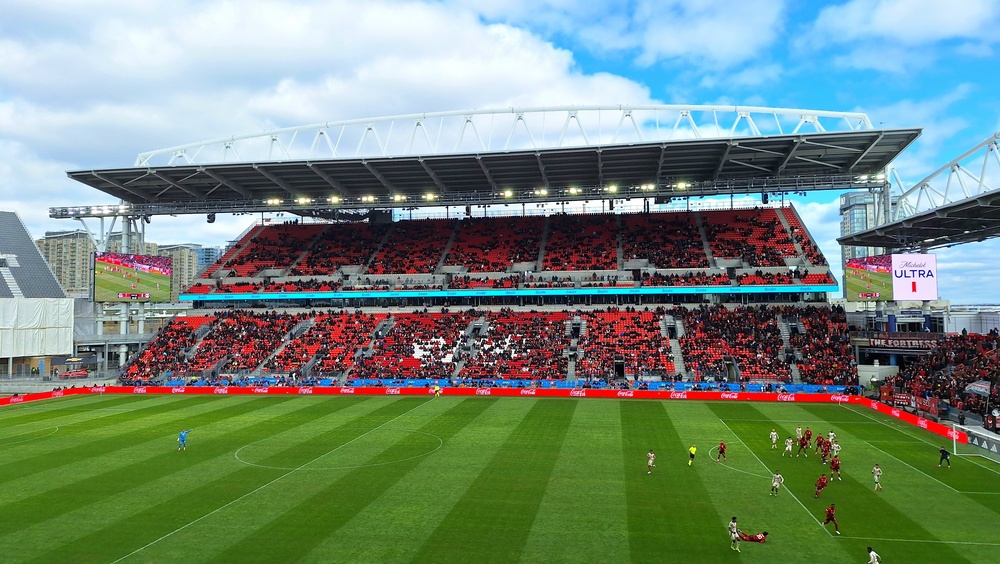
BMO Field — Toronto, Ontario
BMO Field is Canada’s first and only dedicated soccer-specific stadium, and for the 2026 World Cup it becomes the most historically significant sports venue in Canadian history. Located at Exhibition Place on the western waterfront of Toronto, BMO Field opened in 2007 as the home of Toronto FC and has undergone multiple expansions since. Its World Cup configuration seats 44,315 — a significant expansion from its pre-renovation capacity, achieved through temporary seating installations in the east end.
The bmo field Toronto experience is intimate by World Cup standards, but that proximity is a feature, not a limitation. Supporters in the upper deck are closer to the pitch than in most purpose-built soccer stadiums three times the size. The atmosphere during Toronto FC’s MLS playoff runs gives a preview of what 44,000 Canadians — and visiting international supporters — will generate when Canada takes on Bosnia-Herzegovina on June 12 at 3:00 PM ET in the nation’s World Cup opener.
The bmo field capacity of 44,315 makes it the smallest World Cup venue in North America but among the most passionate. Toronto FC’s history of supporter culture — the south end of the ground is famously raucous — translates directly to international competition. For Canadians looking to attend Canada’s first World Cup match on home soil, see our World Cup 2026 tickets guide for prices and the FIFA.com purchasing process.
BMO Field hosts multiple group stage matches across Groups B and C. Beyond Canada’s opener, it holds additional fixtures involving non-Canadian sides, giving international fans a chance to experience the venue before the home nation appears. The stadium’s downtown Toronto location, surrounded by restaurants, bars, and the Harbourfront waterway, creates a pre-match atmosphere unlike any other World Cup venue on the continent. For the complete BMO Field guide, including transport, parking, and seat map details, visit our dedicated venue page.
BC Place — Vancouver, British Columbia
BC Place is Western Canada’s largest stadium and one of the most technically sophisticated multi-purpose facilities in North America. Home to the Vancouver Whitecaps FC and the BC Lions, the stadium sits in the heart of downtown Vancouver adjacent to False Creek, with one of the most scenic urban backdrops of any World Cup venue: the North Shore mountains visible beyond the retractable roof when it is open.
The bc place capacity for the 2026 World Cup is 54,000 — substantially larger than BMO Field and among the more intimate venues on the US side of the border. The retractable roof is BC Place’s defining feature: Vancouver’s June and July weather is characteristically mild and often dry, but the stadium can close its roof within 20 minutes should conditions deteriorate. No other Canadian World Cup venue offers that flexibility.
BC Place hosts two of Canada’s group stage matches: the June 18 fixture against Qatar (6:00 PM ET / 3:00 PM PT) and the critical June 24 decider against Switzerland (3:00 PM ET / 12:00 PM PT). Both matches will see Les Rouges backed by a capacity crowd in what promises to be the loudest the stadium has ever been. The Whitecaps fanbase has grown dramatically in the last decade; international soccer experience is deeply embedded in Vancouver’s multicultural population.
BC Place previously hosted the opening and closing ceremonies of the 2010 Winter Olympic Games, the 2015 FIFA Women’s World Cup Final, and multiple Grey Cup championships. Its international event infrastructure — broadcast compounds, media facilities, team preparation areas — is proven. For full stadium information and ticket guidance for Vancouver’s World Cup fixtures, see our BC Place guide.
United States Stadiums
MetLife Stadium — East Rutherford, New Jersey
MetLife Stadium hosts the World Cup Final on July 19, 2026 — the world cup 2026 final venue. The home of the New York Giants and New York Jets seats 78,576 in its FIFA configuration, making it the largest stadium in the tournament. Its location in East Rutherford, approximately 15 minutes from midtown Manhattan by road, positions it at the epicentre of the world’s media capital. Full details in the dedicated MetLife section below.
AT&T Stadium — Arlington, Texas (Dallas)
AT&T Stadium is one of the most recognizable sports venues on earth — a steel-and-glass colossus with a capacity of 70,122 and a retractable roof that can open or close in approximately 12 minutes. Home to the Dallas Cowboys, it hosts a World Cup semifinal on July 14-15. The stadium’s 160-foot-wide HD video board, the largest in any stadium, will display goalmouth action in resolution that makes broadcast cameras feel obsolete. Dallas is one of the most soccer-passionate cities in the United States.
SoFi Stadium — Inglewood, California (Los Angeles)
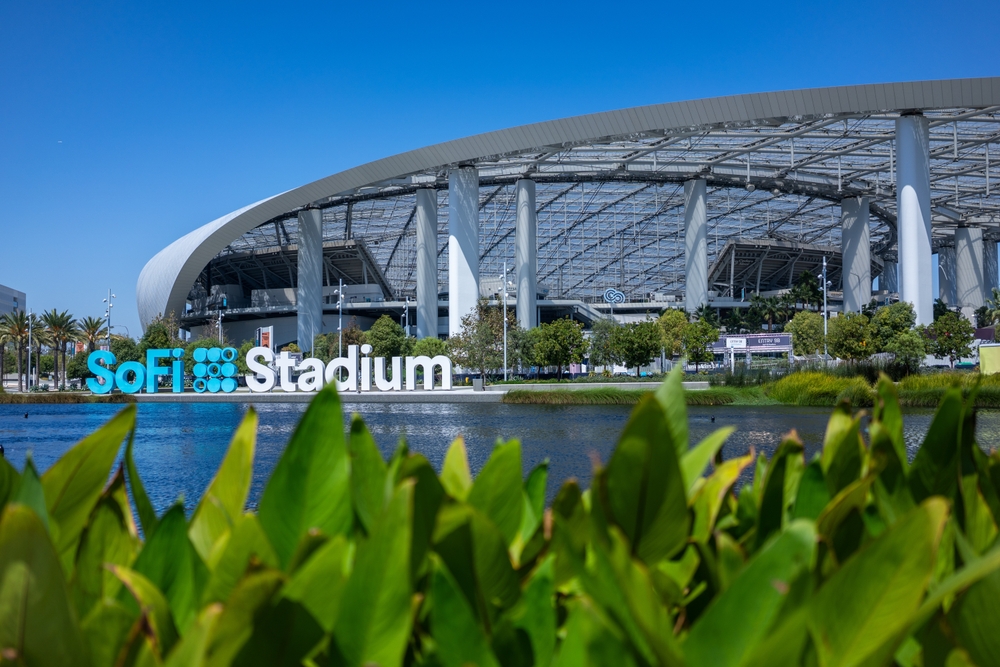
Opened in 2020 and immediately regarded as one of the finest stadium constructions of the modern era, SoFi Stadium seats 70,000 for the World Cup and hosts both group stage and knockout matches including a quarterfinal. The home of the Los Angeles Rams and Chargers is a partially enclosed venue with a transparent roof, offering weather protection without the closed-stadium feel. Los Angeles’s vast Latino population guarantees electric atmospheres for any match involving a Spanish-speaking nation.
Levi’s Stadium — Santa Clara, California (San Francisco Bay Area)
Levi’s Stadium, home of the San Francisco 49ers, seats 70,909 for World Cup purposes — the second-largest group stage venue after MetLife. Its Santa Clara location, deep in Silicon Valley, means the surrounding corporate audience is complemented by one of California’s most diverse and soccer-aware general populations. Previously hosted Super Bowl 50 and Copa América Centenario 2016 matches. Hot Bay Area summer temperatures make the limited shade a consideration for attending fans.
Lumen Field — Seattle, Washington
Lumen Field is the home of the Seattle Sounders FC — one of MLS’s most successful clubs and the team with the most consistent attendance in North American soccer. Seattle’s soccer culture is the deepest of any US host city, with Sounders supporters groups providing an atmosphere in the 65,123-capacity stadium that rivals European club soccer. Lumen Field is also home to the NFL’s Seattle Seahawks, famous for their crowd noise records. Seattle’s Pacific Northwest location and progressive, multicultural population make it one of the most anticipated World Cup 2026 venues in the United States.
Arrowhead Stadium — Kansas City, Missouri
Consistently rated as one of the loudest stadiums in American sports, Arrowhead Stadium (capacity 67,513) is the home of the NFL’s Kansas City Chiefs — four-time Super Bowl champions — and hosts World Cup quarterfinal matches. Kansas City’s growing soccer scene, centred around Sporting KC, means local enthusiasm for the tournament will be genuine rather than manufactured. The venue’s open-air bowl design concentrates crowd noise with remarkable effectiveness.
Mercedes-Benz Stadium — Atlanta, Georgia
Mercedes-Benz Stadium is the home of both the Atlanta Falcons (NFL) and Atlanta United FC (MLS), giving it a dual soccer-and-football identity rare among the US host venues. The retractable roof and capacity of 67,382 make it an ideal World Cup semifinals venue (July 14-15). Atlanta United regularly posts some of MLS’s highest attendances, demonstrating that this city’s appetite for soccer extends beyond the Super Bowl events the stadium typically hosts.
Hard Rock Stadium — Miami Gardens, Florida
Hard Rock Stadium (capacity 64,091) hosts group stage, Round of 16, quarterfinal, and the third-place match on July 18. Home to the Miami Dolphins, the stadium underwent significant renovation in 2016 and now features a canopy roof providing shade for all seating areas — crucial for Miami’s summer humidity. Miami’s large Cuban-American, Colombian, and Brazilian communities ensure that virtually every group stage match at Hard Rock generates a passionate partisan atmosphere from somewhere in the crowd.
NRG Stadium — Houston, Texas
NRG Stadium’s fully retractable roof makes it one of the most weather-flexible venues in the tournament — essential in Houston’s summer heat, which regularly pushes above 35°C in June and July. The home of the NFL’s Houston Texans seats 68,311 for the World Cup and hosts group stage and knockout matches. Houston’s extraordinary demographic diversity — one of the most multicultural cities in the United States — guarantees that any team from Latin America, Africa, or Asia will find vocal local support.
Lincoln Financial Field — Philadelphia, Pennsylvania
Lincoln Financial Field (capacity 65,827) is the home of the Philadelphia Eagles and one of the most storied sporting venues on the US East Coast. Philadelphia’s proximity to New York creates a secondary market effect: fans who cannot access MetLife for later rounds can watch competitive knockout soccer at a stadium 90 minutes south by train. The city’s passionate, demanding sports culture will transfer seamlessly to World Cup fixtures.
Gillette Stadium — Foxborough, Massachusetts (Boston)
Gillette Stadium (capacity 63,815) is the home of both the New England Patriots and New England Revolution, giving it one of the strongest dual soccer-football identities of any World Cup venue. The outdoor stadium in Foxborough — approximately 45 minutes from downtown Boston — hosts group stage matches and a quarterfinal on July 9-11. Boston’s large Irish, Italian, and Cape Verdean communities create an authentic soccer atmosphere that major European clubs recognized on pre-season tours long before the World Cup made it official.
Mexican Stadiums
Estadio Azteca — Mexico City
The Azteca is the most historically significant World Cup stadium in existence — this will be the third World Cup it has hosted (1970, 1986, 2026), a feat no other venue has achieved. Its capacity of 72,766 in the 2026 configuration, combined with Mexico City’s altitude of 2,240 metres above sea level, creates physiological challenges for visiting teams unaccustomed to the thin air. The Azteca opens the entire tournament on June 11 with Mexico vs. South Africa. Whatever its current commercial naming rights, the world knows it as the Azteca — the venue where Diego Maradona’s “Hand of God” and “Goal of the Century” both occurred in 1986.
Estadio Akron — Guadalajara, Jalisco
Estadio Akron, home of Club Deportivo Guadalajara (Chivas), seats 44,330 for the World Cup — the smallest venue in Mexico’s hosting contingent. Guadalajara is Mexico’s second city and a deeply passionate soccer community. The Chivas fanbase is among the most devoted in Latin America; that culture infuses the stadium’s atmosphere even in non-Chivas fixtures. The stadium’s modern construction (opened 2010) meets FIFA’s technical standards comprehensively.
Estadio BBVA — Monterrey, Nuevo León
Estadio BBVA (capacity 50,113), home of CF Monterrey (Rayados), is widely regarded as one of the finest stadium constructions in Latin America. Its dramatic mountain backdrop — the Cerro de la Silla visible beyond the open end of the ground — creates one of the most photogenic World Cup settings. Monterrey is Mexico’s industrial heartland and a soccer-fanatical city whose club rivalry between Rayados and Tigres UANL is among the most intense in CONCACAF.
Full Stadium Reference Table
| Stadium | City | Country | WC Capacity | Roof |
| BMO Field | Toronto, ON | Canada | 44,315 | Open |
| BC Place | Vancouver, BC | Canada | 54,000 | Retractable |
| MetLife Stadium | East Rutherford, NJ | USA | 78,576 | Open |
| AT&T Stadium | Arlington, TX | USA | 70,122 | Retractable |
| SoFi Stadium | Inglewood, CA | USA | 70,000 | Canopy |
| Levi’s Stadium | Santa Clara, CA | USA | 70,909 | Partial |
| Lumen Field | Seattle, WA | USA | 65,123 | Open (partial cover) |
| Arrowhead Stadium | Kansas City, MO | USA | 67,513 | Open |
| Mercedes-Benz Stadium | Atlanta, GA | USA | 67,382 | Retractable |
| Hard Rock Stadium | Miami Gardens, FL | USA | 64,091 | Canopy |
| NRG Stadium | Houston, TX | USA | 68,311 | Retractable |
| Lincoln Financial Field | Philadelphia, PA | USA | 65,827 | Open |
| Gillette Stadium | Foxborough, MA | USA | 63,815 | Open |
| Estadio Azteca | Mexico City | Mexico | 72,766 | Open |
| Estadio Akron | Guadalajara | Mexico | 44,330 | Open |
| Estadio BBVA | Monterrey | Mexico | 50,113 | Open |
The Final: MetLife Stadium
On July 19, 2026, one team will lift the FIFA World Cup trophy at MetLife Stadium in East Rutherford, New Jersey. The choice of MetLife as the world cup 2026 final venue was logical and emphatic: no stadium in the Americas exceeds its 78,576-seat World Cup capacity, its proximity to New York City’s global media infrastructure is unmatched, and the symbolic weight of crowning a world champion in the shadow of the world’s most recognizable skyline needs no editorial elaboration.
MetLife Stadium is the co-home of both the New York Giants and the New York Jets — two franchises with century-long histories in one of sports’ most saturated markets. The stadium sits in a sports complex with the PGA’s Bethpage Black course nearby, and its New Jersey Transit rail connections into Penn Station make it accessible from the entire Northeast corridor. For the World Cup Final, the surrounding sports complex will be transformed into a fan festival zone accommodating tens of thousands of additional supporters who cannot access seats inside.
The metlife stadium configuration for the World Cup increases usable seating beyond its standard NFL footprint through FIFA-mandated temporary additions. The 78,576 figure represents the largest single-match capacity in the tournament, appropriate for the match that will be watched by a projected one billion people worldwide. For Canadian fans hoping to attend the Final, tickets in the FIFA general sale for Category 1 seats at MetLife exceeded USD 7,875. The secondary market will surpass that considerably if Canada reaches the final — a prospect that seemed implausible a decade ago and is now discussed with cautious optimism by a nation that has never won a knockout match at a senior Men’s World Cup.
Ver esta publicación en Instagram
For the full World Cup 2026 schedule including all venue assignments for every round, visit our schedule guide. For ticket information for both Canadian venues, see our tickets guide.
Where North America Shows the World
The 16 world cup 2026 venues collectively represent the most ambitious stadium program ever assembled for a single tournament. From BMO Field’s intimate soccer-specific atmosphere to MetLife’s billion-viewer stage, from the altitude of the Azteca to the mountain panorama at Estadio BBVA, this is a World Cup that will be remembered for its settings as much as its goals. Canadian fans have two world-class venues to call their own — and the team to fill them with something unforgettable.