Author: William Tremblay | Updated: 04.06.2026
Odds on this page are American (moneyline) and move daily – always confirm the live line before betting. For the full tournament rundown see our complete World Cup 2026 guide, and for the continuously updated board our World Cup 2026 odds comparison.
The Most Open World Cup Race in a Generation
When bookmakers cannot separate the top five contenders by much more than a point or two of probability, the market is telling you something important: the analytical consensus is genuinely divided. That is the situation heading into 2026. France, England, Spain, Brazil, and Argentina are all within a narrow pricing band – roughly +480 to +800 – a cluster that reflects legitimate uncertainty rather than sloppy market-making.
Several structural factors are driving this unusual parity. Argentina return as defending champions with a 38-year-old Lionel Messi now confirmed as captain – a known quantity, but one whose age raises questions about his load across a longer tournament. Brazil’s post-2022 rebuild has produced a stylistically evolved but untested-at-the-highest-level squad. France have the talent but a history of underperforming relative to their roster quality in knockout rounds. England are perpetually talented and perpetually questioned. Spain are perhaps the most technically refined but also the youngest of the group.
Our world cup 2026 predictions are built on squad depth, tactical flexibility, historical knockout-round performance, and the specific structural advantages of competing in a North American tournament – travel schedules, climate, crowd environments – that affect different nations differently. Here is our assessment of each major contender.
World Cup 2026 Favourites: The Top Five Contenders Dissected
Spain (+480) – The Most Compelling Case
Spain are the reigning European champions and, squad analysis aside, represent the most structurally compelling argument among the top five. Their pressing system – running high up the field, winning the ball back within seconds of losing possession, and immediately transitioning into direct attacks – is the most sophisticated collective tactical structure in the world. It has been calibrated over years under coaches who share a philosophical DNA: dominate the ball, compress the opponent’s space, exploit transitions.
The individual quality is extraordinary, particularly in its youth. Lamine Yamal – 18 at tournament time – is already operating at a level of technical fluency normally achieved by players five or six years older. His ability to beat defenders in tight spaces, combine in one-touch triangles, and deliver from wide positions gives Spain an attacking dimension that is essentially unguardable with conventional defensive shapes. Pedri, the creative heartbeat of the midfield, is arguably the most intelligent passer in the world in terms of reading pressure and finding exits. Rodri – when fit – is the single most important holding midfielder on the planet, the defensive fulcrum around which Spain’s attacking freedoms are constructed.
The historical case is equally strong: world champions in 2010 and record holders in the European Championship. They know how to win tournaments, not just qualify for them. The risk is precisely that youth and systemic reliance: a red card, an injury to a key connector, or a disruptive refereeing decision can unravel a performance in ways that would not affect a more individually driven team. They were also knocked out of the 2022 World Cup on penalties by Morocco – a reminder that system football has its limits when the margin disappears in a shootout.
Our verdict on Spain: the best risk-adjusted value among the top five. At +480 they are the marginally bigger price than France for arguably the deeper, more system-secure squad. This is our headline title pick.
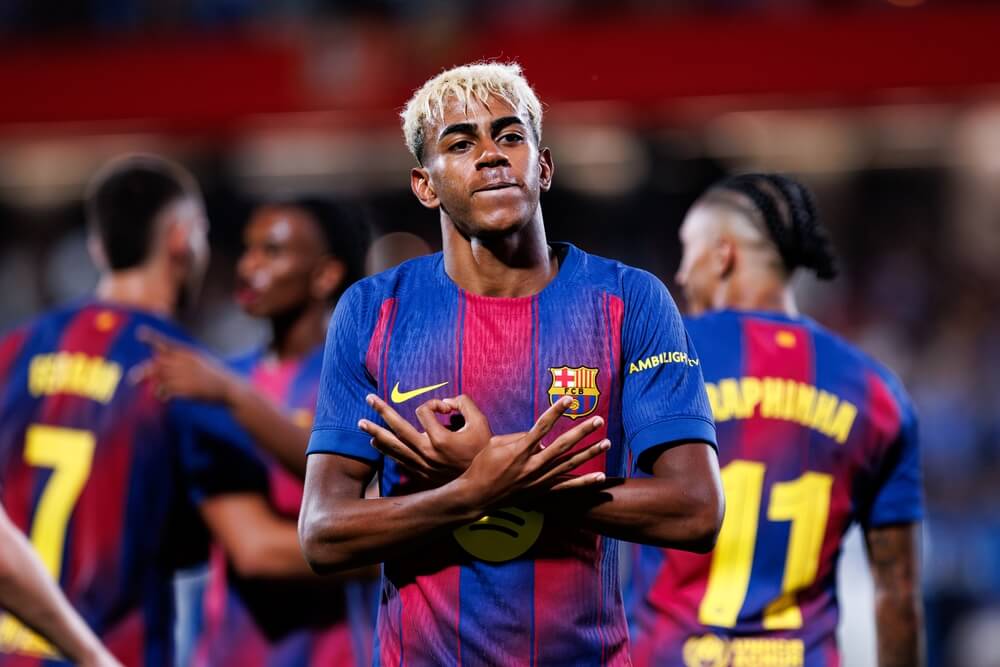
France (+500) – The Most Complete Roster
Raw squad depth alone – the depth that allows the staff to lose two or three key players to injury without fundamentally compromising the team – puts France in a category apart. The nations that win World Cups rarely do so without navigating at least one significant selection crisis, and France’s ability to absorb those shocks is their most underrated advantage.
Kylian Mbappé, 27 in the summer of 2026, is the single most dangerous forward in the world at peak tournament conditions. His pace combined with the technical control to finish at speed makes him uniquely difficult to contain over 90 minutes. He scored a hat-trick in the 2022 final despite finishing on the losing side – an indication of what he produces even when France are under pressure. Beyond Mbappé, France’s midfield has deepened considerably since 2022, giving the staff a platform to play narrow and counter or press high and dominate. That tactical flexibility is rare among the top five.
The vulnerability that follows France into every tournament is mental – the history of underperforming as pre-tournament favourites, most notably the 2002 group-stage exit without scoring a goal. Whether that psychological problem has been solved is the question no odds model can answer.
Our verdict on France: the most legitimate favourite, but at +500 they are priced as though the market has already handed them the trophy – limited value at that number.
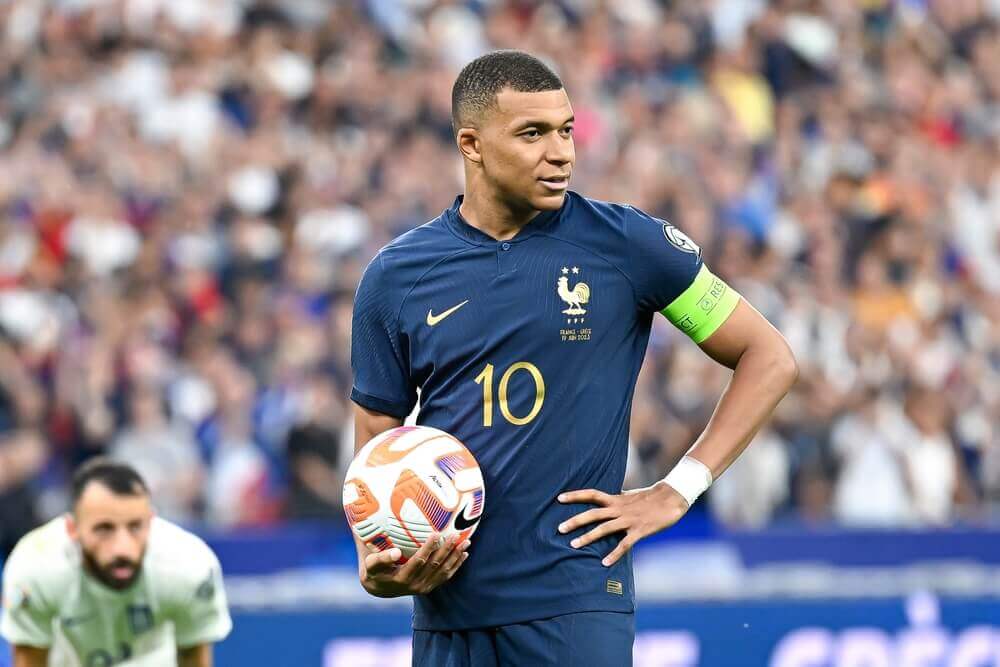
England (+650) – Long-Awaited or Long-Overdue?
England’s narrative arc since 1966 is the longest-running suspense story in international soccer: six decades of talent, expectation, near-misses, and heartbreak. The 2026 tournament arrives at what may be England’s most genuinely prepared moment in decades – a cohesive, professionally conditioned squad under Thomas Tuchel, a manager with a proven knockout-round pedigree at club level.
Harry Kane is the cornerstone. His scoring rate at Bayern Munich finally matches the international standard his ability always promised, and at 32 he is experienced in knockout pressure yet still at his physical peak as a hold-up and finishing centre forward. The supporting cast – Jude Bellingham’s all-action creativity, Bukayo Saka’s relentless wide energy, Phil Foden’s genius in tight spaces – matches any European opponent, behind a defensive structure that is arguably more reliable than France’s or Spain’s.
England’s consistent tournament failure has rarely been about individual quality – it has been about penalty shootouts and losing concentration in matches they were expected to control. Roster upgrades alone do not solve that. Until England win a shootout at a major tournament, that vulnerability stays embedded in their price.
Our verdict on England: the emotional pick for millions of Canadian fans watching on TSN. The analytical pick only if you believe Tuchel’s side has finally solved the mental game.

Brazil (+800) – The Weight of Five Stars
Brazil’s five World Cup titles are both their greatest strength and their most pressing psychological burden. The Seleção enter 2026 carrying more than two decades of underachievement since their last trophy, and pressure of that magnitude can either forge or fracture a squad at the critical moment.
The attacking quality is undeniable. Vinicius Jr. is among the most complete forwards in the world – technically brilliant, physically relentless – and his understanding with Rodrygo at Real Madrid gives Brazil a club-level combination that can translate to the international arena. The structural question is the midfield and defensive organization: CONMEBOL qualifying exposed gaps between the attacking excellence and the collective shape behind it, and intelligent European pressing sides can exploit those gaps in the knockout rounds.
Our verdict on Brazil: a must-include in any serious World Cup portfolio at +800. They have consistently underperformed the market’s expectations – but eventually that trend reverses, and the attacking ceiling is as high as anyone’s.
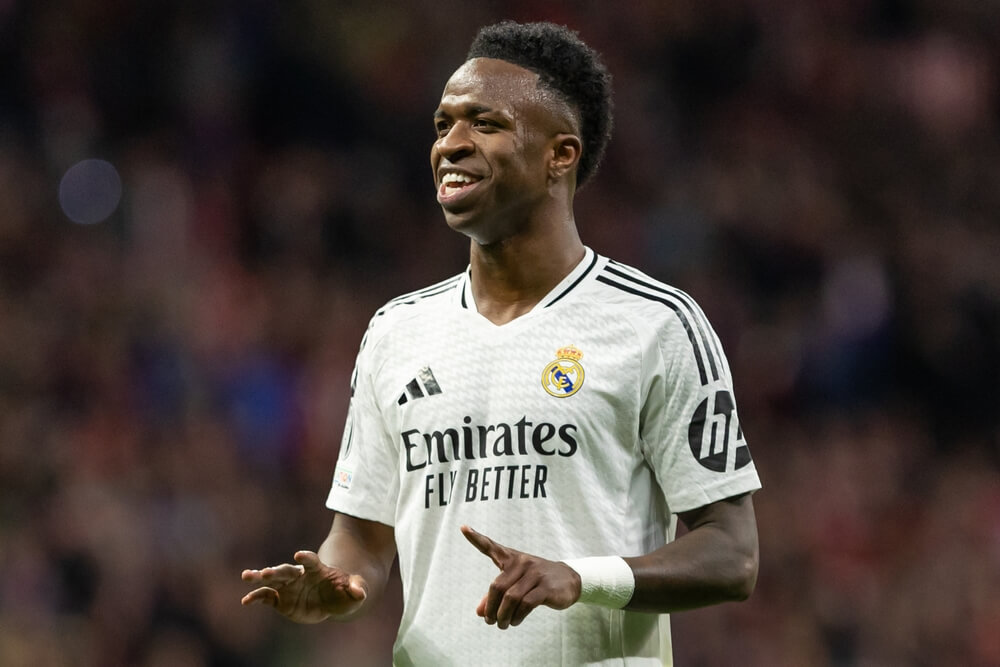
Argentina (+800) – Defending Champions With Messi Confirmed
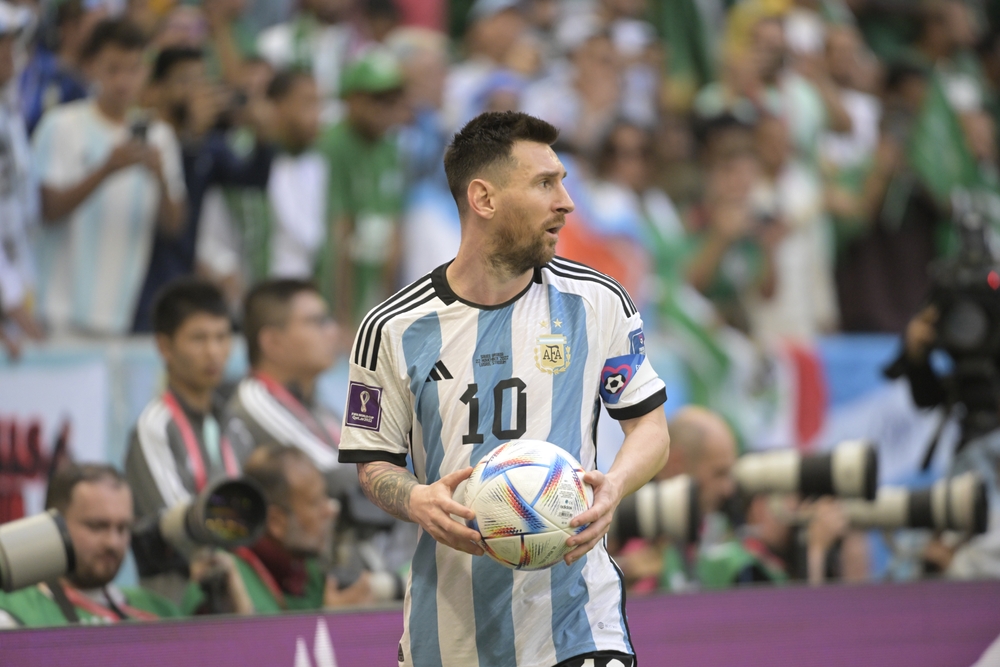
The Albiceleste’s 2022 triumph was so thoroughly Lionel Messi’s tournament – in narrative gravity, tactical load, and spiritual leadership – that his role in 2026 was the central question hanging over their title defence. That question is now answered: in late May, Lionel Scaloni confirmed Messi as captain for a record sixth World Cup, alongside 17 holdovers from the 2022 winning squad. A hamstring scare in the build-up is not considered serious.
Messi will be 38 during the tournament, so the realistic debate is no longer whether he plays but how Scaloni manages his minutes across a longer, eight-match path. The reassuring news for Argentina backers is that Scaloni has built a side that can function without leaning on Messi for 90 minutes every game: Julián Álvarez and Lautaro Martínez carry the scoring load, Enzo Fernández drives the midfield, and the defensive structure remains organized and physically robust.
Our verdict on Argentina: with Messi confirmed, +800 is a fair price for a champion side that knows how to win this tournament. The key variable is now load management, not availability – watch how Scaloni rotates Messi in the group stage.
Dark Horse World Cup 2026 Picks: Morocco, Japan, and Norway
Every World Cup produces at least one nation that advances far beyond their betting price. These are our three primary world cup 2026 dark horse candidates. The prices below are indicative conversions – confirm the live line before betting.
Morocco (~+2700) – The Most Credible Dark Horse. Morocco are barely a dark horse anymore – they are a recognized quarterfinal-and-beyond contender, which means their price may undervalue their realistic ceiling. The Atlas Lions’ 2022 run to the semifinal under Walid Regragui was a system triumph, built on a defensive structure that conceded almost nothing from open play. Achraf Hakimi gives Morocco an offensive outlet from full back that other defensively compact nations cannot match, and the squad’s ability to absorb pressure and score on the counter or from set pieces is a formula that beats possession-heavy European sides who struggle to break down organized defences.
Japan (~+3100) – The Asian Team the Favourites Fear. Japan’s 2022 group-stage wins over Germany and Spain – both from behind – were not chaotic upsets but structured, disciplined performances against two of the tournament’s top sides. The current squad is distributed across the Bundesliga, Premier League, Ligue 1, and Serie A, producing a tactical literacy and physical conditioning previous Japanese generations lacked. At around +3100 they are the clearest statistical value among the recognized dark horses if you believe 2022 reflected genuine quality rather than aberrant results.
Norway (~+3900) – The Haaland Wildcard. Norway have qualified and sit in Group I alongside France – and Erling Haaland changes the risk calculus for every team drawn against them. No other striker combines his physical dimensions, aerial ability, and clinical finishing rate. At a World Cup where defensive organization can be disrupted by aerial threat and direct running, Haaland is a nightmare no conventional pressing system fully solves. Norway to reach the knockout rounds at a generous price is our highest-conviction dark horse angle.

Can Canada Go Far on Home Soil? The Honest Assessment
The can canada win the world cup question deserves a grounded answer rather than patriotic optimism. Winning outright would require beating five or six elite nations across a four-week stretch – a realistic probability of roughly 2%, consistent with their +5500 outright price. But advancing deep into the knockout rounds is a genuinely achievable objective, and it is the target the camp would privately acknowledge as success.
Home advantage is real and measurable. Host nations historically average more points per group game than comparable non-hosts, and the crowd intensity at BC Place in Vancouver and BMO Field in Toronto will be unlike anything Les Rouges have experienced. Alphonso Davies is the key individual – explosive on the overlap and a top-tier left back whose threat opens central space for Jonathan David’s clinical runs. David, a consistent top-tier Ligue 1 scorer, is a genuinely elite finisher; in a tournament where Canada’s chances may be compressed to three or four per game, his conversion rate matters enormously.
Our honest assessment: Canada reaching the Round of 16 is real, achievable progress given the home support and squad quality. The outright is sentiment; the value lies in Canada to advance from Group B and in their match markets. For the squad preview see our Canada World Cup 2026 page and our full analysis on whether Canada can win the World Cup.
Odds – Canada
19+ · Gambling can be addictive · Terms & Conditions apply · Odds are indicative
World Cup 2026 Favourites: Full Odds Table
The table below summarizes current world cup 2026 favourites odds covering the top contenders and key dark horses. Top-tier prices are taken from the live World Cup board; dark-horse prices are indicative conversions and subject to change – confirm before wagering.
| Nation | American Odds | Our Assessment |
| Spain | +480 | Best value among the top five – our pick |
| France | +500 | Most complete roster, limited value at the price |
| England | +650 | Quality squad, mental question marks remain |
| Brazil | +800 | Attacking brilliance, defensive vulnerability |
| Argentina | +800 | Champions with Messi confirmed as captain |
| Germany | ~+900 | Rebuilt identity, dangerous in knockout format |
| Portugal | +1100 | Squad depth strong; monitor roster news |
| Netherlands | ~+1500 | Capable but historically inconsistent in finals |
| Morocco | ~+2700 | Dark horse with a proven blueprint |
| Japan | ~+3100 | The tactical shock team of the tournament |
| Norway | ~+3900 | Haaland wildcard – highest upside |
| Canada | +5500 | Home advantage real; Round of 16 the realistic ceiling |
Odds per the supplied World Cup 2026 board (top tier) and indicative conversions (dark horses); consulted 04.06.2026.
The spread between sportsbooks on mid-tier nations (Morocco, Japan, Portugal) is wider than on the top five – this is where line shopping yields the most meaningful price differences. Check our full World Cup 2026 odds comparison for the latest numbers.
Our Final Call on the 2026 World Cup
The world cup 2026 predictions market is an invitation to think clearly about probability rather than narrative. Spain, at +480, is the standout value play among the declared favourites – their tactical system, squad age profile, and tournament momentum make them more likely winners than their price implies. Morocco earns a smaller stake as the dark horse with the most credible knockout blueprint, and Japan represents the highest-ceiling long shot backed by genuine evidence rather than hope.
For Canadian fans, the most satisfying bet may be Canada to advance beyond the group stage – a wager that, depending on results, could be available at attractive prices and represents a real rather than wishful outcome. Regardless of result, this will be the most-watched Canadian soccer summer in history. Bet with your head, not your heart.
Our recommended book for the World Cup: Megapari – competitive outright and special-market pricing, fast Interac and crypto payouts, and deep coverage of every group.
For everything you need heading into the tournament, start at our World Cup 2026 hub, compare books in our best World Cup betting sites in Canada guide, and see our match-by-match World Cup 2026 predictions & tips.
Odds valid as of 04.06.2026 and subject to change. Sports betting can be addictive. Please bet responsibly and only what you can afford to lose. 19+ in most provinces (18+ in Alberta, Manitoba and Quebec). If gambling stops being fun, support is available through ConnexOntario and provincial responsible-gambling services.