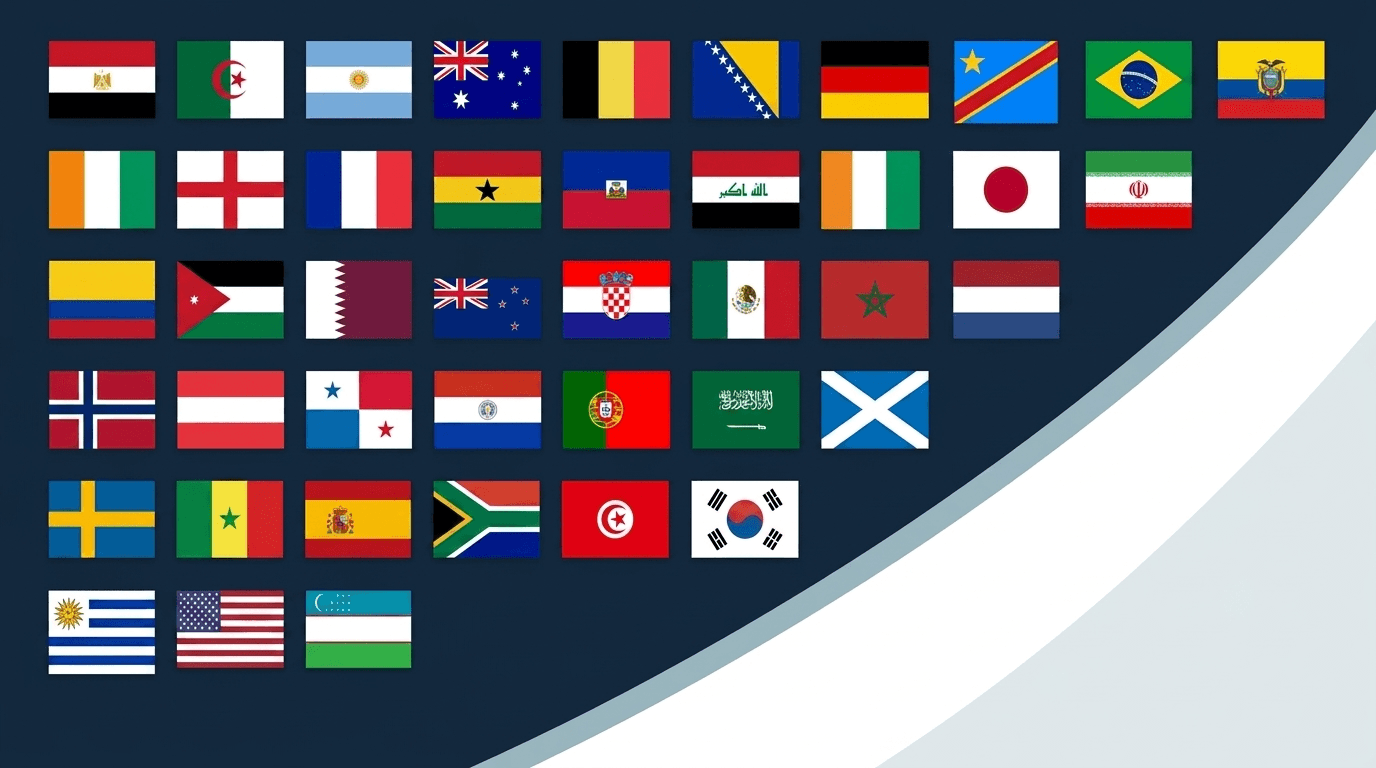
For the first time in the tournament’s 96-year history, 48 nations will compete at the FIFA World Cup. The expanded world cup 2026 teams list represents every corner of the globe – from perennial powerhouses to first-time qualifiers earning their place through years of patient development. With Canada, the United States, and Mexico sharing hosting duties, North America provides six of the 48 spots through CONCACAF, while Europe, South America, Asia, and Africa fill out the field. If you’re building parlays, researching group-stage value, or simply want to know who has qualified for World Cup 2026, this is the complete breakdown.
48 Teams, 6 Confederations: How the Spots Were Distributed
FIFA’s decision to expand from 32 to 48 teams required a substantial reallocation of confederation quotas. Europe retains the largest bloc with 16 direct berths, reflecting the depth and financial power of UEFA competition. Africa received a significant increase, jumping from 5 to 9 spots – an acknowledgement of the continent’s rapid development, exemplified by Morocco’s 2022 semifinal run. Asia grew from 4.5 to 8 spots, with AFC nations now capable of fielding multiple sides that can genuinely compete deep into the tournament. CONCACAF holds 6 spots – three locked in for the co-host nations – while South America maintains 6 berths under CONMEBOL. Oceania earned its first automatic direct berth, rather than having to navigate an intercontinental playoff. Two additional spots are determined through an intercontinental play-off tournament, bringing nations from different confederations into direct competition for the final places in the draw.
The world cup 2026 confirmed teams span five continents, bringing the most geographically diverse field in tournament history. Below is the full breakdown of all world cup 2026 qualified teams by confederation, with betting context for each group. For group-stage fixture schedules and match-up analysis, see our World Cup 2026 groups page.
CONCACAF – 6 Qualified Nations Including Canada, USA, and Mexico
CONCACAF’s six-team contingent carries unique significance in 2026 given that three of the six nations are co-hosts – a structural quirk that virtually guarantees a North American team deep into the knockout rounds simply by virtue of home-crowd advantage and compressed travel schedules. The three host nations earned automatic berths upon being awarded the tournament, while the remaining three spots were contested through the CONCACAF qualifying competition.
Canada – Les Rouges enter their first home World Cup with legitimate ambitions beyond the group stage. Built around Alphonso Davies’s dynamism down the left flank and Jonathan David’s ruthless finishing, Canada under Jesse Marsch have a tactical shape capable of frustrating elite opponents. Home support at BC Place in Vancouver will be unlike anything this program has experienced.
United States – The USMNT arrive with a young, MLS-and-Europe-blended core. Christian Pulisic remains the talisman, but the depth at midfield and the emergence of several high-ceiling 21-to-24-year-olds make this one of the more intriguing American squads in years. The USA’s infrastructure as a host – MetLife Stadium for the final, with games in cities from Seattle to Miami – gives them structural benefits beyond just home support.
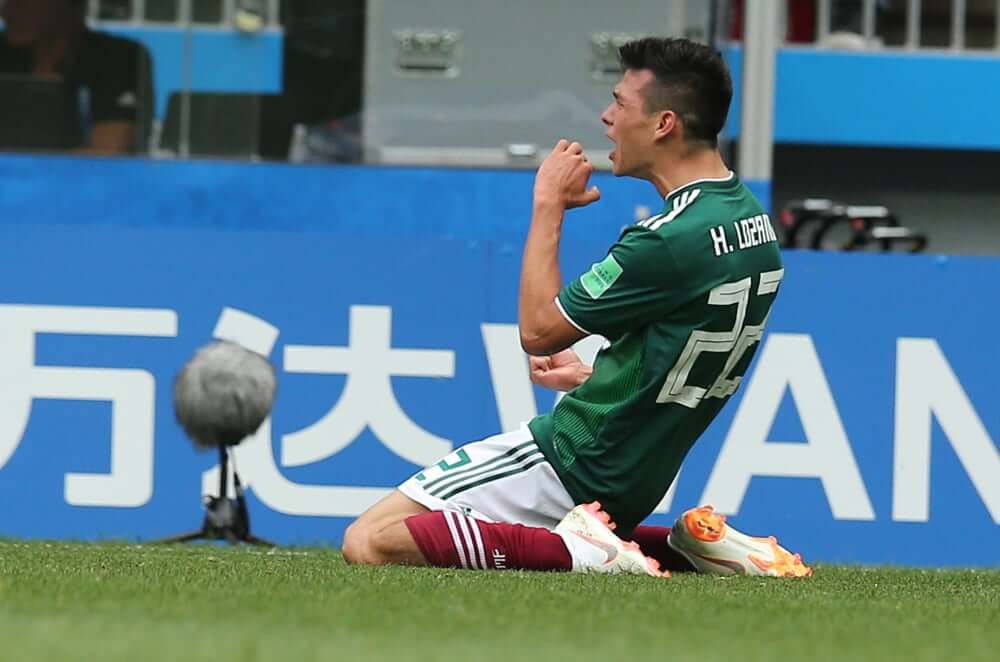
Mexico – El Tri are playing in front of their most passionate home crowds possible at Estadio Azteca in Mexico City, Guadalajara, and Monterrey. The Mexicans have a painful record of exiting in the Round of 16 in five consecutive tournaments – breaking that curse on home soil is the defining objective of this generation.
Panama, Curaçao, and Haiti rounded out the six-team allocation through the CONCACAF qualifying rounds. Panama have made steady strides as a program since their maiden 2018 World Cup appearance. Curaçao bring physical, combative soccer that historically makes them difficult opponents in the opening rounds.
UEFA – 16 European Nations Confirming Their Places
Europe’s 16-team contingent is the deepest and most difficult to predict bloc in the draw. The UEFA qualifying process – run through a combination of Nations League standings and traditional group qualifying – produced the most competitive field the confederation has sent to a World Cup. For bettors tracking who has qualified for world cup 2026, the European group is where the majority of the betting action centres, given that six of the eight all-time World Cup winners are European or South American.
France – Les Bleus arrive as one of the two or three most complete squads in the tournament. Kylian Mbappé anchors an attack with the finishing quality to score against any defence on earth, and Deschamps has cycled in enough new blood since 2022 to maintain the collective hunger that defines France’s best performances under pressure.
England – The Three Lions reached the Euro 2024 final. Harry Kane’s prolific output at club level – over 40 goals in the Bundesliga season before the tournament – makes him the most dangerous centre forward England has fielded since the sport went professional. The question is always whether the team’s tactical structure elevates or constrains the individuals.
Spain – The reigning Euro 2024 champions arrive with the youngest and most dynamic roster among the traditional elite. Lamine Yamal – born in 2007, just 18 at tournament time – is already a generational talent. Pedri and Rodri provide the engine. Spain’s high press and positional fluidity make them physically exhausting to play against across 90 minutes.
Germany – The host nation of Euro 2024 reinvigorated domestic excitement in their home tournament. Julian Nagelsmann has rebuilt the squad’s identity around intensity and vertical speed – a departure from the control-based football that defined earlier German eras. They are dangerous.
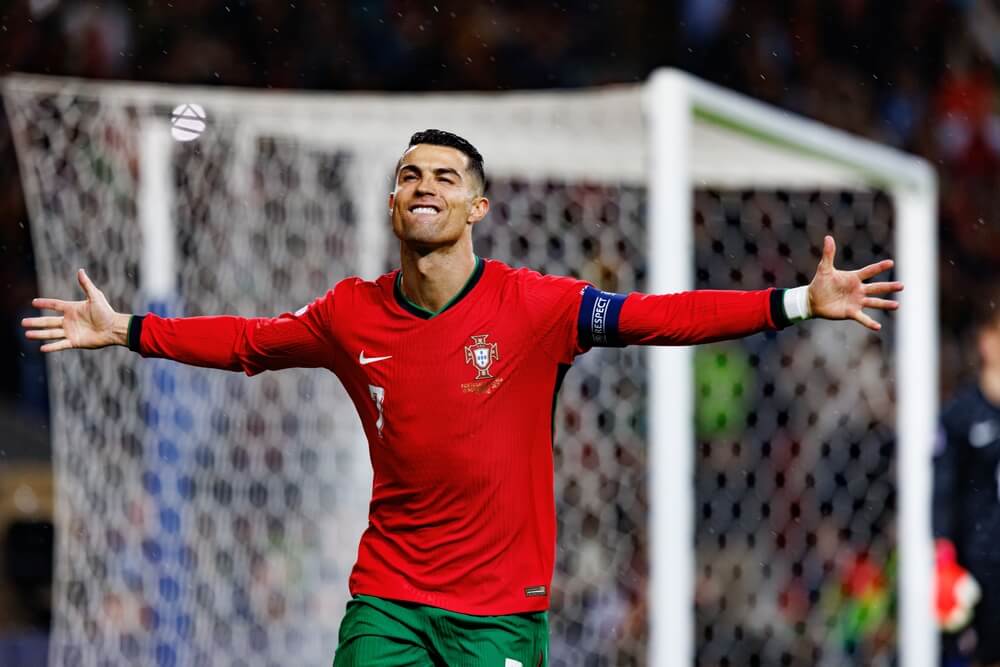
Portugal – Whether Cristiano Ronaldo features at 41 years old is the most debated roster question involving a European nation. Portugal’s core – Bernardo Silva, Bruno Fernandes, Rúben Dias, Rafael Leão – is strong enough to advance deep regardless, but Ronaldo’s presence or absence reshapes the tactical blueprint entirely.
Netherlands, Norway, Croatia, Austria, Switzerland, Czech Republic, Scotland, Belgium, Bosnia, Turkey – These nations round out the European contingent. Croatia’s golden generation is ageing, but experience counts in knockout tournaments. Austria and Scotland represent the newer wave of European emerging programs finding consistency at the highest level.
CONMEBOL – 6 South American Giants
South America’s six spots went to the top finishers in CONMEBOL’s single continuous round-robin qualification campaign – the most gruelling qualifying format in world soccer, where every team plays every other team home and away across three years. Altitude, travel, and climate variations make South American qualifying a true test of depth and consistency.
Argentina – The defending champions bring the collective confidence of having won everything there is to win. With Messi’s future involvement uncertain at 38, the real question is whether Julián Álvarez, Enzo Fernández, and Rodrigo De Paul can carry the operational load. Argentina’s tactical discipline under Lionel Scaloni has been as impressive as their individual talent.
Brazil – Five-time champions arrive with Vinicius Jr. and Rodrygo operating at the peak of their powers from Real Madrid. Brazil conceded frustratingly in the 2022 quarterfinal exit and have since rebuilt with a clear attacking identity. The pressure to end a 24-year title drought remains enormous.
Colombia, Uruguay, Ecuador – Colombia’s youthful roster carries the attacking energy of James Rodríguez’s generation combined with a new wave of technically gifted forwards. Uruguay rely on their characteristic defensive organization and Luis Suárez’s possible final tournament involvement. Ecuador’s physical style and set-piece menace make them a dangerous draw in the group stage.
Paraguay – One of South America’s emerging nations earned the final berth through consistent points across the qualification window, adding further competitive depth to a confederation that has now sent six competitive sides to 2026.

AFC – 8 Asian Nations Representing the Continent
Asia’s eight-team contingent is the most expanded allocation in 2026, and it reflects how seriously AFC nations have developed tactically over the past decade. Japan and South Korea are no longer mere participants – they are legitimate Round of 16 and quarterfinal threats based on recent form and squad quality.
Japan – The Samurai Blue play a pressing, high-tempo game built on technically gifted players scattered across Europe’s top leagues. Their 2022 group stage results – beating both Germany and Spain – were not accidents. Japan are a genuine dark horse for the quarterfinals. South Korea – Built around players at top Premier League and Bundesliga clubs, South Korea’s squad depth has never been stronger. Iran and Australia are regulars at this stage of the tournament. Saudi Arabia – famous for the 2022 upset of Argentina in the group stage – bring unpredictable attacking pace. Three additional AFC qualifiers complete the eight-team Asian allocation, potentially including Iraq, Jordan, and one further nation from the final AFC qualification round.
CAF – 9 African Nations Ready to Make History
Africa’s nine-team allocation is the largest the continent has ever received, and the quality across the CAF field has genuinely risen to match the ambition. Morocco set the standard in 2022. The 2026 field represents the widest African representation in tournament history.
Morocco – The 2022 semifinalists arrive in 2026 as the clear betting favourite among African nations. Coach Mohamed Ouahbi has maintained the collective defensive structure that made them so difficult to break down. Achraf Hakimi and Hakim Ziyech provide world-class individual quality. Congo, South Africa, Cabo Verde, Senegal, Egypt, Ivory Coast, Algeria, Tunisia, Ghana – These nations bring Africa’s characteristic combination of athleticism, creative improvisation, and the genuine tactical sophistication that African coaches have developed over the past decade. Four of the nine African spots will go to nations appearing at their second or third consecutive World Cup, cementing a stability in CAF representation that was absent a generation ago.

OFC + Intercontinental Play-offs: The Final Two Spots
Oceania’s automatic berth – most likely claimed by New Zealand – represents a significant structural change for the OFC, which previously had to navigate intercontinental play-offs just to earn a single spot. Two final places were decided through a six-team intercontinental play-off tournament, with participants drawn from each confederation’s next-best finisher. The two nations that progressed through those play-offs completed the full 48-team field. For the complete group-stage draw including all 48 nations, visit our World Cup 2026 groups breakdown.
The Most Diverse Field in World Cup History
The world cup 2026 48 teams represent a genuine step toward making the tournament a global event rather than a European-South American duopoly. Several nations are appearing at their first or second World Cup, bringing fresh tactical identities and passionate fan bases that will energize host stadiums across Canada, the United States, and Mexico. From a betting standpoint, the expanded field creates significant value in early rounds, where group-stage mismatches can produce high-scoring games with predictable patterns. Explore our World Cup 2026 hub for odds on every nation, group-stage analysis, and the latest roster news before the tournament kicks off.