The United States men’s national team enters its home World Cup carrying more pressure, more potential, and more scrutiny than any previous American generation. As co-hosts of the 2026 FIFA World Cup alongside Canada and Mexico, the USMNT cannot lean on underdog status – not with Mauricio Pochettino running the bench, Christian Pulisic in the attack, and a roster of players earning starting spots at Champions League clubs across Europe. USA World Cup 2026 is a genuine inflection point for the sport in America: the moment the promises of decades of player development infrastructure are either redeemed or subjected to uncomfortable reassessment. Here is BettingSite.ca’s complete breakdown for Canadian fans and bettors tracking the United States throughout this tournament.
USA’s Road to 2026: Co-Hosting Their Way In
Like Canada and Mexico, the United States qualified automatically for the 2026 World Cup by virtue of co-hosting the tournament. That automatic berth removed the CONCACAF qualifying grind – the same process that infamously eliminated the USMNT from the 2018 World Cup in one of American soccer’s most painful chapters – and replaced it with a preparation schedule centred on Copa América and Gold Cup competition.
The Copa América 2024 results on home soil were the most instructive test, and they were uncomfortable viewing for Pochettino’s staff. The United States was drawn into Group C and finished third, missing the knockout rounds entirely and going home early from a tournament they co-hosted. The early exit sparked widespread criticism and forced a genuine tactical reckoning about whether the talent pool was being translated effectively into competitive performances.
The 2025 Gold Cup offered partial redemption. Pochettino’s USMNT navigated the group stage cleanly, advanced through the knockout rounds, and reached the final – where Mexico’s experience and collective discipline proved decisive in a narrow defeat. The runner-up finish disappointed but demonstrated meaningful tactical progress: the system was taking hold, the starting lineup was settling, and the players were beginning to express Pochettino’s ideas with more fluency than the Copa América showing had suggested was possible.
What the USMNT’s preparation record really underlines is that talent is not the constraint. Translating individual quality into collective efficiency, sustaining it under tournament pressure, and producing results in the knockout moments – that is the challenge Pochettino has been hired to solve, and the 2026 World Cup is the examination.
Ver esta publicación en Instagram
Mauricio Pochettino: Bielsa’s Student Takes on the American Experiment
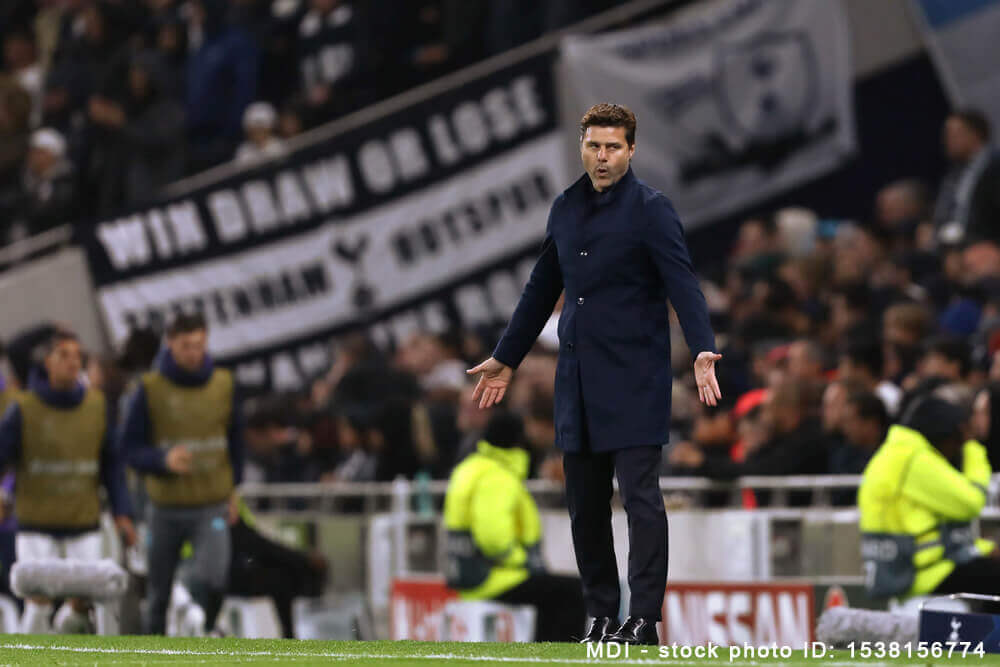
Mauricio Pochettino arrived at the USMNT job with a biography that reads as a coaching masterclass. Formed tactically under Marcelo Bielsa at Newell’s Old Boys in Argentina – the same Bielsa whose pressing philosophy eventually transformed how world soccer is played – Pochettino became one of the most respected coaches in European soccer over two decades of club management. His work at Southampton, Tottenham Hotspur, PSG, and Chelsea was defined by a recurring signature: taking talented-but-inconsistent squads and turning them into disciplined, high-intensity collectives.
His record at Tottenham in particular is instructive. Pochettino took a club without major transfer investment and built a side that reached the Champions League final in 2019 – achieving with collective cohesion what others achieve with spending power. That ability to extract maximum from available talent is precisely why US Soccer targeted him, and why his appointment generated genuine excitement from analysts who follow international football closely.
Pochettino’s preferred system is a 4-2-3-1 that demands high pressing intensity, a compact defensive structure, and rapid ball circulation through midfield. Tyler Adams and Weston McKennie form the double pivot – Adams’ recovery pace and positional intelligence protecting the backline while McKennie contributes press triggers and late runs into the box. Giovanni Reyna operates as the number ten, the creative fulcrum through whom Pochettino’s attacking combinations are meant to flow. Christian Pulisic plays left of Reyna or centrally, operating in the spaces between lines where his technical quality and clinical finish can produce decisive moments.
The system requires midfield press triggers to function. When Adams disrupts the opponent’s build-up and transitions are launched quickly, USA generate high-quality chances with regularity and efficiency. When the press is bypassed with direct balls and the team’s defensive shape stretches, the gaps exposed in behind the fullbacks are significant. The 2025 Gold Cup run showed the system working; the Copa América group stage exit showed what happens when it breaks down. Both remain relevant data for June 2026.
USMNT 2026 Roster: The Pulisic Generation
The expected lineup under Pochettino draws on players now established at some of Europe’s most competitive clubs, a roster depth that previous USMNT generations could not have imagined.
| Position | Player | Club | Age (June 2026) |
| GK | Matt Freese | Crystal Palace | 27 |
| RB | Joe Scally | Borussia Mönchengladbach | 23 |
| CB | Chris Richards | Crystal Palace | 26 |
| CB | Tim Ream | Charlotte FC | 38 |
| LB | Antonee Robinson | Fulham | 28 |
| CDM | Tyler Adams | Bournemouth | 27 |
| CM | Weston McKennie | Juventus | 27 |
| AM | Giovanni Reyna | Borussia Mönchengladbach | 23 |
| RW | Timothy Weah | Juventus | 25 |
| ST | Folarin Balogun | Monaco | 25 |
| LW | Christian Pulisic | AC Milan | 27 |
Christian Pulisic – Captain America
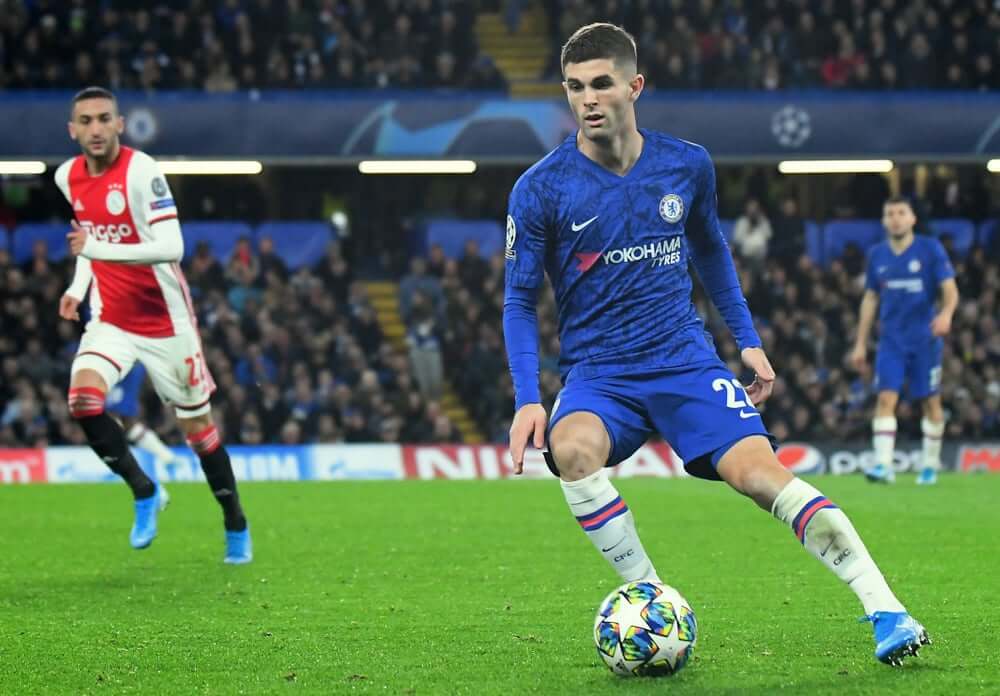
At 27 years old at the 2026 tournament, Christian Pulisic is the most decorated USMNT player of his generation and the undisputed face of the American game. The Hershey, Pennsylvania native made his name at Borussia Dortmund as a teenager before moves to Chelsea and then AC Milan confirmed his status as a legitimate starter at European elite level. His ability to play anywhere across the attacking third – centrally, on the left, as a second striker – gives Pochettino tactical flexibility that coaches at lesser teams would pay enormous transfer fees for.
The 2026 World Cup on home soil carries personal significance for Pulisic that goes beyond statistics. He grew up as the face of a movement trying to persuade Americans that soccer was a sport worth caring about. Now that the country has arrived – and the World Cup is on American soil – Pulisic’s performance in front of his own public will define much of how this tournament is remembered domestically for decades.
Weston McKennie – Midfield Authority
The Juventus midfielder is arguably the USMNT’s most complete player in terms of all-round contribution. McKennie’s pressing intensity triggers Pochettino’s high-press sequences, his physical presence wins duels in central areas, and his ability to arrive late in the box makes him a legitimate scoring threat that opposing midfielders must account for. His experience winning trophies in Serie A adds a mental currency that the younger players around him can draw on in high-pressure tournament moments.
Giovanni Reyna – The Conductor
When fully healthy, Reyna is arguably the most technically gifted player the United States has ever produced. His close control, vision, and passing in tight spaces – the ability to find teammates in positions that other number tens cannot – separates him from the more industrious midfield options around him. Fitness has been a recurring concern throughout his career, but a fully available Reyna at a home World Cup transforms the quality ceiling of what Pochettino’s system can produce.
Diego Kochen – The Next Generation Watching from the Bench
At just 19, Diego Kochen – born in Miami with Peruvian and Venezuelan heritage – has already earned his place in Barcelona’s senior squad, an achievement that underlines the accelerating quality of young American talent developing in elite European academy environments. His inclusion in the USMNT setup, even in a backup capacity for 2026, signals that the generational talent pipeline that produced the current roster has not dried up – it has deepened.
American Strengths and the Structural Ceiling
Midfield quality. When McKennie, Adams, and Reyna are all available and functioning in Pochettino’s system, the USMNT possesses one of the more technically accomplished midfield units in the tournament. The combination of high-press intensity, clean distribution, and genuine goalscoring threat creates a versatility that coaches with more predictable midfield setups would envy.
European club experience. The majority of Pochettino’s expected starters compete regularly for clubs in Europe’s top leagues and knockout competitions. Surviving elimination matches under hostile crowd pressure, managing momentum shifts in adversity, and executing under fatigue in the 80th minute of a decisive game – these are qualities previous USMNT generations lacked and this one has accumulated through years of club football at the highest level.
Home tournament advantage. Playing at packed American venues in Los Angeles, Seattle, and San Francisco removes the isolation factor that has historically affected USMNT squads playing overseas tournaments. For younger players especially, partisan home support amplifies confidence in ways that show up in body language, decision-making under pressure, and recovery from setbacks within matches.
Weakness: Striker depth. Folarin Balogun has genuine quality but has not yet demonstrated consistent tournament-level clinical finishing at the international stage. Without a reliable centre-forward who can convert the chances Pochettino’s midfield creates, the USMNT’s sophisticated build-up can arrive at the final third and produce less than the possession numbers suggest it should.
Weakness: Copa América benchmark. The group stage exit at Copa América 2024, on home soil, in a tournament that provided near-perfect preparation conditions, is the most uncomfortable data point in Pochettino’s record. A team expected to advance could not. That result hangs over every conversation about how far this generation can genuinely go.
Weakness: Injury exposure. Adams, Reyna, and Weah have all experienced significant injury interruptions in recent seasons. The World Cup arrives at the end of a long European club season, and the physical condition of key players when June arrives could determine the difference between a quarterfinal run and an early exit.
How USA Got Here: The Co-Host Path
The United States earned its 2026 World Cup place automatically as a co-hosting nation, meaning no formal CONCACAF qualifying campaign was contested. For context and competitive benchmarking purposes, their most important pre-tournament results came through the Copa América 2024 and the 2025 CONCACAF Gold Cup.
Copa América 2024 was held on American soil across multiple US cities. The USMNT was placed in Group C alongside Bolivia, Panama, and Uruguay. Despite hosting advantage, the United States managed one win and collected four points, finishing third and exiting in the group stage – their worst result in recent Copa América cycles.
The Gold Cup 2025 showed substantially more promise. Pochettino’s team navigated the group stage with authority, advanced through consecutive knockout rounds, and reached the final, where they fell to Mexico. The final result was narrow and disputed, and the tournament run provided meaningful evidence that the system Pochettino has been building is functional under genuine competitive pressure.
| Tournament | Result | Note |
| Copa América 2024 | Group stage exit | Finished 3rd in Group C |
| Gold Cup 2025 | Final (runners-up) | Lost to Mexico in the final |
A Century of American Soccer: The World Cup Record
The United States has a World Cup history far more complex and fascinating than the country’s domestic soccer reputation might suggest. At the inaugural 1930 World Cup in Uruguay, the USMNT reached the semifinals – still their best-ever finish – before losing to Argentina. Twenty years later at the 1950 tournament in Brazil, they produced one of the most celebrated upsets in the competition’s history: a 1-0 defeat of England, the country that invented the sport, in a match that received almost no coverage in the American press at the time.
After 1950, the United States missed every World Cup until Italia 1990. Re-emergence in the 1990s coincided with MLS’s creation and genuine domestic investment, and the 2002 tournament in South Korea/Japan remains the high-water mark: a quarterfinal run featuring wins over Portugal and Mexico that generated real mainstream attention at home. Russia 2018 was the lowest point in modern memory – a CONCACAF qualifying loss to Trinidad & Tobago sent the USA to their first World Cup absence since 1986, accelerating the youth development overhaul that produced the Pulisic generation currently preparing for this home tournament.
Group D: USA, Paraguay, Australia, Turkey
The United States leads Group D as the seeded co-host nation, facing Paraguay, Australia, and Turkey – a draw that offers a realistic path to the Round of 16 while providing genuine tactical challenges that a still-developing system must answer.
The opening fixture against Paraguay at LA Stadium (midnight ET, June 13) is a late-night kickoff that will still generate significant viewership across the Eastern time zone. Paraguay are a physical, competitive South American side – CONMEBOL opponents are never straightforward – and the heat and timing in Los Angeles create conditions where Pochettino’s high-pressing system needs careful management.
Australia present familiar CONCACAF-adjacent challenges: athletic, direct play with genuine transition danger. Turkey are perhaps the most tactically interesting Group D opponent, having earned their place through a competitive European playoff run, and their collective organisation can cause problems for teams that do not respect their structured defensive shape from the first whistle.
| Date | Time (ET) | Match | Venue |
| Friday, June 12 | 12:00 AM ET (Sat) | USA vs Paraguay | Los Angeles Stadium |
| Saturday, June 13 | 3:00 AM ET | Australia vs Turkey | BC Place, Vancouver |
| Friday, June 19 | 6:00 PM ET | USA vs Australia | Seattle Stadium |
| Saturday, June 20 | 3:00 AM ET | Turkey vs Paraguay | SF Bay Area Stadium |
| Friday, June 26 | 1:00 AM ET (Sat) | Turkey vs USA | Los Angeles Stadium |
| Friday, June 26 | 1:00 AM ET (Sat) | Paraguay vs Australia | SF Bay Area Stadium |
All times are Eastern Time (ET). Pacific Time fans: subtract three hours.
Ver esta publicación en Instagram
USA World Cup Odds and Our Predictions
USA World Cup 2026 odds at Canadian sportsbooks including bet365, BetMGM, and FanDuel Canada position the USMNT as a genuine but second-tier contender – ahead of the field in terms of realism but well behind Argentina and France in terms of probability. Outright title odds for the United States typically sit around 12.00-18.00, reflecting the talent on the roster and the home advantage while acknowledging the gap between the current generation and the tournament’s elite.
| Market | Approximate Odds |
| USA to win the World Cup | 12.00 – 18.00 |
| USA to advance from Group D | 1.30 – 1.50 |
| USA to reach the quarterfinals | 2.80 – 3.50 |
| USA vs Paraguay: USA to win | 1.70 – 1.90 |
Odds are indicative. Check current prices at your sportsbook of choice.
The most straightforward value proposition lies in Group D advancement markets. “USA to advance” at 1.30-1.50 is fair rather than compelling – the margin is tight enough that the Copa América benchmark creates legitimate doubt. For bettors seeking upside, “USA to reach the quarterfinals” in the 2.80-3.50 range balances realistic probability against a meaningful return.
Our prediction: USA finishes first or second in Group D and advances to the Round of 16. A quarterfinal run is achievable and would fulfil Pochettino’s stated ambitions for this group. Getting beyond the quarters requires a collective step up in performance consistency that this generation has not yet demonstrated for three consecutive knockout rounds – but at a home World Cup, stranger things have happened. Track the full picture at our World Cup 2026 hub, with odds and group analysis at our World Cup odds page.
Pochettino told American soccer fans when he took the job that his players needed to believe they could win the World Cup. Whether that belief translates into results when the tournament begins is the question that will define his legacy in the United States. The talent is there. The system is in place. June will decide if it is enough.