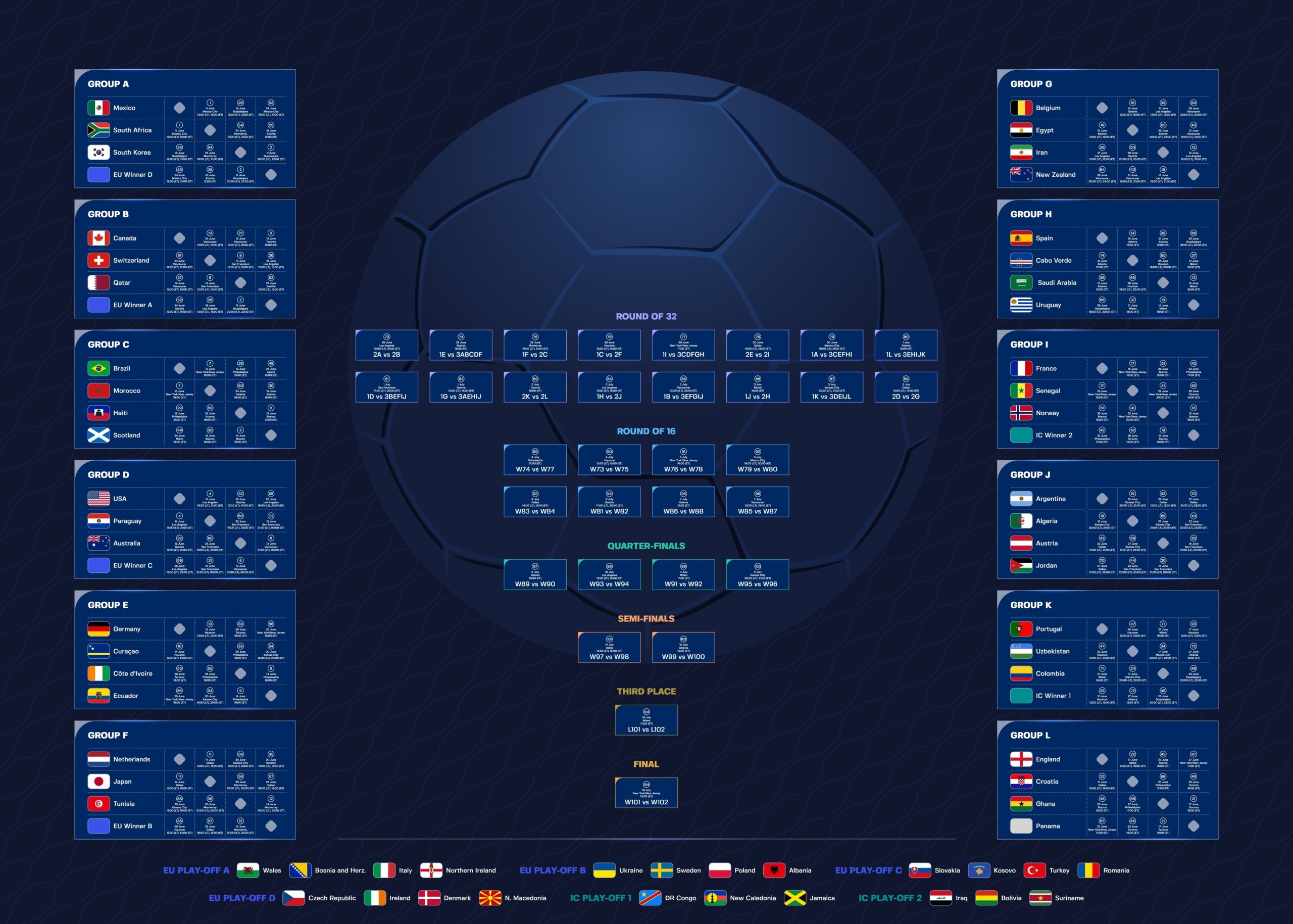
Sportsbooks Impact – The 2026 FIFA World Cup will generate an estimated $35 billion USD in global betting handle – making it, by volume, one of the largest single betting events in the history of legal sports wagering. Behind those staggering numbers is an industry that most fans interact with as bettors but rarely think about analytically: the sportsbook. How does a global bookmaking operation actually set a price on France winning the World Cup? Why do those odds move? What happens to billions of dollars of action when Argentina are eliminated? And for Canadian bettors operating in a now-regulated market with licensed operators, what does the industry’s global structure mean for the lines you see on your betting app? This is the inside view of how sportsbooks shape – and are shaped by – events like the World Cup.
The Role of Sportsbooks in Global Sporting Tournaments
Sportsbooks are not passive recording machines that simply take bets and pay out winners. They are active market-makers – institutions that set prices, manage risk, and generate revenue through the spread between the true probability of an outcome and the price offered to bettors. At a tournament like the World Cup, this market-making role operates at an extraordinary scale and with considerable complexity, influencing not just individual bets but the entire information environment surrounding the competition.
Sportsbooks serve several functions that extend well beyond facilitating gambling. Their odds – particularly those of the major market-makers like Bet365, Pinnacle, and the leading licensed operators – function as public probability assessments that are more accurate, on average, than most journalistic or analytical predictions. The financial incentive to be right is enormous: a sportsbook that systematically misprices major events will be exploited by sharp bettors and will lose money. The discipline imposed by that financial pressure produces odds that aggregate vast amounts of information and crowd wisdom into a single numerical signal.
At the World Cup specifically, sportsbooks become part of the tournament’s cultural infrastructure. Major operators run comprehensive promotional campaigns – enhanced odds on opening-match favourites, parlay insurance on multi-leg accumulators, free-bet offers on first goal scorers – that bring millions of new and occasional bettors into the market. The promotional investment in World Cup years routinely exceeds that of any other event on the sports calendar. In Canada, the first World Cup since single-event sports betting was legalized in 2021 – enabling licensed operators to take single-game bets rather than only parlay wagers – the 2026 tournament represents a watershed commercial moment for the regulated betting industry.
How Odds Are Actually Created
The process of creating World Cup odds begins months before the first group-stage kick-off, and involves layers of quantitative modelling, human expertise, and market management that most bettors never see.
The starting point is a probability model – typically a sophisticated Monte Carlo simulation that assigns each of the 48 teams a base quality rating (drawn from Elo ratings, FIFA rankings, historical performance data, and proprietary metrics), simulates the full tournament thousands of times based on those ratings, and calculates the frequency with which each team wins. Those frequencies become the base probabilities, which are then converted into decimal odds.
The model’s base ratings are not static. They are continuously updated as new information becomes available: qualifying results, friendly match performance, injury announcements, squad selections, and scouting intelligence all feed into ongoing adjustments. For a team like Canada – whose true tournament quality is harder to model precisely than a France or a Brazil, given the relative scarcity of top-tier competitive match data – the uncertainty in the probability estimate is higher, which typically manifests as slightly wider bid-ask spreads and more cautious line movement in early markets.
Once the opening odds are published, the sportsbook transitions from model-driven pricing to market-driven price management. This is where the volume and direction of incoming bets begins to shape the line. If substantial money flows onto France at +550, the sportsbook will shorten France’s odds – perhaps to +500 or +475 – to rebalance the book and reduce their liability on a French victory. Simultaneously, they may lengthen the odds on France’s competitors to attract action on the other side of the market. This is not the sportsbook expressing an updated view of France’s probability of winning – it is the sportsbook managing their risk exposure across the full market.
The critical implication for bettors: the odds you see on your screen reflect a combination of the sportsbook’s model, the betting public’s opinion (which shapes line movement), and the sportsbook’s risk management decisions. They are not a pure probability signal. In markets where the betting public has strong and systematic biases – as they do toward popular teams like Brazil, Argentina, and host nations – the odds can drift away from true probability in ways that create value for bettors who can identify the bias.
Market Influence and the Weight of Global Betting Volume
The World Cup is unique in the betting industry not just because of its volume, but because of the composition of that volume. The bettor profile at a World Cup is dramatically different from that of a typical weekend league slate: it includes hundreds of millions of occasional bettors – people who bet once or twice a year, almost exclusively on the World Cup – alongside the professional and semi-professional sharp bettors who operate year-round.
The recreational volume is enormous, and it distorts markets in predictable ways. Recreational bettors systematically over-bet tournament winners on traditional powers, under-bet knockout specialists from smaller nations, over-bet high-scoring first halves (because early goals are exciting and memorable), and dramatically over-bet high-profile player props – goal scorers, assists, man of the match – for globally recognized stars like Mbappé, Vinicius Jr., or Messi, at prices that often fail to reflect true probability.
Sportsbooks understand this dynamic and profit from it. Recreational bettors are structurally long on popular teams and popular players, and sportsbooks can shade their prices toward the recreational side of the market – offering slightly worse odds on popular selections, slightly better odds on the unpopular side – because the recreational volume is so large that it overwhelms sharp-money corrections in many markets. This is most pronounced in the outright market (tournament winner) and player prop markets during the group stage, when the combination of public enthusiasm and information uncertainty is highest.
Where sharp money does move markets significantly – typically in team-specific lines 12 to 24 hours before kick-off – the signal is worth tracking. Sudden, late line movement on a specific match (say, a shift from -150 to -170 on a favoured team within 12 hours of kick-off) often indicates sharp action on new information: an injury that hasn’t been publicly confirmed yet, a tactical change spotted in the final training session, or model-driven sharp money identifying a pricing inefficiency. Following line movement direction – not the line itself, but the direction and speed of the move – is one of the most reliable public signals available to recreational bettors at Canadian sportsbooks.
How Canada’s Betting Regulations Shape the 2026 World Cup Market
The Canadian regulatory context for the 2026 World Cup is genuinely different from any previous edition of the tournament. Before August 2021, Canadians could only legally place sports bets through government-run parlay products – the Sport Select and Pro-Line platforms operated by provincial lottery corporations, which offered limited markets, poor odds, and no single-event betting capability. The legalization of single-event sports betting under the Safe and Regulated Sports Betting Act transformed the market, enabling private, licensed operators to compete for Canadian bettors with international-standard products.
The provincial regulatory structure means each province maintains its own licensing requirements and consumer protection standards. iGaming Ontario, launched in April 2022, was the first to open a competitive private market, and operators including bet365, FanDuel, BetMGM, PointsBet, theScore Bet, and Betway now hold iGaming Ontario registrations. British Columbia, Alberta, and other provinces have their own licensing frameworks, though Ontario’s is currently the most developed competitive market in the country.
For the 2026 World Cup, Canadian bettors in Ontario and other regulated provinces have access to a product suite that rivals anything available in the United States, the United Kingdom, or Australia. Live betting markets, extensive player props, same-game parlays, cash-out functionality, and a full range of alternative lines are all available through licensed Canadian sportsbooks. The competitive intensity between operators – all fighting for market share in what will be the biggest betting event in post-legalization Canadian history – has driven promotional activity to extraordinary levels, with enhanced odds, deposit match bonuses, and free-bet credits broadly available for the tournament.
Regulatory protections embedded in the Canadian framework – mandatory responsible gambling tools, identity verification requirements, self-exclusion programs linked across licensed operators – mean the 2026 World Cup betting market in Canada is both more accessible and better regulated than any previous iteration. For bettors, this means more competitive odds (operators competing against each other narrow the vig), more market depth, and more reliable consumer protection if disputes arise.
The Economic Footprint of World Cup Betting
The economic impact of World Cup betting activity extends well beyond the direct revenue generated by sportsbooks. In a regulated market, licensing fees, corporate taxes, and problem gambling levies flow directly to government coffers – in Ontario alone, iGaming Ontario’s tax revenues have contributed hundreds of millions of dollars annually to provincial public finances since the market’s 2022 launch, and the 2026 World Cup is expected to produce the largest single-quarter betting tax contribution in Canadian gaming history.
Advertising and media spending around the World Cup betting market will be significant. Licensed sportsbooks – prohibited from advertising to minors and required to follow responsible gambling messaging standards – will dominate sports broadcast advertising windows on TSN, CTV, CBC, and DAZN during the tournament. Sponsorships of sports commentary programs, pre-match analysis segments, and digital media properties will reach levels that were impossible in the pre-legalization era. This investment flows into Canadian sports media infrastructure, contributing to the production quality and depth of coverage that Canadian fans benefit from.
For the global economy of soccer, World Cup betting revenue reinforces the sport’s status as the dominant entertainment product on earth. Sponsorships and broadcast rights are valued with betting handle as a key demand indicator; leagues and federations use betting engagement metrics – how many bets are placed on their product, how many live markets are active during their matches – as evidence of audience engagement depth when negotiating commercial deals. The betting ecosystem, far from being peripheral to the World Cup, is now structurally embedded in its commercial architecture.
For Canadian bettors heading into the 2026 tournament, understanding how this ecosystem operates gives you a material advantage. The sportsbook is not your opponent – it is the marketplace. And like any marketplace, it operates most efficiently when participants understand the forces that drive prices. Compare lines across multiple licensed Canadian sportsbooks before placing any significant bet – price differences of 5-10% on identical outcomes are common across operators – and use the market’s dynamics rather than fighting against them. For a comprehensive guide to Canadian sportsbooks offering the best World Cup 2026 markets, visit our sportsbooks comparison, and for full odds analysis, head to our World Cup 2026 odds tracker.