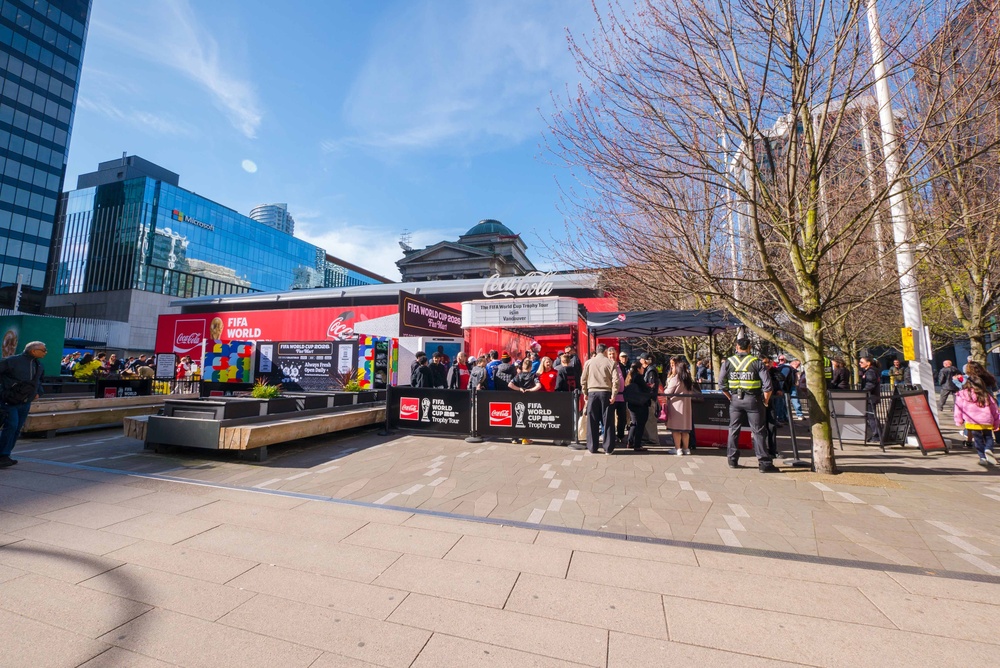
World Cup 2026 in Vancouver – No Canadian city offers a more dramatic backdrop for the World Cup 2026 than Vancouver. Mountains to the north, ocean to the west, a downtown skyline that looks like it was designed for a postcard — and right at the city’s heart, BC Place, which hosted the 2015 Women’s World Cup Final and now takes centre stage for seven men’s matches, including two games featuring Canada’s national team. Vancouver Stadium (FIFA’s official tournament name for BC Place) is the busiest Canadian venue at the 2026 FIFA World Cup. If you’re planning to be there, here’s everything you need to make it happen.
Getting to Vancouver for the World Cup 2026
Vancouver International Airport (YVR) is the main entry point and one of Canada’s best-connected international airports. Air Canada, WestJet, and dozens of international carriers serve it. YVR is uniquely positioned among North American airports: the Canada Line SkyTrain connects the terminal directly to Downtown Vancouver in roughly 25 minutes for about $9–$10 CAD — no shuttle, no transfer, no taxi required. That alone makes the logistics cleaner than most tournament cities. Flights from Toronto take approximately five hours; from London, UK, direct routes run around nine hours.
Driving to Vancouver from within British Columbia is straightforward via the Trans-Canada Highway (Highway 1) or Highway 99 from the south. Fans travelling from the US by car will cross at Peace Arch (the busiest crossing), Pacific Highway, or Aldergrove. Be prepared for extended wait times at land border crossings during tournament weeks — the Canadian Border Services Agency recommends using the ArriveCAN customs declaration app to streamline entry and checking estimated wait times before you head to the border. From Seattle, the drive is roughly 2.5–3 hours without border delays; allow extra on World Cup match days.
For fans combining Canadian and US matches, the Amtrak Cascades train runs between Seattle and Vancouver (Pacific Central Station) daily, though it crosses the border and requires full passport clearance on both sides. Book well in advance — this service sells out during major events. Bus services (Greyhound and Flixbus) also connect Seattle and Vancouver affordably for those on a tighter World Cup 2026 Vancouver travel budget.
Where to Stay in Vancouver During the World Cup 2026
Vancouver is a compact city with distinct neighbourhoods, each offering a different experience — and a different price point. Book early; with seven matches running June 13 through July 7, the city will be under sustained demand for most of the tournament.
Downtown / West End gives you the closest proximity to Robson Street shopping, English Bay beach, and Stanley Park while keeping BC Place a 10–15 minute walk. It’s the most expensive zone during the tournament. The YWCA Hotel Vancouver is a legitimate gem here — located roughly 300 metres from the Stadium-Chinatown SkyTrain station, with laundry facilities and rooms equipped with refrigerators at rates significantly below traditional hotels. The Best Western Plus Sands is another solid mid-range option, just minutes from English Bay with restaurants and two bars on-site. For social travellers keeping costs low, the Samesun Vancouver hostel offers both dorms and private rooms, complimentary guided tours, a reliable breakfast, and a genuinely welcoming atmosphere — a solid base for the World Cup experience without the boutique hotel price tag.
Yaletown sits between Downtown and BC Place, a former warehouse district reinvented as one of Vancouver’s most stylish neighbourhoods. Loft conversions, design-focused restaurants, and cocktail bars line the streets. You can walk to Vancouver Stadium in under 10 minutes. The neighbourhood is pricier than West End but quieter at night.
West End offers a residential village feel close to English Bay and Stanley Park, with some of Vancouver’s best value accommodation. The Sylvia Hotel, a historic ivy-covered building on English Bay, is one of the city’s most charming properties — sea views, a vintage pub, and an atmosphere that couldn’t be replicated in a new-build hotel.
Richmond is worth considering if Downtown prices are prohibitive. Positioned along the Canada Line with multiple SkyTrain stations, Richmond puts you 20 minutes from the city centre and 10 minutes from YVR. The area also has an outstanding Asian food scene, arguably the best in North America outside of major Chinese cities.
Fan Zones at the World Cup 2026 in Vancouver
The official FIFA World Cup 2026 fan zone for Vancouver is at Hastings Park, home to the PNE Amphitheatre. Located in the northeast of the city, it’s accessible by bus from Downtown and operates from June 11 through July 19 — covering the entire tournament. General admission is expected to be free, with premium seating options available for specific matches. The PNE Amphitheatre’s open-air format means all 104 matches can be shown on giant screens with live entertainment between fixtures, food vendors from local operators, and musical programming throughout. It’s a legitimate destination in its own right, not just a consolation prize for fans without match tickets.
For ticketholders heading to BC Place, FIFA has confirmed a “Last Mile” immersive experience built into the approach route to the stadium — an activation zone that begins outside the venue and is included with your match ticket. Given that the Stadium-Chinatown SkyTrain station is closed to fans on all match days (this is critical — transit apps will show it as the closest station, but access to the stadium from that exit is not permitted), the designated approach is from Main Street–Science World station on the Expo Line, with a marked 10–15 minute pedestrian route through Concord Lands to the stadium entrance.
Getting Around Vancouver on Match Days
Vancouver’s public transit system, TransLink, is excellent and the right choice for every match day. The SkyTrain’s Canada Line runs from YVR to Waterfront Station, then connects to the Expo Line one stop east at Stadium-Chinatown. However, as noted above, Stadium-Chinatown Station is closed to fans on match days — use Main Street–Science World Station instead. Buy a Compass Card ($6 CAD, refundable) at any SkyTrain station or at the airport; alternatively, tap directly with a contactless credit card on validators.
The SeaBus ferry connecting Downtown to North Vancouver runs every 15–30 minutes and costs the same as a SkyTrain fare with a Compass Card — and the crossing provides one of the best views of the Downtown skyline you’ll find for under $5. Buses extend the transit network to neighbourhoods the SkyTrain doesn’t reach. Car rentals are available but strongly discouraged for match days — parking near BC Place is extremely limited during the tournament, and traffic around the stadium area will be heavily managed. Rideshares (Uber, Lyft) operate throughout Vancouver; the designated pick-up and drop-off zone for BC Place is confirmed on the stadium’s official website closer to the tournament. For fans in Greater Vancouver staying in Burnaby, Surrey, or Coquitlam, all three SkyTrain lines converge at Commercial–Broadway, from where the Expo Line to the stadium is a direct ride.
Restaurants & Things to Do in Vancouver Between Matches
Vancouver’s food scene punches well above its population of 700,000. The city’s proximity to the Pacific, its agricultural hinterland in the Fraser Valley, and its enormous Asian diaspora community create a culinary environment that surprises most first-time visitors. Granville Island Public Market is the best single food destination in the city — arrive by Aquabus (the tiny yellow water taxis that depart from the Hornby Street dock) and spend a morning grazing on smoked salmon, fresh produce, and artisan baked goods.
For outdoor activity between matches, Stanley Park’s 9-kilometre Seawall is a must — rent a bike near Denman Street and circle the whole park in under an hour. The views across Burrard Inlet toward the North Shore mountains are what makes Vancouver different from every other World Cup 2026 host city. Gastown, Vancouver’s oldest neighbourhood, centres on a steam-powered clock on Water Street that chimes every 15 minutes; the surrounding streets are lined with independent restaurants and cocktail bars. From North Vancouver, take the SeaBus across the inlet and then a bus or shuttle up to the Capilano Suspension Bridge, one of BC’s most visited attractions. The bridge hangs 70 metres above the Capilano River; the forest surrounding it feels genuinely wild despite being 15 minutes from Downtown.
One practical note specific to Vancouver: the city has strict public smoking and vaping regulations. Smoking is prohibited in parks, on beaches, and within 6 metres of any building entrance. And while cannabis is legal for those 19 and over, consumption in public spaces is restricted and bringing any across any international border — including back into Canada — carries serious legal consequences.
Vancouver Is Ready for Its World Cup Moment
Seven matches, two Canada games, the best mountain backdrop of any tournament city in 2026, and a public transit system that connects everything — Vancouver is arguably the easiest of the Canadian host cities to navigate as a visiting fan. The BC Place stadium guide covers the full match schedule, seating layout, and matchday operations in detail. For the big picture on Canada’s co-hosting role, tournament format, and Canadian betting insights, visit the World Cup 2026 Canada hub. Get your Compass Card, book your accommodation before the rest of the world does, and prepare for seven weeks of soccer in one of the world’s great cities.