How many teams in World Cup 2026? – The 2026 FIFA World Cup features 48 teams – a 50% increase from the 32-team format used from 1998 through 2022. This expansion, the first since France 1998, makes the Canada-Mexico-USA tournament the largest men’s World Cup in history by every meaningful measure: teams, matches, venues, and days of play. Whether you’re planning your first-ever bet on the tournament or trying to understand how your favourite side can advance, knowing the format inside-out is essential. Here’s how it all breaks down.
How many teams in World Cup 2026? – 48 Teams: Why the Expansion and What It Means
FIFA officially approved the move to 48 teams in January 2017, with the Council confirming the four-team group structure in March 2023 after briefly considering 16 groups of three. The four-team format was ultimately preferred because three-team groups create scheduling problems: the final game in each group can’t be played simultaneously, giving teams knowledge of what result they need – a setup that invites collusion. Four teams, simultaneous final-day fixtures, all problems solved.
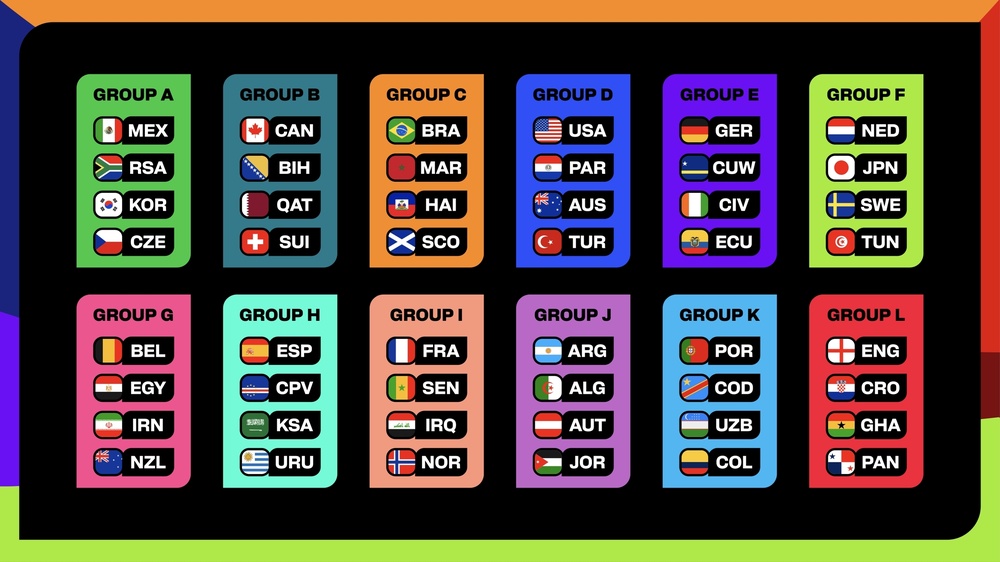
The 48 qualified nations are drawn into 12 groups labelled A through L, with four teams in each group. The three host nations – Canada, Mexico, and the United States – received automatic berths, with Canada and the co-hosts seeded into Pot 1 for the draw. Each team still plays exactly three group-stage matches, exactly as in previous tournaments. The qualifying berths by confederation break down as follows: UEFA (Europe) sends 16 teams, CONMEBOL (South America) sends 6, CAF (Africa) sends 9, AFC (Asia) sends 8, CONCACAF (North/Central America & Caribbean) sends 6 including the three hosts, and OFC (Oceania) gets its first guaranteed berth in the tournament’s history with 1 team. Two intercontinental playoff spots account for the remaining entries.
For Canadian fans, the expanded format is particularly relevant. As a co-host, Canada enters Group B alongside Bosnia and Herzegovina, Qatar, and Switzerland – a group that looks navigable. Les Rouges play all three group matches on home soil: June 12 in Toronto, then June 18 and June 24 in Vancouver.
104 Matches: The Full Schedule From Group Stage to Final
The straightforward answer to how many games are in the 2026 World Cup: 104. That compares to 64 at each of the last several tournaments, representing a 62.5% increase in total matches. The tournament runs 39 days, from the opening match (Mexico vs. South Africa at the Estadio Azteca in Mexico City on June 11) to the final at MetLife Stadium in East Rutherford, New Jersey on July 19.
The group stage alone generates 72 matches – more than an entire 32-team World Cup’s worth of games. The group phase runs from June 11 through approximately June 27. From the Round of 32 onward, the tournament is pure single-elimination: extra time and penalties decide any draw. Notably, the 2026 champion will play eight matches total, one more than champions in every tournament since 1986. The group stage’s final matchday is particularly intense: three groups conclude per day simultaneously, meaning up to 24 matches are played over four days in the most fixture-dense stretch in any World Cup ever staged. All 104 matches across the three host nations are broadcast in Canada on TSN, CTV, CBC, and RDS (for French-language audiences).
The Format: How Teams Advance Across All Rounds
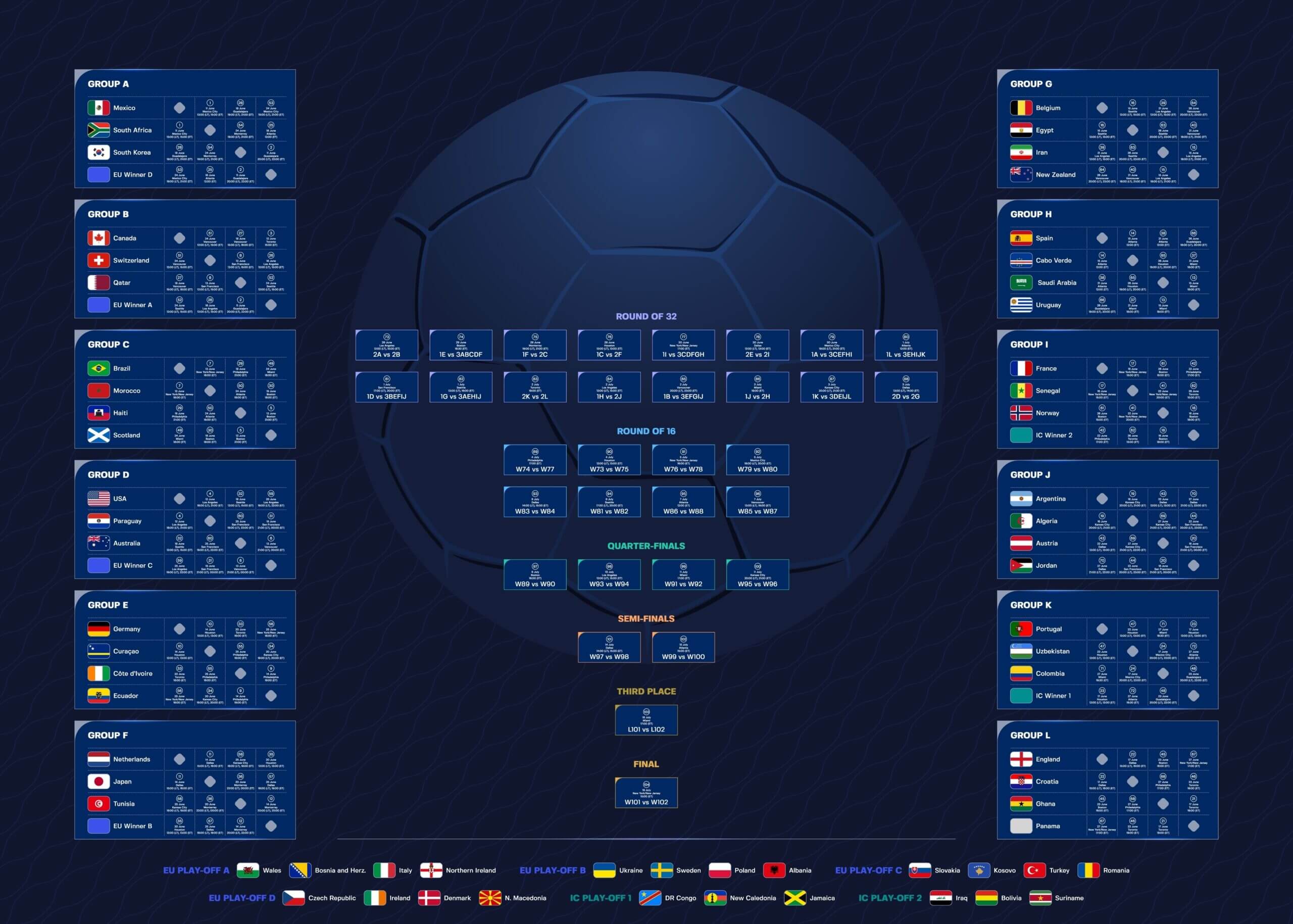
Understanding how many matches are in the World Cup 2026 requires knowing how the bracket works. Here’s the complete structure from group stage through to the final.
| Round | Teams | Matches | How Teams Qualify |
| Group Stage | 48 | 72 | Play 3 matches in groups of 4 |
| Round of 32 | 32 | 16 | Top 2 from each group + best 8 third-place teams |
| Round of 16 | 16 | 8 | Win in Round of 32 |
| Quarter-finals | 8 | 4 | Win in Round of 16 |
| Semi-finals | 4 | 2 | Win in Quarter-finals |
| Third-place play-off | 2 | 1 | Lose in Semi-finals |
| Final | 2 | 1 | Win in Semi-finals |
| Total | 48 | 104 |
The “best 8 third-place teams” rule is the key innovation in the new format. After all 12 groups conclude, the 12 third-place finishers are ranked by points, then goal difference, then goals scored. The top 8 of those 12 advance to the Round of 32. This is similar to how UEFA Euro 2016 and Euro 2024 handled third-place qualification, and it means a team can lose their second group match and still advance – keeping final-day fixtures alive and reducing dead-rubber scenarios. The full bracket structure for the knockout rounds is predetermined based on which groups winners face which runners-up or third-place teams, designed to prevent any two teams from the same group meeting until at least the semi-finals.
The Biggest World Cup Ever – Know the Format, Back the Right Team
The jump from 32 to 48 teams isn’t just a number change – it reshapes the entire betting and tactical landscape of the tournament. More teams means more upsets in the group stage, a broader field of potential dark horses, and a Round of 32 that adds a layer of knockout drama that didn’t exist before. For bettors, the “best third-place” rule is worth keeping in mind: a team that struggles through the group stage can still surface in the knockout rounds with relatively fresh legs. Explore our full World Cup 2026 hub for odds analysis, match previews, and group-by-group breakdowns, or check out the complete format and bracket explainer for even more detail on how the tournament structure plays out.