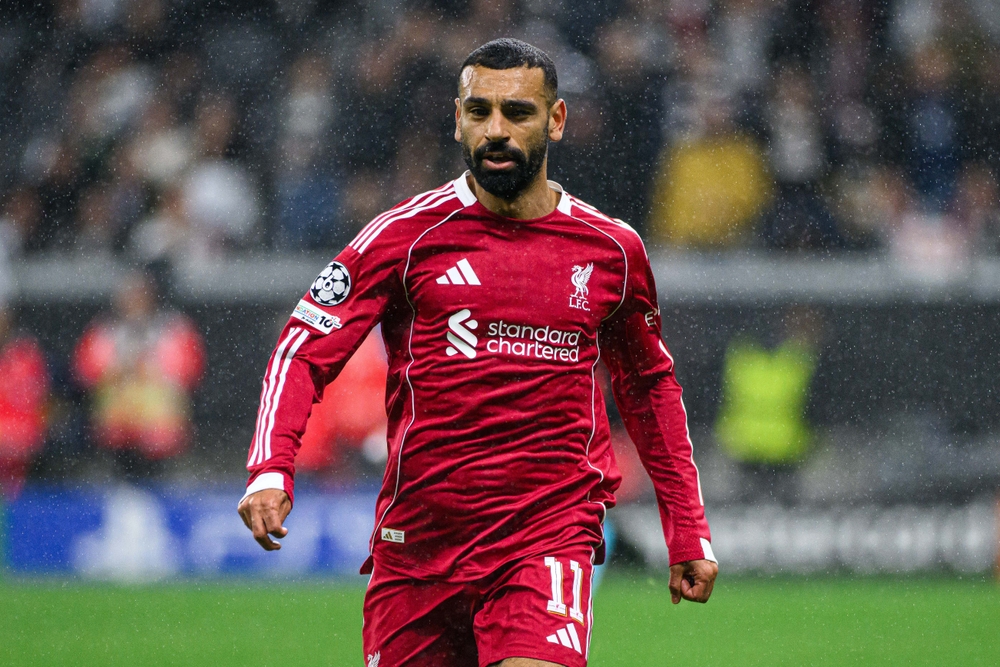
The Pharaohs are back. After an eight-year absence from the biggest stage in soccer, the egypt world cup 2026 campaign arrives with a narrative that transcends sport: a nation that pioneered African participation at the FIFA World Cup in 1934 returns in 2026 carrying the weight of history and the electric talent of Mohamed Salah, arguably the greatest player the continent has ever produced. Egypt’s qualifying campaign through CAF was dominant by any measure, and Group G – featuring Belgium, Iran, and New Zealand – offers a credible path to the knockout rounds for the first time in the egypt national team world cup story. For Canadian bettors, this is a team with compelling value in multiple markets.
Egypt’s Road to World Cup 2026: African Dominance, Global Ambition
If the measure of a qualifying campaign is how convincingly a team establishes superiority over their pool, Egypt’s path to the 2026 World Cup stands among the most impressive in CAF history. The Pharaohs swept through Group A of African qualifying with eight wins and two draws, never losing a single match across ten fixtures. They scored 20 goals and conceded just two – a goal difference of +18 that placed them in an entirely different tactical category from every other team in their group.
Burkina Faso finished second with 21 points after a strong campaign of their own, but the gap between first and second tells the real story: Egypt were not simply better, they were operating at a different level entirely. Sierra Leone, Guinea-Bissau, Ethiopia, and Djibouti all found La Tri – sorry, all found the Pharaohs – impenetrable. Both draws came away from home, which reflects the discipline of a team managed to collect maximum points at Cairo without taking unnecessary risks on the road.
For Canadian bettors evaluating egypt world cup 2026 prospects, the qualifying context matters and it doesn’t. A +18 goal difference against CAF opponents tells you about Egypt’s quality within the continent; it tells you little about how they match up against Belgium or a resurgent Iran. The honest translation is this: Egypt is a well-organized team built around two genuinely world-class attackers. Against mid-level opposition, that formula produces dominance. Against elite European sides, it produces uncertainty – and uncertainty is where betting value lives.
Coach Hossam Hassan delivered on the primary mandate of his appointment: ending an eight-year World Cup absence and restoring Egypt to the global stage. Now comes the harder task.
Ver esta publicación en Instagram
Hossam Hassan’s Flexible Machine: How Egypt Attacks and Defends
There is a particular weight to Hossam Hassan’s presence on Egypt’s touchline. As a striker, he captained the national team at the 1990 World Cup in Italy – the last time Egypt appeared at the tournament before 2018 – and went on to become the most capped player in African soccer history. As a coach, he assumed control in 2024 with Egypt in a precarious qualifying position and engineered a qualification that was ultimately more comfortable than the circumstances suggested when he arrived.
Hassan’s tactical signature is pragmatic versatility. He alternates between a 4-3-3 and a 3-4-3 depending on the opponent, and his willingness to change shape during matches – sometimes within the same half – reflects a coaching intelligence that his critics underestimated. The constant across all formations is an aggressive pressing structure designed to win the ball in advanced positions and deliver quickly to Salah or Omar Marmoush before opposing defences can reset.
In the 4-3-3, Egypt use three attacking midfielders who rotate fluidly, with Salah drifting inside from the right to find space between lines and Marmoush acting as the central reference who drops deep to receive or makes runs in behind. The three central midfielders provide cover for two wing-backs when Hassan uses the 3-4-3, creating numerical superiority in wide areas that stretches opposing back fours.
Against stronger teams – and Belgium qualifies – Hassan shifts to a more conservative shape. Five defenders provide a rigid base, and Egypt’s attacking ambition funnels through transitions rather than sustained possession. The logic is defensible: if you cannot beat Belgium in an open game, you contain them, wait for the moment, and let Salah do what Salah does. One moment of quality from the captain can change any match.
Where Hassan’s system shows vulnerability is against teams with quick central attackers who can exploit the gaps behind Egypt’s high-pressing midfield. If the three central players are caught in bad positions after losing the ball, Egypt’s back line is exposed to direct runs. Iran, who work this exact pattern through Mehdi Taremi, could find that gap in the decisive Group G fixture between the two sides.
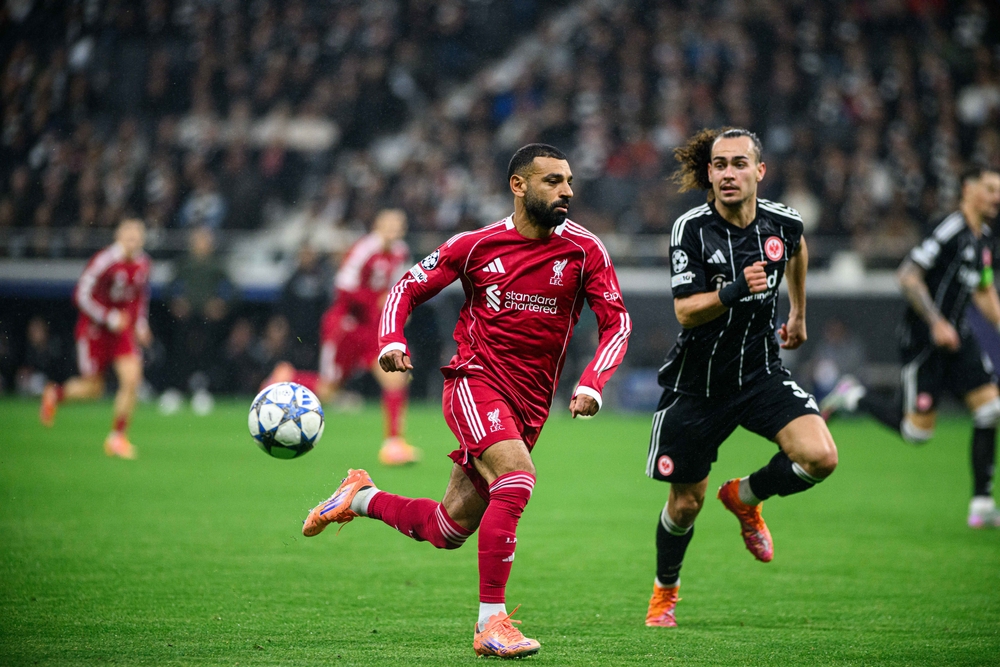
Egypt 2026 World Cup Roster & Key Players
| Player | Position | Club | Age at WC |
| Mohamed El-Shenawy | GK | Al-Ahly | 37 |
| Mohamed Hany | RB | Al-Ahly | 30 |
| Ramy Rabia | CB | Al-Ain F. C. | 32 |
| Yasser Ibrahim | CB | Al-Ahly | 28 |
| Mohamed Hamdi | LB | Pyramids FC | 31 |
| Hamdy Fathy | CM | Al-Wakrah S. C. | 31 |
| Marwan Attia | CM | Al-Ahly | 27 |
| Mohamed Elneny | CM | Al-Jazira Club | 33 |
| Zico (Ahmed Zizo) | AM / W | Al-Ahly | 30 |
| Mohamed Salah | RW / FW | Liverpool | 33 |
| Mahmoud Trezeguet | LW / AM | Al-Ahly | 31 |
| Omar Marmoush | ST / FW | Manchester City | 27 |
| Omar Moawad | W | Al-Ahly | 19 |
* Salah turns 34 on June 15, 2026 – the exact date Egypt face Belgium in their opening match.
Mohamed Salah
The biography of Mohamed Salah has been written so many times that the challenge now is finding the angle that hasn’t been covered. So here is the one that matters most for the egypt world cup 2026 betting context: Salah has never played in a World Cup at full fitness. At Russia 2018, his only previous tournament, he arrived with a shoulder injury sustained in the Champions League final just weeks earlier – still managed two goals – but never showed what a match-fit Salah looks like on the world stage. June 2026 is that opportunity.
He turns 34 the day Egypt face Belgium. The age question is legitimate – he is not the same relentless runner he was at 27 – but he has adapted his game intelligently. The Liverpool forward now operates with sharper positional sense, a more measured press, and a finishing efficiency that has improved even as his raw pace declined. In qualifying, his influence stretched beyond statistics: Egyptian players who play the majority of their soccer in domestic leagues visibly elevate their performance beside him.
Omar Marmoush
The Manchester City attacker is arguably Egypt’s second most important player for 2026 and, in some tactical contexts, the most important one to watch. Marmoush brings a different dimension from Salah: more physical, more direct in the final third, capable of holding the ball under pressure and linking play as well as finishing. His Premier League season experience at City – where spaces are few and time is measured in fractions – sharpens his decision-making for exactly the kind of compact, high-pressure defending that tournament soccer demands from attackers.
Mohamed Elneny
At 33, Elneny arrives at his second World Cup as the midfield anchor who has given Egypt’s national team stability across nearly a decade. His value is not statistical brilliance – it is positional discipline, passing accuracy under pressure, and the kind of defensive reading that prevents sequences of play from becoming dangerous before they develop. His partnership with the younger Hamdy Fathy in central midfield forms the structural base that allows Salah and Marmoush to express themselves going forward without leaving Egypt exposed.
Mahmoud Trezeguet
The left-side attacker – nicknamed “Trezeguet” for his finishing instincts, a reference to the French striker David Trézequet – provides an intriguing option against teams that focus their defensive attention on Salah’s side. At 31, he carries experience from Turkey’s Süper Lig and a European career that never quite reached its ceiling but produced enough quality to make him a legitimate contributor at international level. His ability to cut in from the left and shoot with power creates a second attacking threat that opposing coaches cannot simply ignore while managing Salah.
Ver esta publicación en Instagram
Strengths and Weaknesses: The Pharaohs Under the Microscope
Strengths
Egypt’s most obvious competitive advantage is the quality of their two attacking lynchpins. Having Salah and Marmoush in the same front line is exceptional for a team from the African continent – two players performing at the highest level of European club soccer, week in and week out, arriving at a World Cup in form. The combination of Salah’s technical quality and movement with Marmoush’s physicality and directness creates a dual threat that defences must respect on both sides of the penalty area simultaneously.
Defensively, Egypt’s structure in CAF qualifying was outstanding. Conceding only 2 goals in 10 matches – a staggering GA rate of 0.2 per game – reflects a team that defends with collective discipline and keeps a clean shape when the ball is lost. That defensive solidity is not solely a product of weak opposition; it reflects a tactical identity that Hassan has embedded over multiple campaign cycles.
Egypt’s experience is also an asset. The majority of the squad have been together through recent Africa Cup of Nations cycles and qualifying campaigns. There is no rebuilding under pressure – this group knows each other, knows Hassan’s demands, and arrives as a cohesive unit rather than a collection of individuals assembled for one occasion.
Weaknesses
The dependency on Salah is Egypt’s most significant structural vulnerability. If Salah is marked effectively, limited, or – worst case – unavailable through injury, the attacking threat drops precipitously. There is a meaningful quality gap between what Egypt produce with Salah at full intensity and what they produce when he is contained. Belgium coach will have studied this extensively and prepared a defensive scheme designed specifically to neutralize him.
Midfield creativity is another genuine concern. Elneny is reliable rather than inventive; the other central midfielders are competent defensively but provide limited goal-threat from the second line. Egypt’s attacks tend to be built on wide play and individual brilliance rather than intricate combination from midfield – which means that against compact, well-organized teams that absorb width and invite crosses, finding a way through can be a persistent problem.
Depth behind the first XI is thin at multiple positions. If Salah, Marmoush, or Elneny are unavailable through injury or suspension, the replacement quality is noticeably lower. For a tournament that runs three weeks with matches every four or five days, managing that thin margin is one of Hassan’s most demanding challenges.
Egypt’s CAF Qualifying Campaign: Near-Perfect From Start to Finish
Egypt’s path through CAF Group A qualifying was a statement of intent. Eight wins and two draws across ten matches, with the two draws both coming away from home – a reflection of a team intelligent enough not to chase unnecessary victories on the road when a point serves the campaign equally well.
The attacking output was prolific by qualifying standards: 20 goals scored, which averaged 2.0 per game across the group. Salah contributed directly, but the wider roster shared the scoring responsibility – a vital indicator that Egypt’s attack does not grind to a halt when the captain is tightly marked. The 2 goals conceded across ten matches is the most statistically impressive figure; it suggests a defensive structure that functions consistently, not merely occasionally.
Burkina Faso were the only realistic challenger in the group, finishing 5 points behind with 21 points. Egypt’s final qualifying points total of 26 represented comfortably the best record among all CAF groups in the 2026 campaign. The margin was not close; it was emphatic.
| Pos | Team | PJ | W | D | L | GD | Pts | Status |
| 1 | Egypt | 10 | 8 | 2 | 0 | +18 | 26 | Qualified |
| 2 | Burkina Faso | 10 | 6 | 3 | 1 | +15 | 21 | Eliminated |
| 3 | Sierra Leone | 10 | 4 | 3 | 3 | +2 | 15 | Eliminated |
| 4 | Guinea-Bissau | 10 | 2 | 4 | 4 | -2 | 10 | Eliminated |
| 5 | Ethiopia | 10 | 2 | 3 | 5 | -5 | 9 | Eliminated |
| 6 | Djibouti | 10 | 0 | 1 | 9 | -28 | 1 | Eliminated |
Egypt in World Cup History: Pioneers Who Have Yet to Truly Arrive
Long before most of Europe had considered what it meant for African soccer to be represented on the world stage, Egypt had already been there. In 1934 in Italy – the second World Cup ever held, and the first expanded beyond the founding continent – Egypt stepped onto the field against Hungary as the first African nation to compete at the tournament. They lost that first-round knockout match and returned home, but the symbolic weight of that appearance echoes across nine decades of African soccer history.
The wait for a second appearance lasted 56 years. When Egypt returned to the World Cup in 1990 in Italy – the same country where they had debuted – they were placed in a group with England, Ireland, and the Netherlands. The Dutch had just won Euro 1988 and were among the tournament favourites. Egypt held them to a 1-1 draw, a result that still resonates as one of the great moments in African World Cup history, before losing their remaining two group matches and departing in third place.
Then came another long absence. Egypt’s 2018 Russia appearance – their third overall and first in 28 years – was compromised by Salah’s shoulder injury sustained in the Champions League final. He played, scored twice, and demonstrated even in diminished physical condition what he could bring to a World Cup. Egypt exited without a win, carrying the frustration of a team that arrived with a star but without the structure to support him.
Across three appearances and seven matches, Egypt have never won a World Cup game. The 2026 squad, deeper than any previous generation and built around two European stars, represents the best chance to change that statistic in ninety years of trying.
| Year | Host | Stage | Notable |
| 1934 | Italy | Round of 16 | First African WC nation |
| 1990 | Italy | Group stage | 1-1 draw vs Netherlands (Euro champions) |
| 2018 | Russia | Group stage | Salah scored 2 despite shoulder injury |
Group G Fixtures: Salah’s Birthday, Vancouver, and a Path to the Knockout Rounds
Group G is, on paper, favourable for Egypt – more favourable than any group they have been drawn into at a previous World Cup. Belgium leads as the clear favourite, but the contest for second place between Egypt and Iran is genuinely open. New Zealand, the OFC representative, is the must-win game that Egypt cannot afford to drop.
The scheduling produces one of the tournament’s most intriguing storylines: Egypt face Belgium on June 15 – Mohamed Salah’s 34th birthday. Whether that coincidence energizes or distracts the captain is a matter of psychology, but it makes the Egypt vs. Belgium match one of the group stage’s most compelling human narratives. Salah has never played a competitive World Cup match in top physical condition; doing so on his birthday against a strong European opponent is the stuff of sporting mythology.
The Egypt vs. New Zealand match on June 21 is at BC Place in Vancouver – Canada’s tournament home – which creates a special opportunity for Canadian soccer fans. The Pharaohs playing metres from the Pacific in front of a Vancouver crowd that will include a significant Egyptian diaspora community is one of the co-hosted World Cup’s great regional storylines. Check the Group G breakdown for full analysis of all four sides.
All times are listed in Eastern Time (ET) and Pacific Time (PT). Watch in Canada on TSN, CTV, CBC, RDS, and DAZN.
| Date | Match | Venue | ET | PT |
| Mon, June 15 | Belgium v Egypt | Seattle | 3:00 PM | 12:00 PM |
| Mon, June 15 | Iran v New Zealand | Los Angeles | 9:00 PM | 6:00 PM |
| Sun, June 21 | Belgium v Iran | Los Angeles | 3:00 PM | 12:00 PM |
| Sun, June 21 | New Zealand v Egypt | BC Place, Vancouver 🍁 | 9:00 PM | 6:00 PM |
| Fri, June 26 | Egypt v Iran | Seattle | 11:00 PM | 8:00 PM |
| Fri, June 26 | New Zealand v Belgium | BC Place, Vancouver 🍁 | 11:00 PM | 8:00 PM |
🍁 = Canadian venue. Times in ET and PT.
Egypt World Cup 2026 Odds and Betting Predictions
Egypt’s egypt world cup odds reflect a team that is not expected to win the tournament but is legitimately competitive for group-stage advancement. The market pricing at Canadian sportsbooks reveals where the analytical community sees value – and where it may be leaving money on the table.
| Market | Odds (approx.) | Implied Probability |
| To qualify from Group G | 2.10-2.40 | 42-48% |
| To reach knockout stage (top 2 or best 3rd) | 1.85-2.10 | 48-54% |
| Salah to score anytime vs New Zealand | 1.70-1.90 | 53-59% |
| Salah to score anytime vs Iran | 2.10-2.30 | 43-48% |
| Egypt to win the World Cup | 150/1-250/1 | 0.4-0.7% |
The group-stage advancement market is where the core betting analysis lives. Egypt needs to beat New Zealand – a match where they should be heavy favourites at 1.25-1.40 – and then collect a result against either Belgium or Iran. Beating Iran in the decisive June 26 fixture is the most realistic path; Egypt’s rapid transitions and Salah’s quality in tight spaces create problems for the Iranian defensive block that Iran’s opponent in the preceding match (Belgium) will have already exploited.
For parlay construction, consider combining Egypt to qualify from the group with Salah to score in at least one group match. The combined implied probability of both outcomes is high enough to make the parlay price attractive relative to the realistic scenario. Salah scoring in an Egypt win over New Zealand is the highest-probability leg; attach Egypt to advance as the second leg for a return in the 2.50-3.00 range.
The under 2.5 goals market in Egypt v Iran is worth examining at approximately 1.70-1.80. Both teams prioritize defensive structure and counter-attacking rather than open play; the match profile of two sides that need a result but fear the consequence of conceding leans toward caution and low scoring.
Editorial prediction: Egypt finishes second in Group G behind Belgium with five points, winning against New Zealand and Iran before a respectable performance in defeat to Belgium. The round of 16 would represent the greatest achievement in the Egypt national team World Cup story. For full odds comparisons, visit our World Cup 2026 odds hub.
The Pharaohs Have a Window – and Salah Knows It
The egypt world cup 2026 campaign is, in all probability, Mohamed Salah’s last. He turns 34 on the day they face Belgium; by 2030 he will be 37. This is the version of this team that has the best chance – the deepest roster, the most experienced coach, a group phase that is demanding but navigable. For Canadian fans and bettors, Egypt represents the kind of team that rewards attention: watch their key player profiles, track the latest Egypt World Cup odds, explore the complete Group G breakdown, and follow our World Cup 2026 hub for ongoing analysis as June begins.