The most structurally significant change in World Cup history arrives in 2026 – and its consequences ripple through every layer of the tournament, from pre-match preparation to sportsbook pricing. For the first time, 48 nations will compete across three co-host countries rather than the familiar 32-team field the sport has used since France 1998. That’s not just a bigger number. It’s a fundamentally different tournament architecture, with new rounds, different group mathematics, altered travel logistics, and a set of competitive pressures that no nation – not even the most battle-tested – has experienced before. Understanding the world cup format impact means understanding who genuinely benefits, who carries new risk, and where the betting market hasn’t fully adjusted.
Key World Cup Format Changes Explained: From 32 to 48 Teams
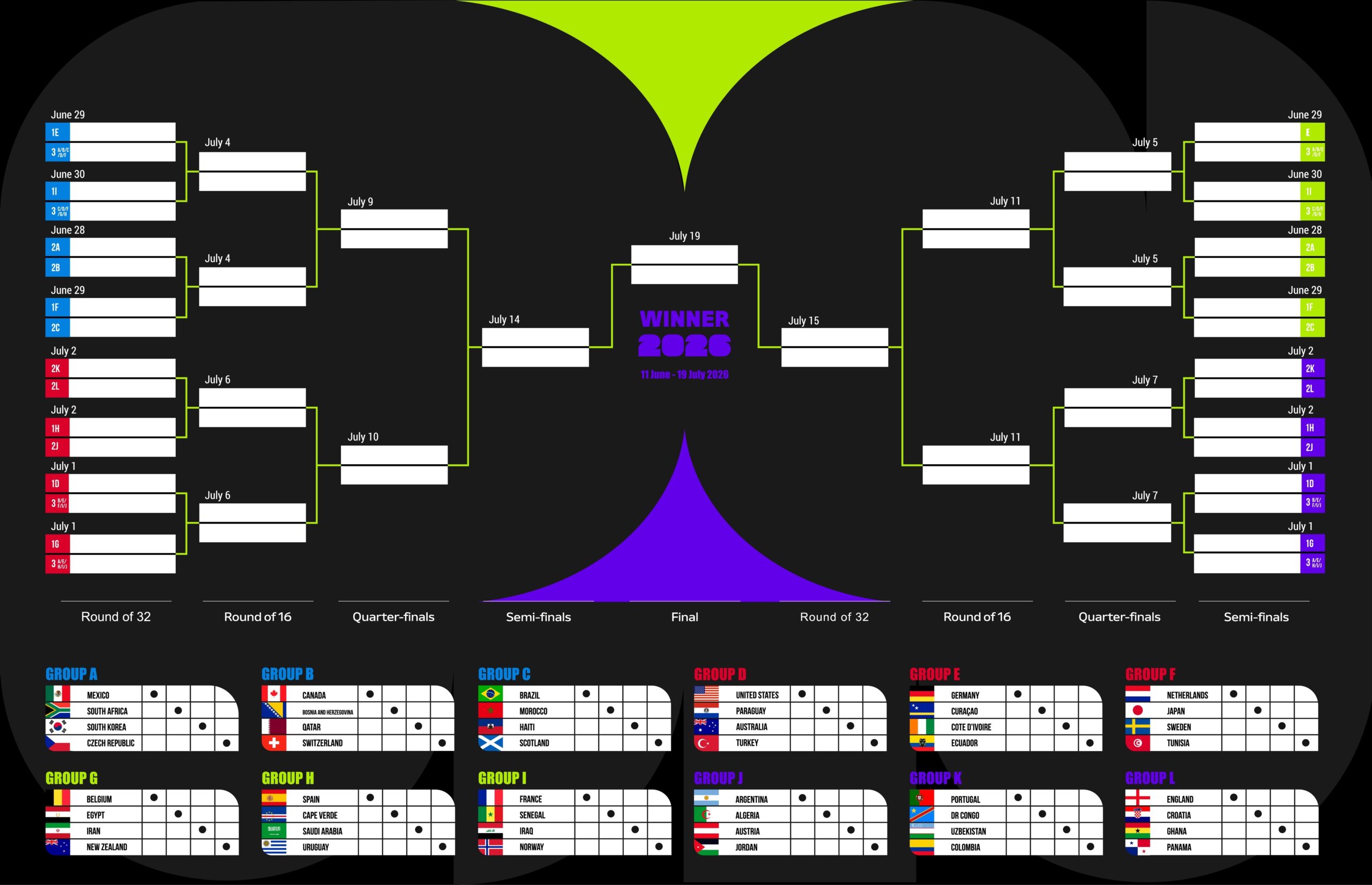
The jump from 32 to 48 teams required FIFA to rebuild the tournament’s skeleton from the ground up. After initially proposing a 16-groups-of-three structure – which critics rightly flagged as ripe for collusion in final group matches – FIFA settled on 12 groups of four teams each, a format that preserves the competitive integrity of simultaneous final-round group games.
Under this structure, the top two finishers from each of the 12 groups advance automatically to the knockout rounds, producing 24 direct qualifiers. An additional eight slots go to the best third-place finishers from across all 12 groups, bringing the knockout field to exactly 32 teams. This creates a brand-new competitive round – the Round of 32 – that has never existed in World Cup history. From there, the tournament runs the familiar single-elimination bracket through to the final.
The match total moves from 64 (Qatar 2022) to 104 – a 62.5% increase in content. The tournament window extends by roughly 10 days. Every number in this equation has betting implications.
| Format Element | Qatar 2022 (32 teams) | 2026 (48 teams) |
| Groups | 8 groups of 4 | 12 groups of 4 |
| Group stage matches | 48 | 72 |
| First knockout round | Round of 16 | Round of 32 (new) |
| Total matches | 64 | 104 |
| Minimum games to win | 7 | 7 |
| Tournament duration | ~29 days | ~39 days |
One figure stands out: the minimum games to win remains seven, the same as before. The champion must still win seven consecutive matches. What changes is the path to those seven games – and how taxed or fresh a roster arrives at each successive round.
Benefits for Top Teams: Why the Favourites Actually Gain Ground
Counter-intuitively, the expanded format benefits elite programs in concrete and measurable ways. The most important is the substantial reduction in group-stage elimination risk. Under the 32-team format, two of four teams in each group were eliminated – a 50% casualty rate. Under the 48-team format, top-seeded nations that comfortably win their group exit the group stage with their full roster healthy, their tactical shape tested, and meaningful tournament momentum built across three matches.
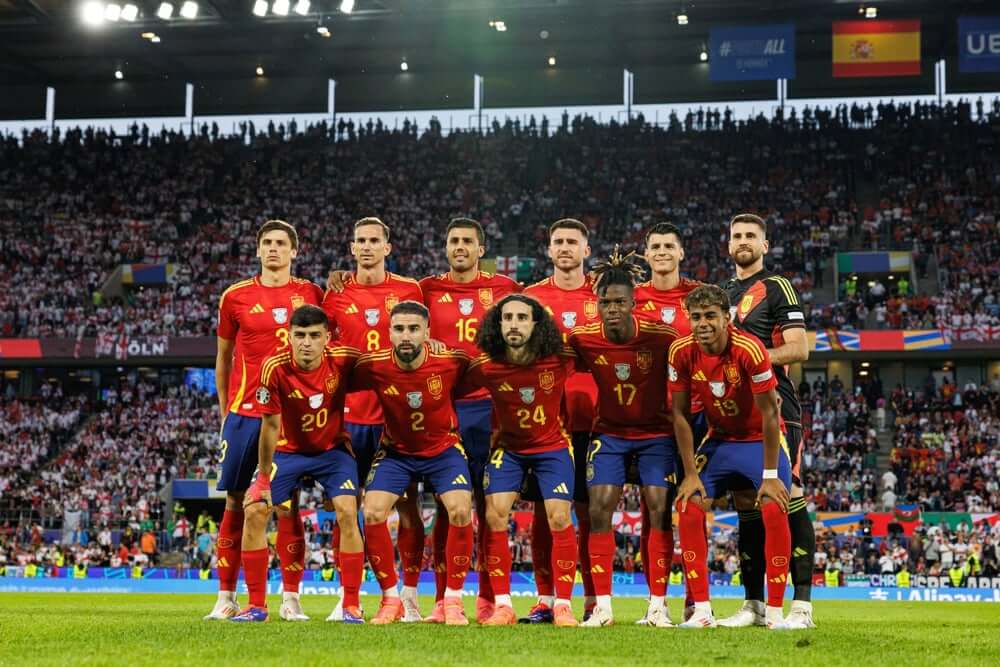
More significantly, the group-stage pool for a seeded nation now includes three opponents rather than the same three but in a more dangerous configuration. FIFA’s seeding system deliberately distributes the highest-ranked nations across separate groups, so a top seed will face at most one genuinely dangerous unseeded opponent in the group phase. For a France, Brazil, or Spain, the group stage functions almost as a calibration phase – identify rotation depth, manage minutes for key players, and arrive at the Round of 32 healthy and sharp.
The longer tournament window also rewards squads with genuine depth in positions 12 through 23. Nations that can deploy a legitimate second-choice goalkeeper, two strong center-back pairings, and interchangeable attacking options – Spain and France are the obvious examples – carry less fatigue-related variance across five weeks than a team riding a core 13 players. Squad depth goes from a nice-to-have to a structural competitive requirement.
There’s also a psychological benefit for home-soil nations. Canada, the USA, and Mexico enter 2026 automatically as co-host qualifiers, bypassing the mental toll of the CONCACAF qualifying gauntlet. For Canada specifically – which experienced the pressure of a must-qualify final round campaign ahead of Qatar 2022 – arriving at the tournament without that psychological cost changes the pre-competition preparation entirely.
Potential Risks the Expanded Format Creates for Favourites
The new format is not uniformly generous to the established elite. The most significant new risk is the Round of 32 – a sudden-death match that arrives earlier in the tournament calendar than any knockout game has appeared in World Cup history. In previous editions, the first elimination game came after 10 or more days of tournament competition, with teams having had time to sharpen tactically, manage injury situations, and build match rhythm. In 2026, a second-place group finisher from a powerhouse group could face a red-hot third-place qualifier in a knockout match with only 72 hours of preparation.
Spain’s 2022 Round of 16 exit – eliminated by Morocco on penalties despite dominating possession – is precisely the kind of result the new Round of 32 makes more likely for top teams. Morocco’s defensive organization, penalty shootout preparation, and psychological composure proved decisive. In a Round of 32 context, a similarly disciplined outsider with nothing to lose could ambush a major nation before the tournament has reached full intensity.
A second risk involves travel logistics specific to the tri-nation format. A team could potentially play its three group games in three different countries – a challenge of time zone management, dietary consistency, and physical recovery that no World Cup has ever imposed on competing nations. While FIFA scheduling will attempt to minimize this, the sheer geographic spread from Vancouver to Monterrey creates genuine logistical variables that don’t exist in a single-nation tournament.
Historical Comparisons: What Past Format Changes Taught Us
The closest historical analogy is the expansion from 24 to 32 teams for France 1998. Critics at the time warned of quality dilution, competitive mismatch, and a bloated structure that would dilute the tournament’s drama. Instead, France 1998 produced Ronaldo’s mysterious pre-final illness, Zinedine Zidane’s two-goal header performance in the final, and a deeply competitive knockout bracket. The extra teams generated storylines, not mediocrity.
More relevant for Canada specifically: France as the 1998 host benefited enormously from home-soil advantage in an expanded format, winning the tournament in front of their home crowd. The structural parallel – an underdog co-host nation in an expanded format, playing before partisan home crowds at an accessible tournament – maps directly onto Les Rouges’ situation in 2026.
The 2002 Japan/Korea co-hosting experience also offers instructive data. Both co-hosts outperformed their FIFA rankings, with South Korea reaching the semi-finals and Japan advancing from the group stage. Travel disruptions for visiting teams, unfamiliar climates, and one-sided home atmospheres all contributed. The 2026 tri-nation format multiplies these variables considerably.
Betting Impact: Adjusting Strategy for the New Format
The world cup format impact on betting markets is both structural and immediate. Outright winner pricing should theoretically lengthen for every nation under the expanded format, since more teams and more knockout rounds increase variance – yet sportsbooks have been slow to fully build this into their early tournament futures. Examining early 2026 outright prices and comparing them to 2022 equivalents for the same nations often reveals that the market has not fully priced in the additional Round of 32 variance.
Group-stage markets become more interesting with 12 groups. The pool of group winner and group advancement betting opportunities expands significantly, and the competitive composition of each group – which teams land in the same pod – drives sharp early value. Top seeds winning their groups carry historical success rates above 65%; at moderate moneyline odds, these are frequently the highest-value group-stage bets available.
Third-place advancement markets – which teams qualify as best third-place finishers – are an entirely new market category for 2026. Sharp bettors who identify which groups are likely to produce competitive third-place finishers with strong goal differentials will find value in a market that has no historical pricing benchmark to anchor against.
Total tournament goals markets shift dramatically. From 64 to 104 matches means any total goals line must be recalibrated from the ground up. If the per-match average holds near Qatar 2022’s 2.69 rate, the total 2026 tournament goal count approaches 280 – a very different number to model than 172.
For deep analysis of how the world cup format shapes each group and bracket, our dedicated section tracks seeding updates and group draw results. The current odds for all favorites world cup markets are updated continuously as qualification concludes.