Every four years, the World Cup brings millions of casual sports fans into the betting market – people who rarely wager on a Tuesday night League Cup match but will confidently place a parlay on Germany to win their group and Mbappé to score anytime. That surge in inexperienced market participants creates a specific environment that sharp bettors recognize and that recreational bettors consistently underestimate: a market where the crowd’s errors are predictable, well-documented, and avoidable. This is a breakdown of the most costly World Cup betting mistakes, why they happen, and – more importantly – how to stop making them before you put money on the line at a Canadian sportsbook.
Why the World Cup Is a Uniquely Tricky Betting Market
The World Cup presents a paradox: it’s the most-watched soccer event on earth, and yet it’s one of the hardest competitions to bet on accurately. The reasons are structural. Unlike domestic leagues – where bettors have 30-plus games of current-season data, consistent team selection, known form trends, and familiar opposition – the World Cup is a 39-day tournament between teams that haven’t faced each other in years, playing in unusual climate conditions, under pressure of a magnitude that disrupts normal performance patterns.
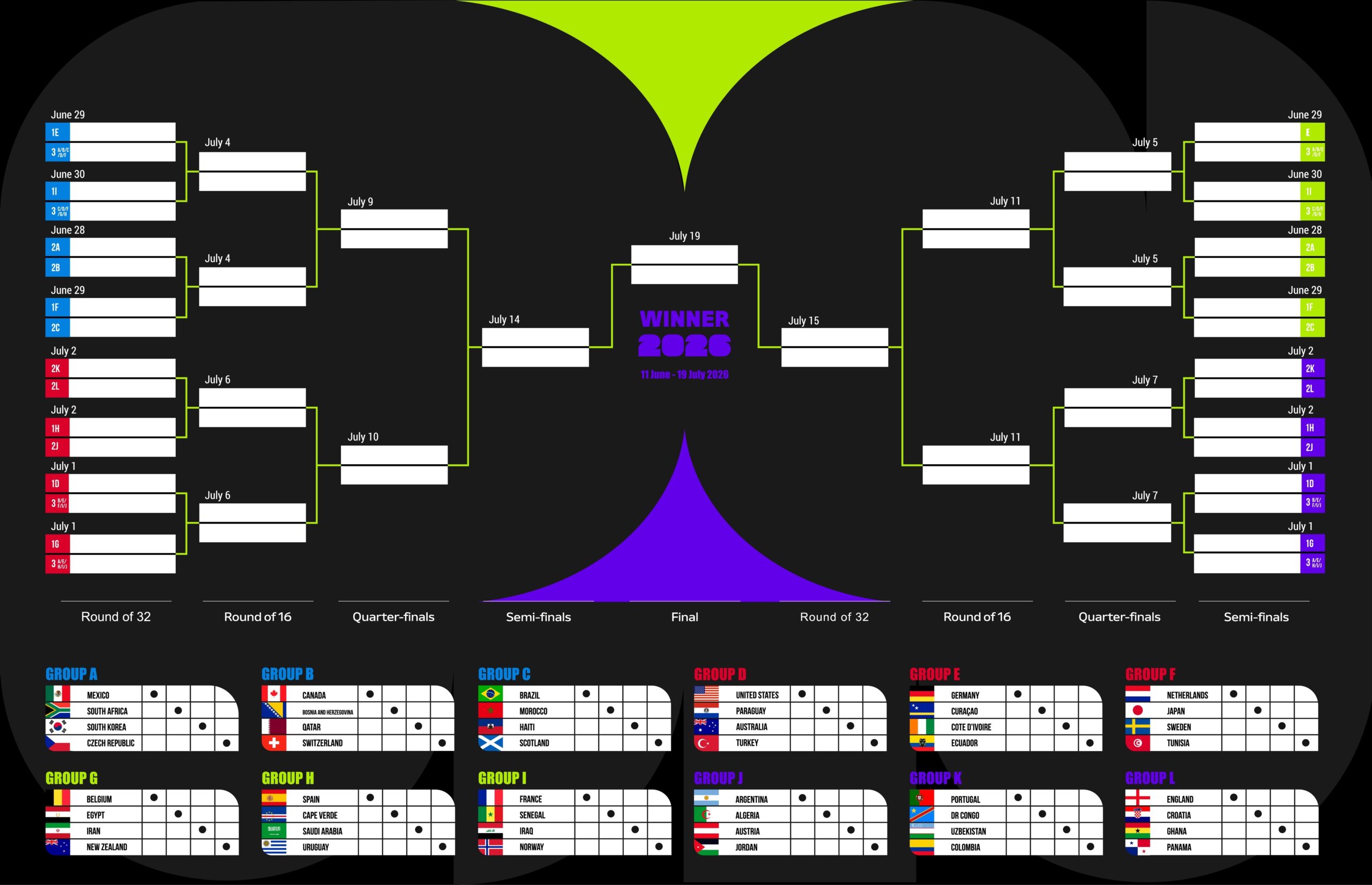
The expanded 2026 format makes it more complex still. With 48 teams across 12 groups, the tournament features a higher proportion of matches between sides with significant quality gaps – which creates false-value traps in the short-price favourites market – and introduces nations with limited international data into the betting market. A team from an underrepresented confederation, qualifying for the first time, may have a Transfermarkt squad value that is entirely misleading in either direction. Sportsbooks know this; casual bettors often don’t.
Add the emotional overlay of a tournament played every four years – where fans develop strong attachments to narratives, legends, and national teams – and the conditions for irrational betting behaviour are essentially perfect. The mistakes that follow are not hypothetical. They are the most statistically common errors documented across World Cup betting behaviour, and they cost Canadian bettors real money every tournament cycle.

Betting with Emotion: The National Bias Trap
The most expensive mistake in World Cup betting is placing a wager because you want a team to win, not because you’ve assessed that they represent value at their current price. This distinction sounds obvious in the abstract. In practice, when it’s Canada playing Bosnia and Herzegovina at BMO Field on June 12 and you’re sitting in a bar in Toronto wearing a Les Rouges jersey, surrounded by 50,000 screaming fans who all believe Canada can advance from the group, the emotional pull toward a Canada bet becomes very powerful indeed.
National bias in betting is well-documented in sports economics research. Bettors systematically overvalue their own national team – or the team they support – to a statistically meaningful degree. In World Cup markets, this shows up as inflated handle (total money wagered) on host nations and popular teams, which in turn compresses the odds offered by sportsbooks who balance their books against the incoming money. Canada’s group-stage prices at Canadian-facing sportsbooks like bet365, FanDuel, and theScore Bet will reflect not just the analytical assessment of Canada’s chances but the weight of Canadian money backing the national side emotionally.
The practical consequence: Canadian national team matches will often be slightly over-priced from a pure expected-value standpoint, because Canadian bettors are pushing the line toward Les Rouges. The value, if any, in Canada’s tournament matches may actually sit with the opposition – not because Canada is worse than their odds suggest, but because the opposition is better value relative to their compressed market price. This is a hard psychological discipline to apply to your own national team. It’s also one of the most reliable sources of edge available to bettors who can execute it.
The antidote is to bet on what the data says, not what you hope happens. Watch the team with interest and passion – but set a firm rule: no bet on your national team’s matches unless an independent analytical process (not an emotional gut feel) produces a clearly identified value play. Your national team’s matches are the ones you should enjoy most; don’t let a losing bet poison that experience while also depleting your bankroll.

Ignoring Data and Form in Favour of Reputation
Germany have won four World Cups. Brazil have won five. These facts are permanently anchored in the betting public’s consciousness – and they systematically cause bettors to overvalue historical giants while undervaluing current form. Germany’s collapse at the 2018 group stage (eliminated in last place) and their 2022 repeat exit in the group stage were preceded by market prices that reflected their historical prestige far more than their pre-tournament form indicators. Sharp bettors who focused on current xG data, pressing intensity metrics, squad age profile, and recent qualifying campaign results – rather than on the “Germany always go deep” narrative – identified value on the other side of the market well before both tournaments.
Form over reputation is the guiding principle, and it requires engaging with data that the casual betting market largely ignores. Key metrics worth tracking in the weeks before the 2026 World Cup include: expected goals (xG) and expected goals against (xGA) from qualifying campaigns; press intensity metrics (PPDA – passes allowed per defensive action); squad age profile (teams built around 28-30 year-olds peak at tournament time; teams built around 24-26 year-olds are volatile but carry upside); and head-to-head record in neutral-venue conditions.
For the 2026 tournament specifically, Portugal’s odds – sitting around +1400 – represent a case study in reputation-versus-form analysis. Does the price reflect Portugal’s current playing identity, their depth beyond Ronaldo, and their tactical structure under recent coaching? Or does +1400 still partially reflect the legacy of Ronaldo’s generation? Working through that analysis produces a position on the bet; skipping it and simply having an opinion about Portugal produces a guess dressed up as a bet.
Misreading Sportsbook Odds: What the Lines Are Really Saying
Odds at regulated Canadian sportsbooks like FanDuel, BetMGM, PointsBet, and Betway are not predictions. They are not the sportsbook’s assessment of who will win. They are market-clearing prices designed to balance action on both sides of a bet and ensure the house retains a margin (the vig, or juice) regardless of the outcome. Understanding this distinction is fundamental to betting intelligently.
A team priced at +500 does not have a 16.7% chance of winning according to the sportsbook. What it means is that the sportsbook has set a price where they expect roughly that level of implied probability – accounting for the vig built into the market – to attract balanced action. The actual probability of that team winning, according to any honest analytical model, may be higher or lower than the implied probability in the odds. Finding the gaps between implied probability and true probability is the core function of value betting.
Parlay betting – highly popular during World Cups among casual bettors – is the most common form of odds misreading. A five-team parlay combining five match winners at short prices creates astronomical odds but carries a vig that compounds with each leg. A five-leg parlay where each individual bet carries a 5% house edge produces an overall parlay where the house edge exceeds 22% – meaning you’re surrendering more than one-fifth of your expected return to the sportsbook before the matches have even started. Parlays are entertainment products, not investment vehicles. Treat them as such: if you’re playing a parlay, play it with money earmarked for entertainment, with full awareness that the expected value is negative by design.
Conversely, understanding when the market is wrong creates opportunity. Sportsbooks set opening lines based on their models and then adjust as money comes in. If a significant public event – a star player injury announcement, a late team selection surprise, or a weather forecast update – changes the true probability of an outcome after a line has already been set and money has already moved it, the live market may lag behind the updated information for 15 to 30 minutes. Bettors who monitor these windows diligently can find genuine mispriced opportunities in real-time before the market corrects.
Poor Bankroll Management: The Silent Bankroll Killer
You can be right about soccer – genuinely, analytically right – and still lose money by betting too large relative to your bankroll. The World Cup is 39 days of matches, and the natural impulse during a major tournament is to treat it as an extended action opportunity where normal discipline can be relaxed. This is precisely when bankroll management discipline matters most.
The core principle is simple: never wager more than 2-5% of your total betting bankroll on a single event. If your World Cup bankroll is $500 CAD, your maximum single bet is $25. At 5%, it’s $25. This cap feels conservative when you’re confident about a bet – it is deliberately designed to feel that way, because the emotional state of confidence is statistically uncorrelated with actual bet success rate.
The reason this discipline protects bettors is mathematical. Over a 39-day tournament with dozens of wagering opportunities, the law of large numbers will eventually produce losing streaks of four, five, or six consecutive incorrect picks – even for bettors with a genuine edge. If those six losses each represent 10-15% of your bankroll, your total loss approaches or exceeds your starting capital. If they represent 2-3%, your bankroll is still largely intact, and the next winning run recovers the loss without requiring a desperate recovery bet that doubles further risk.
Chasing losses – increasing bet size after a losing streak to recover deficit – is the most common and most destructive bankroll management failure in tournament betting. It converts a manageable losing run into a catastrophic one. If you’ve set $500 for the World Cup and you’ve lost $300 in the first two weeks, the rational response is to step back and re-examine your analytical process – not to bet $200 on Germany to win Group A to get even. Getting even is not a legitimate analytical reason to place a bet.

Building Better Habits: A Framework for Avoiding These Mistakes
Avoiding these mistakes doesn’t require becoming a professional bettor. It requires three commitments: process, discipline, and honesty.
Process means making every betting decision through a consistent analytical framework – checking form data, evaluating environmental factors (weather, time zones, altitude), assessing injury news, and comparing your probability assessment to the implied probability in the odds – before committing money. A bet that doesn’t pass this process doesn’t get placed, regardless of how confident you feel.
Discipline means respecting your bankroll limits, avoiding chasing losses, resisting the emotional pull of national bias, and treating parlay entertainment for exactly what it is: lottery-style fun with negative expected value. Discipline is tested hardest at the moments when it matters most – a losing streak, a near-miss, or a massive-favourite upset that makes you feel the market is broken. It isn’t broken. You just need to keep playing your process.
Honesty means tracking your bets, recording the reasoning behind each one, and reviewing that record at the end of the tournament. Were your winners due to good process or lucky outcomes? Were your losers due to bad process or good process and bad luck? The only way to improve is to know the difference. For full World Cup betting resources – including our analytical framework, the best Canadian sportsbooks for tournament wagering, and our ongoing odds updates – visit our World Cup 2026 hub, our betting strategies guide, and our sportsbook comparison page.