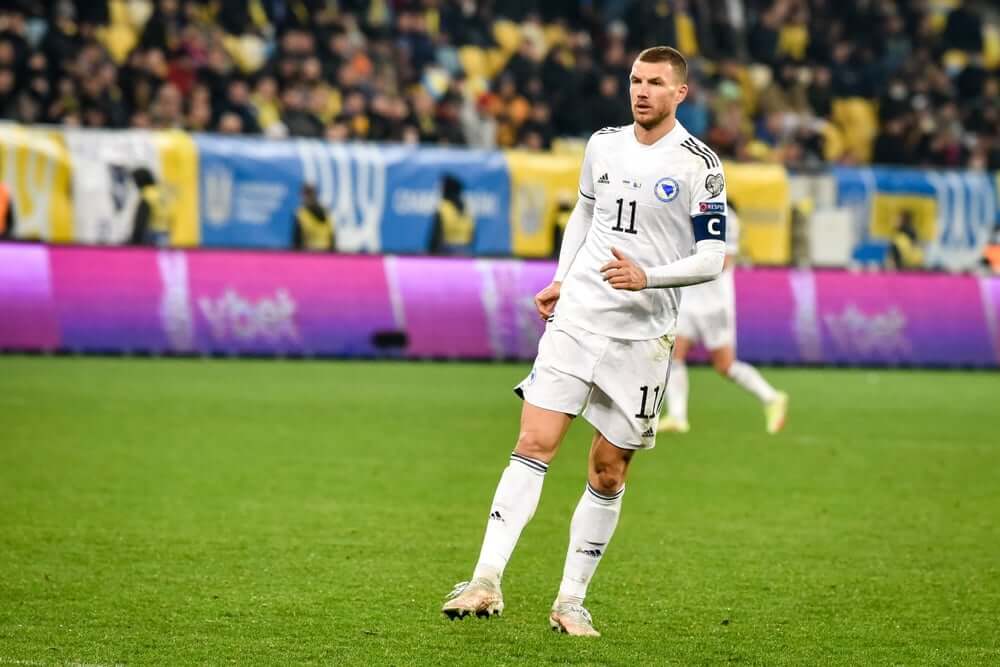
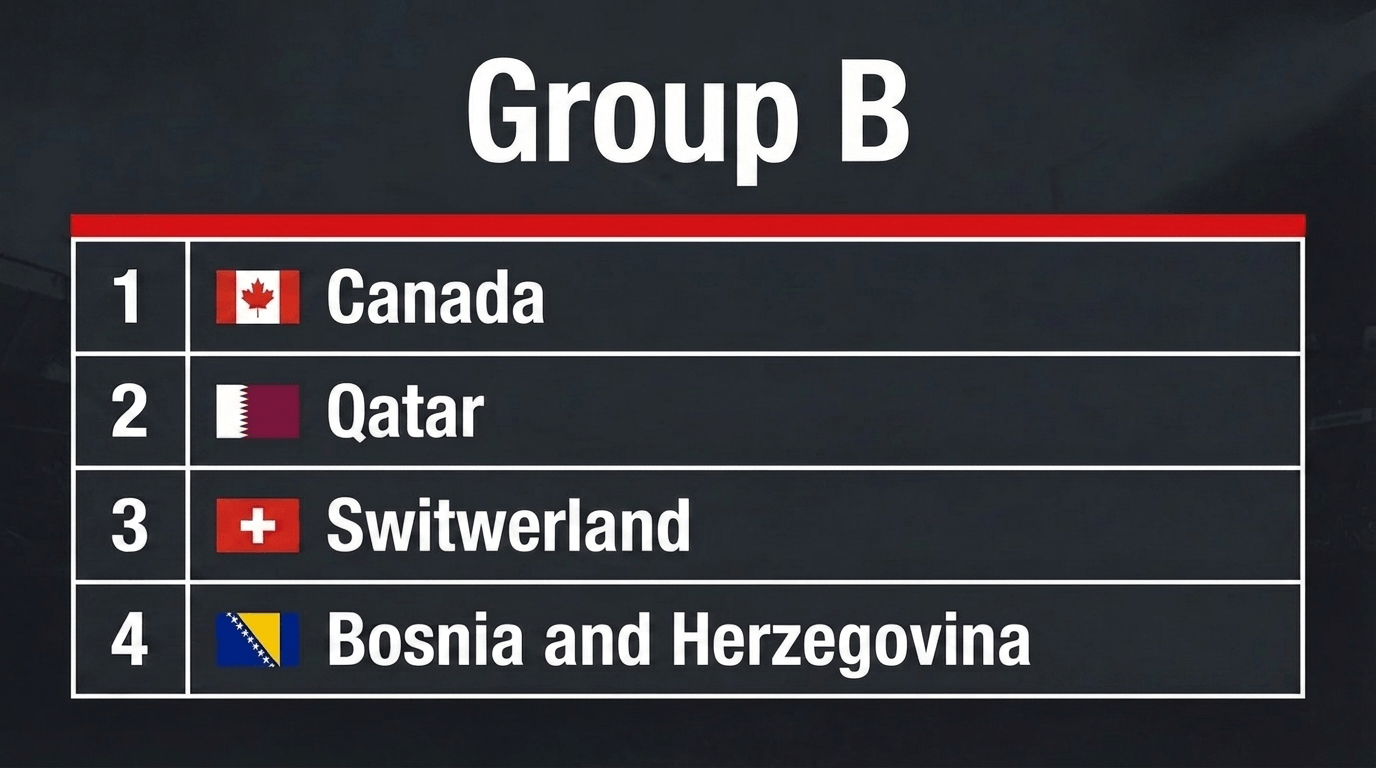
Bosnia and Herzegovina are back on the world stage for the first time since 2014, and they earned it the hard way. The Zmajevi (Dragons) navigated a gruelling playoff path – surviving penalty shootouts against Wales and Italy back-to-back – to claim one of the final UEFA berths at the 2026 FIFA World Cup. Now drawn into Group B alongside co-hosts Canada, Switzerland, and Qatar, Bosnia will open their tournament on Canadian soil on June 12 in Toronto. For Canadian fans, this bosnia world cup 2026 journey begins right at home – making it one of the most compelling group-stage storylines of the summer.
Bosnia’s Road to the 2026 World Cup
Bosnia finished second in UEFA Qualifying Group H behind Austria, accumulating 17 points across eight matches before the playoff rounds. That runner-up spot sent them into the two-legged playoff path, where the drama escalated quickly.
In the playoff semi-final on March 26, Bosnia travelled to Cardiff City Stadium and faced a Welsh side managed by Craig Bellamy that carried strong Championship momentum. Dan James put Wales ahead with a stunning volley early in the second half, and it looked like Bosnia’s World Cup dream might end before it truly began. Then came the moment that defined this campaign: Edin Dzeko, 40 years old and still capable of producing for his country, rose to power home a late header that levelled the match and forced extra time. The score remained 1-1 after 120 minutes. In the penalty shootout, Bosnia were clinical – Wales’ Brennan Johnson and Neco Williams both missed, and Kerim Alajbegovic converted the winning spot kick to send Bosnia through 4-2 on penalties.
Five days later, on March 31 in Sarajevo, Bosnia hosted Italy in the playoff final with a World Cup berth on the line. A raucous home crowd roared them through a 1-1 draw after extra time, and once again Bosnia held their nerve in a shootout – winning 4-1 on penalties as a ten-man Italy side crumbled. The celebrations in Sarajevo were unbridled. For a country that had last qualified in 2014 under a generation of legendary talent, this was the start of a new chapter.
Ver esta publicación en Instagram
Sergej Barbarez: Coach, Tactics & System
Few appointments in recent European soccer have raised as many eyebrows as Sergej Barbarez taking charge of the Bosnian national team. The former national-team captain – a winger who played for Hamburg, Bayer Leverkusen, and Borussia Dortmund in the Bundesliga during a distinguished career – arrived with no senior managerial experience whatsoever. What he did bring was unconditional respect from within the dressing room and an intimate understanding of the culture of this national program.
Barbarez has proven the doubters wrong decisively. His preferred system is a compact 4-4-2, though he shifts to a 4-2-3-1 depending on the opposition. The hallmark of his setup is defensive organisation first: Bosnia sit in a disciplined mid-block, deny space in behind, and look to transition quickly once they win the ball. There is an explicit willingness to absorb pressure and counter-attack at pace – a pragmatic approach that suits the squad’s strengths while masking the lack of depth in wide areas.
His best tactical decision has been building the team around the Dzeko-Demirovic partnership. Edin Dzeko operates as a target striker and focal point – he drops deep, links play, and finishes. Ermedin Demirovic at Stuttgart provides the off-the-ball running, the pressing intensity, and the directness that allows Dzeko to stay in dangerous areas. Together they give Bosnia one of the more physically imposing strike duos in the tournament.
In central midfield, Barbarez relies on Benjamin Tahirovic and Armin Gigovic as a disciplined defensive pivot that protects the back four and keeps the team’s shape. The system is not built to dominate possession – Bosnia typically sit in the high-40s for possession percentage – but it is built to be hard to beat. Against both Wales and Italy in the playoffs, Bosnia conceded only twice across 240 minutes of soccer (plus extra time), a statistic that speaks to the organisation Barbarez has instilled. Coming into a World Cup 2026 group that includes technically superior Switzerland, discipline may be Bosnia’s most valuable asset.
Ver esta publicación en Instagram
Bosnia’s World Cup 2026 Roster & Key Players
Bosnia’s squad for the 2026 World Cup blends veteran leadership at the top end with genuine emerging talent pushing through from European club soccer.
Goalkeepers
Nikola Vasilj (St. Pauli) is the undisputed first choice and arguably the most important player in the squad right now. He was the hero in both penalty shootouts during the playoff path, making crucial saves against Wales and Italy. His shot-stopping in high-pressure moments is elite-level. Osman Hadzikic (Slaven Belupo) and Martin Zlomislic (Rijeka) provide experienced depth.
Defenders
Sead Kolasinac, now at Atalanta after a career that included Arsenal and Schalke, is still the leader of Bosnia’s defensive line at left back. His physicality and Serie A pedigree make him a reliable anchor on that flank. At right back, Amar Dedic of Benfica is the most technically gifted option – his ability to combine going forward gives Bosnia an outlet on the right side. In central defence, Tarik Muharemovic (Sassuolo) and Dennis Hadzikadunic (Sampdoria) form the first-choice partnership, while Nidal Celik of Lens provides pace as a versatile cover option.
Midfielders
Benjamin Tahirovic (Brøndby IF) is Bosnia’s most complete central midfielder – composed, two-footed, and capable of playing short or long. Armin Gigovic of Young Boys Bern provides the energy and pressing alongside him. The veteran Amir Hadziahmetovic (Hull City) offers experience as cover, while Ivan Sunjic (Pafos FC) and Dzenis Burnic (Karlsruher SC) give Barbarez options in terms of physicality and range of passing.
Forwards
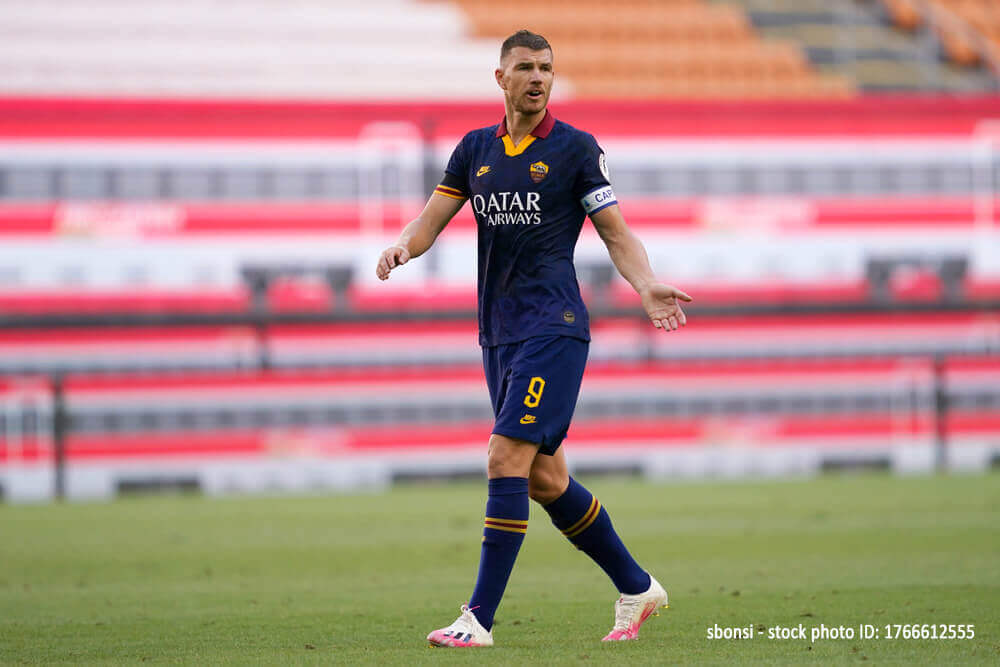
Edin Dzeko is the story. At 40 years old and now plying his trade for Schalke 04 in Germany, Bosnia’s all-time top scorer – 72 goals in 146 international appearances – remains central to everything Barbarez does. His reading of the game, movement in the box, and big-game temperament remain formidable even as his pace has naturally declined. That late header against Wales in the playoff semi-final was a reminder that he still produces when it matters most.
Ermedin Demirovic (VfB Stuttgart) is the present and future of this attack. The 27-year-old had a productive Bundesliga season and brings the relentless pressing and clinical finishing that Dzeko no longer provides consistently over a full match. He is Bosnia’s most dangerous player in open play. Kerim Alajbegovic (Red Bull Salzburg, set to join Bayer Leverkusen) and Esmir Bajraktarevic (PSV) are exciting young forwards coming through – Bajraktarevic, who spent time with the New England Revolution in MLS, converted the decisive penalty against Italy to send Bosnia to Canada. Both could see significant minutes in the group stage, particularly against Qatar.
| Position | Player | Club |
| GK | Nikola Vasilj | St. Pauli (GER) |
| GK | Osman Hadzikic | Slaven Belupo (CRO) |
| DEF | Sead Kolasinac | Atalanta (ITA) |
| DEF | Amar Dedic | Benfica (POR) |
| DEF | Tarik Muharemovic | Sassuolo (ITA) |
| DEF | Nidal Celik | Lens (FRA) |
| DEF | Dennis Hadzikadunic | Sampdoria (ITA) |
| MID | Benjamin Tahirovic | Brøndby IF (DEN) |
| MID | Armin Gigovic | Young Boys (SUI) |
| MID | Amir Hadziahmetovic | Hull City (ENG) |
| MID | Ivan Sunjic | Pafos FC (CYP) |
| MID | Dzenis Burnic | Karlsruher SC (GER) |
| FWD | Edin Dzeko | Schalke 04 (GER) |
| FWD | Ermedin Demirovic | VfB Stuttgart (GER) |
| FWD | Kerim Alajbegovic | Red Bull Salzburg (AUT) |
| FWD | Esmir Bajraktarevic | PSV (NED) |
| FWD | Haris Tabakovic | B. Mönchengladbach (GER) |
Strengths, Weaknesses & Tournament Ceiling
Strengths
Bosnia’s single greatest strength is defensive resilience under pressure. In the two playoff matches against Wales and Italy, they conceded just twice in 240 minutes of regulation and extra time, then outperformed both opponents in the shootout. Nikola Vasilj between the sticks is a genuine difference-maker at this level. The Dzeko-Demirovic striking partnership offers rare versatility – a target-and-movement combination that few defences can completely neutralise with one approach. And when Bosnia defend deep and hit on the counter, their pace on the break via Dedic from right back and Demirovic in the channel can be devastating.
Weaknesses
The squad’s major vulnerability is the lack of established wide midfielders who can consistently create from open play against top-quality opposition. Bosnia’s 4-4-2 can become very compact and reactive – which is fine against Italy in a one-off, but over a group stage that includes Switzerland, the absence of a genuine ball-carrying threat from wide areas is a concern. The reliance on a 40-year-old Dzeko for focal-point attacking play is also a structural risk: if Dzeko cannot sustain his contribution across three games in the summer heat, Bosnia have no like-for-like replacement who can hold the line. Possession statistics will also work against them – Barbarez’s side typically cede the ball willingly, which means all three opponents will enjoy large phases of control.
Realistic Ceiling
Bosnia’s ceiling at this tournament is advancing from Group B as one of the two automatic qualifiers – achievable if they secure results against Qatar and push Switzerland on either side of a tricky Canada opener. A round-of-32 exit is more likely than not, but the playoff run demonstrated they are capable of beating more fancied sides on their day.
UEFA Qualifying: How Bosnia Earned Their Spot
Bosnia’s group-stage qualifying campaign ran from March to November 2025 in UEFA Qualifying Group H, a five-team group alongside Austria, Romania, Cyprus, and San Marino. They were competitive throughout but never quite matched Austria’s consistency over the full eight-match distance.
Bosnia took maximum points from their three home wins against San Marino (6-0), Cyprus (2-1), and Romania (3-1), performances that demonstrated the attacking quality available when given space. The defining home result came against Austria on November 18, when a 1-1 draw confirmed Bosnia’s runners-up spot and playoff berth. They had already suffered a 2-1 defeat in Vienna earlier in the campaign – their only group-stage loss – making the home draw a measure of progress, if not quite the statement win they needed to challenge Austria for top spot.
Finishing second meant the two-legged UEFA playoff route: a two-match gauntlet against Wales and then Italy. Both ended in penalty shootouts. Both went Bosnia’s way. It was the most dramatic route to a World Cup taken by any European side in this cycle.
| Team | P | W | D | L | GF | GA | Pts |
| Austria | 8 | 6 | 1 | 1 | 22 | 4 | 19 |
| Bosnia & Herz. | 8 | 5 | 2 | 1 | 17 | 7 | 17 |
| Romania | 8 | 4 | 1 | 3 | 19 | 10 | 13 |
| Cyprus | 8 | 2 | 2 | 4 | 11 | 11 | 8 |
| San Marino | 8 | 0 | 0 | 8 | 2 | 39 | 0 |
Ver esta publicación en Instagram
Bosnia and Herzegovina at the World Cup: The Full History
Before 2026, Bosnia and Herzegovina had appeared at exactly one World Cup – Brazil 2014 – making the 2026 tournament only their second appearance as an independent nation. The 2014 campaign was historic in every sense. Coach Safet Susic led what became known as the “golden generation,” a squad built around Edin Dzeko, Miralem Pjanic, Vedad Ibisevic, and Senad Lulic, to their first-ever World Cup by topping UEFA Qualifying Group G ahead of Greece.
In Brazil, Bosnia were placed in Group F alongside Argentina, Iran, and Nigeria. They opened with a 2-1 defeat to Argentina – Vedad Ibisevic scoring Bosnia’s first-ever World Cup goal at the Maracanã, though an own goal by Sead Kolasinac in the third minute set the tone for the occasion. Against Iran they were dominant, winning 3-1 through goals from Dzeko, Pjanic, and Avdija Vrsajevic in what remains Bosnia’s only World Cup win to date. Their final group match, a 1-0 defeat to Nigeria, ended their tournament. They finished third in the group and went home having shown genuine quality but without enough points to survive.
That golden generation has since wound down. Miralem Pjanic, the last active member of that 2014 cohort aside from Dzeko, officially retired in late 2025. His departure closed a chapter. Edin Dzeko, defying time itself, remains the bridge between eras. At 2026, he will have the chance to add to that single World Cup win from Belo Horizonte in what will almost certainly be his final major tournament appearance.
Group B Fixtures: Canada vs Bosnia 2026 and More
Bosnia land in Group B alongside co-hosts Canada, Switzerland – widely considered the group favourites – and Qatar, making their return to the World Cup stage as tournament hosts. The group is winnable for Bosnia, but the fixture list is unforgiving from the jump.
The opener is the one that captures Canadian imagination: Canada vs Bosnia 2026, scheduled for June 12 at BMO Field in Toronto. It is the first World Cup match ever played at that venue, and for Les Rouges it doubles as their tournament debut in front of a home crowd. Canadian fans can watch live on TSN and CTV, with RDS covering the French broadcast. For Bosnians, this represents a genuine opportunity – Canada are a co-host facing their own pressure, and a strong defensive performance with a goal on the counter could deliver an opening-match result that sets up the rest of the group.
Bosnia’s second match, against Switzerland at SoFi Stadium in Inglewood on June 18, is the toughest assignment. Switzerland are compact, experienced at major tournaments, and genuinely deep in their roster. A point would be an excellent outcome. The group closes against Qatar in Seattle on June 24 – a match Bosnia will be expected to win and that could prove decisive for their round-of-32 chances.
All Group B matches are also available via DAZN for Canadian streaming audiences, alongside TSN and CTV coverage.
| Date | Match | Venue | Local Time |
| June 12 | Canada vs Bosnia & Herz. | BMO Field, Toronto | 3:00 PM |
| June 13 | Qatar vs Switzerland | Levi’s Stadium, Santa Clara | 3:00 PM |
| June 18 | Switzerland vs Bosnia & Herz. | SoFi Stadium, Inglewood | 3:00 PM |
| June 18 | Canada vs Qatar | BC Place, Vancouver | 6:00 PM |
| June 24 | Bosnia & Herz. vs Qatar | Lumen Field, Seattle | 3:00 PM |
| June 24 | Switzerland vs Canada | BC Place, Vancouver | 3:00 PM |
Bosnia World Cup Odds and Our 2026 Prediction
Bosnia and Herzegovina are a long shot to lift the trophy. Their World Cup 2026 odds to win the tournament sit around +25000 at major sportsbooks including bet365, FanDuel, BetMGM, PointsBet, and Betway – ranking them among the 15 or so least-fancied sides in the entire 48-team field. That number is fair: Bosnia do not have the roster depth to sustain five or six knockout matches against the tournament’s elite.
The more actionable bosnia world cup odds for bettors are at the group-stage level. Bosnia are priced at roughly +260 to advance from Group B – tied with Canada, behind only Switzerland (-105) as group favourite, and far ahead of Qatar (+2800). That +260 represents genuine value if you believe Bosnia’s defensive organisation and the Dzeko-Demirovic partnership can produce results against Canada in the opener and Qatar in the finale.
Our prediction: Bosnia advance from Group B as runners-up behind Switzerland. They are disciplined enough to frustrate Canada at BMO Field in what projects to be a low-scoring, tightly contested match – a draw is the most likely result. They will then absorb Switzerland’s pressure and take a point or lose narrowly before dispatching Qatar in the group finale to secure their round-of-32 berth. At +260 to advance, the value case is clear enough to attract interest from any bettor on theScore Bet or BetMGM looking to fade Canada’s home-opener hype.
Once in the knockout rounds, Bosnia’s ceiling depends on the draw – but a single elimination scenario against a major side would likely end their run. Prediction: Quarter-final exit is the optimistic ceiling; round of 32 is the realistic outcome.
Bosnia are worth a speculative bet at group-stage level. They arrived the hard way, and they deserve respect for it.
Bosnia and Herzegovina return to the World Cup stage not with the romance of a golden generation, but with something arguably more compelling: a battle-hardened group that clawed its way through two penalty shootouts to earn their place. Sergej Barbarez has built something defensively sound and emotionally galvanised. Edin Dzeko, in what will be his final World Cup, provides a focal point that no young squad replacement can replicate. Playing their opening match on Canadian soil at BMO Field makes this one of the most watchable Group B storylines of the entire tournament. The Zmajevi are here to compete – not just participate.