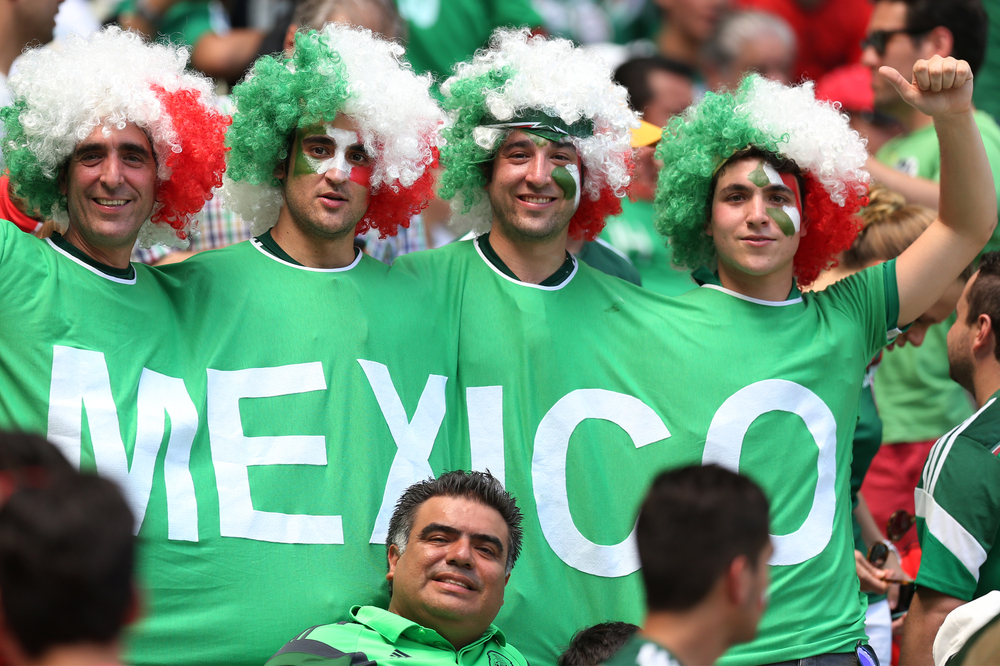
When Mexico walks out at Estadio Ciudad de México for the 2026 World Cup opener against South Africa, the Azteca will shake with the weight of eight decades of history and the expectation of 87,000 people who have been waiting their entire lives for this moment. Mexico is a co-host of the 2026 FIFA World Cup – the third time the Azteca has served a global tournament, after the legendary editions of 1970 and 1986 – and Javier Aguirre’s El Tri enters this tournament carrying something no amount of squad depth or tactical preparation can fully address: the pressure of performing on home soil with an entire football culture watching. Here is our full Mexico World Cup 2026 analysis for Canadian fans and bettors.
Mexico’s Road to 2026: The Weight of a Third Home World Cup
Mexico earned its place at the 2026 World Cup automatically as a co-host, the same arrangement that benefits Canada and the United States. That guaranteed entry removes the pressure of qualifying results but introduces a different burden: without a series of competitive CONCACAF elimination matches to build form, cohesion, and pressure-test individual players, El Tri arrived at the tournament with genuine uncertainty about its competitive level relative to other participants who navigated formal qualifying campaigns.
Javier Aguirre took charge of the national team in 2024 with a specific brief: stabilise a programme in identity crisis following the turbulent exit of Gerardo Martino after Qatar 2022, and build a team capable of honouring the responsibility of hosting. Aguirre – who previously coached Mexico at the 2002 and 2010 World Cups – brought experience specifically suited to this brief that no other realistic candidate could match. His first decisions were pointed: recalling experienced players who had been marginalised under previous regimes while integrating younger talent on a deliberate timeline.
Preparation results through amistosos and the Copa Oro provided mixed signals. There were encouraging performances that suggested the system was settling, and there were unconvincing results against opponents Mexico should have handled more comfortably. The Copa Oro did not reach the final. For bettors assessing mexico world cup odds, the lack of a recent major tournament run under Aguirre is the central information gap that all analysis must acknowledge honestly.
What history offers, however, is precedent: at both previous home World Cups – 1970 and 1986 – Mexico reached the quarterfinals. That represents the best performances in their entire World Cup history. The question for 2026 is whether this generation, on home soil for the third time, can finally break through to the semifinal stage that those earlier teams could not reach.
Ver esta publicación en Instagram
Javier Aguirre: The Veteran Who Understands the Pressure
Among all the coaches available to Mexico when the decision was made in 2024, Javier Aguirre was unique in one critical respect: he has stood in a dugout at a World Cup wearing the green jersey. Twice. The 66-year-old Basque-Mexican coach directed El Tri at the 2002 tournament in Asia – where Mexico reached the Round of 16 before losing to the USA – and at South Africa 2010, where they again exited at the last sixteen against Argentina. That specific experience – knowing what tournament pressure feels like from inside a Mexican football camp – was the deciding factor in his appointment.
Aguirre’s tactical philosophy emphasises structural defensive organisation as the foundation from which attacking play is built. He typically sets up with a compact 4-4-2 or a 4-3-3 that protects the space in behind the defensive line while looking to exploit wide areas quickly on the counter. Against opponents who press high, his teams are structured to use the space that aggressive lines leave – a style that can be effective against top European teams if the transition quality is sufficient.
The challenge in applying that model to this Mexico squad is ensuring the attacking players – particularly Hirving Lozano, Santiago Giménez, and Jesús Corona – are functioning at peak individual level simultaneously. Aguirre has worked extensively on the mental preparation side, aware that the Azteca and Guadalajara environments amplify every performance, every error, and every success to a degree that neutrally sited matches never approach.
His man-management record at club level – Atlético Osasuna, Deportivo de La Coruña, Málaga – shows an ability to build tight collective units from players who are not always the most individually gifted in their league. Applied to a Mexico squad that has individual quality but has historically struggled to function as a cohesive collective under pressure, Aguirre’s cultural authority and man-management instincts may prove as valuable as any specific tactical system.
Mexico’s World Cup Squad: Established Stars, a Key Young Striker
| Position | Player | Club | Age (June 2026) |
| GK | Guillermo Ochoa | AEL Limassol FC | 41 |
| RB | Jorge Sánchez | PAOK FC | 26 |
| CB | César Montes | FC Lokomotiv Moscow | 28 |
| CB | Johan Vásquez | Genoa | 26 |
| LB | Jesús Gallardo | Toluca | 29 |
| CM | Edson Álvarez | West Ham United | 28 |
| CM | Carlos Rodríguez | River Plate | 27 |
| RW | Hirving Lozano | PSV Eindhoven | 30 |
| AM | Jesús Corona (“Tecatito”) | Sevilla | 32 |
| LW | Alexis Vega | Toluca | 28 |
| ST | Santiago Giménez | Feyenoord | 25 |
Hirving “Chucky” Lozano – The Defining Star
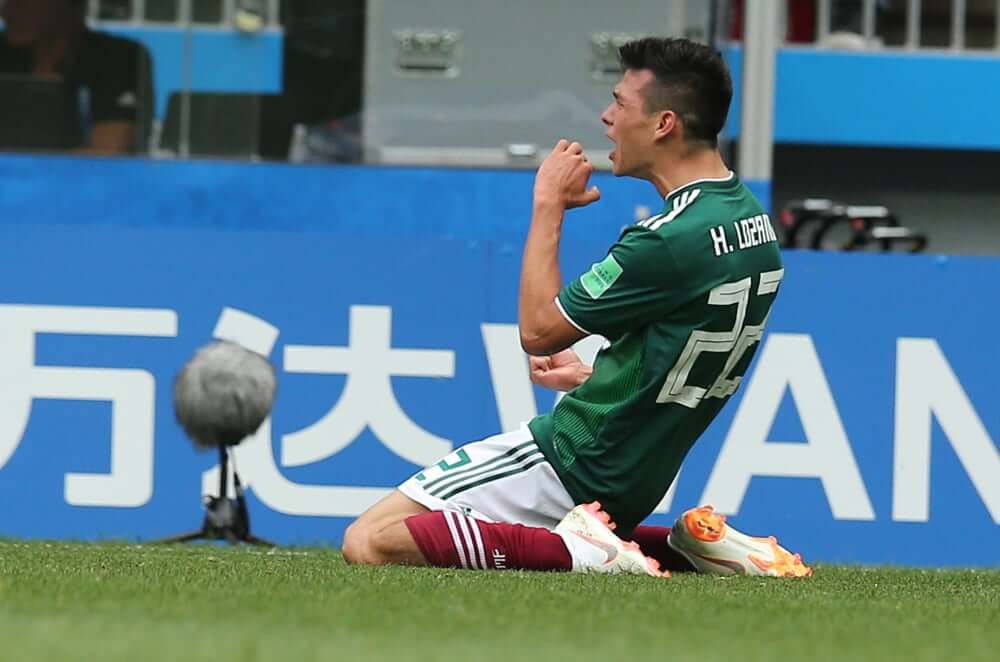
Lozano carries the weight of being Mexico’s most globally recognisable player in a World Cup where global recognition matters for sponsors, broadcast narratives, and national confidence. At 30, the PSV winger arrives at his third World Cup knowing this is almost certainly his last – and that the defining tournament goal of his career, the strike against Germany in 2018 that sent Mexico into national delirium, now demands a worthy sequel.
His performance level has been inconsistent in the intervening years – injuries and club form have not always matched his talent – but in the moments that count on the biggest stages, Lozano has historically arrived. His pace remains exceptional, his ability to create and convert in one-on-one situations is one of the highest in this tournament field, and for Mexico to advance past the group stage, Lozano needs to be the player who decides tight matches rather than the player who goes missing in them.
Edson Álvarez – The Organising Force
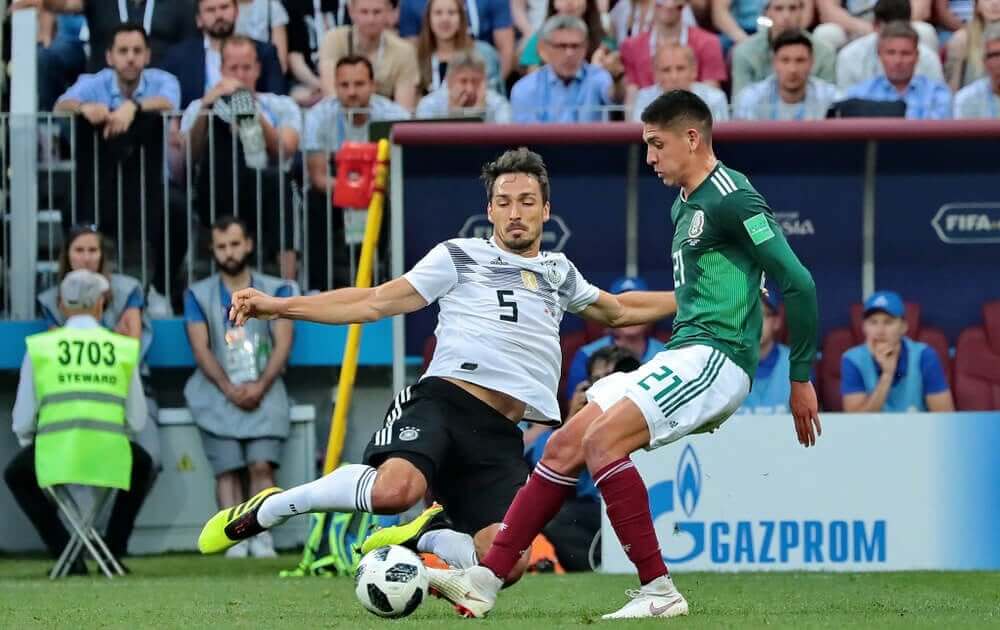
The West Ham central midfielder is Mexico’s most complete outfield player and the organising authority around whom Aguirre’s entire midfield structure revolves. His blend of recovery speed, tackling authority, distribution under pressure, and genuine goalscoring threat from midfield positions makes him the player in the Mexico squad who would walk into several other national team starting lineups. Against Corea del Sur – arguably El Tri’s most challenging Group A opponent – Álvarez’s ability to disrupt Heung-min Son’s influence while keeping Mexico’s own build-up clean will be the tactical duel that defines the match.
Santiago Giménez – The Future Is Now
The 25-year-old Feyenoord striker is the goalscoring solution Mexico has searched years to find. A pure penalty box operator – intelligent positioning, composed finishing with both feet, genuine aerial presence – Giménez provides a reference point for the attack that previous Aguirre-era Mexico sides consistently lacked. His record in the Eredivisie demonstrates that he can convert chances at volume when service is consistent. The World Cup is the stage where his Mexico legacy will be defined, and Aguirre has made him the central figure of the attacking system.
Jesús “Tecatito” Corona – Talent Meeting Its Last Window
Corona’s career has been interrupted by serious injuries that cost him significant periods at Sevilla, and at 32, this World Cup represents his final opportunity to deliver the sustained tournament performance his individual talent has always promised. His raking passes from wide positions and intricate dribbling in tight spaces complement Lozano’s directness beautifully when both are operating at their best. For Mexico to have genuine offensive variety against organised defences, Corona needs to be fit and influential throughout the group stage.
Mexican Strengths and Where the Pressure Cracks
Home crowd as the 12th player. The Estadio Azteca at full voice for the World Cup opener against South Africa will create an atmosphere that no visiting team in this tournament will face elsewhere. Mexico’s players know that stadium the way other players know their childhood bedroom. When confidence is high and the crowd is behind them, El Tri is capable of performances that their squad ranking does not predict. This is an intangible that no statistical model can adequately price.
Midfield control through Álvarez. When Edson Álvarez is dominant in the centre, Mexico can control the tempo of matches against teams that rely on pressing or direct transition play. His ability to slow games down or accelerate them gives Aguirre a tactical instrument that is genuinely rare in the CONCACAF region.
New goalscoring identity. The chronic absence of a reliable striker has been Mexico’s most persistent problem across multiple World Cup cycles. Giménez solves this more convincingly than any previous option in the Aguirre era. With a genuine finisher in the lineup, Mexico’s possession and chance creation can be converted more efficiently than the team’s recent history suggests.
Weakness: The quinto partido curse. Mexico has been eliminated in the Round of 16 in every World Cup appearance since 1994 – seven consecutive exits at the same stage. That is not merely bad luck; it represents a consistent inability to perform at the level required one round beyond the group stage. The psychological weight of that record will be present in the squad’s preparation, no matter how much Aguirre dismisses historical patterns publicly.
Weakness: Goalkeeper age. Guillermo Ochoa at 41 brings legendary Mexico World Cup credentials – his performances across multiple tournaments have been remarkable – but sustaining that level physically across an entire June tournament is a genuine concern. Mexico’s goalkeeping depth behind Ochoa is not strong, and any prolonged spell of below-par performances would have limited replacement options.
Weakness: Lateral depth. Neither fullback position has been settled with authority under Aguirre. Wide defensive roles remain the most contested and uncertain positions in the squad, and against opponents with pace on the wings – including Corea del Sur’s extensive attacking options – exposed fullbacks could create problems that the central defence cannot fully compensate for.
Co-Host Qualification: Mexico’s Route to 2026
Mexico, like Canada and the United States, qualified for the 2026 World Cup automatically as a co-hosting nation, bypassing the CONCACAF qualifying rounds entirely. The absence of formal qualifying competition means the preparation record is the closest available evidence of competitive readiness.
Mexico’s most recent major tournament performances under Aguirre included a Gold Cup title run in 2025, where El Tri defeated the United States in the final to claim the trophy – their clearest indication of competitive form in the pre-tournament period. The result confirmed that when Mexico’s key players are available and the collective system is functioning, they retain the ability to beat the primary competition within their continental region.
| Tournament | Result | Key Result |
| Copa América 2024 | Group stage | – |
| Gold Cup 2025 | Champions | Beat USA in final |
Ver esta publicación en Instagram
Mexico at the World Cup: History, Heartbreak, and Hope
Mexico has participated in every World Cup since 1950 with only limited exceptions, accumulating a record that is simultaneously impressive in terms of consistent qualification and deeply frustrating in terms of the ceiling reached. Their best World Cup performances came on home soil: a quarterfinal at Mexico 1970 – before falling to Italy – and a second quarterfinal run at Mexico 1986, where West Germany eliminated them on penalties in one of the most memorable shoot-outs in tournament history.
Those two home quarter-finals remain the benchmarks. Since 1994, Mexico has been eliminated in the Round of 16 at seven consecutive World Cups – the so-called “quinto partido” (fifth game) curse – including exits to Argentina at Qatar 2022. That pattern of reaching the last sixteen and then failing to take the next step has become the defining characteristic of modern Mexican football at the global level, and it is the psychological context that hangs over everything Aguirre is attempting to build for 2026.
The mexico world cup history is rich with individual brilliance – Hugo Sánchez’s acrobatics, Cuauhtémoc Blanco’s audacity, Rafa Márquez’s authority, and Ochoa’s heroics in goal – but the collective achievement of advancing to a semifinal has always remained one step out of reach. This home tournament represents the most realistic opportunity in three decades to finally close that gap.
Group A: Mexico, South Africa, South Korea, Czech Republic
Mexico’s Group A draw provided a reasonable but not unchallenging set of opponents. South Africa as the group-stage opener at the Azteca carries enormous symbolic weight – an occasion the entire world will watch – while South Korea and Czech Republic offer genuine tactical problems that demand respect and preparation.
The opening match on June 11 is the tournament’s defining domestic moment. Mexico needs to win against South Africa, establish positive momentum, and avoid the kind of early draw or defeat that creates snowballing anxiety within the squad and the media environment. South Korea – who reached the Round of 16 at Qatar 2022 – presents the most dangerous Group A opponent, with Son Heung-min capable of deciding matches with a single moment of individual brilliance. Czech Republic bring European tactical discipline and competitive organisation without the headline individual quality of the Korean squad.
| Date | Time (ET) | Match | Venue |
| Thursday, June 11 | 4:00 PM ET | Mexico vs South Africa | Estadio Ciudad de México |
| Thursday, June 11 | 11:00 PM ET | South Korea vs Czech Republic | Estadio Guadalajara |
| Thursday, June 18 | 12:00 PM ET | Czech Republic vs South Africa | Atlanta Stadium |
| Thursday, June 18 | 10:00 PM ET | Mexico vs South Korea | Estadio Guadalajara |
| Wednesday, June 24 | 10:00 PM ET | Czech Republic vs Mexico | Estadio Ciudad de México |
| Wednesday, June 24 | 10:00 PM ET | South Africa vs South Korea | Estadio Monterrey |
All times are Eastern Time (ET).
Ver esta publicación en Instagram
Mexico World Cup 2026 Odds and Our Predictions
Mexico’s World Cup 2026 odds reflect the consistent scepticism of international markets toward a programme with seven consecutive Round of 16 exits. Outright title odds at Canadian sportsbooks including bet365 and PointsBet Canada typically place El Tri between 60.00 and 80.00 – accurate representation of the statistical probability while leaving room for the home advantage multiplier that no model can fully price.
| Market | Approximate Odds |
| Mexico to win the World Cup | 60.00 – 80.00 |
| Mexico to advance from Group A | 1.30 – 1.50 |
| Mexico to reach the quarterfinals | 2.80 – 3.50 |
| Mexico vs South Africa: Mexico to win | 1.55 – 1.70 |
Odds are indicative. Always verify current prices at your sportsbook.
Our prediction: Mexico advances from Group A with 5-7 points, finishing first or second ahead of South Korea. The Round of 16 is the floor of reasonable expectation given the squad quality and home context. Whether the quinto partido curse finally breaks in 2026 – whether Mexico wins the fifth game and reaches a quarterfinal – is the tournament’s most emotionally loaded question for every Mexican football fan, and the betting market for “Mexico to advance past the Round of 16” in the range of 2.80-3.50 represents the most interesting Mexico World Cup wager available.
The Azteca will be loud. Giménez will score goals. Lozano will have his moments. Whether those individual contributions add up to something greater than the sum of their parts – to a collective achievement that finally breaks the historical ceiling – is what makes Mexico World Cup 2026 one of the tournament’s most compelling storylines for Canadian fans watching every night on TSN and CBC. See our full World Cup 2026 coverage and odds analysis throughout the tournament.
Mexico has hosted the World Cup twice and reached the quarterfinals both times. Home soil has always brought out something extra from El Tri. This is their best opportunity in a generation to write a new chapter – and at the Azteca, with the largest stadium crowd in World Cup history roaring them forward, you would be brave to bet completely against them.