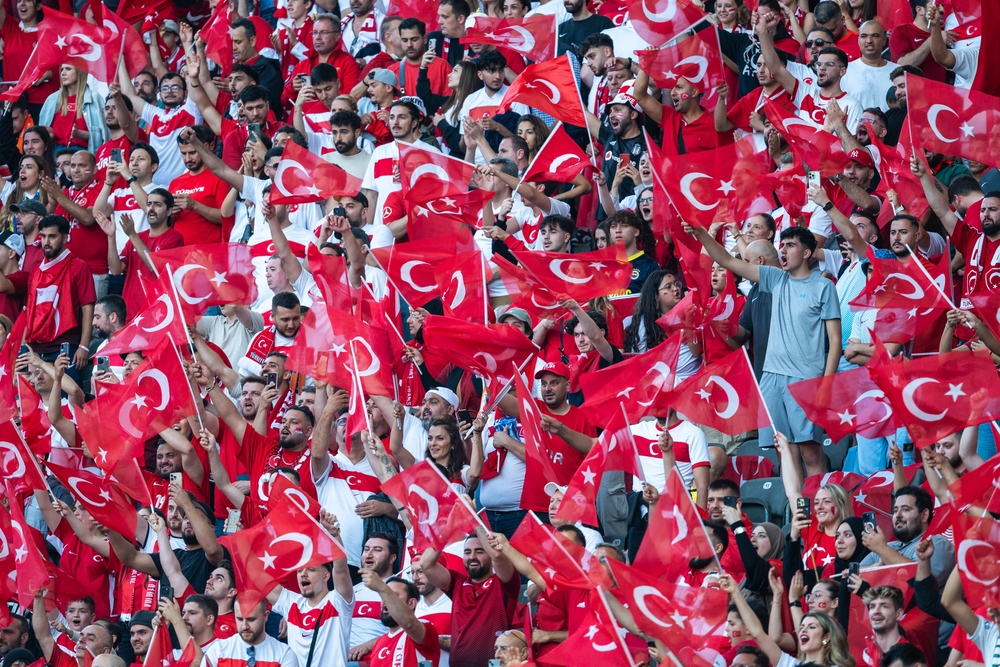
Turkey is back. After a 24-year absence from the FIFA World Cup, Türkiye have punched their ticket to the 2026 tournament in Canada, Mexico, and the United States – completing one of European soccer’s most emotional qualifying journeys. Under Italian coach Vincenzo Montella, the Turks have transformed from a mid-tier UEFA side into a dynamic, attacking outfit built around some of the most coveted young talent in world soccer. With Real Madrid’s Arda Güler pulling strings behind the striker and Inter Milan’s Hakan Çalhanoğlu anchoring the engine room, Turkey arrive in North America for the World Cup 2026 with serious intent – and legitimate knockout-round aspirations.
Turkey’s Road Back to the World Cup
Turkey’s return to the World Cup was anything but straightforward. Drawn into UEFA Group E alongside a formidable Spain side, Türkiye faced a baptism of fire early in qualifying, suffering a bruising 6-0 defeat to La Roja in Istanbul on September 7, 2025 – Mikel Merino’s hat-trick the headline act in a performance that threatened to derail Turkey’s campaign before it had gained any real momentum. That scoreline was a sobering reality check for Montella’s side, exposing just how wide the gap remains between Turkey and Europe’s absolute elite.
But the character of this Turkish generation showed itself in the months that followed. Montella’s side bounced back with commanding victories over Bulgaria – including a dominant 6-0 away win – and a sharp 4-1 dismissal of Georgia, before sealing second place in the group with a hard-earned 2-2 draw against Spain in Seville on November 18, 2025. Deniz Gül and Salih Özcan both found the net that night, giving Turkey a result that confirmed their place in the UEFA play-offs and sent a message that the 6-0 humbling was an aberration rather than a verdict.
Path C of the play-offs then presented two final knockout hurdles. Turkey dispatched Romania 1-0 in the semi-final on March 26, 2026, and edged Kosovo 1-0 in the final on March 31 – both disciplined clean-sheet victories that underlined the maturity Montella has instilled in this group. The final whistle sparked celebrations from Istanbul to Ankara. This Turkey side earned their place at the table the hard way.
Ver esta publicación en Instagram
Montella’s Methods: A Coach Building Something Special
When the Turkish Football Federation appointed Vincenzo Montella in September 2023, it was a gamble that has paid off handsomely. The former AC Milan and Fiorentina striker had previously managed in Turkey at Adana Demirspor and arrived at the national team with an intuitive understanding of Turkish soccer culture that many foreign coaches lack. What he brought to the program, however, was something more valuable than cultural familiarity: a clear, coherent tactical identity.
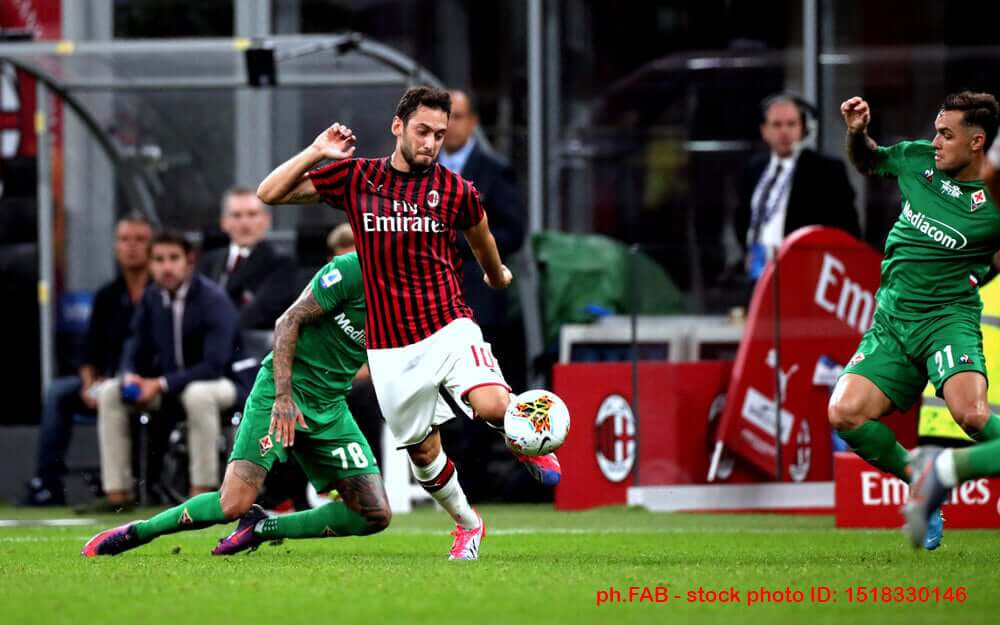
Montella’s preferred system is a fluid 4-2-3-1 that morphs into a 4-3-3 depending on the phase of play. Two central midfielders – typically Hakan Çalhanoğlu and Kaan Ayhan – provide defensive structure and ball circulation beneath the three attacking players ahead of them, who operate with significant positional freedom. Çalhanoğlu, deployed as a deep-lying playmaker, acts as the team’s fulcrum. His ability to switch play, carry through lines, set the tempo, and score from distance is arguably the most important single mechanism Turkey possesses going forward.
Wide attackers rotate fluidly with the full-backs in attack. Ferdi Kadıoğlu (Brighton & Hove Albion) bombing forward from left-back creates natural overloads and his technical quality in tight spaces makes him one of the tournament’s most dangerous attacking defenders. On the right, the interplay between Arda Güler and Mert Müldür has become a signature Montella combination – fast, direct, and near-impossible to pin down. Out of possession, Turkey press aggressively from a high block with the defensive line consistently pushed up, looking to win the ball in advanced positions and launch rapid transitions before opponents can organize.
Critically, Montella has managed Turkey’s golden generation with care – integrating Güler and Kenan Yıldız without over-relying on them while leaning on Çalhanoğlu’s experience and leadership to stabilize the group. He guided Turkey to the quarter-finals of UEFA Euro 2024 and earned promotion to UEFA Nations League League A for the first time in the nation’s history in 2025. At 51, Montella is coaching the best soccer of his career. The 2026 World Cup could cement his legacy entirely.
Roster & Key Players: A Golden Generation Ready to Shine
Turkey’s roster for the 2026 World Cup blends battle-tested European club talent with a thrilling nucleus of young stars. The squad carries a total market value of approximately €440 million – mid-tier by tournament standards – but market value has never been a reliable proxy for Turkish soccer’s capacity to punch above its weight.
Goalkeepers
First-choice gloves belong to Mert Günok (Fenerbahçe), a commanding shot-stopper with vast Süper Lig experience. He brings composure and reading of the game that suits Montella’s high-line structure. Altay Bayındır (Manchester United) serves as high-profile backup, while Uğurcan Çakır (Galatasaray) rounds out a solid three-man goalkeeping pool. Turkey are not short of options between the posts.
Defenders
Captain Çağlar Söyüncü (Fenerbahçe) anchors the back four. His leadership and organizational ability are central to how Montella’s defensive line functions – reading danger early, communicating constantly, and setting the press trigger. Merih Demiral (Al-Ahli) provides physicality and Champions League experience alongside him, a combative presence who wins headers and disrupts strikers. Ferdi Kadıoğlu (Brighton & Hove Albion) is the unit’s standout performer: an attacking full-back who can cut inside or overlap in equal measure, with a natural left foot that makes him a genuine creative force from the back. Mert Müldür (Fenerbahçe) anchors the right, his forward forays linking cleanly with Güler. Abdülkerim Bardakcı (Galatasaray) and Samet Akaydin provide experienced depth.
Midfielders
Hakan Çalhanoğlu (Inter Milan) is the heartbeat of this team – full stop. The captain of one of Europe’s most dominant clubs, his deep-lying playmaker role gives Turkey control, transition speed, and a constant long-range goal threat. He scored and assisted consistently throughout qualifying, and his set-piece delivery borders on the artistic. Salih Özcan (Borussia Dortmund) provides engine-room energy and was a key contributor in qualifying, grabbing an important goal in the 2-2 draw against Spain in Seville. Orkun Kökçü, on loan at Beşiktaş from Benfica, brings creativity and pressing intensity, while Atakan Karazor (VfB Stuttgart) offers disciplined defensive midfield cover. İsmail Yüksek (Fenerbahçe) is a player to watch closely – technically gifted, hard-working, and capable of making a significant impact off the bench in knockout scenarios.
Forwards & Attacking Midfielders
This is where Turkey become genuinely exciting. Arda Güler (Real Madrid) is arguably the most hyped young player heading into this tournament. Just 21 years old at the time of the World Cup, the attacking midfielder combines extraordinary dribbling vision with a wand of a right foot capable of unlocking any defence – at set pieces, in combination play, or in sheer individual brilliance. His performances at Euro 2024 announced him on the global stage. At a full 48-team World Cup, the spotlight grows exponentially.
Kenan Yıldız (Juventus) is equally dangerous from the opposite flank – a powerful, direct forward with the technique to beat defenders in tight spaces and the composure to convert in front of goal. Together, Güler and Yıldız form arguably the most exciting flank duo of any team in the tournament. Support comes from Kerem Aktürkoğlu (Fenerbahçe) and Baris Alper Yilmaz (Galatasaray), who provide pace and directness when introduced from the bench, while Deniz Gül and Semih Kılıçsoy offer youthful goal-scoring options in the forward line.
The one genuine question mark is the striker role. Turkey lacks a traditional, elite No. 9, and goals are expected to flow primarily from midfield runs and wide contributions – a system that works brilliantly on good days but can run dry against compact, well-organized defences. How Montella solves this equation will be the defining tactical question of Turkey’s World Cup campaign.
What Turkey Does Well – and Where They’re Vulnerable
Strengths
Turkey’s greatest asset at this tournament is raw creative talent. Güler and Yıldız are two of the most technically gifted players in the entire field, and when they have space to operate in combination with Çalhanoğlu’s distribution, they are genuinely difficult to stop. Add Kadıoğlu’s attacking contributions from left-back and Turkey have multiple routes to goal from multiple angles simultaneously.
Set pieces are a serious weapon. Çalhanoğlu’s delivery is among the best in international soccer, and the aerial presence of Söyüncü and Demiral in the box gives Turkey a threat on every dead ball. More than a few qualifying goals arrived via this route, and at a World Cup where fine margins separate sides, it could prove decisive.
Tactical flexibility is another genuine strength under Montella. He adjusts between systems seamlessly – parking the bus in a 5-4-1 for must-grind results (see: Romania and Kosovo) and opening up freely in 4-2-3-1 when results demand it. Turkey are not one-dimensional, and opponents cannot simply game-plan against a single structure.
Weaknesses
The high defensive line is the biggest calculated risk Montella takes. It has been exploited ruthlessly by pace. The 6-0 defeat to Spain in qualifying – in which Spain’s forwards repeatedly found space in behind Turkey’s defence – was the starkest illustration of this vulnerability. At a World Cup, against attackers with the speed of a Lamine Yamal or a Kylian Mbappé, a poorly-timed press could prove catastrophic. The back four will need to be far more disciplined in its press triggers than they were in Istanbul.
Inconsistency remains a theme. A team that hammered Bulgaria 6-0 and then drew 2-2 in Seville can also capitulate 0-6 to the same Spanish opponent four months earlier. The gap between Turkey’s best and worst performances is wider than any contending side should be comfortable with. At a single-elimination knockout tournament, consistency – not peak performance – wins trophies.
And then there is the striker problem. Without a reliable, clinical No. 9, Turkey must generate their goals almost entirely through creativity – a beautiful strategy that can be suffocated by a well-drilled low block. If Güler, Yıldız, and Çalhanoğlu all have quiet games simultaneously, Turkey may struggle to find the net at all.
How They Got Here: Turkey’s Qualifying Campaign
Turkey navigated UEFA Group E – alongside Spain, Georgia, and Bulgaria – to finish as runners-up with 13 points from six games, recording four wins, one draw, and one loss (GF17, GA11). Spain dominated the group from wire to wire, finishing with an unbeaten record of five wins and one draw, accumulating 21 goals while conceding just two across the entire qualifying campaign. Turkey’s most impressive group-stage results included a devastating 6-0 dismantling of Bulgaria away, a 3-2 gutsy win at Georgia in September, and a 4-1 home thrashing of Georgia in October. Their most painful result was a 6-0 home defeat to Spain on September 7, 2025, in which Mikel Merino’s hat-trick and a Pedri brace left no doubt about the gulf at the summit of European soccer.
The redemption moment came on November 18 in Seville. Trailing to Dani Olmo’s strike, Turkey clawed back twice – Deniz Gül and Salih Özcan finding the net – before Mikel Oyarzabal equalized for Spain to seal the hosts’ World Cup qualification. Turkey’s point was hard-earned and meaningful, confirming second place and a play-off berth.
| Team | P | W | D | L | GF | GA | Pts |
| Spain | 6 | 5 | 1 | 0 | 21 | 2 | 16 |
| Turkey (Play-offs) | 6 | 4 | 1 | 1 | 17 | 11 | 13 |
| Georgia | 6 | 1 | 0 | 5 | 7 | 15 | 3 |
| Bulgaria | 6 | 1 | 0 | 5 | 2 | 19 | 3 |
In the play-offs, Turkey were ruthlessly efficient. A 1-0 win over Romania on March 26, 2026, followed by a 1-0 victory over Kosovo on March 31 completed the job – two clean sheets, two wins, zero drama. After 24 years away from the World Cup, Turkey were back.
| Stage | Match | Date | Result |
| Play-off Semi-final | Turkey vs. Romania | March 26, 2026 | 1-0 |
| Play-off Final | Turkey vs. Kosovo | March 31, 2026 | 1-0 |
Bronze Medalists to Hungry Returners: Turkey’s World Cup History
Turkey’s World Cup record is brief in volume but extraordinary in quality. The Crescent-Stars have appeared in just two editions of the tournament prior to 2026 – yet one of those appearances remains among the greatest overachievements in the competition’s entire history.
Their debut came at the 1954 World Cup in Switzerland. Turkey’s maiden appearance produced one of the tournament’s most lopsided results: a thunderous 7-0 victory over South Korea that remains one of the biggest winning margins in World Cup history. The joy was short-lived – West Germany defeated Turkey 4-1, and Gusztáv Sebes’ legendary Hungarian side administered a crushing 7-2 defeat that ended the campaign. The message was clear: Turkey could score goals, but they could not yet defend at the highest level.
That assessment was dramatically overturned nearly five decades later. The 2002 World Cup in South Korea and Japan stands as the defining chapter in Turkish soccer history. Under coach Şenol Güneş, a compact, organized, and tactically intelligent Turkey side progressed from a group containing Brazil, China, and Costa Rica before eliminating Japan’s co-host neighbours in the round of 16. Ilhan Mansız’s golden goal beat Senegal in the quarter-finals, and though eventual champions Brazil ended Turkey’s run 1-0 in the semi-final, the bronze medal match against South Korea produced one of the tournament’s most memorable moments: Hakan Şükür’s goal just 11 seconds after kick-off – the fastest in World Cup history, a record that still stands today. Turkey won 3-2 and returned home as bronze medalists, heroes to an entire nation.
This is Turkey’s third-ever World Cup appearance. The 24-year wait between 2002 and 2026 makes this tournament feel enormous for the Turkish soccer community – a chance not simply to participate, but to reconnect with and potentially surpass the greatest moment in their soccer history.
Group D: Turkey’s Path Through North America
Turkey have been drawn into 2026 World Cup Group D alongside co-hosts United States, Paraguay, and Australia. On paper it is a genuinely winnable group – but make no mistake, it is not a soft draw. The USA carry enormous home advantage as one of the tournament’s three co-hosts, with passionate crowds expected at every American venue throughout the group stage.
Turkey’s campaign opens on Canadian soil in Vancouver, British Columbia – a particularly meaningful venue given Canada’s role as co-host of this historic expanded 48-team World Cup. The match against Australia at BC Place on June 13 represents Turkey’s most favourable opening fixture, and securing three points there could be the pivotal moment that shapes their entire tournament trajectory. Fail to win that opener, and the pressure on the Paraguay and USA matches increases dramatically.
The June 25 clash against the United States in Los Angeles – a prime-time, 10 p.m. ET kick-off at SoFi Stadium – looms as the group’s decisive showdown. If both teams win their first two games, that fixture becomes a battle for first place, and one of the tournament’s most anticipated group-stage matches. Canadian fans can catch all of Turkey’s matches live on TSN, CTV, and CBC.
| Date | Match | Venue | Kick-off (ET) |
| June 13, 2026 | Australia vs. Turkey | BC Place, Vancouver, Canada | 12:00 p.m. |
| June 19, 2026 | Turkey vs. Paraguay | Levi’s Stadium, Santa Clara, CA | 12:00 p.m. |
| June 25, 2026 | Turkey vs. USA | SoFi Stadium, Los Angeles, CA | 10:00 p.m. |
Ver esta publicación en Instagram
Turkey’s World Cup 2026 Odds and Our Predictions
Turkey are a tournament longshot to lift the World Cup trophy – available at around +6600 at major Canadian sportsbooks, reflecting the statistical reality that they would need to beat five or six elite opponents on the run to the final. That number is accurate but somewhat misleading. It does not capture how genuinely dangerous Turkey are in a single-elimination match on a given day, particularly when Güler, Yıldız, and Çalhanoğlu are all performing.
In Group D betting markets, Turkey are widely priced as co-favourites alongside the USA to advance to the round of 16. Their group advancement odds represent arguably the best value bet on their entire World Cup card – this roster is objectively stronger than both Paraguay and Australia in terms of European club pedigree, and the USA, for all their home advantage, have question marks of their own in attacking transition.
For bettors building a parlay, consider combining Turkey to advance from the group with Arda Güler to score anytime – a pairing that offers real statistical backing. Güler found the net multiple times during Euro 2024 and qualifying and has a propensity for spectacular moments on the biggest stages. At tournament prices, his anytime scorer odds in knockout rounds carry significant value if Turkey progress as expected.
Our Group Stage Prediction: Turkey beat Australia 2-0 in Vancouver, edge Paraguay 1-0 in a tight affair in Santa Clara, and fall narrowly to the United States 1-0 in Los Angeles – finishing second in Group D and advancing to the round of 16.
Our Tournament Prediction: Turkey advance to the quarter-finals – mirroring their best-ever World Cup run – before exiting against a top-four contender. Montella’s tactical flexibility gives them a genuine shot to upset anyone in a single match. If the draw is kind and Güler is electric, a semi-final run cannot be ruled out.
Final Prediction: Group D – 2nd place. Quarter-final exit.
The Verdict on Turkey at the 2026 World Cup
Turkey’s return to the World Cup after 24 years is one of the tournament’s most compelling storylines heading into the summer. With Vincenzo Montella at the helm, Arda Güler ready to dazzle on the grandest stage, and a group draw that offers a genuine pathway to the knockout rounds, this Turkish side can be far more than a participant. For Canadian fans watching from Vancouver to Montreal – and particularly those catching that opening match against Australia at BC Place – Turkey World Cup 2026 is worth following very closely indeed.