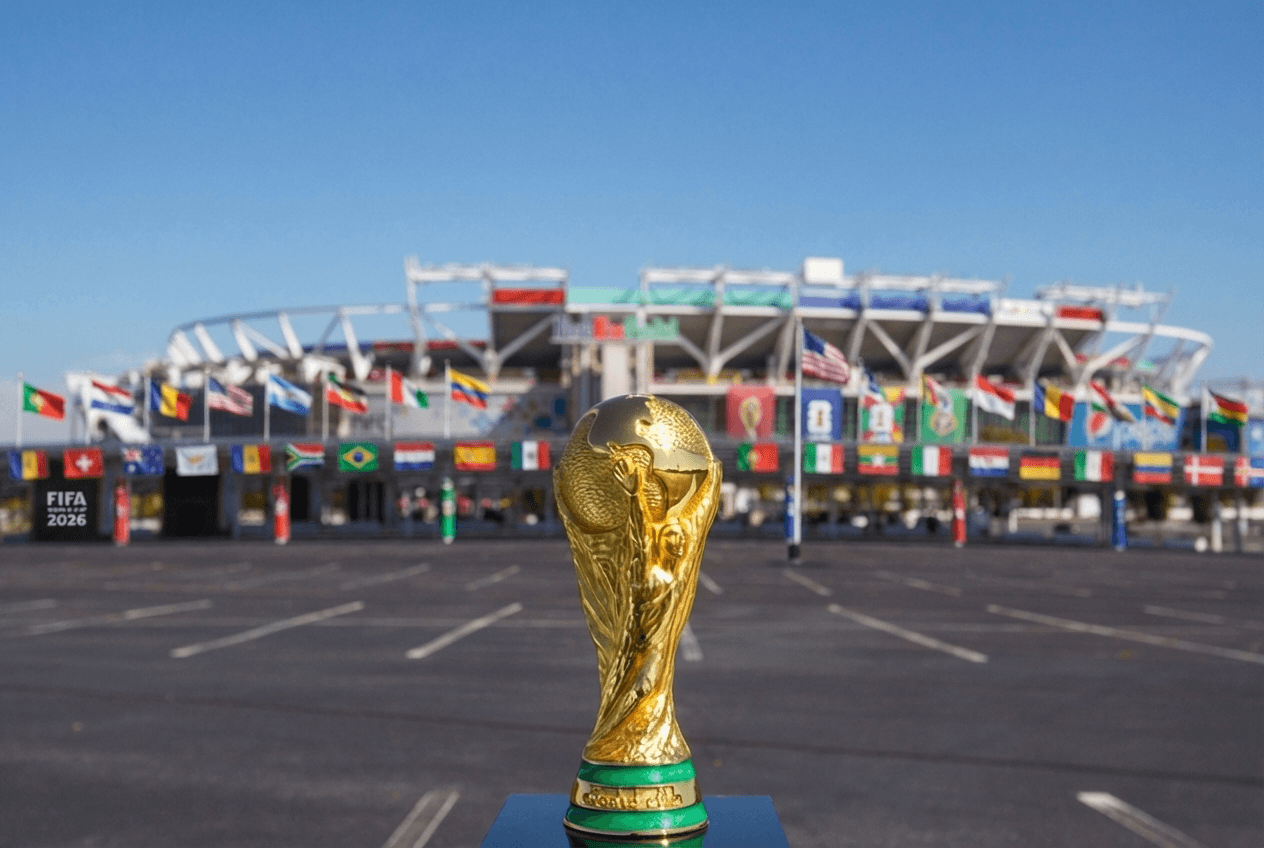
Every World Cup casts a shadow over the one that follows it. Qatar 2022 cast an enormous shadow: a tournament that defied the sceptics, delivered genuinely elite-level soccer in a compact geography that created an unparalleled collective bubble, and culminated in what many consider the greatest World Cup final in the tournament’s history. Argentina and France producing a 3-3 draw after 120 minutes – resolved by penalties – set a standard that any successor tournament will be measured against. The question that increasingly defines World Cup 2026 conversation isn’t just whether it will be good. It’s whether a bigger, geographically dispersed, structurally different tournament can be better.
Format Changes Explained: The Numbers Behind the Restructuring
The most fundamental comparison between world cup 2026 vs 2022 starts with scale. Qatar hosted 32 teams; 2026 will host 48. Eight groups of four became 12 groups of four. A Round of 16 as the first knockout game becomes a Round of 32. Sixty-four matches across 29 days became 104 matches across 39 days.
These aren’t just statistical upgrades – they represent a different tournament philosophy. Qatar 2022 operated on compression: every match felt significant because elimination pressure arrived quickly and the entire tournament fit within a single city cluster. World Cup 2026 operates on expansion: more teams, more geography, more matches, and a longer arc from group stage to the final.
| Metric | Qatar 2022 | 2026 | Change |
| Teams | 32 | 48 | +50% |
| Groups | 8 x 4 teams | 12 x 4 teams | +4 groups |
| Total matches | 64 | 104 | +62.5% |
| Group stage matches | 48 | 72 | +50% |
| Knockout rounds | 4 (R16 through Final) | 5 (R32 through Final) | +1 round |
| Host nations | 1 | 3 | – |
| Host cities | 8 | 16 | +8 |
| Total goals scored | 172 | ~275-285 [projected] | ~+63% |
| Average goals/match | 2.69 | ~2.65-2.75 [projected] | ~flat |
The per-match goal average projection holds near flat because two opposing forces roughly cancel: more mismatched group-stage games (favouring higher scores) versus more tactically cautious knockout matches earlier in the competition (favouring lower scores). The total goals number skyrockets simply because there are 40 more matches.
Ver esta publicación en Instagram
Competition Level: Will 2026 Match Qatar’s Quality?
Qatar 2022 set an unusually high bar for group-stage quality. The 32-team format’s relatively tight FIFA ranking distribution meant most group-stage matches involved two competitive nations. Upsets were plentiful – Saudi Arabia defeating Argentina, Japan defeating Germany and Spain, Morocco eliminating Spain and Portugal en route to the semi-finals – but they were upsets of genuinely quality opponents rather than comfortable walkovers against weaker sides.
The honest answer on competition level for 2026 is: the top tier will be as good as Qatar, the bottom tier will be weaker. With 48 teams, FIFA’s allocation formulas across all six confederations now include nations ranked well outside the top 50 in the world. In a group stage context, this means some matches between a top-seeded European power and a debutant from a smaller confederation could produce lopsided results that carry minimal sporting drama. This is not a hypothetical concern – it happened in the 1998 expansion from 24 to 32 teams, and it will happen again in 2026.
However, the knockout rounds will filter this out effectively. From the Round of 32 onward, the only teams remaining will be those who have earned their place by finishing in the top two of competitive groups or among the best third-place finishers. The quality of knockout football should be comparable to or better than Qatar 2022, particularly in the quarter-finals and beyond.
Morocco’s 2022 run is the strongest evidence that the expanded talent pool cuts both ways. A nation that might have faced more difficult qualifying paths in a smaller-format tournament reached the semi-finals because their defensive quality was genuinely elite. The 48-team format gives more nations that opportunity – and occasionally, one of them will be good enough to take full advantage.
Ver esta publicación en Instagram
Goal Scoring Trends: Qatar’s Baseline vs. 2026 Projections
Qatar 2022’s 172 goals in 64 matches (2.69 per game) made it the highest-scoring World Cup since France 1998 in terms of per-match average. The tournament featured several high-scoring group-stage games, an unusually action-packed quarter-final round, and a historic final. Specific Qatar 2022 scoring metrics that serve as baselines for 2026 modelling:
| Metric | Qatar 2022 | Historical WC Average |
| Goals per match | 2.69 | ~2.50 |
| Both teams score (BTTS) rate | ~56% | ~52% |
| Over 2.5 goals rate | ~55% | ~50% |
| Matches decided in extra time/penalties | 7 of 16 knockout games | ~35-40% |
| Clean sheets (group stage) | ~36% | ~35–38% |
For 2026, the key modelling question isn’t whether per-match averages change significantly – they likely won’t. It’s whether the 40 additional matches produce goals at a rate above or below 2.69. Group-stage matches involving lower-ranked nations may tilt higher (more mismatches, more goals); the new Round of 32 may tilt lower (cautious first knockout-game tactics). The net effect is likely near-neutral, with total tournament goals landing somewhere between 270 and 290 based on a per-match rate of approximately 2.60-2.75.
Ver esta publicación en Instagram
Betting Implications: How the Comparison Shapes 2026 Markets
The world cup 2026 vs 2022 comparison has direct consequences for betting strategy across multiple market types.
Outright winner markets: The additional Round of 32 increases variance for every nation. A defending champion like Argentina carries the historical curse of champions performing poorly in subsequent editions (France 2002, Italy 2010, Spain 2014, Germany 2018 all exited in the group stage) – now amplified by one extra knockout round. This suggests Argentina’s outright price should be longer than it would be under the 32-team format, yet betting markets may not fully reflect this.
Total tournament goals over/under: With 104 matches instead of 64, any total goals market must be evaluated at a fundamentally different scale. A bettor using Qatar 2022’s 172-goal total as an anchor for 2026 market evaluation is making a structural error. The question for 2026 total goals markets is whether the line offered by sportsbooks correctly reflects 104 matches at ~2.65-2.70 per game.
BTTS and over/under 2.5 by match: Per-match markets change less between 2022 and 2026 than tournament-level markets do. If BTTS hit at 56% in Qatar, a 2026 group-stage match between two competitive nations at similar FIFA ranking levels should carry a comparable baseline. The matches most likely to deviate from the 2022 baseline are group-stage games involving the tournament’s weakest entrants – which should be under-weighted for BTTS and over 2.5 relative to the default historical rate.
Which Tournament Will Actually Produce Better Soccer?
This is the question no data table fully answers. Qatar 2022 produced extraordinary soccer within a unique atmospheric bubble: 8 stadiums within 60 kilometres of each other, no travel between venues, and a shared tournament intensity that made every match feel like it was happening simultaneously in one vast arena. The final – Argentina 3-3 France, four goals in extra time, Mbappe’s hat-trick against Messi’s brilliance – will be discussed for decades.
World Cup 2026 cannot replicate that geographic compression. It will breathe differently – spread across 5,000 kilometres from Vancouver to Monterrey, with matches in stadiums ranging from intimate to colossal, in climates from Pacific-coast cool to Mexican summer heat. The tournament will not feel like one experience. It will feel like dozens of overlapping experiences happening simultaneously, which is arguably a more honest reflection of what the global game actually is.
Where 2026 will almost certainly surpass 2022 is atmosphere. The combination of North American sports culture – passionate, loud, media-saturated – with the specific intensity of Mexican soccer fandom and Canada’s home-tournament hunger creates conditions for stadium atmospheres that will be genuinely unprecedented. MetLife Stadium hosting the final with 82,000 people will feel different from Lusail. Whether it will feel better depends on what you value.
The full statistical breakdown and historical context for the world cup format 2026 is in our dedicated section. Full qatar 2022 recap stats serve as the baseline reference for all 2026 betting models.