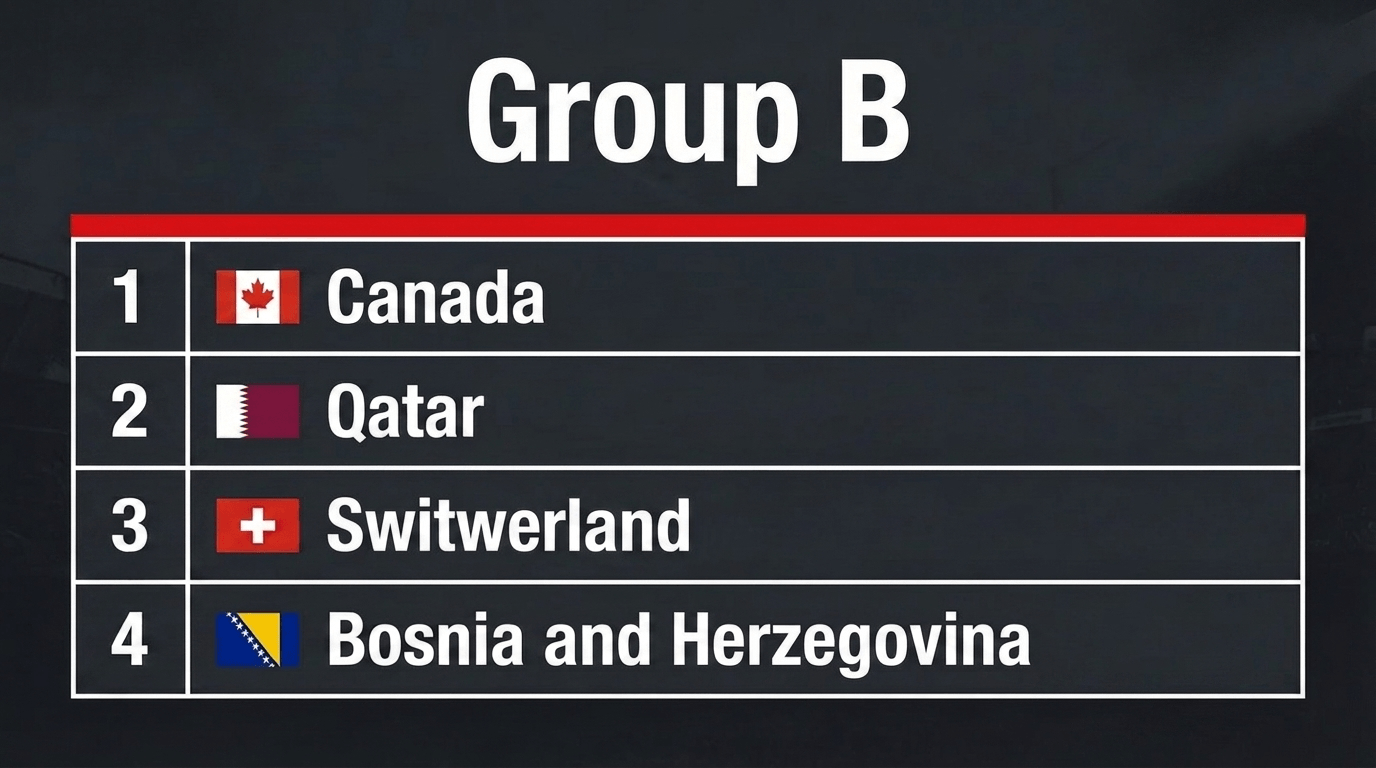
For Canadian soccer fans, no group at the 2026 FIFA World Cup matters more than World Cup 2026 Group B. Co-host Canada – returning for just their third-ever World Cup appearance – shares this group with Switzerland, Bosnia and Herzegovina, and Qatar. The Group B table race pits Canada’s relentless high-press identity against Swiss discipline, Bosnian physicality, and a Qatari side that is dangerous in transition but dangerously leaky at the back. This is Canada’s group to seize, and the nation knows it. Here’s the complete breakdown of Group B 2026: team analysis, fixtures, odds, and our prediction on who qualifies.
Group B Overview
World Cup 2026 Group B is built around a clear two-tier structure – but the gap between tier one and tier two is close enough to make every match meaningful. Switzerland are the most experienced side in the group, making their sixth consecutive World Cup appearance on the back of an unbeaten European qualifying campaign. Canada arrive as co-hosts – fuelled by home crowd momentum, a clear tactical system under Jesse Marsch, and a genuine top-tier striker in Jonathan David. Below them, Bosnia and Herzegovina bring a physical brand of soccer that knocked Italy out of qualifying and could disrupt anyone on a given day. Qatar, making a second consecutive appearance after hosting in 2022, have the attacking quality of Almoez Ali but carry serious defensive concerns into every fixture. The Group B predictions that circulate in the betting markets lean toward Switzerland and Canada advancing – but Bosnia’s elimination of Italy suggests the Group B standings could hold a surprise or two before the final whistle blows on June 24.
Canada: The Maplepress Co-Hosts
Canada have never won a match at a FIFA World Cup. Both previous appearances – Mexico 1986 and Qatar 2022 – ended in group-stage exits without a single victory. That record ends here, in front of their own fans, under a coach who has given them something they never had before: a defined identity.
Jesse Marsch has spent his tenure installing what analysts have dubbed the “Maplepress” – a compact, aggressive 4-4-2 (or 4-2-2-2) built on a high defensive line, minimal space between units, and relentless collective pressing that forces opponents wide and cuts off central passing lanes. The system demands elite discipline from every player, and Canada’s roster has bought in completely. The goal is straightforward: crowd the centre, force opponents to play along the touchline, and win the ball back high up the pitch to generate short-range transition chances.
Jonathan David is the system’s most dangerous outlet. One of the most clinical strikers in Europe at club level, David thrives precisely in the type of half-chances and transition moments the Maplepress creates. Alphonso Davies stretches defences from wide-left with pace that no amount of scouting can fully prepare a backline for. The fullbacks provide width, and the midfield block stays compact enough to prevent teams from building through Canada’s shape.
What no other team in Group B 2026 possesses is what Canada will have in abundance: an electric home crowd. The opening match against Bosnia and Herzegovina takes place at BMO Field in Toronto on June 12 – tens of thousands of flag-waving Canadian fans in a cauldron atmosphere. The final group fixture, Switzerland vs Canada, is at BC Place in Vancouver. Canadian fans can catch every Group B match on TSN, CBC, CTV, RDS (French-language), and DAZN. Canada World Cup 2026 ambitions are real – and our Group B predictions have them advancing to the Round of 16.
Ver esta publicación en Instagram
Switzerland: Six Consecutive World Cups and Counting
Switzerland do not generate headlines. They generate results. Their sixth consecutive World Cup qualification – confirmed via a 1-1 draw in Kosovo that preserved their unbeaten Group record in European qualifying – is the latest chapter in a quiet, relentless run of competence that makes Murat Yakin’s side one of the safest teams in this bracket to back.
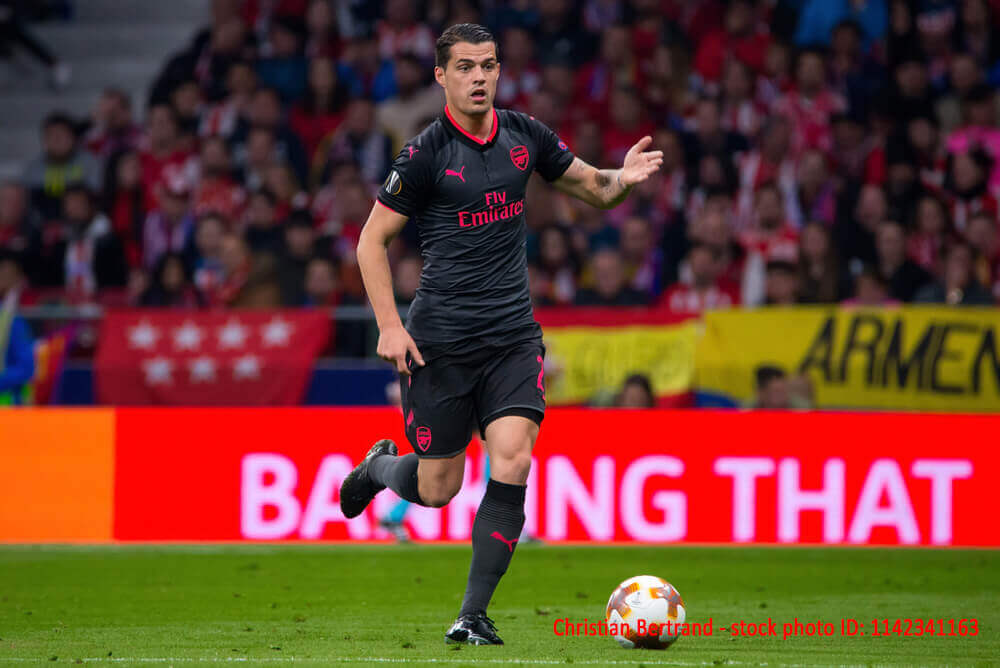
The engine behind Switzerland’s consistency is their central-midfield axis: Granit Xhaka and Remo Freuler. Xhaka distributes with authority and range; Freuler wins the ball and recycles possession quickly. Together, they deny opponents central access and provide the defensive cover that allows Switzerland’s full-backs to push forward with confidence. Switzerland ranked seventh among UEFA nations in ball recoveries per 90 minutes during qualifying (43 recoveries), a number that reflects how aggressively they contest possession in the middle of the pitch.
Tactically, Yakin alternates between a flat back-four and a three-central-defender setup depending on the game state – a flexibility that can wrong-foot opponents who prepare only for one shape. Switzerland rarely dominate possession in a spectacular fashion; instead, they control tempo through patience and structure, making them difficult to pin down and even harder to break down on the counter.
Their Group B fixtures are manageable: Qatar in the opener, then Bosnia, then the Canada decider. A clean win against Qatar followed by a point or more against Bosnia should make the Vancouver match against Canada a formality at worst. Switzerland’s qualifying record argues for the Group B standings showing them in first place – though Canada’s home crowd makes that outcome less certain than the odds suggest.
Bosnia and Herzegovina: Europe’s Most Physical Qualifier
Bosnia and Herzegovina are the wildcard that gives this group real teeth. Coach Sergej Barbarez – appointed in 2024 with no prior head – has assembled a side that embodies his former persona as a player: aggressive, physical, and completely unbothered by the moment. Bosnia committed 15.16 fouls per 90 minutes during European qualifying – the highest of any UEFA nation – a stat that reportedly prompted Italian coach Gennaro Gattuso to flag them specifically as a set-piece and physical threat ahead of their playoff match. Bosnia duly eliminated Italy 1-1 on aggregate, then converted their penalties to send the Azzurri out of the World Cup for the third consecutive tournament.
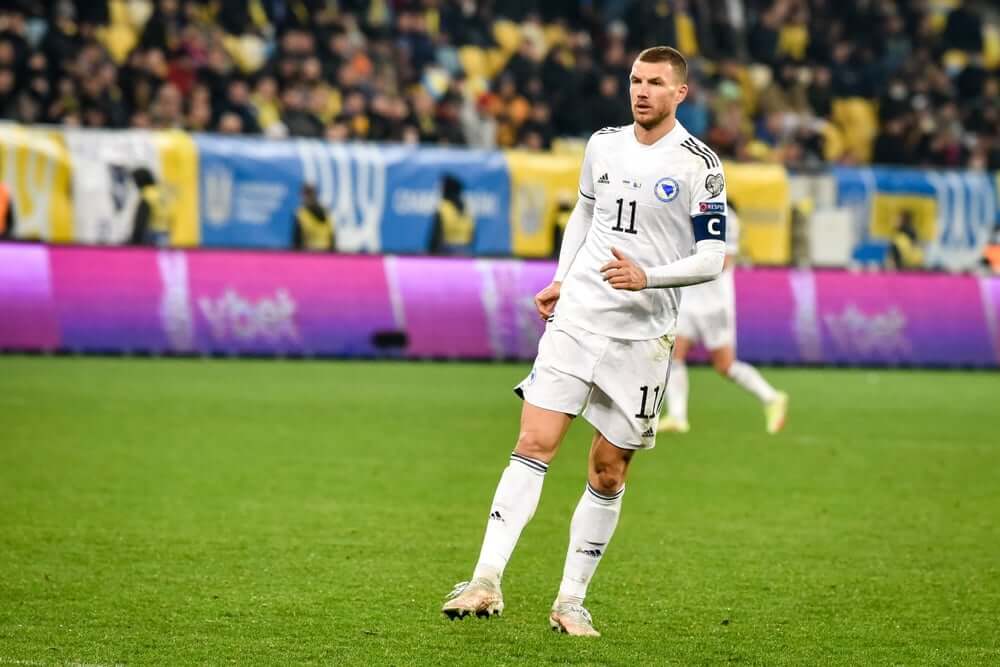
Their offensive structure is direct and deliberate: Edin Džeko and Ermedin Demirovic lead the line as two physically imposing centre-forwards, with Haris Tabakovic ready off the bench when either fades. Width and crossing are Bosnia’s primary creative mechanism – long diagonals, overlapping runs, deliveries into the box – ahead of any sophisticated combination play. They thrive at set pieces, on second balls, and in the kind of combustible, pressure-filled environments that technical teams find deeply uncomfortable.
Bosnia’s path to advancing from World Cup 2026 Group B is narrow but plausible: take three points from Qatar, extract something from Canada in Toronto, and hold their own against Switzerland. The Group B odds mark them as outsiders, but anyone who watched them eliminate Italy should be reluctant to dismiss them. A Group B standings finish in second place is unlikely – but it’s possible.
Qatar: Transition Threat, Defensive Liability
Qatar’s return to consecutive World Cups – secured with a 2-1 win over the UAE on the final day of AFC qualifying – is a genuine achievement. But the numbers from the Asian qualifying campaign tell a cautionary tale. Under Julen Lopetegui, Qatar conceded 24 goals across the third-round qualifying phase – the worst defensive return among all 18 participating nations. That is not a record you can dress up.
The counterweight is the attacking output of Almoez Ali. Qatar’s striker was the top scorer in Asian qualifying with 12 goals – an impressive tally that demonstrates how dangerous the team can be in transition when he gets space to run into. Set pieces have also become a reliable avenue for chance creation, and Lopetegui has added more structural organization to the build-up phase than his predecessor managed. But structure in possession means little when the defensive unit is giving the ball back consistently in their own half.
Facing the Maplepress of Canada, the organizational discipline of Switzerland, and the physical intensity of Bosnia, Qatar’s backline will be tested more severely than at any point in qualifying. Their most realistic path to points in the Group B table runs through the final fixture against Bosnia – a match where both teams are fighting for survival. For World Cup 2026 betting odds, Qatar represent high-value longshot territory, not a team to back for qualification.
Group B Fixtures – All Times Eastern (ET)
| Date & Time (ET) | Match | Venue |
| Friday, June 12 – 3:00 PM ET | Canada vs Bosnia and Herzegovina | Toronto |
| Saturday, June 13 – 3:00 PM ET | Qatar vs Switzerland | San Francisco Bay Area |
| Thursday, June 18 – 3:00 PM ET | Switzerland vs Bosnia and Herzegovina | Los Angeles |
| Thursday, June 18 – 6:00 PM ET | Canada vs Qatar | BC Place, Vancouver |
| Wednesday, June 24 – 3:00 PM ET | Switzerland vs Canada | BC Place, Vancouver |
| Wednesday, June 24 – 3:00 PM ET | Bosnia and Herzegovina vs Qatar | Seattle |
All six Group B fixtures are broadcast in Canada on TSN, CBC, CTV, RDS (French-language), and DAZN. Canada’s opening match on June 12 in Toronto – the loudest sporting event on Canadian soil in decades – kicks off at 3:00 PM ET. The June 24 double-header, where both matches kick off simultaneously, will be the most anxious 90 minutes in Canadian soccer history.
Group B Odds and Predictions
The Group B odds across Canadian sportsbooks such as bet365, FanDuel, and BetMGM reflect a tight race at the top between Switzerland and Canada, with Bosnia carrying genuine value as a potential qualifier and Qatar listed as a heavy longshot. All odds below are estimated and subject to change – check the latest lines before placing any bets.
| Team | To Qualify (Top 2) | To Win Group B |
| Switzerland | -500 / 1.20 | -140 / 1.71 |
| Canada | -350 / 1.29 | +190 / 2.90 |
| Bosnia and Herzegovina | +180 / 2.80 | +900 / 10.00 |
| Qatar | +350 / 4.50 | +1500 / 16.00 |
From a betting standpoint, Canada to qualify (-350) is a well-supported anchor for any World Cup 2026 parlay. The co-host advantage is not symbolic – it generates real on-field intensity, and Marsch’s Maplepress system is perfectly calibrated for the high-energy home environment. Switzerland to win the group (-140) also carries appeal given their qualifying consistency and a favourable opening fixture against Qatar.
The most interesting value in this group is Bosnia and Herzegovina to qualify (+180). Their path is plausible – beat Qatar, grind out a result against Canada in Toronto, and hold Switzerland. They’ve already beaten a better team in Italy. Backing Bosnia at nearly 2-to-1 as a parlay component is a defensible play for sharp bettors.
Our Group B predictions: Switzerland advance as group winners on goal difference. Canada qualify in second place. Bosnia exit with one win and a creditable group stage. Qatar finish bottom. For the latest World Cup 2026 Odds, our page is updated throughout the tournament.
Group B standings forecast: 1. Switzerland (7 pts) | 2. Canada (6 pts) | 3. Bosnia and Herzegovina (3 pts) | 4. Qatar (1 pt)
This is Canada’s moment. From the Maplepress in Toronto to the blue-and-red sea at BC Place, World Cup 2026 Group B will define a generation of Canadian soccer. Follow all World Cup 2026 Groups through our complete World Cup 2026 hub. Go Canada.