Switzerland don’t arrive at tournaments to make headlines – they arrive to advance, frustrate stronger sides, and quietly exceed expectations. The Switzerland World Cup 2026 story is the sixth consecutive chapter of a program that has turned steady qualification into a reliable tournament presence. Drawn into Group B alongside Canada (co-hosts), Qatar, and Bosnia-Herzegovina, the Swiss enter with a settled roster, an experienced coach, and a realistic path to the knockout rounds. Under Murat Yakin, with Manuel Akanji commanding the back line and Granit Xhaka dictating from midfield, Switzerland are built to grind results – and that might be exactly what Group B requires.
Switzerland’s Road to the 2026 World Cup
Switzerland’s qualifying campaign was expected to be routine. Placed in UEFA Group B alongside Kosovo, Slovenia, and Sweden – a draw that on paper favoured a comfortable Swiss top finish – the reality proved considerably more competitive than pre-tournament analysis suggested.
Kosovo emerged as a genuine rival, taking points off Switzerland and pushing the two-horse race to the final matchday. Switzerland needed the last round of fixtures to definitively seal first place, which they managed – though the manner was somewhat anticlimactic after a tense campaign. Their final qualifying record read: four wins, two draws, zero defeats from six matches, with a +12 goal difference and 14 points. Kosovo finished four points behind on 11 after a campaign that included wins over Slovenia and Sweden.
Sweden, once Switzerland’s presumed main challenger, finished bottom of the group on just two points – a dramatic underperformance that illustrated how competitive the 2026 UEFA qualification cycle was across the board. Slovenia managed four draws and two defeats for four points, never threatening the top two.
Switzerland’s automatic qualification – without needing playoffs – was the outcome, but the journey served as a reminder that even competent, well-organized teams can be pushed hard by emerging nations. Kosovo’s rise, in particular, is a story that will continue well beyond this qualifying cycle.
Ver esta publicación en Instagram
Coach Murat Yakin and Switzerland’s Tactical Setup
Murat Yakin arrived as Switzerland head coach in September 2021 in circumstances that surprised much of the soccer world. His most recent club role had been with FC Schaffhausen in Switzerland’s second division – hardly the resume expected of a national team coach. What gave him the appointment was his decade as a defender for Switzerland as a player and the credibility that brought with selectors. Expectations, broadly, were modest.
What Yakin delivered has substantially exceeded those expectations. He qualified Switzerland for Qatar 2022, where they advanced to the Round of 16 – defeating Serbia in the group stage and then falling to Portugal in a match Switzerland pushed to the limit. At Euro 2024, his side produced the tournament’s genuine shock result by eliminating Italy in the Round of 16, before losing to England on penalties in the quarterfinal – a match that could easily have ended differently.
Tactically, Yakin builds Switzerland around a 4-2-3-1 system anchored by a constant emphasis on clean ball movement from the defensive line and numerical superiority in midfield. The double pivot – Xhaka and Remo Freuler – provides the structural foundation: defensive cover when possession is lost, and reliable recycling when Switzerland are building through the thirds. The system generates clear passing options for centre-backs at every stage of build-up, reducing turnovers in dangerous positions.
Defensively, Switzerland drop into a compact mid-block and make themselves extremely difficult to play through. Against sides who rely on creative central midfield play, Switzerland’s shape crowds passing lanes and forces play wide. Their defensive numbers across qualifying – conceding very little while maintaining a +12 goal difference – confirm this organizational quality.
The likely starting lineup for Group B:
Gregor Kobel; Silvan Widmer, Manuel Akanji, Nico Elvedi, Ricardo Rodríguez; Granit Xhaka, Remo Freuler; Rubén Vargas, Fabian Rieder, Dan Ndoye; Breel Embolo.
Ver esta publicación en Instagram
Switzerland’s World Cup 2026 Squad and Key Players
Yakin’s squad combines a settled core of experienced internationals with one exciting emerging talent who could be the story of Switzerland’s tournament.
Manuel Akanji – Inter Milan (on loan from Manchester City)
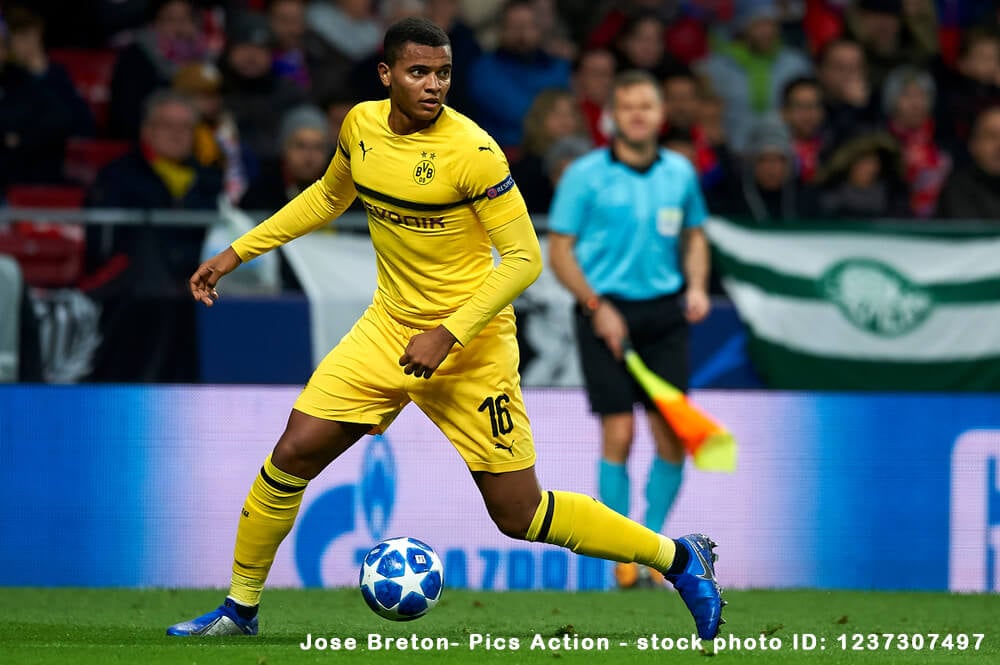
At 30, Akanji is Switzerland’s most recognizable defensive figure on the world stage and their most important player at the 2026 World Cup. He was a key component of Manchester City’s historic 2022-23 treble under Pep Guardiola – that campaign secured the Premier League, FA Cup, and Champions League – and now applies that experience at Inter Milan. The 2026 tournament will be his third World Cup and almost certainly his peak international platform. His reading of the game from central defence, composure in possession under pressure, and ability to carry the ball out of the back make him Switzerland’s most complete player.
Granit Xhaka – Captain
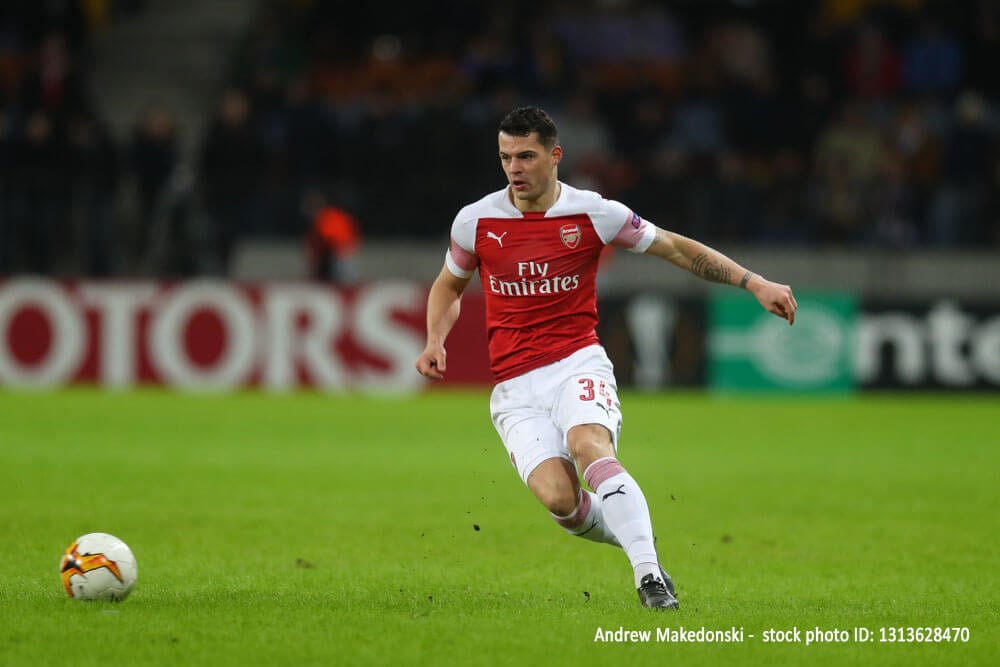
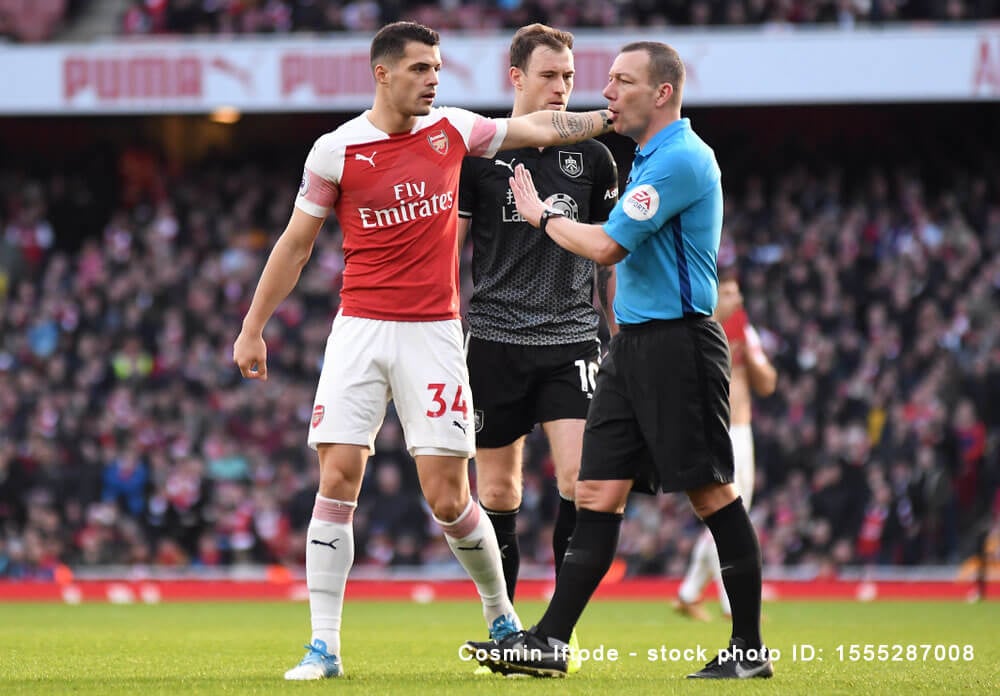
The captain and heartbeat of Yakin’s midfield. Xhaka’s evolution from divisive Arsenal figure to deeply influential international leader is one of European soccer’s more compelling narratives of the past decade. At Bayer Leverkusen he played a central role in their historic unbeaten Bundesliga title in 2023-24 before a move that remains confirmed as Sunderland. Regardless of club address, his international reading of the game is as sharp as ever – few central midfielders at this World Cup see the next two passes before the current one is played. As captain, his effect on team structure extends beyond his positional footprint.
Dan Ndoye – Nottingham Forest
The winger who announced himself at Bologna before moving to Nottingham Forest brings pace, directness, and unpredictability that Switzerland’s measured system requires at the margins. Ndoye can stretch defences horizontally in a way few Swiss attacking players can, and his willingness to track back and press defensively fits Yakin’s disciplined structure without compromising his effectiveness going forward.
Johan Manzambi – Fribourg
At 20 years old, Manzambi is the most intriguing emerging talent in the Swiss camp. Three goals in his first seven international appearances is a remarkable return for a central midfielder, and clubs including Napoli have reportedly been tracking his development closely. What distinguishes him is goal-scoring contribution from deep positions – a quality every international team needs but few develop naturally. Yakin is likely to deploy him as a game-changer off the bench in tight scenarios, with the option to start if Switzerland need a creative injection earlier.
Breel Embolo – Reference Striker – Stade Rennes
The target striker provides the physical reference point in attack – holding play up, occupying centre-backs, and bringing Ndoye, Vargas, and the advancing midfielders into combinations. Embolo’s physicality gives Switzerland a direct option when their combination play stalls against deep defensive blocks, which Group B opponents are expected to employ.
Switzerland’s Strengths and Weaknesses
Switzerland’s primary strength is organizational excellence. In qualifying, they conceded minimally while accumulating a +12 goal difference – the mark of a team that manages matches intelligently rather than simply winning them. They don’t beat themselves, and in a tournament format where avoiding early damage in the group stage is half the battle, that discipline is enormously valuable.
The Xhaka-Freuler double pivot is one of the most functionally reliable midfield partnerships in international soccer. Combined, the two bring thousands of career club appearances, deep tournament experience, and an understanding built through years of playing alongside each other for Switzerland. Against Group B opposition – including Canada’s pressing style and Bosnia’s directness – that central midfield solidity will be Switzerland’s first line of resistance.
The weakness is attacking ceiling. Switzerland’s forwards, while technically competent, lack the individual brilliance that distinguishes quarterfinal sides from semifinalists. Embolo has rarely replicated his national team work rate at consistent club level; Ndoye and Vargas are dangerous but not yet world-class by the standards of Europe’s top attacking players. Against elite defences in a potential Round of 16 match, Switzerland may find goals genuinely difficult to manufacture.
The depth behind Akanji and Xhaka is the secondary concern. If either misses games through injury or suspension, the quality drop in those positions is pronounced.
Switzerland’s UEFA World Cup 2026 Qualifying Table
| Pos | Team | P | W | D | L | GD | Pts |
| 1 | Switzerland | 6 | 4 | 2 | 0 | +12 | 14 |
| 2 | Kosovo | 6 | 3 | 2 | 1 | +1 | 11 |
| 3 | Slovenia | 6 | 0 | 4 | 2 | -5 | 4 |
| 4 | Sweden | 6 | 0 | 2 | 4 | -8 | 2 |
Switzerland’s World Cup History
Switzerland has participated in the FIFA World Cup more times than their modest global profile might suggest – 12 appearances across the competition’s history, spanning nine decades of international soccer. Their best results came in the tournament’s early era: quarterfinals in 1934 and 1938, and another quarterfinal in 1954 when they hosted the tournament themselves. That 1954 edition produced the most extraordinary match in World Cup history – a 7-5 defeat to Austria that remains the highest-scoring game in the competition’s existence.
Since those early highs, Switzerland have never again matched a quarterfinal performance at the World Cup. They reached the Round of 16 in 2014 (losing to Argentina in extra time), and again in 2022 (losing to Portugal). The pattern has been consistent: Switzerland qualify, compete hard, and exit at a tactically superior opponent in the first knockout round.
The 2026 tournament will be Switzerland’s sixth consecutive World Cup – a run of consistency achieved by fewer than a handful of nations. That continuity of qualification reflects a stable development system, a reliable coaching structure, and a program that prioritizes incremental improvement over speculative rebuilds. Whether they can finally advance past the Round of 16 for the first time in seven decades remains the central unanswered question of Yakin’s tenure.
Switzerland’s Group B Fixtures at World Cup 2026
Group B is the most Canada-relevant group in the entire tournament, with Les Rouges as co-hosts and the June 24 Switzerland vs Canada 2026 match at BC Place in Vancouver shaping up as one of the most eagerly anticipated fixtures in the group stage.
| Team | Confederation |
| Canada | CONCACAF (Co-Host) |
| Switzerland | UEFA |
| Bosnia-Herzegovina | UEFA |
| Qatar | AFC |
| Date | Match | Venue | Kickoff ET |
| Sat, June 13 | Qatar vs Switzerland | Bay Area Stadium, San Francisco | 3:00 PM |
| Wed, June 18 | Switzerland vs Bosnia-Herzegovina | Los Angeles Stadium | 3:00 PM |
| Wed, June 24 | Switzerland vs Canada | BC Place, Vancouver, Canada | 3:00 PM ET / 12:00 PM PT |
The June 24 group finale between Switzerland and Canada at BC Place deserves particular attention. Both sides are expected to have results from their first two matches that make this fixture meaningful – potentially decisive for group standing. Switzerland’s tactical discipline against a home Canada side carrying crowd momentum is a matchup that rewards analysis. For detailed group projections, visit our World Cup 2026 groups page.
Ver esta publicación en Instagram
Switzerland World Cup 2026 Odds and Predictions
Switzerland are comfortable favourites to advance from Group B at major Canadian sportsbooks, with Canada the most likely co-qualifier. The Switzerland World Cup odds on overall tournament markets position them in the mid-lower tier of contenders – credible Round of 16 and potential quarterfinal material, but not realistic title challengers at current prices.
The Canada vs Switzerland 2026 group match is drawing significant Canadian betting interest. Switzerland’s UEFA pedigree and international experience gives them a slight edge in most analytical models, though the home crowd factor at a sold-out BC Place in Vancouver is a genuine variable that narrows the margin. For Canadian bettors specifically, the Asian handicap market for this match is likely to offer the most nuanced value given the competing influences of Swiss tactical quality and Canadian home advantage.
Switzerland at +goals in group stage markets is worth considering – their qualifying numbers suggest a team that scores when required, and Group B offers limited high-quality defensive opposition beyond Canada. Visit our World Cup 2026 odds page for current lines and the World Cup 2026 hub for full tournament coverage.
Switzerland won’t generate highlight reels. They’ll win ugly when needed, keep clean sheets when required, and advance exactly as far as their defensive organization and Akanji’s leadership allow. In Group B, that might be further than their ranking suggests.