
Qatar’s second FIFA World Cup is defined by one word that didn’t apply to their first: earned. The Qatar World Cup 2026 campaign arrives not via tournament hosting rights, but through legitimate AFC qualification – a first in the nation’s soccer history. Under coach Julen Lopetegui, the side that endured a winless group stage exit on home soil in 2022 has been remade with structure, discipline, and a clear tactical identity. Drawn into Group B alongside Canada (co-hosts), Switzerland, and Bosnia-Herzegovina, Qatar enter as heavy underdogs – but arrive with more credibility than their ranking alone suggests.
Qatar’s Road to the 2026 World Cup
The journey for Qatar to the 2026 FIFA World Cup in Canada, Mexico, and the United States is best understood as a story of institutional recovery. After the 2022 World Cup – where Qatar lost all three group stage matches, scoring just one goal, and became the first host nation in history to be eliminated in the group stage – the country’s soccer federation undertook a meaningful review of the national program.
The most consequential decision was appointing Julen Lopetegui as head coach, replacing Luis García following a difficult start to the AFC qualification process. Lopetegui, a Spaniard with extensive top-level coaching experience in Spain and England, arrived with a clear mandate: qualify Qatar for 2026 on merit, through the standard AFC ladder, without the automatic passage that host-nation status had provided in 2022.
Placed in Group A of the fourth round of AFC qualifying, Qatar performed with increasing consistency under Lopetegui’s guidance. A 2-1 victory over the United Arab Emirates clinched the group and secured their berth – a result that prompted genuine celebration across a nation for whom this outcome represented something qualitatively different from 2022’s inherited place in the draw.
“Our objective was to fulfil the dream of everyone in Qatar – to qualify for the World Cup and make our fans proud,” Lopetegui said before the UAE match. His team delivered. This marks the first time Qatar has qualified for a World Cup through the standard pathway, and in the broader context of the nation’s soccer development, it matters more than the result on the pitch.
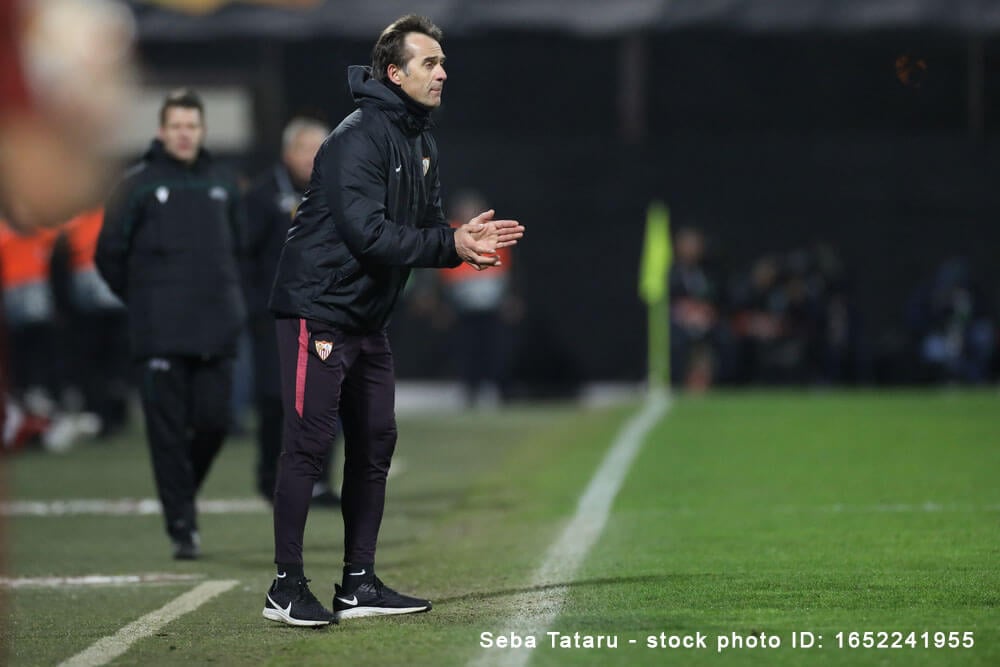
Coach Julen Lopetegui and Qatar’s Tactical Approach
Julen Lopetegui is among the most experienced, and most controversial, coaches at the 2026 World Cup. The former Spain national team head coach was infamously dismissed on the eve of the 2018 World Cup in Russia, after it emerged he had agreed to take over at Real Madrid post-tournament – a breach of trust that ended his involvement before a ball was kicked in a tournament Spain eventually reached the Round of 16 under Fernando Hierro.
His subsequent career traced a path from Real Madrid (brief and turbulent) to Sevilla, where he delivered the 2020 UEFA Europa League – a genuine trophy at a major club and the result that restored his reputation in European coaching circles. Stints at Wolverhampton Wanderers and West Ham United in the Premier League followed, both of which ended in league-table underperformance, though they gave Lopetegui deep familiarity with physically demanding, tactically competitive soccer environments.
At Qatar, Lopetegui has applied a recognizably Spanish framework: structured, possession-oriented, pressing in organized waves rather than with relentless intensity. The system typically runs as a 4-3-3 or 4-2-3-1, with emphasis on short passing sequences from the back and movement in advanced areas designed to create numerical overloads in wide channels. The pressing is disciplined and triggered – Qatar press when the opponent’s build-up is forced into predictable positions – and retreat into a compact defensive block when possession is lost in dangerous zones.
The coaching challenge at Qatar is making these principles work with players primarily developed in the Qatar Stars League, a competition that – despite considerable investment in facilities and wages – does not replicate the physical intensity or tactical density of European football. The discipline and structural clarity Lopetegui has brought to the national setup is, arguably, his most significant achievement in the role. This will be his first World Cup as a head coach in actual tournament action – making 2026 a personal milestone alongside a national one.
Qatar’s World Cup 2026 Squad and Key Players
Qatar’s roster blends veterans of the 2022 home tournament with players developed through the Aspire Academy – the nation’s high-performance development program that has produced virtually every Qatari international of note since the mid-2000s.
Akram Afif
Qatar’s most technically accomplished player and their primary creative threat. Afif operates as a wide attacker and is the primary outlet for Lopetegui’s combination play in advanced areas. His dribbling ability, direct running, and capacity to produce decisive moments in tight situations set him apart from his teammates when judged against top-level international standards. At the 2023 AFC Asian Cup he was outstanding, cementing his status as Qatar’s standout individual.
Almoez Ali
The centre-forward who established his international reputation with a record-breaking goal tally at the 2019 AFC Asian Cup. Ali provides the vertical reference point in Lopetegui’s attack – his movement between lines and ability to combine with wide players give Qatar’s front line its structural coherence.
Hassan Al-Haydos – Captain
The veteran winger and long-serving national team figure brings the experience of multiple AFC championships and the 2022 World Cup to a squad that still leans on his leadership. Al-Haydos has been Qatar’s most consistent player across different coaching regimes – his technical quality and understanding of Aspire-developed teammates makes him a connective tissue figure in the roster even as his direct output naturally evolves with age.
Meshaal Barsham – Goalkeeper
The first-choice goalkeeper will need to deliver his finest performances if Qatar are to take anything from a Group B that includes Switzerland’s clinical set pieces and Canada’s direct attacking runs. Barsham’s distribution and shot-stopping under pressure will be tested from the opening whistle against Switzerland in San Francisco.
Pedro Miguel – Left Back
The Brazilian-born naturalised Qatari brings technical quality at left-back that gives Lopetegui an attacking option down the flank that few AFC national teams can replicate. His overlapping runs and crossing ability add a dimension to Qatar’s wide play that is genuinely above the regional average.
Ver esta publicación en Instagram
Qatar’s Strengths and Weaknesses at World Cup 2026
Qatar’s primary competitive strength is tactical cohesion. Lopetegui has had enough time with the squad to instill genuinely clear principles – his side know their shape, their pressing triggers, and their set piece routines with a consistency that was absent under previous coaches. Against opponents who invite pressure and then hit on the break, Qatar’s structured build-up can create dangerous moments even against superior individual quality.
The second strength is tournament experience among the senior core. Players who appeared in the 2022 home World Cup carry a psychological frame of reference that no amount of friendly preparation can provide. They know the scale of the occasion – the environment of a World Cup match, the physical and mental demands, the speed of decision-making required. That institutional knowledge gives Qatar a baseline competitiveness that pure rankings don’t capture.
The weaknesses are real and significant. At the individual level, Qatar’s squad falls below every Group B opponent in terms of technical and physical ceiling when measured against the standards of European and North American professional football. Switzerland’s Akanji and Xhaka operate in the Champions League and top European leagues at a level no current Qatari outfield player matches on current form. Canada’s Alphonso Davies and Jonathan David compete at the highest club level in Europe week-in, week-out.
Defensive vulnerability from set pieces is a specific concern. Qatar have conceded from dead-ball situations at an above-average rate in qualifying, and both Switzerland and Canada are proficient set piece deliverers. Neutralizing those threats will require Lopetegui’s set piece structure to be precise.
Qatar’s AFC World Cup 2026 Qualifying Results
Qatar qualified through the fourth round of AFC World Cup 2026 qualifying, topping Group A.
| Pos | Team | G | W | D | L | GD | Pts |
| 1 | Qatar | 2 | 1 | 1 | 0 | +1 | 4 |
| 2 | UAE | 2 | 1 | 0 | 1 | 0 | 3 |
| 3 | Oman | 2 | 0 | 1 | 1 | -1 | 1 |
Note: Full AFC 4th round Group A standings require verification from official AFC records. Key clinching result: Qatar 2-1 UAE.
Qatar’s World Cup History
Qatar’s FIFA World Cup history is brief – two appearances separated by four years – but its significance to the national soccer narrative is disproportionate to that brevity. Their first appearance, as hosts in 2022, made them the first Arab and Middle Eastern nation to host the tournament. The on-pitch reality was a sobering group stage exit with three defeats and just one goal scored – a result that reflected both the quality of the opposition and the size of the gap between Qatar’s domestic development and the world’s elite.
That 2022 experience should be understood in proper context: host nations frequently struggle at their own tournaments, and the automatic qualification that hosting provides does not come with a guaranteed competitive baseline. Qatar’s program was not yet at the level of their group stage opponents in 2022. The question the 2026 campaign answers is whether four years of development under Lopetegui has meaningfully narrowed that gap.
Their 2026 tournament marks the first time Qatar has needed to earn their way in – and they did. In the context of a national program with just two World Cup appearances, that progression from host-nation automatic berth to proper qualification is the most meaningful development metric available.
| First Appearance | 2022 (as hosts) |
| Total Appearances | 2 (2022, 2026) |
| Best Result | Group Stage (2022) |
Qatar’s Group B Fixtures at World Cup 2026
Group B places Qatar against Canada (co-hosts), Switzerland, and Bosnia-Herzegovina. On paper, every opponent is expected to be stronger – but Group B’s dynamics depend on results, not rankings, and Lopetegui’s structured Qatar can make matches uncomfortable for sides that underestimate them.
| Team | Confederation |
| Canada | CONCACAF (Co-Host) |
| Switzerland | UEFA |
| Bosnia-Herzegovina | UEFA |
| Qatar | AFC |
| Date | Match | Venue | Kickoff ET | Kickoff PT |
| Sat, June 13 | Qatar vs Switzerland | Bay Area Stadium, San Francisco | 3:00 PM | 12:00 PM |
| Wed, June 18 | Canada vs Qatar | BC Place, Vancouver, Canada | 6:00 PM | 3:00 PM |
| Wed, June 24 | Bosnia-Herzegovina vs Qatar | Lumen Field, Seattle | 3:00 PM | 12:00 PM |
The Canada vs Qatar 2026 match on June 18 at BC Place is the fixture Canadian fans will circle as the one to win convincingly. Les Rouges, playing their second group match at home in front of a packed BC Place crowd, will be heavy favourites, and the national weight of expectation will be considerable. For bettors, Asian handicap markets on this match will draw significant Canadian sportsbook action – the precise spread will depend on Canada’s result against Bosnia in their opening fixture. For full group analysis, see our World Cup 2026 groups page.
Qatar World Cup 2026 Odds and Predictions
Qatar are among the tournament’s longer-priced sides at major Canadian sportsbooks, with their outright winner odds reflecting the realistic assessment that Group B advancement would represent a significant overachievement. The Qatar World Cup odds on outright markets position them firmly as outsiders – and that assessment is broadly accurate.
In group-specific markets, however, there is tactical nuance to be found. The Qatar vs Switzerland opening match carries genuine intrigue: Lopetegui’s structural discipline against Yakin’s organized Swiss system produces a matchup where both coaches will prioritize not losing. Low-scoring market models suggest the first match in San Francisco is unlikely to be a goal-fest – the under line and draw options at current prices are worth examining before the tournament begins.
The Canada vs Qatar 2026 match at BC Place will attract the heaviest Canadian domestic betting interest of any Group B fixture, with sportsbooks including bet365, FanDuel, and BetMGM expecting significant Les Rouges support to move the lines. Canada should be respected favourites, though the precise margin is the interesting market. Lopetegui’s Qatar are more difficult to beat than their ranking suggests, and a tight result – Canada winning 1-0 or 2-0 – is more probable than a blowout when Lopetegui has time to set up defensively.
For current lines and in-tournament updates, visit our World Cup 2026 odds page. For complete Group B coverage, see the World Cup 2026 hub.
Qatar’s 2026 World Cup matters not because they are expected to advance, but because they earned the right to be there. Lopetegui has given this squad an identity and a structure that 2022’s version never had. If Afif finds form, if the defensive block holds in the opener against Switzerland, and if the draw opens slightly – stranger things have happened in a World Cup group stage.