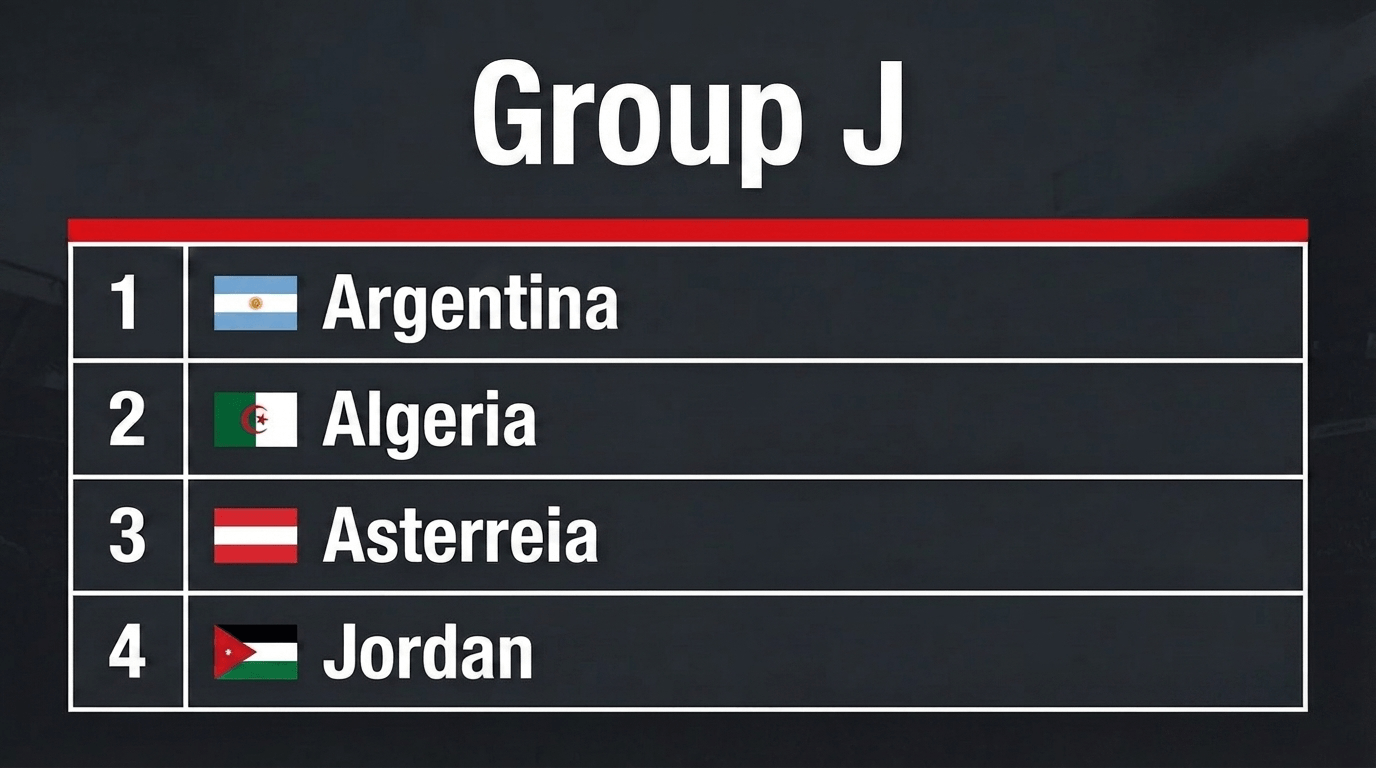
The reigning world champions step into World Cup 2026 Group J carrying the weight of expectation that comes with defending the world’s greatest prize. Argentina, under Lionel Scaloni, have not deviated from the system that delivered the Qatar 2022 title – and at 29.3 years of average age, this squad has the experience to back it up. Austria arrive as Europe’s most intense pressing team, a relentless Ralf Rangnick machine built for exactly this kind of tournament environment. Algeria return to the World Cup after missing 2018 and 2022, bringing attacking talent but tactical inconsistency. Jordan make their historic World Cup debut with a pragmatic defensive system and nothing to lose. The Group J 2026 standings will almost certainly feature Argentina – but the race for second place between Austria and Algeria is one of the tournament’s most intriguing subplots. Here is our complete breakdown.
Group J Overview
World Cup 2026 Group J could be described as one great team, one very good team, and two unpredictable dark horses. Argentina are the defending champions, the CONMEBOL qualifying leaders, and a side whose 64.0% average possession and 9.34 PPDA (passes allowed per defensive action) in South American qualifying paint a picture of a team in full tactical control. Austria enter as arguably the most physically intense side in European soccer under Ralf Rangnick – a side that recorded the continent’s highest tackles count (144), second-highest ball recoveries (365), and the lowest PPDA of any European qualifier (7.14). Algeria qualified comfortably but carried tactical inconsistencies that their Swiss-born coach Vladimir Petkovic has not fully resolved. Jordan, qualifying for the first time in their history, bring a low-block defensive system that generates danger in transition and fears no one. The Group J predictions are clear at the top – Argentina advance – but the question of who joins them is genuinely open. Canadian viewers can follow all Group J action on TSN and DAZN.
Argentina: The Same Plan, Sharper Than Ever
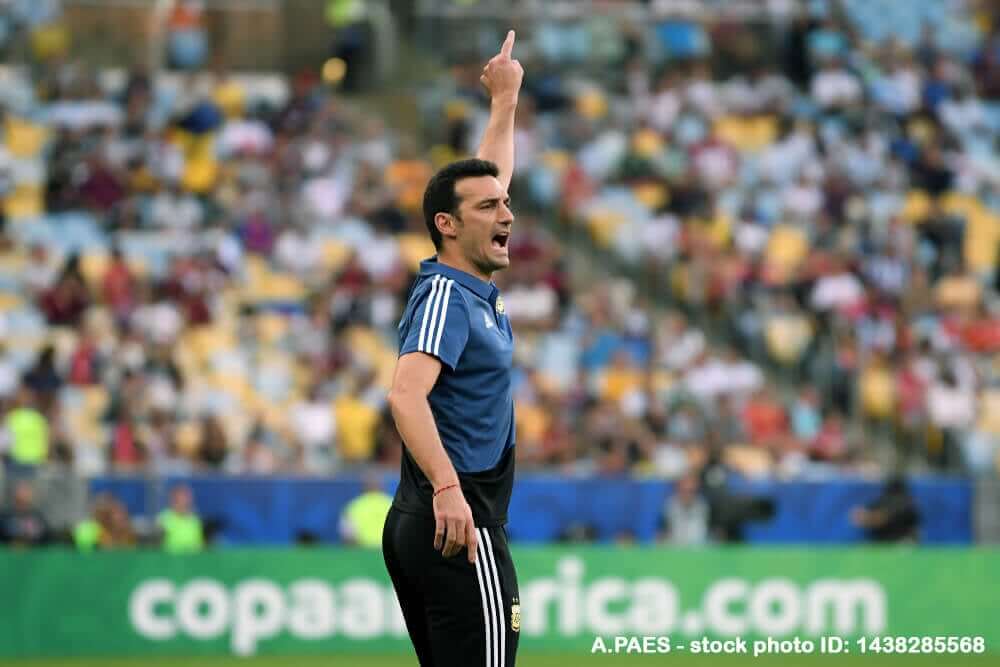
Lionel Scaloni has never chased novelty. Since winning the Copa América in 2021 and the World Cup in 2022, the Argentine coach has stuck resolutely to the principles that made the “Scaloneta” so formidable: high possession (64.0% – CONMEBOL’s best during qualifying), a compact mid-block without the ball (9.34 PPDA), rapid vertical passing after winning possession, and an offensive structure built around familiar, rehearsed patterns with room for individual improvisation at the highest level.
Argentina were the top scorers in CONMEBOL qualifying with 31 goals, clinching their place in the field four rounds before the end of the campaign – a statement of dominance over a 10-team, 18-match marathon that includes Brazil, Uruguay, and Colombia. The squad skews experienced – an average age of 29.3 years makes Argentina one of the oldest rosters in the tournament – but this is not a group of aging veterans stumbling toward one last dance. These are players in or near the peak years of their careers who know exactly how to win in high-pressure environments.
Argentina World Cup 2026 carries its own specific storyline: Lionel Messi, now 38, is not the player he was in Qatar – his role has been managed carefully to minimize the physical load – but the system around him has evolved to compensate. Argentina is no longer Messi and ten others. The collective is balanced, disciplined, and brutal in its efficiency. Julián Álvarez leads the line with tireless movement. The midfield structure shields the backline. Group J 2026 will present no serious challenge to Argentina’s advancement – and their Group J odds reflect it.
Austria: Rangnick’s Pressing Machine at Full Throttle
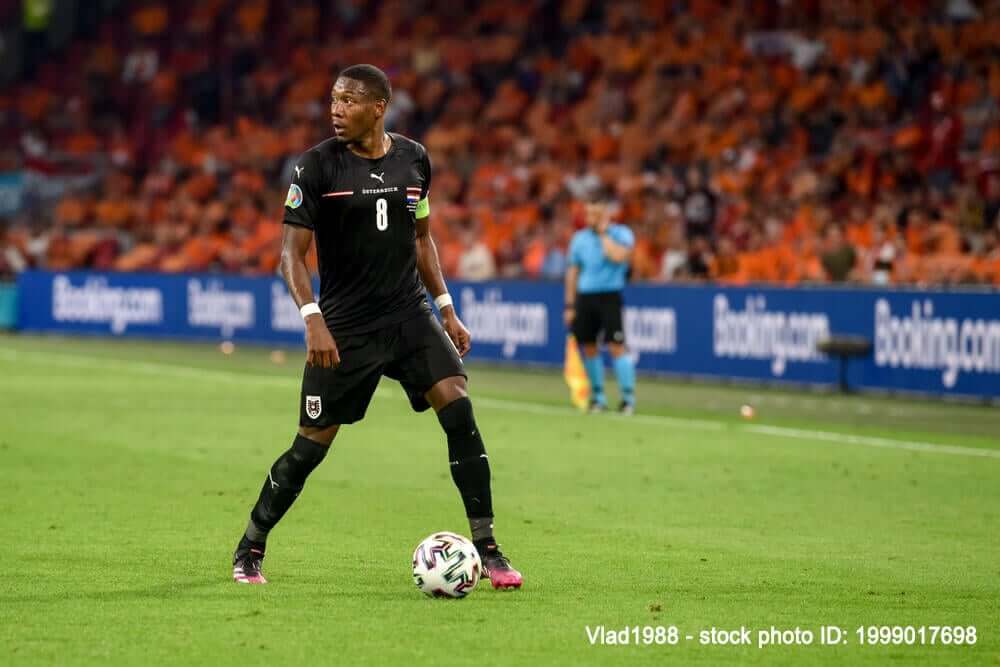
No team in European qualifying pressed with the sustained ferocity that Ralf Rangnick’s Austria brought across their entire campaign. The numbers are not just impressive – they are outliers in the most literal statistical sense. Austria registered the most tackles of any UEFA qualifying nation (144), the second-highest ball-recovery total (365), and the lowest PPDA on the continent – 7.14 – meaning they allowed opponents fewer than eight passes per defensive action, squeezing the life out of any team that attempted to build through their pressure. For comparison, England and Germany – both historically elite pressing teams – both returned higher PPDA values than Austria.
Rangnick’s system is built around a core principle: never let the opposition settle. Press immediately on loss of possession, recover the ball high up the pitch, and then move it vertically before the opposition’s defensive structure resets. One or two passes from turnover to shooting opportunity is the ideal. It is a demanding, physically punishing style that requires elite fitness levels across the entire roster – and Rangnick has built his squad precisely to sustain it for 90 minutes at international level.
Austria clinched first place in their European qualifying group with a 1-1 draw against Bosnia and Herzegovina, confirming their place in North America ahead of the final matchday. In World Cup 2026 Group J, their most important match is against Algeria on June 27 – a direct elimination match that could come down to who can sustain their tactical identity longer. Austria’s intensity is their most dangerous weapon, and it makes them the clear favourite for second place. Group J predictions that overlook Austria’s defensive work rate are making an expensive mistake.
Algeria: Second-Half Football and Dangerous Potential
Algeria return to the World Cup – their first appearance since 2014 – after a qualifying campaign that was convincing in its results but sometimes unconvincing in its execution. Eight wins from ten matches, Mohamed Amoura as the campaign’s top scorer with 10 goals, and a 63.6% average possession figure that ranked second among CAF qualifiers. The raw numbers suggest a dominant team. The underlying data tells a more complicated story.
Under Vladimir Petkovic, Algeria’s build-up phase was frequently stagnant – too much lateral passing, a tendency to lose the ball under pressure, and occasional fragility in transition that sit oddly alongside the individual creativity and technical quality the roster undeniably possesses. Riyad Mahrez remains capable of decisive moments; Mohamed Amoura’s goalscoring instincts at club level are legitimate. But translating that individual quality into a cohesive 90-minute team performance has been Petkovic’s persistent challenge.
What Algeria do have is a genuine second-half gear. There is a pattern in their qualifying results of sluggish first halves followed by sharper, more press-intensive second periods – a tendency to change tempo at half-time, apply more direct pressure, and force opponents into errors through intensity rather than structure. In the Group J table race, Algeria’s most winnable fixtures are their first two – Argentina and Jordan – and their path to second place requires staying competitive against Austria. For World Cup 2026 Group J bettors, Algeria represent genuine but volatile value.
Jordan: A Historic Debut Built on Defensive Resilience
Jordan’s qualification for their first-ever FIFA World Cup – secured with a 3-0 win over Oman – was an achievement celebrated across the nation. Under coach Jamal Sellami, the Nashama reached the tournament with the lowest average possession of any qualified Asian side (46.7%) – a figure that reflects deliberate strategy, not limitation. Jordan never intended to dominate the ball. They intended to concede it, organize defensively, and counter at speed.
Sellami has committed fully to a three-central-defender structure that retreats into a 5-4-1 without the ball, relying on the wide centre-backs to win individual aerial duels and initiate rapid counter-attacks with a single forward run. When Jordan win the ball deep, they are one or two passes away from threatening the opposition backline – they generate one of the best shot-to-transition ratios of any Asian qualifier. Their offensive output is exclusively generated from vertical balls after winning possession; there is no plan B that involves sustained build-up play.
The challenge in Group J 2026 is obvious: Argentina and Austria are not teams that allow the open spaces Jordan’s counter-attack style needs to function. Against Algeria, Jordan have a legitimate chance of taking points. But for the Group J standings to feature Jordan in the top two, a shock of genuinely historical proportions is required. Their significance in this group is as a potential spoiler – particularly in the final match against Argentina, where a fully qualified Albiceleste rotation creates uncertainty.
Group J Fixtures – All Times Eastern (ET)
| Date & Time (ET) | Match | Venue |
| Tuesday, June 16 – 9:00 PM ET | Argentina vs Algeria | Kansas City |
| Wednesday, June 17 – 12:00 AM ET | Austria vs Jordan | San Francisco Bay Area |
| Monday, June 22 – 1:00 PM ET | Argentina vs Austria | Dallas |
| Monday, June 22 – 11:00 PM ET | Jordan vs Algeria | San Francisco Bay Area |
| Saturday, June 27 – 10:00 PM ET | Algeria vs Austria | Kansas City |
| Saturday, June 27 – 10:00 PM ET | Jordan vs Argentina | Dallas |
All Group J fixtures are available on TSN, CTV, CBC, RDS (French-language), and DAZN for Canadian viewers. Note the June 17 Austria vs Jordan match kicks off at midnight ET – a late-night watch on the West Coast but prime time for those on Pacific time. The June 27 simultaneous double-header, with Argentina and Algeria both in action at the same moment, could deliver dramatic final-minute permutations.
Group J Odds and Predictions
The Group J odds available on major Canadian sportsbooks including bet365, FanDuel, and BetMGM are predictably Argentina-heavy – the champions are priced as near-certain qualifiers, with Austria as comfortable favourites for second. Algeria carry value at the outsider price, and Jordan’s historical debut comes with longshot numbers across the board.
| Team | To Qualify (Top 2) | To Win Group J |
| Argentina | -2000 / 1.05 | -500 / 1.20 |
| Austria | -600 / 1.17 | +300 / 4.00 |
| Algeria | +180 / 2.80 | +800 / 9.00 |
| Jordan | +700 / 8.00 | +3000 / 31.00 |
Argentina to qualify (-2000) exists almost exclusively as a parlay anchor – there is no standalone analytical argument for placing a single bet at that price. Used as one leg of a multi-team World Cup parlay, however, it functions as close to a certainty as the sport allows. Austria to qualify (-600) is similarly safe in isolation: their qualifying numbers are elite, their system is proven, and Algeria – their primary competition for second place – bring questions Petkovic has not yet resolved.
Algeria to qualify (+180) is the most interesting bet in this group. Their individual talent is sufficient to beat Austria on the right day; their second-half tendencies can flip a match that looks settled. If Amoura is sharp, Mahrez is involved, and Algeria execute their half-time gear-change against the right opponent, a place in the knockout stage is absolutely within reach. For the value-oriented bettor building a Group J 2026 parlay, Algeria to qualify with Argentina to top the group makes for a defensible combination.
Our Group J predictions: Argentina win the group, likely with maximum or near-maximum points. Austria advance in second place after surviving a tight finish with Algeria. Jordan earn a famous point – possibly against Argentina in a rotated lineup – and exit having played with credit.
Group J standings forecast: 1. Argentina (9 pts) | 2. Austria (6 pts) | 3. Algeria (3 pts) | 4. Jordan (1 pt)
Follow Argentina’s championship defence and Austria’s pressing ambition through our World Cup 2026 Groups coverage. For real-time lines, visit our World Cup 2026 Odds tracker. Everything is at our World Cup 2026 hub.