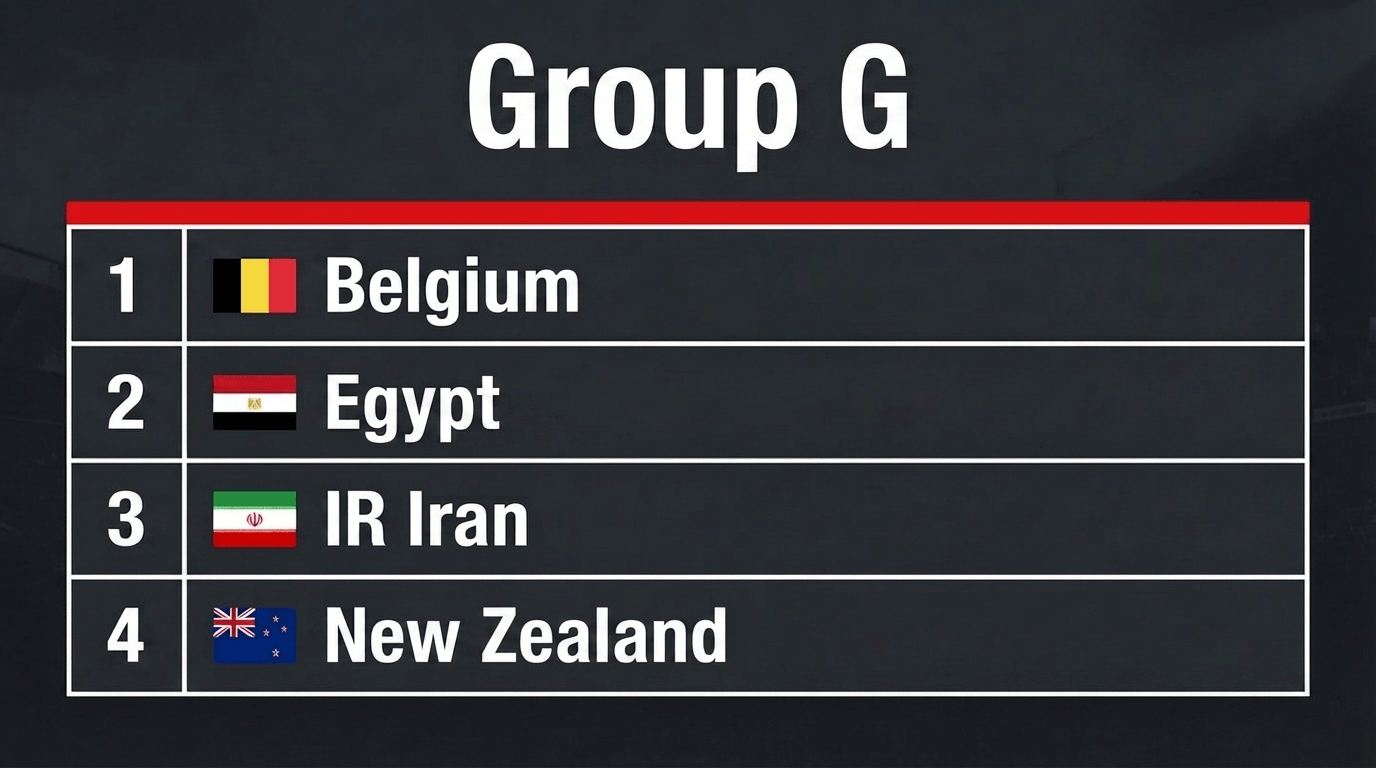
Belgium enter World Cup 2026 as a team shedding the long shadow of their Golden Generation – and doing so louder than anyone expected. Under Rudi Garcia, they have become one of the most dynamic attacking rosters in international football, ranking first in European qualifying for opposition penalty area touches and attempted dribbles. Egypt arrive with Mohamed Salah at the centre of everything, having qualified without a single defeat. Iran bring their fourth consecutive World Cup qualification through resilience, tactical pragmatism, and a clinical counter-attacking threat. New Zealand, qualifying from the OFC in their first tournament appearance since 2010, face their greatest step up in class. Group G fixtures run across Seattle, Los Angeles, and Vancouver – venues that will already be buzzing from earlier Canadian co-host excitement.
Group G Overview
World Cup 2026 Group G is defined by a power gap that is real but not insurmountable. Belgium are the group’s dominant force, having qualified for their 16th World Cup by hammering Liechtenstein 7-0 and topping UEFA Group J with a record that showcases their attacking depth and pressing intensity. Egypt return after missing Qatar 2022, qualifying unbeaten with just two goals conceded across ten African matches – a record underscored by Hossam Hassan’s defensive organizational discipline and the perpetual X-factor of Mohamed Salah. Iran secured their fourth consecutive World Cup in dramatic fashion: twice coming from behind against Uzbekistan to earn a 2-2 draw that confirmed their AFC passage on March 25, a result that encapsulates the tenacity with which Amir Ghalenoei’s team operates.
New Zealand, the OFC representative, qualified by defeating New Caledonia 3-0 in the confederation’s final and appear in their third World Cup overall, having previously done so in 1982 and 2010. Two advance. The group g world cup 2026 standings will be settled across Seattle, Los Angeles, and Vancouver – with BC Place hosting what could be a decisive Matchday 2 clash between New Zealand and Egypt. Follow all developments on our World Cup 2026 groups page.
Belgium: Dynamic, Dribble-Happy, and Hungrier Than Ever
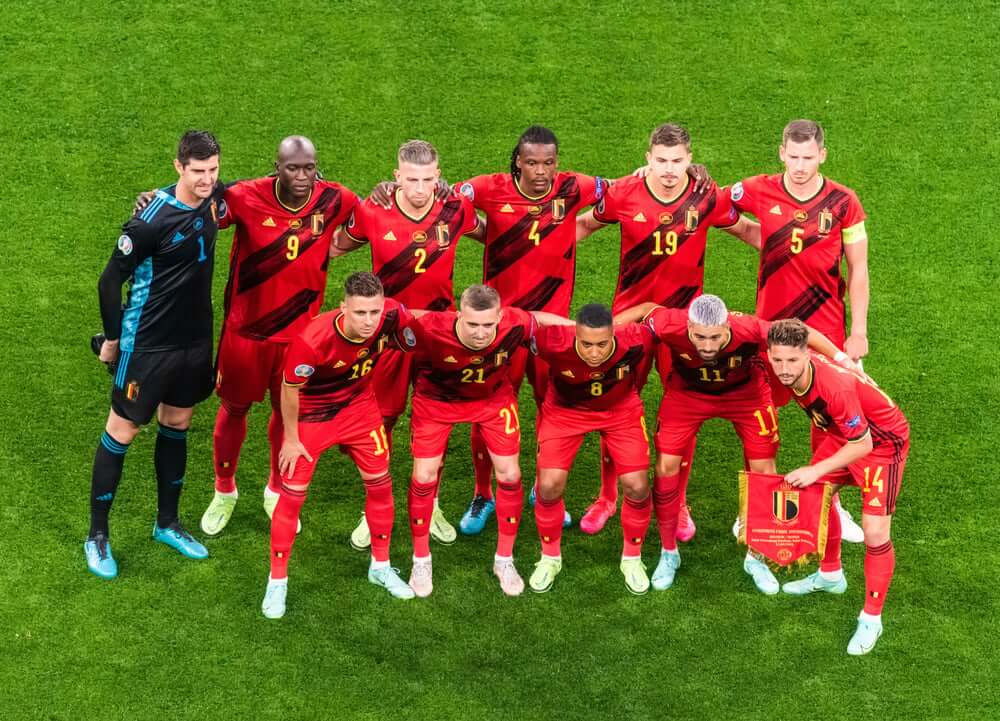
For a decade, Belgium were measured against the impossible standard of a Golden Generation that never won a major tournament. De Bruyne, Hazard, Lukaku, Kompany, Courtois – a collection of talents that filled trophy cabinets at club level while repeatedly falling just short on the international stage. That era is over. The Belgium that qualified for 2026 by posting 491 penalty area touches in European qualifying – 101 more than second-placed Croatia – and attempting 201 dribbles across the phase is a different animal: younger, more direct, and with an identity built on transition speed rather than individual brilliance.
Rudi Garcia’s 4-3-3 is constructed to create space for Jérémy Doku and Kevin De Bruyne to operate in decisive areas. Doku’s pace and dribbling are the group’s most destabilizing individual quality – in a group g world cup 2026 context, no other player creates 1v1 situations as consistently or exploits them as effectively. De Bruyne, at 35, may no longer be an 80-minute force, but his ability to shape attacks from deep positions and deliver the final pass with precision remains extraordinary. Garcia’s system deliberately builds through wide channels to generate these situations: high fullbacks, an industrious double pivot, and front three movement designed to force the opposition into one-versus-one defensive moments that Doku relishes.
Belgium’s Matchday 1 fixture against Egypt in Seattle at 6:00 PM ET is the group’s defining early contest. Egypt’s cautious defensive structure – two goals conceded in ten qualifying matches – presents exactly the kind of organized low block that Belgium have learned to dismantle through patient wide play and late runners from midfield. A Belgium win there would almost certainly confirm their group stage advancement. Their other fixtures against Iran and New Zealand, while not trivial, present manageable obstacles for a team whose qualifying form – first in UEFA qualifying for penalty area incursions – suggests genuine readiness for the knockout rounds.
Egypt: Salah, Structure, and the Defensive Floor
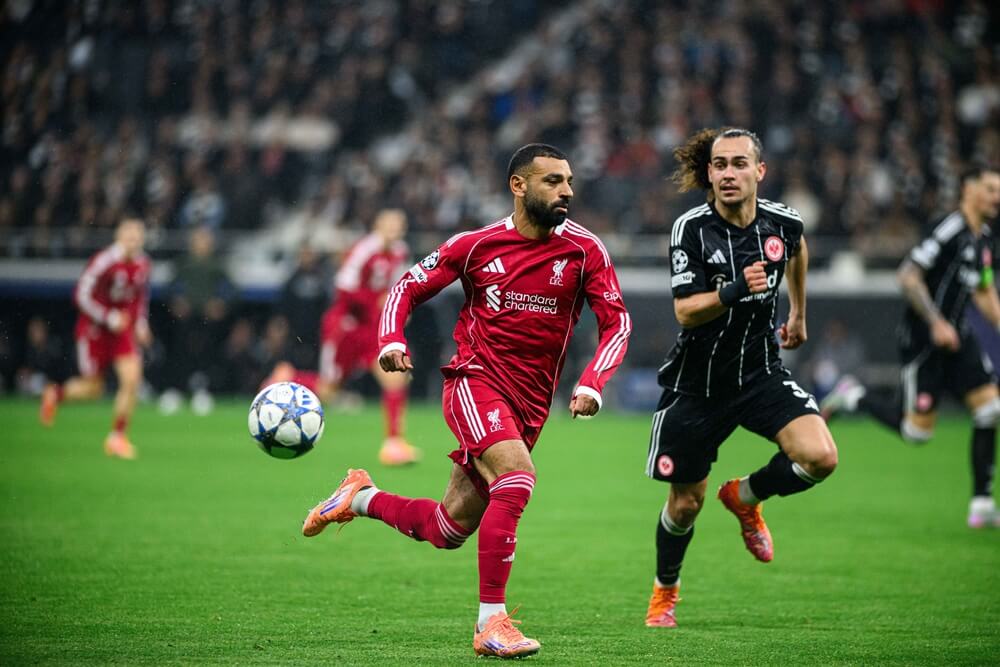
Egypt’s path back to the World Cup after missing Qatar 2022 was built on a principle that coach Hossam Hassan has never compromised: do not concede. Two goals across ten African qualifying matches. Not five. Not three. Two. That defensive record, combined with a qualification secured with one match still to play (a 3-0 win over Djibouti), reveals a team that is exceptionally difficult to score against even if it is not always easy to watch.
The 4-3-3 or 4-2-3-1 system – the choice depends on the opponent – is organized from back to front around conservative defensive positioning. Lines are compact, the central areas are protected, and the fullbacks are instructed to prioritize defensive duties over attacking contributions until possession is safely established. The trade-off is an attacking output that sits below their expected goals (xG) by 2.4 goals – a figure that confirms Egypt are not a team that creates and finishes at an elite rate. They led qualifying in key passes, however, which indicates genuine creative intelligence in the final third even if the conversion rate does not reflect it. Everything – genuinely everything – flows through Mohamed Salah’s ability to make decisive moments from individual quality in tight situations.
For group g predictions, the Egypt framework is straightforward: defend to a draw against Belgium, win the matches against Iran and New Zealand, and trust Salah to produce the goal or assist that separates them when quality is required. Their Matchday 2 fixture against New Zealand at BC Place in Vancouver at midnight ET is effectively a must-win – a team with Egypt’s defensive record should not drop points against the OFC representative. The question is not whether Egypt can defend Group G opponents into submission; it is whether Salah’s individual influence is sufficient to manufacture the winning goals that a low-scoring team requires.
Iran: Counter-Attacking Pragmatism Built for the Long Game
Amir Ghalenoei’s Iran produced one of the Asian qualifying campaign’s most dramatic qualification moments: trailing twice against Uzbekistan before a 2-2 draw on March 25 confirmed their place in North America. It was a result that encapsulated everything about this Iran side – resilient, tactically patient, and capable of producing in high-pressure moments through individual quality rather than collective dominance.
The 4-2-3-1 is the system, and it is deployed reactively. Iran tend to set up in a compact mid-block, invite opponent possession in the middle third, and transition to attack quickly once possession is won – with Mehdi Taremi and Sardar Azmoun as the focal points of the counter-attacking structure. The creativity metrics from Asian qualifying are genuinely promising: Iran completed the second-highest volume of through balls in the confederation (12), which suggests their center midfielders are capable of breaking defensive lines when space is available. Their xG of 18.99 ranked sixth across Asian qualifying nations – respectable for a team whose primary identity is defensive and transitional.
The limitation is the challenge of translating this approach against the higher-quality opposition they will face in group g world cup 2026. Belgium’s press and directness will reduce Iran’s transitional space significantly compared to what they encountered in the AFC; Egypt’s defensive density is comparable to their own; and New Zealand – while the group’s weakest team – are physically direct enough to compete in the low-block dueling Iran specializes in. For the group g standings, Iran realistically target second place. The Matchday 2 clash against Belgium in Los Angeles at 6:00 PM ET on June 21 is their critical test – a point against Garcia’s side would open the group considerably for the final matchday.
New Zealand: The All Whites’ Toughest Assignment Yet
Third World Cup. First since 2010. New Zealand qualified by defeating New Caledonia 3-0 in the OFC playoff final – a result that, while achieving the objective, offered limited information about how Darren Bazeley’s side will handle the step up to Belgium, Egypt, and Iran. The gulf between OFC-level competition and Group G’s actual opponents is, to be direct, significant.
Chris Wood is the central tactical question for Bazeley. The Nottingham Forest striker – 33 years old and a consistent Premier League performer – managed just three goals across a qualifying campaign where the competition was broadly below the standard of his club opposition. Wood’s natural game is physical, positional, and built on penalty-area presence: he wins aerial duels, holds up play, and is lethal from crosses. What Bazeley wants is a Wood who participates more actively in the team’s build-up play and receives the ball earlier in the final third, acting as a creative reference point as well as a finisher. Converting a penalty area predator into a more complete center forward is a coaching challenge that takes time – time that an OFC qualification campaign does not always force a coach to spend.
The 4-3-3 used in qualifying – effective against Fiji, New Caledonia, and the region’s other participants – will likely need to evolve into a more structured 4-2-3-1 or 4-5-1 for the World Cup proper. A lower defensive line, more disciplined midfield coverage, and reliance on Wood for isolated moments of quality when the ball can be delivered quickly in transition. For group g predictions, New Zealand are the group’s most clear-cut fourth-place team – but the opportunity to represent New Zealand and Oceania on the world’s biggest stage represents a genuine achievement that transcends a group d standings position. Their Matchday 2 fixture against Egypt at BC Place in Vancouver at midnight ET may be the most important match in All Whites history.
Group G Fixtures: Full Schedule in Eastern Time (ET)
All six group g fixtures at the 2026 World Cup are listed below with kickoff times in Eastern Time (ET). Canadian fans can watch on TSN, CTV, CBC, and RDS. BC Place in Vancouver hosts two Group G matches, making this one of the most locally relevant groups for Western Canadian viewers.
| Matchday | Date | Match | Time (ET) | Venue |
| MD 1 | Mon, June 15 | Belgium vs Egypt | 6:00 PM ET | Lumen Field, Seattle |
| MD 1 | Mon/Tue, June 15/16 | Iran vs New Zealand | 12:00 AM ET (June 16) | SoFi Stadium, Los Angeles |
| MD 2 | Sun, June 21 | Belgium vs Iran | 6:00 PM ET | SoFi Stadium, Los Angeles |
| MD 2 | Sun/Mon, June 21/22 | New Zealand vs Egypt | 12:00 AM ET (June 22) | BC Place, Vancouver |
| MD 3 | Fri/Sat, June 26/27 | Egypt vs Iran | 2:00 AM ET (June 27) | Lumen Field, Seattle |
| MD 3 | Fri/Sat, June 26/27 | New Zealand vs Belgium | 2:00 AM ET (June 27) | BC Place, Vancouver |
The Matchday 3 simultaneous kickoffs – Egypt vs Iran and New Zealand vs Belgium both at 2:00 AM ET early June 27 – will test the commitment of Canadian night owls, but the stakes at that point in the group g standings will likely make them unmissable. BC Place hosts New Zealand vs Egypt on Matchday 2 at midnight ET and New Zealand vs Belgium on Matchday 3, making Vancouver one of Group G’s central hubs.
Group G Odds: Belgium Lead, Egypt the Defensive Value
The World Cup 2026 odds for group g world cup 2026 position Belgium as clear group winners, with Egypt expected to accompany them through to the round of 32. Here are approximate group g odds from major Canadian sportsbooks:
| Team | To Win Group G | To Qualify (Top 2) |
| Belgium | -250 | -600 |
| Egypt | +320 | -145 |
| Iran | +650 | +220 |
| New Zealand | +1800 | +500 |
Belgium’s -250 odds to win the group are anchored in qualifying evidence that is difficult to dismiss: 491 penalty area touches, 201 attempted dribbles, first place in UEFA’s Group J, and a roster that features Doku’s pace, De Bruyne’s distribution, and Garcia’s attacking philosophy working together efficiently. The qualification win over Liechtenstein was emphatic, and the squad depth to handle injuries or rotation is significantly greater than any other group member.
Egypt at -145 to qualify is where the market’s best value appears in Group G. Two goals conceded across ten qualifying matches, an unbeaten qualification record, and a Salah whose best form remains elite even at this stage of his career – these factors combine to make Egypt a genuinely difficult team to beat in a knockout-style pressure match. For who will qualify from group g, backing Egypt to advance at this price makes analytical sense, particularly for Canadian bettors who have observed how Salah consistently elevates his level at major tournaments.
Iran at +220 to qualify is the group’s most debated secondary bet. Their counter-attacking structure can hurt teams that over-commit – and both Belgium’s high press and Egypt’s forward runs create the transitional spaces Ghalenoei’s team is designed to exploit. New Zealand at +500 reflects a realistic assessment of the gap between OFC-level qualifying and Group G competition, but Bazeley’s side will compete with pride at BC Place. For comprehensive group g standings tracking and updated odds throughout the tournament, follow our World Cup 2026 hub.