The Golden Generation’s final curtain call is approaching. Belgium arrive at Belgium World Cup 2026 carrying the weight of a decade’s worth of unfulfilled potential: a FIFA world ranking that once sat at number one, a third-place finish in Russia 2018 that remains the high-water mark of the nation’s football history, and a group-stage elimination in Qatar 2022 that confirmed the cycle was ending. Now, under French coach Rudi Garcia, the Red Devils are attempting something difficult – winning a major tournament in the twilight years of their best generation while simultaneously building around the wave of younger talent that will define Belgian football through the 2030s. For bettors at Canadian sportsbooks, the Belgium World Cup 2026 situation is genuinely nuanced: Group G looks navigable, the individual quality remains exceptional, but the structural and fitness concerns around the key veterans are as real as they have ever been.
Belgium’s Road to North America
The road to qualification was characterised by drama that both encouraged and alarmed Belgian supporters in equal measure. In UEFA Group J, Wales and North Macedonia emerged as the competitive challengers, with the British side proving a particularly stubborn opponent across two high-scoring encounters. Belgium surrendered a 3-0 lead at home before winning 4-3 – a performance that highlighted the attacking brilliance but defensive vulnerability that defines this squad. They then repeated the pattern, winning 4-2 away in Cardiff to consolidate their qualifying position.
Kevin De Bruyne, despite recurring injury setbacks throughout the qualification window, contributed six goals across the campaign – a remarkable return for a midfielder operating under the physical constraints of a body that has endured considerable wear. The final match of qualifying, a 7-0 demolition of Liechtenstein, secured the top spot and provided a flattering final scoreline for a campaign that was more complicated than that result suggests.
Garcia arrived in January 2025 inheriting a dressing room fractured by the conflicts of the Domenico Tedesco era – publicly documented disputes with Courtois, De Bruyne, and Lukaku had created toxic dynamics that the Belgian FA needed to resolve before any tournament could be approached with serious ambition. Garcia’s early management achievement was restoring basic professional cohesion, getting those three veterans back in the same room pulling toward a shared objective. At World Cup 2026, whether that cohesion holds under tournament pressure is the team’s central human variable.
Rudi Garcia’s Methods and System
Garcia brings a coaching CV built across French and Italian football – Ligue 1 and Coupe de France double with Lille in 2011, a UEFA Champions League runner-up finish with Roma in 2018, and stints at Lyon, Marseille, Al-Nassr, and Napoli that demonstrated his ability to manage star-heavy environments with complex internal politics. The Belgium role is his first in international management, and the learning curve has been visible in how he navigates the specific demands of preparing a squad across international windows rather than daily training sessions.
His system of choice is a 4-2-3-1 as the starting framework, with the flexibility to shift into a 4-3-3 depending on the opponent and the specific personnel available. The defensive two – Amadou Onana as the primary ball-winner alongside Youri Tielemans – has functioned as the spine that allows De Bruyne creative freedom slightly ahead of them without leaving the defensive structure exposed. When De Bruyne operates effectively in the advanced midfield zone, Belgium are genuinely difficult to stop: his passing range, vision, and set-piece delivery at 35 years old remain among the best in world soccer.
The attacking triangle of Leandro Trossard, De Bruyne, and Jeremy Doku generates the width and pace that the 4-2-3-1 requires to function at its best. Doku – raw, explosive, and increasingly decisive for Manchester City – provides the left-sided directness that Belgium’s system has historically lacked when Eden Hazard’s individual quality was no longer available. Trossard’s versatility allows him to appear anywhere across the forward line. And Romelu Lukaku, Belgium’s all-time scorer with over 85 international goals, provides the aerial and physical presence through the centre that the system’s combinations are designed to supply.
Garcia’s task before the tournament is managing the fitness of three key players – De Bruyne, Lukaku, and Courtois – whose injury histories through the 2025-26 club season have each been complicated. De Bruyne underwent surgery in October 2025 and spent months returning to form at Napoli. Lukaku recovered from a thigh tear. Courtois, despite his status as arguably the world’s best goalkeeper, is 32 and has had his own injury management challenges at Real Madrid. If all three arrive in North America fit and sharp, Belgium’s ceiling rises significantly.
Squad & Key Players
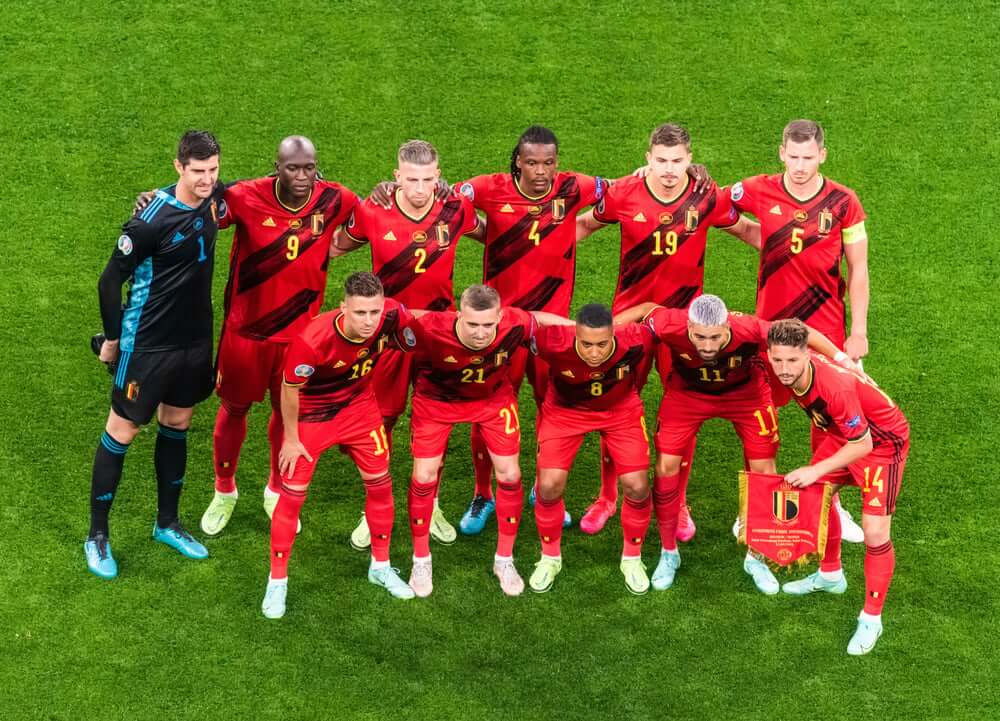
Thibaut Courtois anchors everything. The most decorated goalkeeper in Real Madrid’s recent history – Champions League titles, Ballon d’Or Golden Glove in 2022 – returned to the national team setup after refusing to play under Tedesco, and his presence between the posts restores a level of last-line security that Belgium had been missing. At the 2018 World Cup in Russia, he won the Golden Glove, making saves that preserved results Belgium needed at critical moments. He will do so again if the defense in front of him requires it, which – given Belgium’s historic tendency to defend with reasonable quality but not elite discipline – it almost certainly will.
Kevin De Bruyne is approaching his 35th birthday by the time the tournament begins, and every squad announcement comes with an injury update attached. His body has been managing the accumulated toll of an extraordinary club career, but when he is fit and operating in Belgium’s number-10-adjacent role, he remains one of the game’s three or four most dangerous creative players. Six qualifying goals established that the output is still there when the body cooperates. His surgically repaired knee, expected to be fully functional by March 2026, will need competitive minutes before June to rebuild the rhythm that makes him most effective.
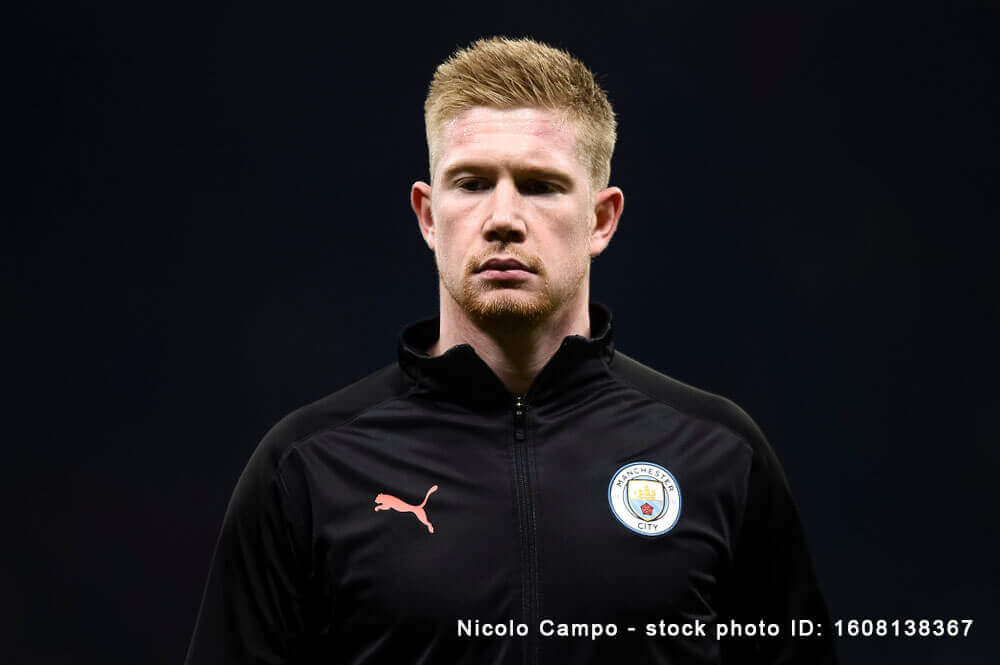
The de Bruyne World Cup 2026 question is ultimately a durability question rather than a quality one – the talent has not diminished, but the body’s ability to sustain 90-minute contributions across multiple matches over four weeks of a major tournament is genuinely uncertain. Garcia’s plan presumably involves protecting De Bruyne’s minutes in the group stage against Iran and New Zealand, while deploying him as the central figure against Egypt and in the knockout rounds.
Jeremy Doku, 23 during the tournament, represents Belgium’s most exciting attacking talent and their bridge to the next generation. His directness on the left – taking players on in one-on-one situations with a pace and unpredictability that even top-level full backs struggle to contain – has made him a weekly danger at Manchester City. For Belgium, he plays in a wider role that gives him more freedom to isolate and attack than his club position always provides. A productive World Cup from Doku would establish him as one of Europe’s elite forwards heading into the next cycle.
Amadou Onana has matured into one of the Premier League’s more complete midfielders since his move to Everton and then the top clubs interested in his profile. His combination of physical presence, ball-winning, and increasingly confident distribution makes him the defensive foundation that frees De Bruyne to operate further forward. Without Onana performing at his level, Belgium’s defensive midfield stability collapses.
Young players to watch include Joaquin Seys at left back – 20 years old, established at Club Bruges – and Arthur Theate at centre-back, whose ball-playing quality from deep provides the defensive build-up phase that Garcia’s system requires. The centre-back pairing lacks the elite-level pedigree of the squad’s forward line, but Courtois behind them covers considerable ground that less protected goalkeepers cannot.
Strengths & Weaknesses
Belgium’s attacking quality is simply too good to dismiss regardless of age. The combination of De Bruyne’s creative intelligence, Doku’s direct pace, Lukaku’s aerial and physical dominance, and Trossard’s versatile cleverness provides a variety of goal-scoring threats that Group G opponents cannot reliably neutralize simultaneously. Egypt – arguably the group’s second-strongest team – will gameplan primarily around stopping De Bruyne’s distribution. If Doku burns the right back while De Bruyne draws defensive attention centrally, Belgium will create opportunities regularly.
Courtois is a genuine strength multiplier. His presence at goalkeeper makes Belgium competitive even in matches where the defensive outfield performance is below the standard the opposition’s attack deserves. He has won Champions League finals and LaLiga titles through individual performances that changed what teams could afford to do in front of him. That quality does not disappear at a World Cup.
The weaknesses are on the defensive side of the defensive record. Belgium’s tendency to surrender leads – the 3-0 to eventually 4-3 win over Wales being the most jarring example – points to a team that prioritizes attack over defensive discipline in a way that high-quality opponents will eventually punish. The centre-back pairing is competent but not elite; the full backs push forward aggressively and leave space behind them. Against a counter-attacking team in the knockout rounds, those spaces could be decisive.
The squad depth concerns are real. When De Bruyne has missed matches through injury, Belgium’s creative output has dropped visibly. The back-up options for his specific role – controlling the tempo, delivering the final pass, converting set pieces – do not replicate his quality. A tournament is six to seven matches. If De Bruyne misses two or three with injury recurrence, the team that takes the pitch looks significantly less capable of winning tight knockout matches.
Ver esta publicación en Instagram
How Belgium Qualified
Belgium won UEFA Group J with an unbeaten eight-match campaign – five wins, three draws – accumulating 18 points and finishing three ahead of Wales in second place. The 22-goal tally was the group’s highest attacking output; the seven goals conceded revealed the defensive frailties that Garcia must address before the knockout rounds. North Macedonia and Kazakhstan rounded out a group where Belgium’s superiority was never in genuine doubt, even when individual matches produced the kind of drama that made supporters nervous.
| Team | PJ | W | D | L | GD | Pts |
| 🇧🇪 Belgium | 8 | 5 | 3 | 0 | +22 | 18 |
| 🏴 Wales | 8 | 5 | 1 | 2 | +10 | 16 |
| 🇲🇰 North Macedonia | 8 | 3 | 4 | 1 | +3 | 13 |
| 🇰🇿 Kazakhstan | 8 | 2 | 2 | 4 | -4 | 8 |
| 🇱🇮 Liechtenstein | 8 | 0 | 0 | 8 | -31 | 0 |
The three draws – all with North Macedonia – were the campaign’s only blemishes. Holding Macedonia to a draw rather than winning those direct matches was the tactical reality of facing a team that defended with genuine organization. Belgium’s record of never losing throughout qualifying is the headline number; the subtext is that the gap to second place was only two points, meaning Wales could have caught them with different results in the final round.
Belgium’s World Cup History
Belgium’s World Cup story found its modern identity in 1982, when the Red Devils defeated reigning champions Argentina in the group stage – their first genuinely landmark result at the tournament. From that edition onward, Belgium became a reliable presence at the event’s later stages rather than a periodic qualifier with limited ambition.
The 1986 quarterfinals in Mexico, reached via a penalty shootout defeat of the USSR, established that Belgium could compete with the world’s best across multiple rounds. The 2018 Russia tournament then became the generation’s defining chapter: the stunning 3-2 comeback win over Japan in the round of 16 – trailing 2-0 before producing one of the tournament’s greatest comebacks – and the quarterfinal masterclass that defeated Brazil in Kazan with a counter-attacking performance that football analysts still reference as a benchmark of that tactical approach. France eliminated them in a semifinal they had legitimate chances to win.
Qatar 2022 was the deflating full stop to the Golden Generation’s main chapter. Unable to score past Morocco in a 0-0 draw, defeated by Croatia who would reach the third-place match, Belgium went home with no wins and a reckoning about whether the cycle had run its course. The answer was not quite – but the margin for error at this tournament is essentially zero. Belgium have participated in 14 World Cups across their history and currently rank tenth in the all-time tournament points table.
Ver esta publicación en Instagram
Group G Fixtures and Schedule
Group G offers Belgium an accessible path to the round of 16. Egypt, buoyed by the individual quality of Mohamed Salah and Omar Marmoush, represent the most credible challenge – but even Egypt do not approach Belgium’s overall squad depth. Iran defend compactly and can frustrate opponents who lack the patience to break them down, which Belgium historically struggle with. New Zealand are the group’s debutants and the fixture every tournament favourite wants.
All times are Eastern Time for Canadian viewers on TSN, CTV, and DAZN.
| Date | Fixture | Venue | ET Time |
| Mon, June 15 | Belgium v Egypt | Seattle (Lumen Field) | 3:00 PM ET |
| Mon, June 15 | Iran v New Zealand | Los Angeles (SoFi) | 9:00 PM ET |
| Sun, June 21 | Belgium v Iran | Los Angeles (SoFi) | 3:00 PM ET |
| Sun, June 21 | New Zealand v Egypt | Vancouver (BC Place) | 9:00 PM ET |
| Fri, June 26 | Egypt v Iran | Seattle (Lumen Field) | 11:00 PM ET |
| Fri, June 26 | New Zealand v Belgium | Vancouver (BC Place) | 11:00 PM ET |
Belgian supporters in Canada will be particularly interested in the final group match at BC Place in Vancouver – the third time in the tournament that Canada hosts a Group G fixture. The Egypt opener in Seattle sets the competitive tone immediately: win that, and the group is effectively Belgium’s to control at their own pace.
Ver esta publicación en Instagram
Belgium World Cup Odds & Predictions
The Belgium World Cup odds for the outright title sit between 33/1 and 50/1 depending on the sportsbook – call it roughly 11.00 to 21.00 in decimal format. The wide range reflects market uncertainty about Belgium’s ceiling, with BetMGM carrying the longest price and suggesting a meaningful portion of the market remains sceptical about this squad’s ability to match their talent with tournament results.
My assessment: Belgium will top Group G with relative comfort. The quarterfinale is a realistic and achievable target; the semifinal is possible if the draw is kind and De Bruyne remains healthy. A title run requires things to go right that have not gone right for this generation across three previous major tournaments – which is not impossible, but is priced appropriately at the current odds.
The best value in Belgium’s market is the quarterfinals elimination market at approximately 3/1 (4.00 decimal). History suggests this is where Belgian squads tend to peak – close enough to the medal positions to matter, not quite capable of winning the specific match that would define a generation. If you believe Garcia has solved the psychological barriers that previous coaches could not, the semifinal market at 13/2 (7.50) offers interesting return.
For match betting, Belgium’s games against Iran and New Zealand carry strong over 2.5 goals potential at odds around 1.55-1.65. The attacking quality in the Red Devils roster is too great for either opponent to contain across 90 minutes, and Belgium’s defensive generosity provides opponents opportunities even in mismatches. The Belgium total goals over 1.5 in both of those fixtures is also worth considering at odds typically available around 1.35-1.45.
Check the latest World Cup odds and live lines at bet365, FanDuel, and BetMGM as the tournament approaches – the Belgium market will move significantly based on De Bruyne and Courtois fitness updates in May and June.
Belgium at this World Cup is a story about endings and inheritance – the last dance of a generation that promised more than it delivered, paired with the first act of a new wave that has not yet been tested at the highest level. For bettors, that transition creates opportunity. Quarterfinals and individual match markets on Belgium offer better risk-adjusted returns than the outright, and the Egypt opening fixture is one of the Group G’s most genuinely competitive and interesting betting propositions of the entire group stage.