Morocco arrives at the 2026 World Cup carrying the weight of a continent’s ambitions and the momentum of a historic generation. The Atlas Lions became the first African nation ever to reach a World Cup semifinal when they stunned the world in Qatar 2022 – a result that permanently shifted global expectations for this program. Now under new coach Mohamed Ouahbi, who replaced Walid Regragui just weeks before the tournament, this Morocco World Cup 2026 squad enters Group C as one of the most technically accomplished African rosters ever assembled. Achraf Hakimi captains a group rich in Champions League and Bundesliga pedigree, while 20-year-old Othmane Maamma pushes for a starring role that could define the next decade of Moroccan soccer.
Morocco’s Road to the 2026 World Cup
The story of Morocco’s build-up to this tournament is defined as much by off-pitch turbulence as on-pitch dominance. The shock departure of Walid Regragui – the visionary coach behind the Qatar 2022 semifinal miracle – fewer than 100 days before kick-off sent shockwaves through Moroccan soccer. Regragui had transformed the Atlas Lions from a capable African side into a legitimate global force, and his exit raised urgent questions about continuity, identity, and the psychological readiness of a squad accustomed to his methods.
His replacement, Mohamed Ouahbi, enters the role with unconventional but genuinely earned credentials. A U-20 World Cup title in Chile – delivered with Othmane Maamma as the tournament’s standout performer – proved he can deliver results under major tournament pressure, and his decade-plus work at Anderlecht’s academy in Belgium gave him a tactical education rooted in modern European methods.
Away from the coaching upheaval, Morocco’s recent continental form has been outstanding and controversial in equal measure. Their Copa Africa campaign ended with a final loss to Senegal on the pitch, but Morocco subsequently claimed the title at an administrative level following a misconduct ruling – meaning they enter the 2026 World Cup as Africa’s officially designated reigning champions pending a final CAS determination. That backdrop, chaotic as it appears from outside, has only hardened a squad that consistently performs its best soccer when circumstances demand resilience rather than comfort.
For Canadian fans tuning in on TSN or DAZN, the Atlas Lions are the sort of neutral-friendly team that generates moments and storylines deep into any tournament – and this edition will be no different.
Coach & Tactics: Ouahbi’s Blueprint
Mohamed Ouahbi is a coaching profile that most North American soccer audiences will not immediately recognize – and that unfamiliarity probably works in his favour. Born in Belgium to Moroccan parents, he never played professional soccer, building his entire career on the training ground. He spent more than 15 years developing players at Anderlecht’s academy, one of Belgian soccer’s most productive environments for youth talent, before answering his ancestral homeland’s call in 2022 when Morocco appointed him to lead the under-20 national program. The return on that investment was immediate: Ouahbi guided Morocco’s youth side to the FIFA U-20 World Cup title in Chile, confirming his methods translate to high-stakes international competition.
“I understand perfectly the high expectations surrounding this team,” he said upon taking the senior role. “I take on this responsibility as an immense honour and I promise to work with absolute dedication, humility, and a deep patriotic sense.” Those words landed with an audience that needed convincing – but his track record provides the substance behind the rhetoric.
Tactically, Ouahbi has retained the 4-1-4-1 structure that made Morocco so difficult to break down in Qatar 2022. The system is built around a compact defensive block anchored by a single defensive midfielder – Sofyan Amrabat – who shields a disciplined back four, while a technically gifted midfield four bridges defence and attack with purpose. Morocco conceded just one goal in their first five matches in Qatar, a record that illustrates exactly how this system functions at its ceiling.
Ouahbi’s refinement is an emphasis on positional flexibility. His wide players invert centrally to overload the ten-space; his full-backs push to provide width and quality in crossing; his striker holds and links under pressure, allowing runners from midfield to arrive late into dangerous positions. This versatility allows Morocco to defend deep and counter quickly against Brazil, then press higher and control possession against Haiti and Scotland.
Probable starting lineup: Yassine Bounou; Achraf Hakimi, Nayef Aguerd, Abdel Abqar, Souffian El Karouani; Sofyan Amrabat; Brahim Diaz, Neil El Aynaoui, Ismael Saibari, Eliesse Ben Seghir; Youssef En-Nesyri.
Ver esta publicación en Instagram
Morocco 2026 Squad & Key Players
The Morocco 2026 squad is the deepest and most technically complete the national program has ever assembled – a claim that once seemed impossible but now appears accurate when you survey the clubs and competitions represented across every line of the group.
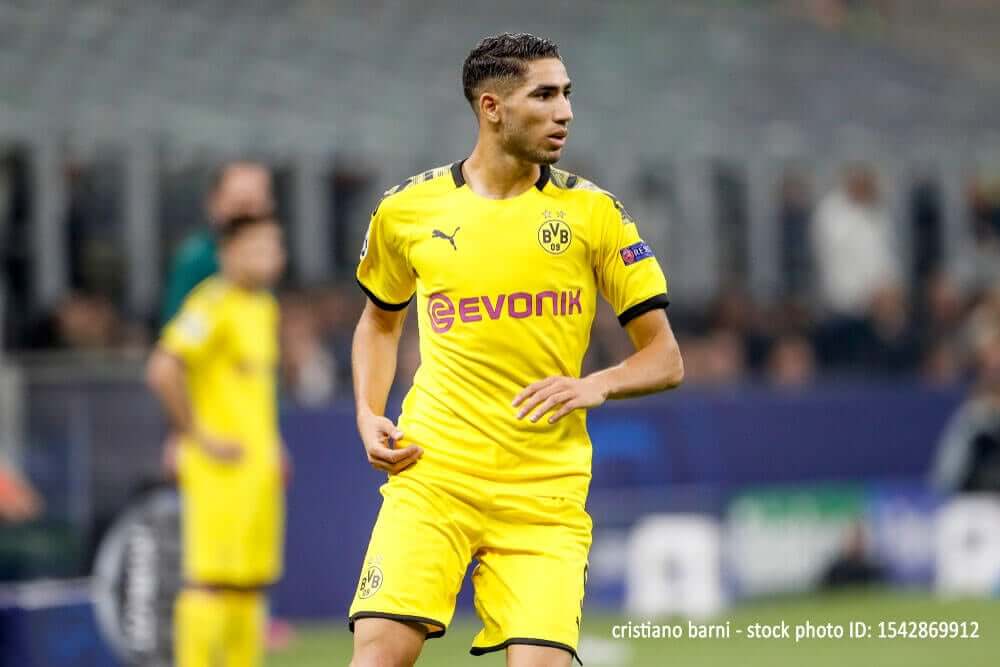
Achraf Hakimi – The Captain
If one player embodies Morocco’s transformation into a genuine global soccer force, it is Achraf Hakimi. Born in Madrid to Moroccan parents, Hakimi holds Spanish nationality but chose to represent the nation of his heritage – a decision that galvanized an entire generation of diaspora players who followed his lead. Now 27 and at the peak of his abilities at PSG, the Champions League winners, he is widely considered the best attacking right back in world soccer. His explosive acceleration, technical precision on the ball, and intelligent off-ball positioning create individual mismatches that no full back or winger has found a reliable answer to. This is his third World Cup, and he enters as captain, talisman, and the face of everything Morocco is building.
Brahim Diaz – The Creative Engine
The Real Madrid attacking midfielder committed to Morocco in 2021, delivering a creator of genuine top-level quality to a program that had previously lacked one at that level. Diaz drifts inside from wide positions, locates pockets between opposition lines, and functions as a de facto second playmaker who complements Amrabat’s structural role. His composure under pressure and execution in tight zones give Morocco a dimension that no other African roster can match.
Eliesse Ben Seghir – Leverkusen’s Product
At 21, the Bayer Leverkusen midfielder brings Bundesliga title experience and modern pressing intelligence that Ouahbi’s system demands at every position. Capable of operating across the midfield or from the right flank, Ben Seghir’s spatial understanding and transition awareness fit seamlessly into the Atlas Lions’ collective structure – a player whose best tournament moments will come when the game opens and he can exploit the spaces that elite defence-splitting passes create.
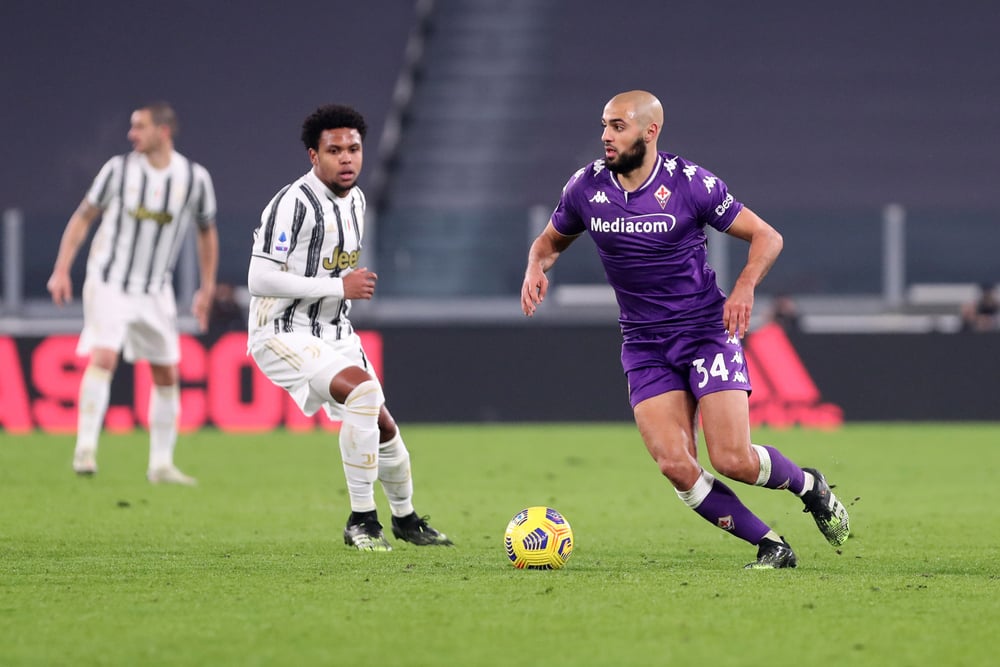
Sofyan Amrabat – The Defensive Foundation
The single pivot role is among modern soccer’s most demanding assignments: read the game several moves ahead, cover ground relentlessly, distribute cleanly under pressure. Amrabat – who became a global talking point after his Qatar 2022 performances – fulfils every requirement. His ability to protect the centre backs, intercept passes before they develop into threats, and restart possession sequences with composure is the structural foundation of Morocco’s entire defensive shape. Without him fit and sharp, the organization deteriorates noticeably against opponents with quick central combinations.
Othmane Maamma – The Wildcard Everyone Is Watching
They call him the Moroccan Cristiano Ronaldo – partly for a striking physical resemblance, partly for flashes of talent that generate genuine excitement. The 20-year-old Watford striker was voted best player at the U-20 World Cup in Chile, where Morocco claimed the title, and pressure from fans and analysts alike has mounted for his immediate integration into the senior roster. Ouahbi faces a real selection dilemma: blood him now under maximum pressure, or protect his development and lose a potentially decisive wildcard. Either decision carries risk and reward in equal measure – which is itself a sign of exceptional talent at an exceptional age.
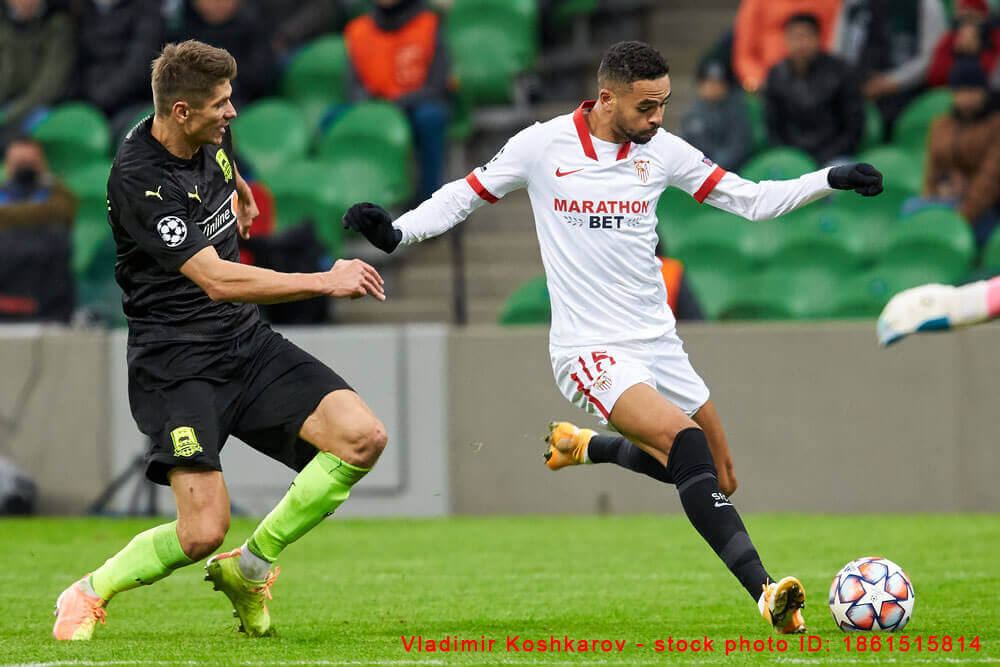
Youssef En-Nesyri – The Focal Point
Morocco’s first-choice striker provides the aerial threat and hold-up quality that allows the midfield four to arrive late from deep positions. His all-round game has improved steadily, and in a tournament where Morocco will encounter elite defensive setups, his ability to hold the line and link play is as valuable as any goal he converts.
Strengths & Weaknesses: An Honest Assessment
Morocco’s greatest competitive strength is defensive organization backed by concrete data rather than narrative. In eight African qualifying matches, they conceded just four goals across 720 minutes – a rate of 0.5 against per game that only the most elite tournament sides can sustain across a full campaign. Their shape under Amrabat’s protection is compact, physically committed, and disciplined in recovery when the press is bypassed.
The distribution of this roster across Europe’s top five leagues means these players are not learning to press, hold shape, or execute under pressure at a World Cup – they are applying principles drilled into them 40-plus times a season at Real Madrid, PSG, and Bayer Leverkusen. That coherence is genuinely rare in international soccer, where training time is compressed and tournaments arrive suddenly. It explains why Morocco performed with Champions League-level compactness even against elite opponents in Qatar 2022.
The primary weakness, assessed without sentiment, is the roster’s margin for error at two specific positions. If Hakimi is suspended or injured, the right flank loses both an attacking dimension and defensive athleticism that no available substitute fully replicates. The same applies to Amrabat in the pivot – Morocco’s entire defensive architecture is engineered around his reading of the game. In a compressed tournament where suspension accumulation across five to seven matches is a genuine risk, protecting both players from unnecessary yellow cards represents one of Ouahbi’s most important non-tactical challenges.
A secondary concern is vulnerability to late-game pressure from opponents who remain organized for 80 minutes and then press aggressively in the final stages – a pattern that produced late goals against Morocco in Qatar 2022. Against Brazil, that specific threat warrants tactical preparation from the opening minutes.
African Qualifying: Eight From Eight
Morocco’s qualifying campaign delivered something rarely seen at this level of international competition: a perfect record. Eight matches played, eight won – not narrowly, but with the consistency of a side that understood exactly what it needed to do and executed it in every fixture. The Atlas Lions secured their World Cup berth with two rounds of matches still to play, confirmed by a dominant home victory over Niger that effectively closed the group before the final dates were reached.
Their +20 goal differential was the highest in CAF Group E by a significant margin, reflecting how completely Morocco outclassed every opponent they faced. Tanzania, Zambia, and the Republic of Congo each had their moments – and moments is all they got. Morocco’s quality across all four lines made sustained 90-minute pressure impossible for opponents who lacked the individual talent to maintain it.
The campaign confirmed what informed observers already believed: Morocco is not occasionally Africa’s best team – they are structurally and permanently superior to every other side on the continent within the current cycle. For betting context, teams that dominate qualifying with this margin rarely regress dramatically at tournaments. Morocco’s 2022 qualifying numbers were similarly dominant, and that translated to a semifinal.
| Pos | Team | P | W | D | L | GD | Pts |
| 1 | Morocco | 8 | 8 | 0 | 0 | +20 | 24 |
| 2 | Niger | 8 | 5 | 0 | 3 | +1 | 15 |
| 3 | Tanzania | 8 | 3 | 1 | 4 | -1 | 10 |
| 4 | Zambia | 8 | 3 | 0 | 5 | 0 | 9 |
| 5 | Congo | 8 | 0 | 1 | 7 | -20 | 1 |
| 6 | Eritrea | 0 | 0 | 0 | 0 | 0 | 0 |
Ver esta publicación en Instagram
World Cup History: Building Toward Greatness
Morocco’s World Cup story is one of long patience rewarded with a moment that redefined African soccer. Their debut came at Mexico 1970, where a 1-1 draw with Bulgaria provided their first point at the global stage – modest in isolation, significant as the announcement of a continent’s right to belong. They returned to Mexico in 1986 and produced the finest result of the pre-Qatar era: topping a group containing England, Portugal, and Poland before losing narrowly to eventual runner-up West Germany in the round of 16, confirming Morocco as a side capable of competing at the very highest level.
Further appearances in 1994 (USA) and 1998 (France) brought group-stage exits before Morocco’s extended absence and return in 2018 (Russia), where they again fell in the groups despite competitive performances. The full accounting of that journey explains why Qatar 2022 felt transformative rather than simply positive: it was the culmination of 52 years of progress, setbacks, near-misses, and patient development. Defeating Spain and Portugal – two European powers – in consecutive knockout matches, then pushing France to the limit in the semifinal, was a moment that belongs permanently in the sport’s history.
In 2026, Morocco make their seventh World Cup appearance. They are no longer the African side making up tournament numbers. They are a legitimate knockout-round threat with history, talent, and mentality that fully justify that status.
Group C Fixtures & Match Schedule (All times Eastern Time)
Group C is Morocco’s most challenging draw in recent tournament memory. Brazil anchor the group as one of the World Cup 2026 odds favourites and represent the clearest qualification obstacle. Scotland return to the World Cup for the first time since France 1998, bringing Premier League physicality and tactical discipline but limited depth against top-level international competition. Haiti make a rare World Cup appearance and represent Morocco’s clearest opportunity to bank maximum points early in the group stage.
Morocco’s realistic path involves managing the Brazil opener carefully, then collecting six points from victories over Scotland and Haiti to advance comfortably in second place. All Group C matches are played in Eastern Time venues – convenient for Canadian viewers from Atlantic to Pacific. TSN and DAZN carry full tournament coverage across Canada.
| Date | Time (ET) | Match | Venue |
| Sat, June 13 | 6:00 PM | Brazil v Morocco | MetLife Stadium, New York/NJ |
| Sat, June 13 | 9:00 PM | Haiti v Scotland | Gillette Stadium, Boston |
| Fri, June 19 | 6:00 PM | Scotland v Morocco | Gillette Stadium, Boston |
| Fri, June 19 | 9:00 PM | Brazil v Haiti | Lincoln Financial Field, Philadelphia |
| Wed, June 24 | 6:00 PM | Brazil v Scotland | Hard Rock Stadium, Miami |
| Wed, June 24 | 6:00 PM | Morocco v Haiti | Mercedes-Benz Stadium, Atlanta |
Morocco World Cup Odds & Our Prediction
Morocco’s Morocco World Cup odds to win the 2026 tournament range from approximately 80.00 to 100.00 at Canadian sportsbooks including bet365 and BetMGM – longshot champion pricing that reflects the genuine quality gap between this Atlas Lions roster and the title favourites while acknowledging that no one who watched Qatar 2022 can entirely dismiss them. Those who placed pre-tournament bets on Morocco finishing fourth in Qatar at similar odds collected returns that, in retrospect, were very well earned.
The most actionable market for most Canadian bettors is Morocco advancing from Group C. Their odds to qualify in any position sit around 1.75-1.90, incorporating the Brazil obstacle while reflecting Morocco’s clear superiority over Haiti and Scotland. A more specific play – Morocco to advance in second place – in the 2.20-2.50 range captures the most likely scenario without exposure to the Brazil result. My projection: Morocco wins six points from victories over Scotland and Haiti, then holds Brazil to a close draw or narrow defeat in the opener, advancing in second.
The “Morocco to reach the quarterfinals” market, typically priced around 5.50-7.00 before the tournament, represents the strongest value in this landscape. If Morocco advances from Group C – which historical context and roster quality both suggest they should – their knockout draw could produce a tie against a second-place finisher from an adjacent group that Morocco’s defensive quality and counter-attacking precision is designed to exploit. Replicate even 70% of the Qatar 2022 defensive performance and they are capable of reaching the last eight.
For speculative plays, Othmane Maamma as an anytime scorer in any match – if included in the final roster – offers asymmetric upside worth a small-unit pre-tournament stake. His direct, high-intensity style causes specific problems for tiring defenders in the final stages of group play, and his U-20 tournament record is the strongest possible precedent for performing under exactly that type of pressure.
Prediction: Morocco advance from Group C in second place, defeat a beatable knockout opponent in the round of 16, and exit at the quarterfinal stage against a European power – another historic campaign that extends Africa’s greatest soccer narrative another chapter.
Morocco’s journey to 2026 has been anything but conventional, but then nothing about this generation of Atlas Lions soccer has followed a predictable script. Whether Ouahbi matches the heights Regragui scaled, the talent at his disposal gives every reason to believe another piece of history is within reach. Track the full 2026 World Cup hub and all World Cup 2026 groups as the tournament draws closer.