
Twenty-eight years. That is how long Norway waited to return to the World Cup stage – a gap spanning generations of Norwegian players who never got to experience major tournament soccer at the senior level. The wait ends in spectacular fashion: Erling Haaland scored 16 qualifying goals in eight matches, including a legendary performance at San Siro where Norway demolished Italy 4-1 in the most emphatic group-stage clincher the campaign produced. The Norway World Cup 2026 arrival is a genuine national moment for a football culture that has spent nearly three decades watching from the sidelines. For Canadian bettors, the question around Haaland’s first World Cup is how to price a team with the world’s most prolific striker but a group draw – France, Senegal, and Iraq in Group I – that provides an unforgiving entrance into the tournament. These are not easy points. These are survival questions.
Norway’s Road to North America
The qualifying campaign was, by any measure, extraordinary. Eight matches played, eight matches won – a perfect record across the entire UEFA group stage that no other European nation achieved. Thirty-seven goals scored, five conceded: a goal difference of +32 that illustrated both the Haaland-driven attacking devastation and a defensive solidity that often gets overshadowed by the headline numbers. When you are scoring four and five goals per match, it is easy to overlook that the team behind those numbers was also organized enough to concede less than one per match against opposition that included Italy, Israel, and Estonia.
The definitive result came on November 18, 2025, in front of 75,000 stunned Italian supporters at the Stadio Giuseppe Meazza in Milan. Haaland’s 4-1 final scoreline in that San Siro encounter – a match Italy needed to win to stay level on points – confirmed Norway’s group victory with one match remaining. The reversal of the traditional power dynamic, with Norway going to San Siro and outplaying Italy across 90 minutes, captured something significant about how this team has been rebuilt under Stål Solbakken since 2020.
Italy finished second in the group with 18 points – a team that has won four World Cups, a program with vastly greater resources and infrastructure. That Norway outpointed them across the eight-match window is the clearest evidence that this is not an accidental qualification. The group stage at World Cup 2026 will tell us whether those performances translate against world-class opposition in knockout-adjacent pressure situations.
Solbakken’s System and Approach
Stål Solbakken carries personal history with this World Cup that goes beyond the tactical. He played for Norway at France 1998 – the country’s last World Cup appearance before this one – making him one of the very few coaches in this tournament’s history who appeared as a player in his nation’s previous participation at the same competition. In 2001, while playing for FC Copenhagen, he suffered a cardiac arrest during training; he was clinically declared dead before being revived nearly seven minutes later. The resilience that story suggests has become something of a calling card for how his teams play.
After seven years at FC Copenhagen – where he won three Danish Superliga titles and was later named the greatest coach in the history of that league – he took over Norway’s national team in 2020. He missed qualification for the 2022 Qatar World Cup despite having Haaland available, a failure that nearly cost him the job but that he ultimately survived. The lesson from that campaign, where Norway’s performances were inconsistent and their tactical identity unclear, informed the methodical build that produced the 2026 qualification campaign’s perfect record.
Solbakken’s tactical base is a 4-4-2 or 4-3-3 depending on the opponent, with a consistent priority on direct vertical soccer that makes the most of Norway’s physical advantages. Norwegian players are historically well-suited to this approach – the squad is full of athletes with elite aerobic capacity and above-average physical stature – and the system is designed around Haaland as the gravitational centre of the attack. When Haaland pulls defenders deep, wide players like Antonio Nusa find one-on-one situations on the flanks. When Haaland runs beyond the defensive line, Ødegaard and the midfielders play the ball into those spaces. The system is not complicated in concept. It is extremely effective in execution because the players executing it are among Europe’s best.
The pressing structure deserves specific attention. Norway’s high press – synchronized and physically demanding – has caused problems for opponents who build through the back rather than over it. Martin Ødegaard’s injury absence during the March 2026 international window (managed carefully by Solbakken, who said “it’s the World Cup that counts, not friendlies in March”) means the system’s full version has not been seen recently. If Ødegaard is fit and operational for June, Norway’s tactical ceiling rises substantially above what the March friendlies suggested.
Ver esta publicación en Instagram
Norway World Cup 2026 – Squad & Key Players
Erling Haaland needs no extended introduction – but the specific context of the Haaland World Cup 2026 situation is worth establishing precisely. At 25 years old when the tournament begins, he arrives at what should be the physical peak of his career. His goal-scoring record at Manchester City has redefined expectations for what a centre forward can produce at the elite club level. The qualification campaign added 16 goals in eight matches at international level – a rate that suggests the international game, often slower and more defensive, suits his movement and finishing as much as the Premier League environment. This is his first major tournament at senior level. The combination of physical peak, motivation, and a system designed to supply him is as close to ideal conditions as any striker enters a major tournament with.
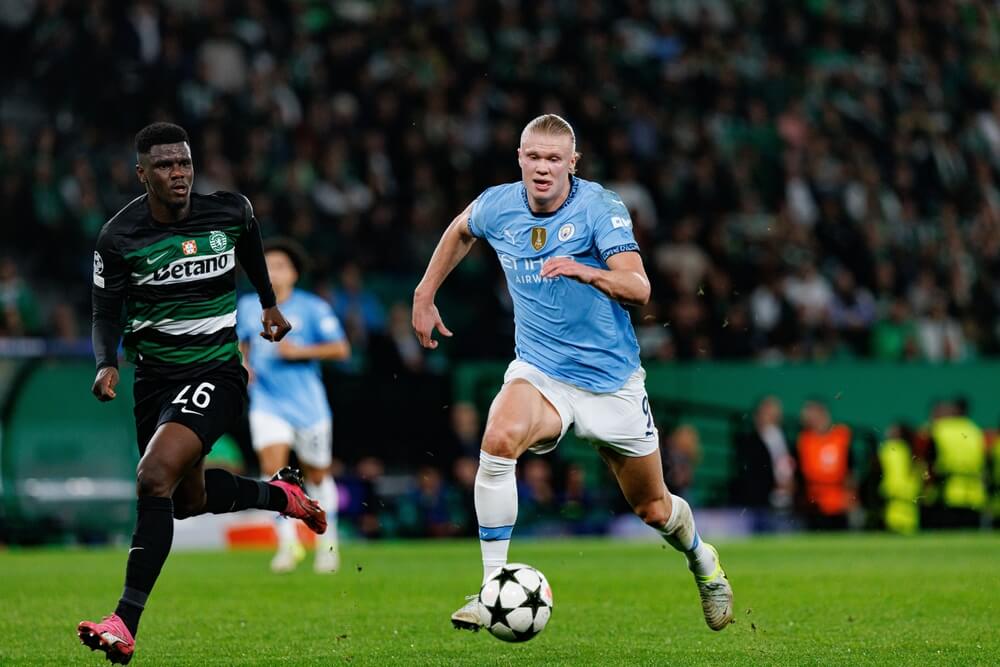
The fitness concern that surfaced in March – Solbakken was quoted as saying “It would be completely idiotic of me to push him through two games” when managing Haaland’s participation across March friendly matches – illustrates how carefully Norway are protecting their most important asset ahead of June. A Manchester City season of sustained involvement, followed by careful management in the pre-tournament period, is the right approach to ensuring Haaland arrives in North America at full capacity.
Martin Ødegaard, 27 during the tournament, is the player who makes the system around Haaland function at its highest level. As captain and creative orchestrator from the Arsenal midfield, Ødegaard provides the vision, passing range, and spatial intelligence that translates Haaland’s movement into genuine scoring chances rather than isolated efforts. His knee injury, which kept him out of Norway’s March squad entirely, is the tournament’s most important individual fitness story within the group. Solbakken has been deliberately cautious: “If he calls and says it’s good to go, I’m not sure I’d want him,” the coach said of the March window, prioritizing long-term readiness over short-term participation. A fully fit Ødegaard is the factor that elevates Norway from “dangerous dark horse” to “genuine knockout-round threat.”
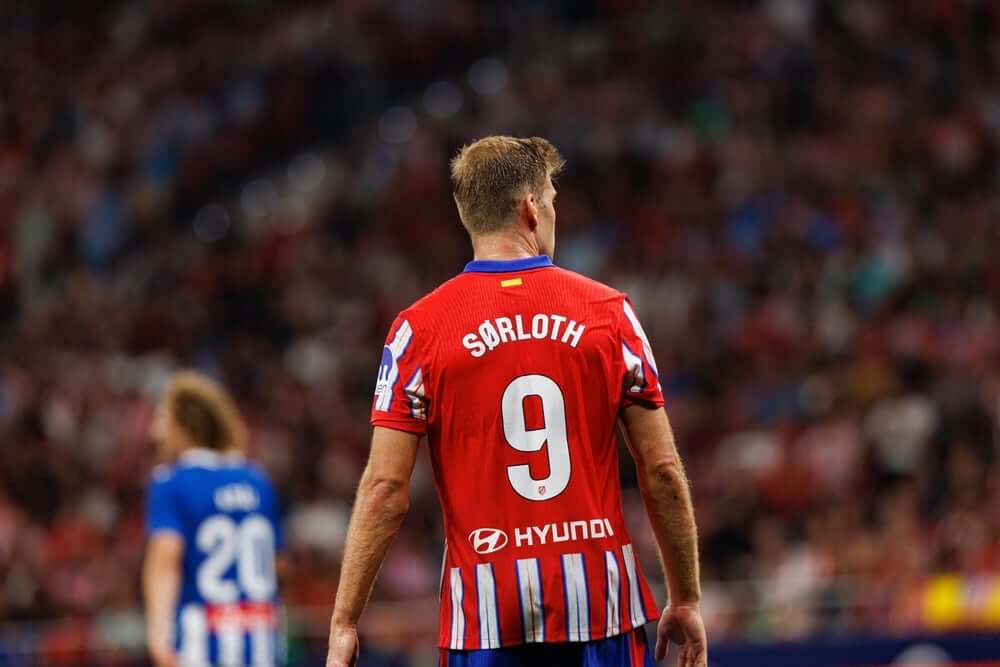
Alexander Sørloth at Atlético de Madrid provides the secondary striker option that every tournament team needs. His 26 international goals and physical profile – tall, strong, excellent in the air – give Norway a continuation of the Haaland-adjacent threat even when the Manchester City striker is receiving treatment or rotating. Sørloth’s Champions League experience with Atlético means he has competed in high-pressure European nights that prepare him for what the World Cup demands.
Antonio Nusa, 20 years old at RB Leipzig, is the most exciting young wide player in Norway’s squad and perhaps one of the most promising in the entire tournament. His ability to operate effectively on both flanks, his pace, and his technical confidence in one-on-one situations earned him the nickname “the Scandinavian Neymar” from European football journalists – an ambitious comparison, but one that reflects how unusual his profile is for a player produced by Norwegian football. He became one of the youngest scorers in Champions League history during his time at Bruges, and has now established himself in the Norway senior setup ahead of several more experienced alternatives.
Oscar Bobb, who moved from Manchester City to Fulham this season for more regular minutes, adds midfield creativity and the ability to cover the Ødegaard role if the captain cannot recover full fitness in time. Sander Berge at Fulham provides the midfield defensive engine that protects the back four when Norway is not in possession. The double pivot of Berge and Patrick Berg gives Solbakken the physical foundation to accommodate the wide-open attacking approach without leaving the defence structurally exposed.
Defensively, Julian Ryerson has developed into a reliable right back option through his Dortmund career. Kristoffer Ajer – now at Brentford – provides centre-back leadership with European experience. Ørjan Nyland in goal is an experienced Nordic league goalkeeper who has had moments of international quality without ever establishing himself as a world-class option at the position. If Norway advance deep into the tournament, the goalkeeping position will face greater tests than the group stage provides.
Strengths & Weaknesses
Norway’s overwhelming strength is structural simplicity maximized by elite individual quality. When the system is delivering service to Haaland and Sørloth, while Nusa and Ødegaard create problems wide and between the lines, the attacking unit is as dangerous as any team outside the absolute top tier of tournament favourites. The qualifying statistics – 37 goals in eight matches – were not flukes. They reflected a team executing its game plan at a consistently high level across nine months of competitive matches.
The physical profile of the squad is a genuine collective strength that often goes underappreciated in tactical analysis. Norway’s starting lineup is among the tallest in the tournament field, creating aerial advantages at both ends of the pitch that teams without equivalent physical presence cannot match. Set pieces – both offensive and defensive – will be a specific area of advantage across Group I and into the knockout rounds.
The weaknesses start with the Ødegaard injury uncertainty. Norway without Ødegaard is a different team – still dangerous through Haaland’s individual quality, but missing the creative conductor that makes the system’s combinations truly fluid. The March friendly against the Netherlands without both Haaland and Ødegaard produced a 2-1 defeat, a glimpse of what the team looks like when its two most important players are absent simultaneously.
The group draw is the second major challenge. France are priced as overwhelming favourites across all major sportsbooks – an implied probability of approximately 70% to win Group I. Senegal, led by Sadio Mané’s generation and with a disciplined defensive structure, are no pushovers in the second match. Iraq represent the more accessible points, but even they cannot be dismissed entirely. Norway’s path to the knockout stage runs through beating the two more accessible opponents while managing the France fixture as a learning experience rather than a must-win.
Experience at this level is the final concern. Norway have not played World Cup soccer since France 1998. The specific pressure – the attention, the expectation management, the recovery demands of multiple high-stakes matches across compressed timelines – cannot be replicated in qualifying campaigns. How the squad handles that environmental shift will determine whether they advance or exit at the group stage.
How Norway Qualified
Norway won UEFA Group I with a perfect eight-from-eight qualifying record – the only European team to complete their qualifying campaign without dropping a single point. The goal difference of +32 (37 scored, 5 conceded) was not only the best in their group but among the very best across all UEFA qualifying pools. Italy finished second on 18 points, with Israel and Estonia accumulating modest totals in third and fourth.
| Team | PJ | W | D | L | GD | Pts |
| 🇳🇴 Norway | 8 | 8 | 0 | 0 | +32 | 24 |
| 🇮🇹 Italy | 8 | 6 | 0 | 2 | +9 | 18 |
| 🇮🇱 Israel | 8 | 4 | 0 | 4 | -1 | 12 |
| 🇪🇪 Estonia | 8 | 1 | 1 | 6 | -13 | 4 |
| 🇲🇩 Moldova | 8 | 0 | 1 | 7 | -27 | 1 |
The 24-point total – maximum available points – confirmed Norway as the dominant qualifying team in their group by a margin of six points over Italy. The decisive San Siro victory in November 2025, where Haaland netted his 16th qualifying goal as Norway won 4-1, represents one of the tournament cycle’s most memorable qualifying performances across any confederation.
Norway’s World Cup History
Norway’s World Cup history is brief but contains moments of genuine historical significance. Their first appearance in 1938 produced a match against defending champions Italy that went to extra time before the hosts prevailed 2-1 – a result that, had it gone differently, would have been one of the great upsets in early tournament history. The tenacity against the eventual champions established something about Norwegian competitive character that the national identity has carried forward.
The return to the tournament in 1994 – after 56 years away – brought qualification but a group-stage exit despite a famous 1-0 victory over Mexico. The 1998 France World Cup produced the most successful Norwegian World Cup campaign to date: a round-of-16 appearance ended by a 1-0 defeat to Italy, with Norway again facing the country that had eliminated them at the only other two World Cups they had attended. The narrative coincidence is remarkable: Norway versus Italy in qualifying 2026 ended Italy’s tournament cycle entirely, a reversal of every previous head-to-head encounter between the nations in World Cup history.
The 28-year gap between 1998 and 2026 is the longest absence any current participating nation has experienced. Players on this roster – Haaland, Ødegaard, Nusa – never watched Norway at a World Cup as children because there was none to watch. The motivation that history creates is not easily quantified, but it is real.
Ver esta publicación en Instagram
Group I Fixtures and Schedule
Group I is the most unbalanced of Norway’s possible draws – France as heavy group favourites, Senegal as a genuinely organized second-tier team, and Iraq as the most accessible opponents. Norway’s realistic path is: maximum points against Iraq, competitive performance against Senegal with a realistic chance of winning, and a learning-experience match against France that does not produce a demoralizing defeat.
All times are Eastern Time for Canadian viewers on TSN and CBC.
| Date | Fixture | Venue | ET Time |
| Tue, June 16 | France v Senegal | New York/New Jersey | 3:00 PM ET |
| Tue, June 16 | Iraq v Norway | Boston | 6:00 PM ET |
| Mon, June 22 | France v Iraq | Philadelphia | 5:00 PM ET |
| Mon, June 22 | Norway v Senegal | New York/New Jersey | 8:00 PM ET |
| Fri, June 26 | Norway v France | Boston | 3:00 PM ET |
| Fri, June 26 | Senegal v Iraq | Toronto | 3:00 PM ET |
The Norway-Senegal fixture on June 22 in New York is the group’s decisive match for second place. If Norway win that match and collect three points against Iraq, they advance to the round of 16 regardless of their France result. The Norway-France match in Boston on the final group day – simultaneous with Senegal-Iraq – produces some of the most interesting tactical questions of the group stage: does France manage their effort against a Norway team that cannot be threatened by late goals from Haaland?
Ver esta publicación en Instagram
Norway World Cup Odds & Predictions
The Norway World Cup odds for the outright title sit between 40.00 and 66.00 at major sportsbooks – prices that reflect realistic assessment of their ceiling rather than disrespect for their quality. Prediction markets imply approximately a 1.5-2% probability of Norway winning the tournament. My own estimate is slightly higher, around 2.5-3%, primarily because of Haaland’s variance-expanding potential: if he hits peak form in a knockout-round tournament, Norway can beat anyone in a single-match encounter.
The value bet for Norway is advancing from Group I as second-place qualifier, typically priced around 1.90-2.20. Given the Senegal match as the effective tiebreaker – and given Haaland’s individual quality in a one-match format – Norway finishing second and advancing to the round of 16 is achievable. France winning the group is almost certain; whether Norway or Senegal collects second is the genuine competition, and the head-to-head between Norway and Senegal on June 22 essentially decides it.
The Haaland World Cup 2026 individual markets are where the most interesting value lives. His odds for the Golden Boot – tournament top scorer – typically sit around 8.00-12.00. That is not obviously undervalued given that France, Brazil, Argentina, and England all have competing candidates. But Haaland’s qualifying rate – two goals per match – and his ability to dominate matches where Norway are expected to attack freely (Iraq, potentially Senegal) suggests the output will be there if Norway advance. If Ødegaard is fit and the system functions at its highest level, Haaland scoring 4+ goals in the group stage alone is realistic.
The over 2.5 total goals market in Norway matches – particularly against Iraq and Senegal – is consistently good value at odds around 1.65-1.80. Norway’s attacking system is structurally committed to goal production, and neither Iraq nor Senegal have the defensive quality to suppress Haaland across 90 minutes while also covering Nusa wide and Ødegaard between the lines.
My overall prediction for Norway at World Cup 2026: group stage advancement as second in Group I, reaching the round of 16. From there, the bracket determines everything. A round-of-16 exit against a major European team is the most probable outcome. A quarterfinal run – which would already represent Norway’s best-ever World Cup performance – is achievable if Haaland is scoring and Ødegaard is orchestrating. The tournament is Haaland’s first major stage; the world will finally see whether the greatest goal-scorer of his generation can translate club-level dominance into the specific pressure of knockout soccer on the biggest stage of all.
Norwegian supporters in Canada – a significant community, particularly in British Columbia and the Prairie provinces – will find this tournament uniquely accessible as a co-host nation. Watching Haaland’s first World Cup at venues across Canada and the United States, after 28 years of waiting for any Norwegian World Cup at all, is the kind of collective sporting experience that no odds calculation can fully capture.