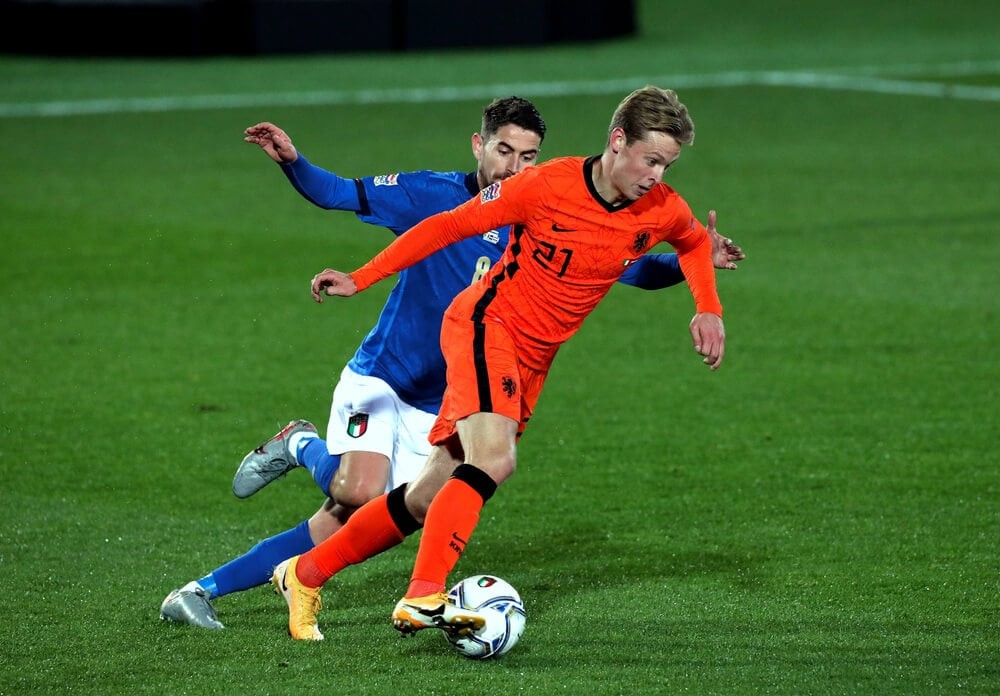
The Orange have never won the World Cup. Three finals played, three defeats – to West Germany in 1974, Argentina in 1978, and Spain in 2010 – define the agonizing gap between Dutch soccer’s philosophical greatness and its trophy cabinet. Heading into the Netherlands World Cup 2026, Ronald Koeman’s side arrives not as a title favourite but as something more intriguing: a team with genuine dark-horse credentials, built around an elite defensive core, a technically sophisticated midfield, and enough attacking variety to threaten anyone on a given day. For Canadian bettors trying to evaluate this edition of Holland at the World Cup, the fundamental question is whether the Oranje’s ceiling matches their odds – and the answer, examined honestly, is more complicated than the market currently prices.
Netherlands’ Road to North America
Ronald Koeman’s second stint in charge of the national team has produced the kind of structural solidity that his first spell – cut short by a failed attempt to qualify for Euro 2016 and the 2018 World Cup – lacked. Returning to the role in 2023 after an ultimately unsuccessful period at Barcelona, Koeman inherited a squad that had reached the Euro 2024 semifinals and appeared to be genuinely back among Europe’s best. He continued that momentum into qualifying, and the numbers tell a straightforward story: unbeaten in eight matches, 23 goals scored, an eventual winning margin of three points over Poland.
The Oranje navigated Group G without ever looking genuinely troubled. Poland were the only team capable of holding them – two draws in the direct head-to-heads – but the Netherlands made those draws irrelevant by dismantling the other opponents with clinical efficiency. A 4-0 win over Lithuania in the group’s final match sealed qualification in the most emphatic fashion available, with Cody Gakpo converting a penalty that doubled as a milestone moment for the campaign. Virgil van Dijk set the Netherlands’ all-time captaincy record that same night, appearing for his 88th cap and leading the team out for the 72nd time as captain.
At World Cup 2026, the Oranje are seeded and drawn into Group F alongside Japan, Sweden, and Tunisia – a collection that demands respect but presents a realistic path to the knockout stage for a team of the Netherlands’ caliber.
Koeman’s System and Philosophy
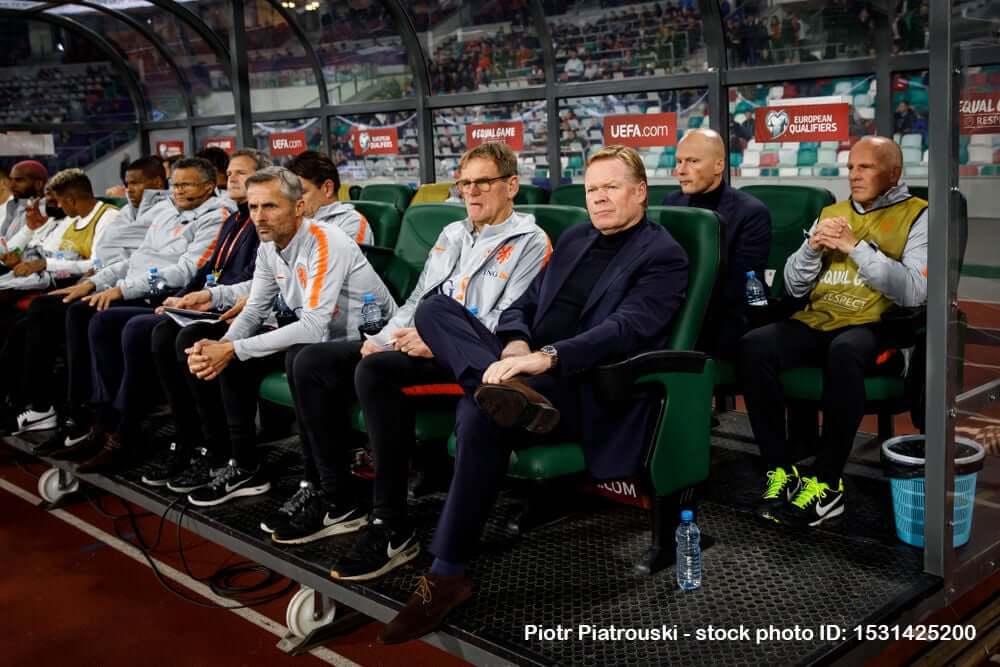
Ronald Koeman carries the Dutch football inheritance in a way few coaches can claim. As a player he won the European Championship in 1988 as part of the iconic Oranje team under Rinus Michels, then won Barcelona’s first European Cup in 1992 with a Johan Cruyff side that reimagined what team soccer could look like. Those formative experiences under two of the greatest coaches the game has ever produced shaped his football brain irreversibly. When he coaches the Netherlands, he is not simply implementing a system – he is drawing on a philosophical lineage that runs through the DNA of Dutch soccer.
Koeman’s Netherlands operates from a positional foundation. The priority is establishing numerical superiority in central midfield, using ball possession to control rhythm, and pressing with synchronized collective movement after losing the ball rather than relying on individual tracking. These principles echo the Total Football tradition while accommodating the modern reality that few Dutch players are the complete, position-switching universalists that made the 1970s teams so revolutionary.
The preferred formation is a 4-3-3, with Frenkie de Jong anchoring the midfield alongside Ryan Gravenberch, while a third, more advanced midfielder – Tijjani Reijnders has emerged as the leading candidate – provides the link between the engine room and the attacking line. The back four is defined by Van Dijk’s organizational authority at centre-back, with Micky van de Ven’s athleticism covering ground on the left side and Denzel Dumfries providing the right-sided energy from full back.
The tactical challenge Koeman faces is integrating Memphis Depay – who surpassed Robin van Persie as the Netherlands’ all-time top scorer, now with 55 international goals – into a forward line that also features Gakpo and Donyell Malen. Memphis, playing for Corinthians in Brazil, brings experience and big-game temperament but is no longer a guaranteed starter. Koeman’s management of that sensitive situation will be one of the camp’s more delicate human dynamics to navigate ahead of June.
Squad & Key Players
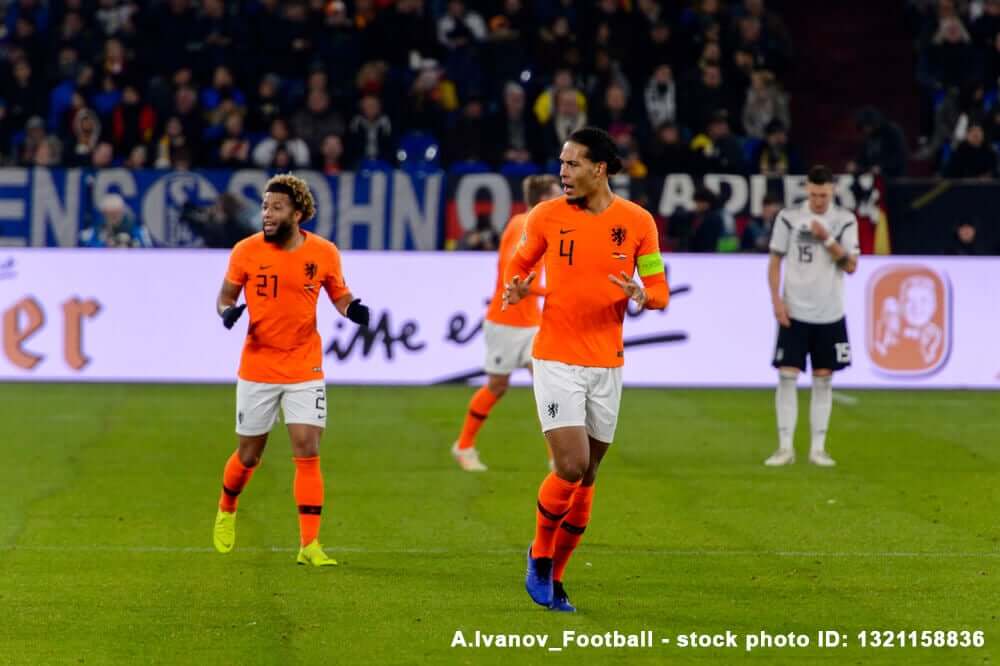
Virgil van Dijk is the Netherlands’ captain, emotional anchor, and – at 34 during the tournament – arguably still the best centre-back in world soccer by most analytical metrics. He wins approximately 75% of aerial duels in club competition, his progressive passing from deep creates build-up opportunities that most defenders cannot offer, and his ability to impose calm on teammates in high-pressure moments is the kind of quality that does not appear in any expected goals model. Qatar 2022 ended in a quarterfinal penalty shootout loss to Argentina where goalkeeper Emiliano Martínez saved his spot kick – a moment Van Dijk will want to rewrite in North America. He has 88 caps and counting, and this World Cup is likely his final chapter in tournament soccer.
The emergence of Jorrel Hato at 19 years old represents one of Dutch soccer’s most exciting recent developments. Chelsea paid over €42 million to bring him from Ajax last summer. The adaptation to English football took time – as it does for most teenagers who make that leap – but his technical profile is exceptional: aerial composure, distribution quality from the back, and the tactical intelligence to read attacking patterns before they fully develop. Alongside Van Dijk in the long term, or growing as an understudy at this tournament, Hato gives the Netherlands a defensive cornerstone for the next decade.
Matthijs de Ligt, now at Manchester United, provides experienced depth at centre-back, though injury issues at club level have complicated his build-up. Jan Paul van Hecke at Brighton has been a reliable alternative with strong club performances this season. The depth at centre-back is genuinely impressive for a nation that is not historically known for producing defenders at scale.
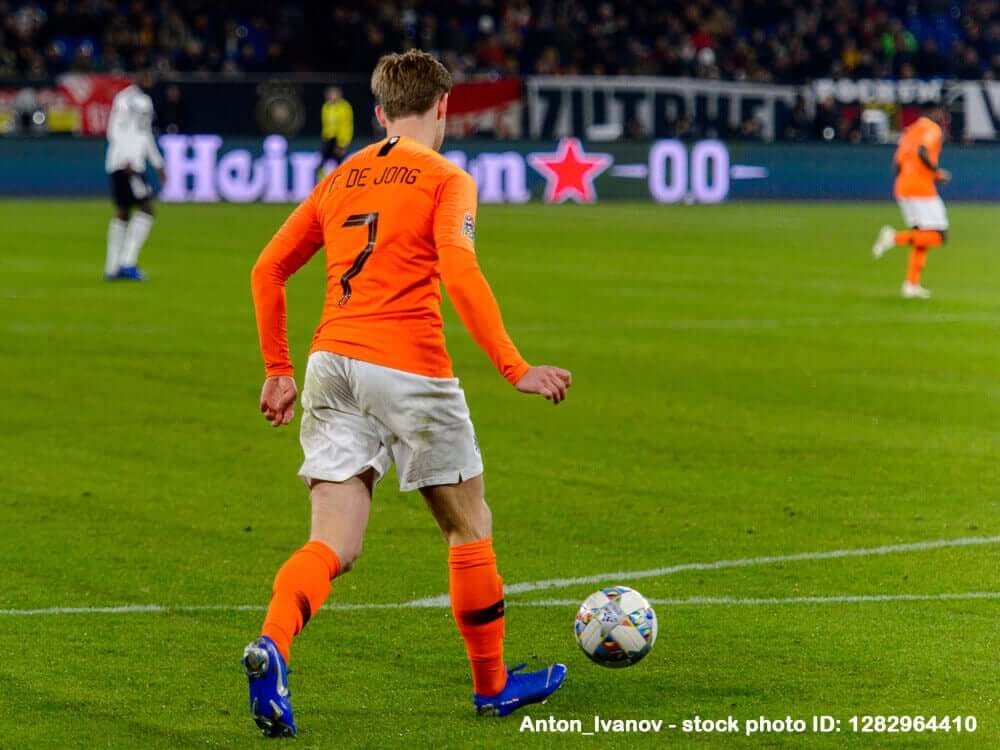
Frenkie de Jong at Barcelona remains the Netherlands’ most technically complete midfielder. His ability to receive the ball under pressure, turn in tight spaces, and distribute with both range and precision is a quality Koeman’s system is built around. The question that has followed De Jong for several seasons – why does a player of his obvious quality often look muted in big tournament moments? – will define his World Cup legacy one way or another. Alongside Gravenberch, who has developed quickly at Liverpool into one of the Premier League’s more complete midfielders, the Dutch engine room has genuine European-level quality.
Cody Gakpo has established himself as the Netherlands’ most dangerous and reliable attacking player over the past two years. Operating from the left side of the attacking line, he brings the ability to cut inside and finish, deliver from wider areas, or lead the line centrally if required. His tournament experience – impressive at the 2022 World Cup – and his composure under pressure make him the attacking player Koeman trusts most in must-win situations.
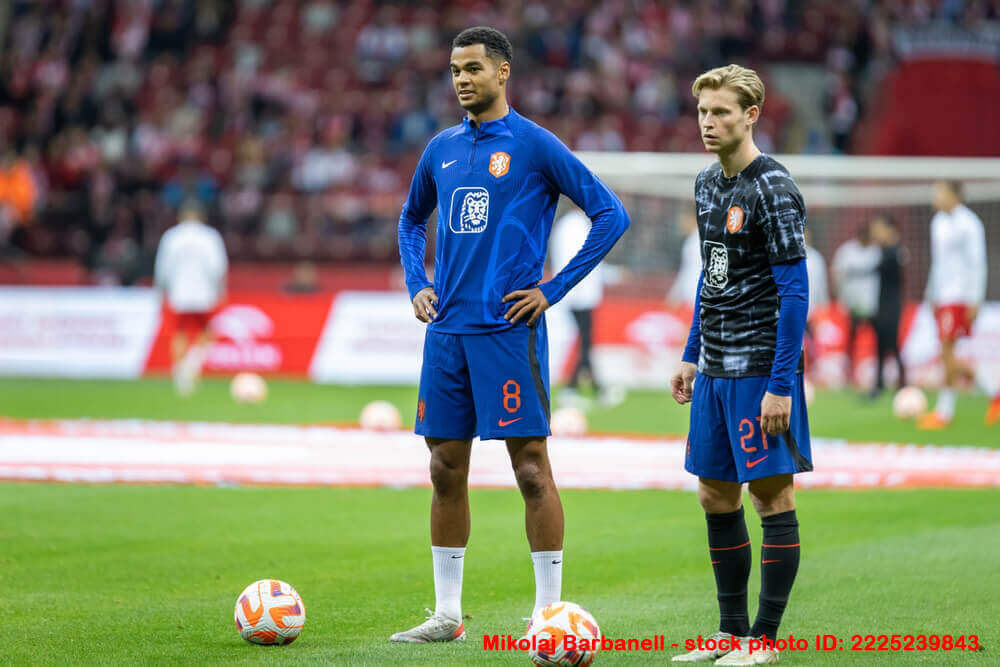
Jurrien Timber of Arsenal adds versatility to the defensive and midfield structure – capable of playing right back, centre-back, or a defensive midfield role – though injury withdrew him from the March international window. His return to full fitness ahead of the tournament will be monitored closely given how much his positional flexibility means to Koeman’s tactical options.
Donyell Malen provides the right-side attacking option with proven goal-scoring credentials from his Dortmund and club career. Justin Kluivert – son of Patrick – has developed into a reliable wide forward option. The attacking depth is sufficient; the concern is whether any of the supporting cast can step up if Gakpo is marked out of a match.
Strengths & Weaknesses
The Netherlands’ primary strength is defensive sophistication backed by world-class individual quality. Van Dijk as the sweeper-keeper-style organizer, van de Ven covering ground with elite athleticism on the left, and Timber providing versatile protection across multiple positions gives Koeman a backline that can absorb pressure and transition quickly into attack. In the group stage against Sweden and Tunisia, that defensive foundation should be sufficient to win matches without exposing the full team to counter-attacking risk.
The midfield is equally impressive structurally. De Jong and Gravenberch provide a double-pivot combination of technical quality and physical coverage that few international double pivots can match. Reijnders – operating between the lines – adds the direct running and goal threat from midfield that enables the front three to play slightly narrower and find combinations in tighter spaces.
The weakness is in the attacking third, particularly in the central striking position. Memphis Depay, despite his extraordinary goal record, is no longer the same athletic threat he was at his peak. The Netherlands often look lightweight through the centre against organized defensive blocks that force attacking play wide rather than direct. Japan – a potential group rival with excellent defensive organization – will study this pattern extensively.
The mental fragility in knockout moments is the hardest factor to quantify. The 2022 World Cup exit on penalties to Argentina, the Euro 2024 semifinal exit to England, and historical tournament near-misses all point to a team that can produce excellent soccer in 90 minutes but struggles with the specific pressure of shootouts and extra time. Koeman has been working on penalties in training – a detail the Dutch FA has made public – but shootouts remain a genuinely uncertain variable in any evaluation of the Netherlands’ ceiling.
Ver esta publicación en Instagram
How the Netherlands Qualified
An unbeaten UEFA Group G campaign confirmed the Netherlands’ direct qualification without needing to navigate the playoff route. Their 20 points from eight matches – six wins and two draws – reflected consistent quality rather than fortune. Poland, with 17 points, came closest to threatening Dutch top-spot dominance, but the Netherlands’ superior record against the other teams in the group made the finishing position comfortable despite the Polish challenge.
| Team | PJ | W | D | L | GD | Pts |
| 🇳🇱 Netherlands | 8 | 6 | 2 | 0 | +23 | 20 |
| 🇵🇱 Poland | 8 | 5 | 2 | 1 | +7 | 17 |
| 🇫🇮 Finland | 8 | 3 | 1 | 4 | -6 | 10 |
| 🇲🇹 Malta | 8 | 1 | 2 | 5 | -15 | 5 |
| 🇱🇹 Lithuania | 8 | 0 | 3 | 5 | -9 | 3 |
A goal difference of +23 – the best in the group by a considerable margin – illustrated the attacking potency the Oranje brought to their qualifying campaign. The 4-0 win over Lithuania that sealed qualification also saw Van Dijk break the national captaincy record, adding a ceremonial dimension to an already significant result.
Netherlands World Cup History
No nation has a more fascinating World Cup narrative than the Netherlands – and no nation carries a larger gap between its contribution to the game’s tactical evolution and its actual trophies. The 1974 Oranje, managed by Rinus Michels and led by Johan Cruyff, arrived in West Germany with a system – Total Football – that changed how the sport was conceptualized. They destroyed Argentina and defeated reigning champions Brazil, but lost the final to the host nation in Munich.
Four years later, without Cruyff but still structured around his principles, the Netherlands reached another final – this time losing to Argentina in Buenos Aires under controversial circumstances that remain debated five decades later. A third final in 2010, built around coach Bert van Marwijk’s pragmatic counter-attacking approach, produced a defeat to Spain and a playing style that purists found difficult to reconcile with the Oranje tradition.
Despite missing the 2018 World Cup – a failure that shook Dutch soccer to its foundations – the Netherlands have accumulated enough points across their World Cup appearances to rank eighth in the all-time tournament table. The 2022 quarterfinal exit to Argentina in Qatar, via penalties, was their most recent result. This tournament is Van Dijk’s generation’s last realistic chance at correcting the historical record. Holland World Cup 2026 – a search term that resonates as strongly as the official name among Canadian fans – carries the weight of that entire narrative into North America.
Ver esta publicación en Instagram
Group F Fixtures and Schedule
Group F presents the Netherlands with a navigable but genuinely demanding path. Japan are the group’s most tactically organized opponent – a team with genuine World Cup tradition and the discipline to frustrate European possession teams with compact defensive blocks. Sweden bring physical quality and aerial threat. Tunisia are unlikely to progress but will make life difficult for whoever they face. The Netherlands should advance from this group comfortably; the question is whether they do so with the efficiency and defensive solidity that knockout rounds demand.
All times below are Eastern Time for Canadian viewers watching on TSN and CTV.
| Date | Fixture | Venue | ET Time |
| Sun, June 14 | Netherlands v Japan | Dallas | 4:00 PM ET |
| Sun, June 14 | Sweden v Tunisia | Monterrey | 10:00 PM ET |
| Sat, June 20 | Netherlands v Sweden | Houston | 1:00 PM ET |
| Sun, June 21 | Tunisia v Japan | Monterrey | 12:00 AM ET |
| Thu, June 25 | Japan v Sweden | Dallas | 7:00 PM ET |
| Thu, June 25 | Tunisia v Netherlands | Kansas City | 7:00 PM ET |
The opening match against Japan is the group’s most tactically interesting fixture and the one that establishes early tournament narrative. Win comfortably, and the Netherlands arrive at the knockout stage with momentum. A draw or defeat shifts the dynamics considerably and could see Sweden rather than the Oranje emerge as group winners.
Ver esta publicación en Instagram
Netherlands World Cup Odds & Predictions
The Netherlands World Cup odds sit around 13.00-20.00 for the outright title across major sportsbooks, implying a probability of between 5% and 7.7%. That range feels approximately correct – the Netherlands have the talent to reach a semifinal, but the ceiling is limited by the attacking question marks and the historical shootout vulnerability.
The value market for the Netherlands is Group F winner, priced around 1.90. Given the quality of Van Dijk, De Jong, and Gakpo relative to what Japan, Sweden, and Tunisia can offer, the Oranje should emerge from the group at worst as runners-up. The group winner market at 1.90 implies roughly 53% probability – lower than the talent differential warrants, in my view.
Netherlands to reach the quarterfinals at odds around 1.50-1.60 represents another position worth considering. The expanded tournament format means a third-place group finish can still advance a team, further reducing the elimination risk in the early phase. At those odds, it is not an exciting bet, but as part of a broader World Cup portfolio it provides a reliable return from a team with genuine structural quality.
The under 2.5 goals market in the Netherlands-Japan fixture – typically priced around 1.65-1.75 – is the specific match bet I find most interesting. Japan’s defensive organization is genuine, Koeman’s system can struggle to break down compact blocks efficiently, and the tactical caution both coaches will bring to a Group F opener suggests a tight, low-scoring match rather than an open exchange. One or two goals settled late in the match is the more likely pattern than an early, high-scoring affair.
For the latest World Cup betting lines, all major Canadian sportsbooks carry Netherlands markets – outright, group, and individual match props will be available from the tournament draw confirmation through to the final whistle in New Jersey on July 19.
The Netherlands at World Cup 2026 represent the fascinating paradox that Dutch soccer has always presented: technically brilliant, philosophically coherent, and historically unable to win the tournament that would confirm their status as true all-time greats. Van Dijk’s generation has one more attempt to write a different ending. Whether they do so will be one of the tournament’s genuinely compelling subplots.