There is a specific gravity to Portugal’s 2026 FIFA World Cup campaign that no tactical analysis alone can capture. Cristiano Ronaldo will turn 41 during the tournament – making this almost certainly his last appearance on the world stage, and almost certainly his final opportunity to add the one title that has eluded the most prolific international goal scorer in soccer history. But this Portuguese generation is not merely a vehicle for a farewell tour. It is genuinely deep, technically elite and, under Roberto Martínez’s increasingly confident tactical management, arguably the most complete roster Portugal has ever assembled. The tournament, co-hosted by Canada, the United States and Mexico, may finally deliver what nearly 60 years of trying have not. Portugal World Cup 2026 odds at Canadian sportsbooks make the Seleção das Quinas genuine dark horse contenders at prices that reward careful bettors.
Portugal’s Road – A Nation With Everything Still to Prove
Portugal has qualified for their ninth FIFA World Cup, arriving at the 2026 tournament having navigated their European qualifying group with the authority that their global ranking demands while occasionally revealing a human inconsistency that keeps analysts honest. Placed in UEFA Group F alongside Ireland, Hungary and Armenia, the Seleção secured direct qualification – top spot in the group – through four wins, one draw and one defeat across six matches.
The stumbles were instructive. A draw at home against Hungary, followed later by a defeat in Ireland, provided evidence that Portugal can be disrupted when opponents combine strong tactical organisation with high press intensity. Neither result was catastrophic in the context of a six-match group, but both signalled that the Seleção are not immune to physical, direct teams willing to sacrifice possession and play on the transition.
What the qualifying campaign demonstrated above all else is Portugal’s capacity to control the majority of their matches through individual quality and collective build-up discipline, even when results do not flow immediately. Vitinha and João Neves – the PSG midfield axis who won the UEFA Champions League with Paris in the 2024-25 season – provide the technical foundation that allows Portugal to retain possession across long periods and wait for the openings that their attacking talent exploits. When Portugal play at full capacity, their combination game is among the four or five most beautiful attacking systems in international soccer. The challenge is replicating that consistency across seven consecutive World Cup matches against progressively superior opposition.
Roberto Martínez’s Methods – Adapting to Win on the World Stage
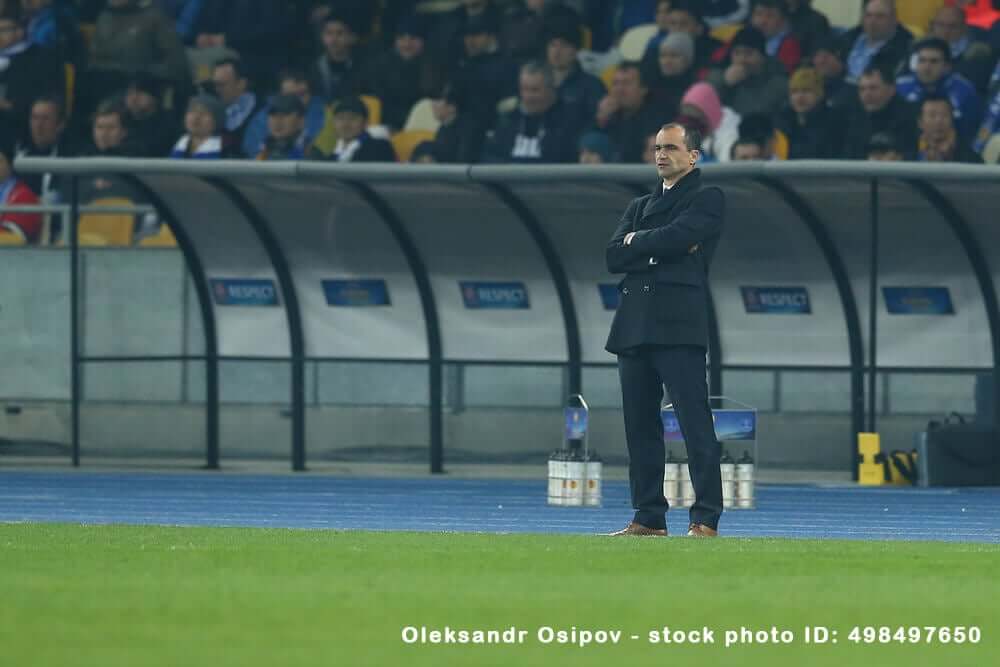
Roberto Martínez accepted the Portugal coaching position in 2023 following the end of his Belgium tenure – a career chapter that demonstrated both his capacity to develop individual players and his limitations in maximising collective systems in tournament knockout rounds. The Belgian experience produced magnificent group stage performances and consistently underwhelming exits when the pressure of elimination rounds arrived.
Portugal offer Martínez a different proposition entirely. Where Belgium’s aging golden generation required careful management of fading physical capacity, Portugal’s roster is in its absolute prime – Bruno Fernandes is 31, Bernardo Silva 30, Rúben Dias 27 and the emerging João Neves just 21. Managing physical decline is not the primary challenge here. The challenge is tactical: building a system that maximises the extraordinary individual quality available while maintaining the defensive discipline that deep World Cup runs demand.
Martínez’s tactical approach is more adaptive than dogmatic. He does not impose a rigid system regardless of opponent – instead, he builds a base shape and modifies it based on what the opposition presents. Against teams who defend deep in a low block, Portugal will build patiently through Vitinha and João Neves in midfield, draw defenders out of position and create spaces for Bernardo Silva and Bruno Fernandes to exploit in the final third. Against teams who press high, Portugal will use their technical quality in tight spaces to play through the press and find runners in behind.
The formation most commonly employed under Martínez is a 4-3-3 that shifts to a 4-2-3-1 in possession. Nuno Mendes provides significant attacking output from left back, which effectively gives Portugal a sixth attacking player when they are in control of a match. Rúben Dias organises the backline with the confidence of a player who has won multiple Premier League titles – his communication and positional authority extend to every player around him. The system’s vulnerability is the same as Spain’s: committed attacks leave space in behind, and transitional counter-attacks are where Portugal concede most frequently.
His most valuable trait as a coach is the relationship he builds with individual players. Ronaldo, whose commitment level and ego could complicate any coach’s team-building, has spoken publicly about Martínez’s communication style and his respect for the veteran’s continuing input. Managing that relationship while building around younger players requires diplomatic skill that Martínez has consistently demonstrated.
Portugal World Cup 2026 – Squad: Ronaldo’s Legacy and a Golden Generation Peaking
The Portugal squad World Cup 2026 assembles individual quality across every line that genuinely rivals any European nation outside of Spain and France. What makes this roster particularly compelling is the combination of players in their absolute prime alongside the young talent on the cusp of it – a depth profile that most legitimate contenders possess across one or two positions but Portugal carry across the entire 23.
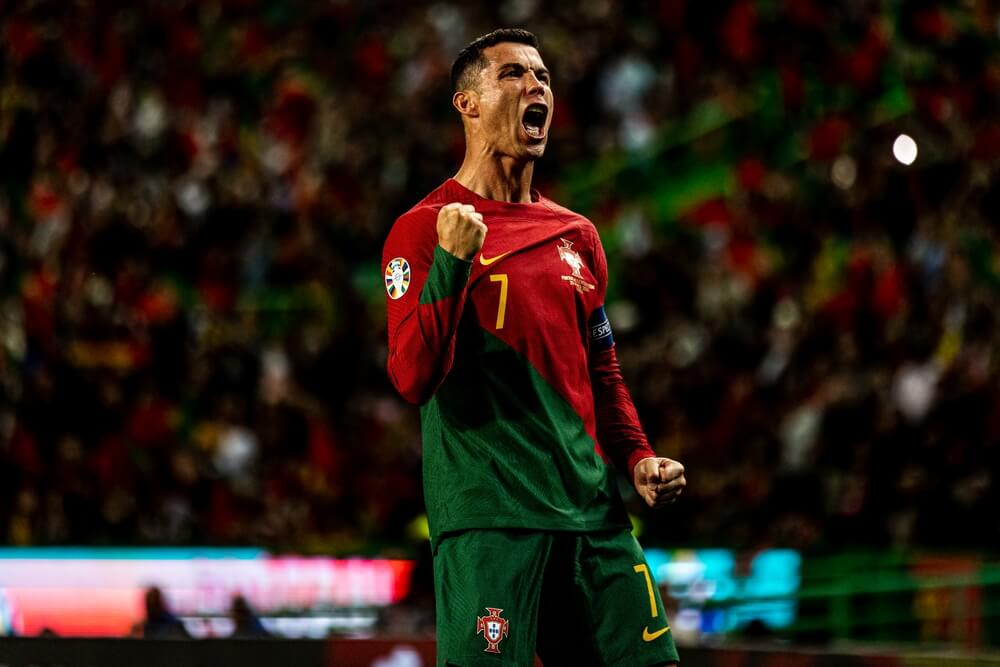
Cristiano Ronaldo requires no statistical introduction to Canadian soccer fans who have followed his career – though the numbers bear repeating as context for what 2026 represents. He will become, alongside Lionel Messi, the first player in history to compete in six FIFA World Cups. He is already the sport’s all-time leading international goal scorer. He maintains the physical conditioning at 41 that most athletes abandon at 33. His Al-Nassr performances since 2023 have kept him sharp and prolific at a volume that gives Martínez genuine selection options beyond purely sentimental ones. The Ronaldo World Cup 2026 narrative is the tournament’s most discussed storyline globally – whether this is his last world cup, whether he can deliver the one title history has denied him, and whether the team is better served by managing his minutes carefully or trusting him to perform across 90 minutes in critical matches.
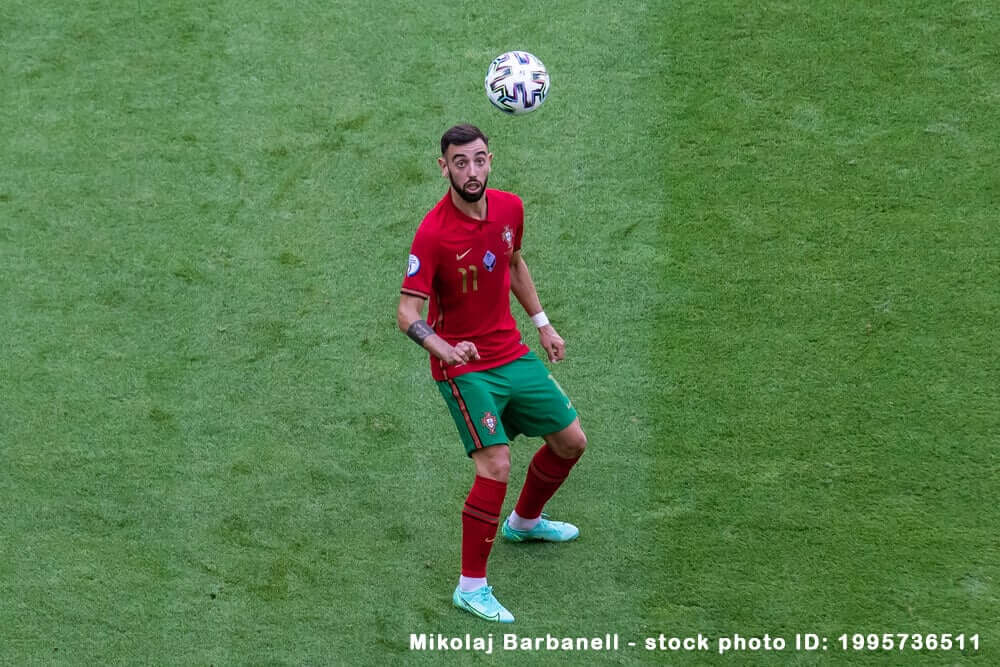
Bruno Fernandes has evolved into Portugal’s most important outfield player when the full roster is assembled. His combination of long-range passing, direct running, set-piece quality and goal-scoring from midfield positions gives Martínez an option that most coaches can only dream about at the number 8 or number 10 position. His Manchester United career has been inconsistent alongside poor teammates, but in the Portuguese national team environment – surrounded by superior players who execute what he initiates – he functions at a consistently higher level.
Bernardo Silva represents the purest technical talent in the Portuguese system. His ability to operate in tight spaces, dribble at pace in close quarters and find passes that open defences who believe they are well organised is elite at the global level. His Manchester City experience – multiple Premier League titles, Champions League success – has given him a mentality shaped by winning, which is the mental environment Martínez is attempting to install across the entire squad.
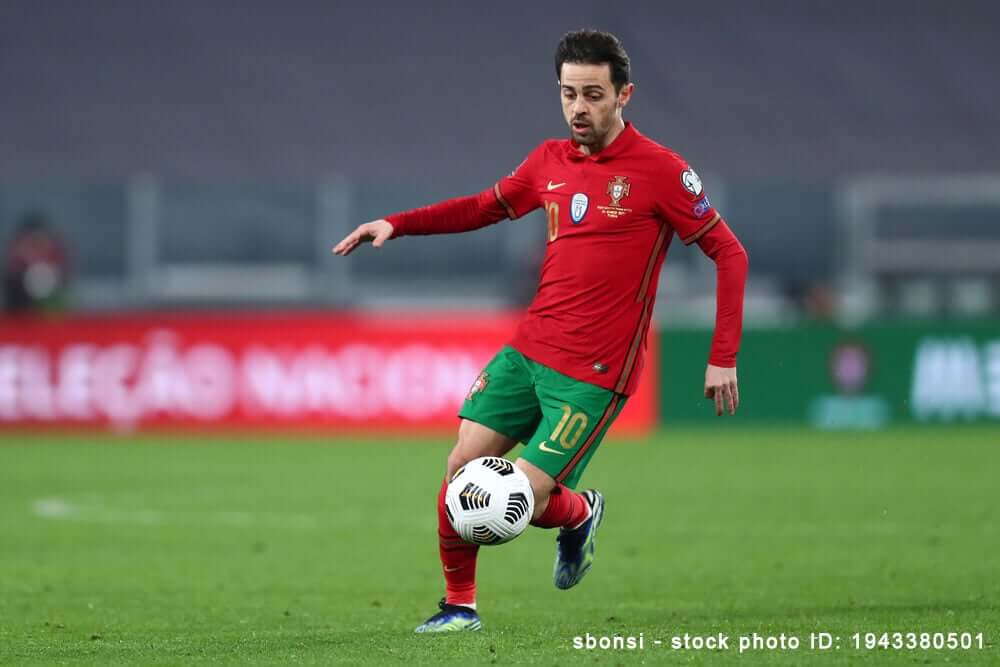
Vitinha and João Neves, the PSG Champions League-winning midfield partnership, provide Portugal with perhaps the most technically accomplished central midfield pairing in the 2026 field. Vitinha distributes with precision and pace. Neves, despite his youth (21 at the time of the tournament), plays with the reading and composure of a ten-year international veteran. Their combination allows Portugal to retain possession under pressure, which in turn reduces defensive exposure and generates the attacking platform the front players need.
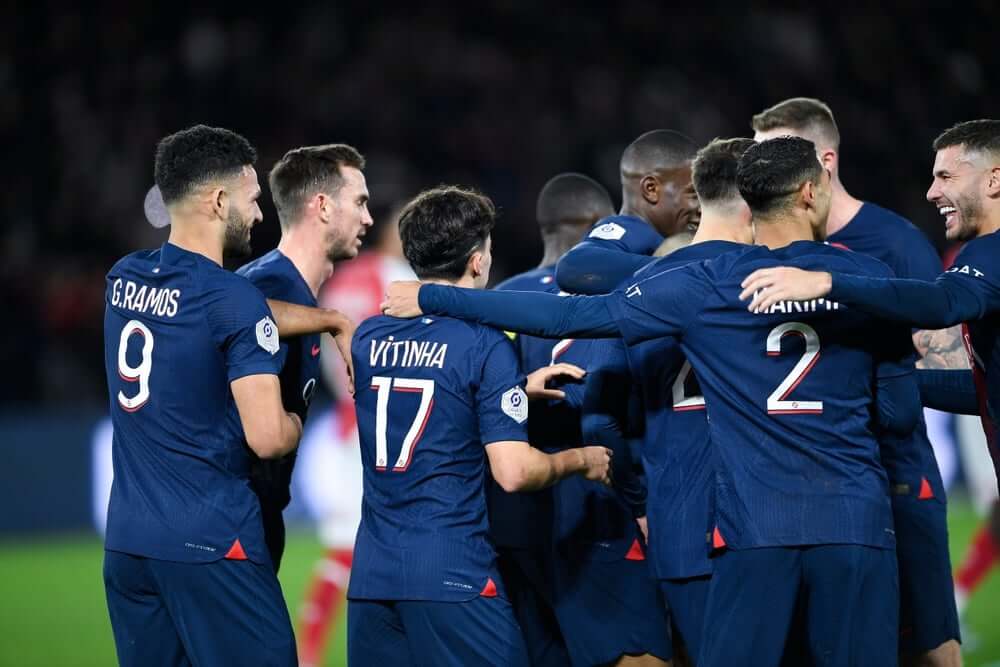
Rúben Dias anchors the defence with the authority of a multiple Premier League winner. His aerial dominance, leadership under pressure and ability to organise those around him make him the backline’s most important figure – arguably more important to Portugal’s overall structure than any individual attacking player. Gonçalo Inácio partners him with the composure of a defender two decades older than his actual years. Nuno Mendes at left back provides a genuine attacking threat that gives Portugal’s wide play an extra dimension; Nelson Semedo occupies the right back position with solid defensive reliability.
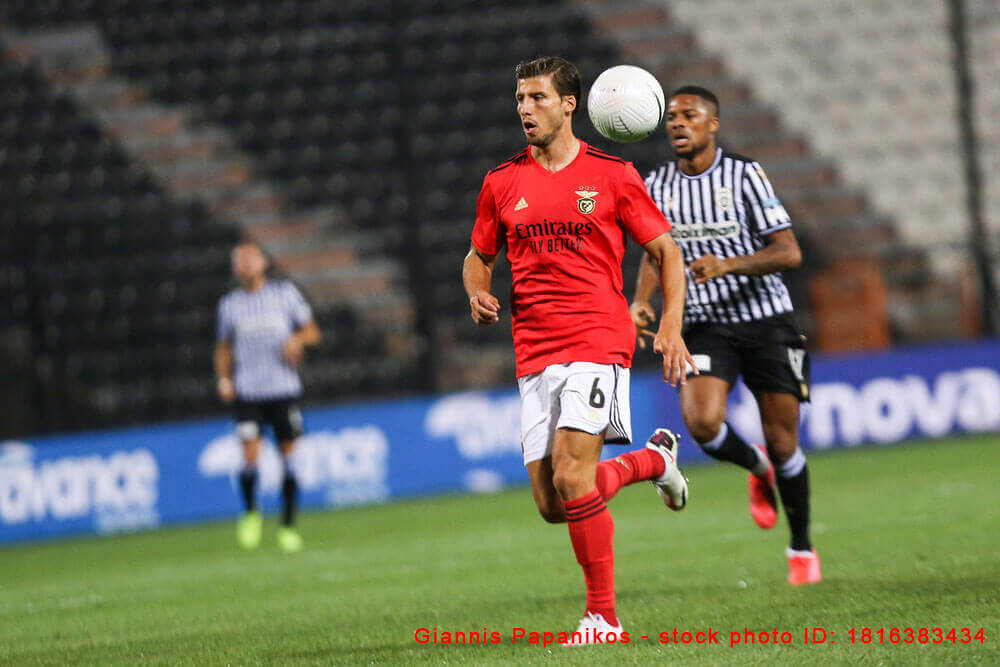
In goal, Diogo Costa has established himself as one of European soccer’s elite keepers. His distribution from the back actively contributes to Portugal’s build-up sequences – not just as a safety valve but as a first-line passer who initiates attacks with precision. His shot-stopping in high-pressure moments, including penalty-shootout performances for Porto and Portugal, signals a goalkeeper capable of being decisive in the specific scenarios where World Cups are ultimately decided.
The most exciting name among Portugal’s emerging talent is Rodrigo Mora. The 18-year-old Porto offensive midfielder became the youngest player to participate in the FIFA Club World Cup, where he also scored in a dramatic 4-4 draw against Al Ahly of Egypt. He represents the latest product of Portugal’s extraordinary youth development system – the pipeline that produced Figo, Deco, Ronaldo, Bernardo Silva, João Félix and now the current midfield core. Martínez has already incorporated him into senior national team training sessions, and a World Cup appearance as a substitute in the group stage is entirely plausible.
Portugal’s Greatest Strengths and Most Pressing Concerns
Portugal’s primary strength is the sheer number of genuinely world-class players distributed across every line of the pitch. Unlike nations whose quality concentrates in one department while mediocrity fills others, Portugal carry elite talent in goal (Diogo Costa), central defence (Rúben Dias), midfield (Bernardo Silva, Vitinha, João Neves) and attack (Bruno Fernandes, Pedro Neto, and Ronaldo). No single defensive strategy neutralises all threats simultaneously.
The second strength is Martínez’s tactical adaptability. Portugal will not play the same way against Colombia in the group stage as they will against a potential European opponent in the quarterfinals. The coach’s willingness to reshape the team based on context rather than insisting on a fixed identity is a meaningful advantage in a seven-match tournament where opponents range from CONMEBOL qualifiers to European powers.
The concern most analysts raise is the Ronaldo question – specifically, how Martínez manages the gap between what the captain has been and what his physical profile at 41 can sustainably deliver across consecutive knockout-level matches. Ronaldo’s goal-scoring instinct, positioning and set-piece value remain genuine assets. His pressing output, recovery pace and defensive tracking have necessarily declined. If Portugal face a team that targets the space behind Ronaldo’s position repeatedly, Martínez must either accept that structural vulnerability or manage the captain’s minutes in a way that respects both the player’s legacy and the team’s competitive needs.
Defensive transition remains the system’s structural weakness. Nuno Mendes’ attacking output from left back is a feature of Portugal’s game, but it creates the same exposed left-side channel that smart coaching staffs will identify and target. Portugal allowed several counter-attacking goals in qualifying from precisely this scenario.
European Qualifying – Solid When It Mattered
Portugal’s European qualifying campaign was defined by professional results rather than aesthetic dominance. Group F contained Ireland and Hungary as credible opponents alongside Armenia as the expected lower-ranking qualifier. Portugal finished atop the group with 13 points from six matches – a haul that secured direct qualification while leaving room for the Seleção to improve their consistency before the World Cup itself.
The home draw against Hungary (1-1) and the defeat in Ireland remained points of discussion among Portuguese soccer analysts throughout qualifying. Both results demonstrated that Portugal can be disrupted by physical, direct opponents who are willing to sacrifice possession and defend with numbers. They also demonstrated Portugal’s ability to recover from setbacks without unravelling – the losses prompted tactical adjustments rather than crisis, which speaks to the maturity Martínez has built into the squad culture.
| Pos | Team | PJ | G | E | P | DG | Pts |
| 1 | Portugal | 6 | 4 | 1 | 1 | +13 | 13 |
| 2 | Ireland | 6 | 3 | 1 | 2 | +2 | 10 |
| 3 | Hungary | 6 | 2 | 2 | 2 | +1 | 8 |
| 4 | Armenia | 6 | 1 | 0 | 5 | -16 | 3 |
Portugal World Cup History – From Eusébio’s Golden Boots to Ronaldo’s Last Chance
Portugal’s relationship with the FIFA World Cup stretches across nine tournaments and nearly 60 years of participation, encompassing extraordinary individual brilliance and consistent collective near-misses that have defined the national soccer identity. The story begins in England in 1966 – Portugal’s debut on the World Cup stage – where they produced one of the tournament’s most celebrated and improbable runs. Eusébio, the Black Panther of Mozambican origin, carried Portugal to a third-place finish while delivering individual performances still cited as among the finest in World Cup history. The quarterfinal comeback against North Korea – trailing 0-3 before winning 5-3 – remains one of the competition’s most dramatic reversals across all editions.
The decades between 1966 and 2002 were characterised by periodic absences and occasional participation without deep runs. From 2002 onward, Portugal has appeared at every World Cup – a 24-year continuous streak. The high points: a fourth-place finish in Germany in 2006, with a young Ronaldo supporting a balanced side under Luiz Felipe Scolari. The frustrations: a 2022 quarterfinal exit against Morocco, eliminated by the same African side that would go on to beat Spain and Portugal’s Iberian neighbours. For a full historical record across all competing nations, visit our World Cup 2026 hub.
The common thread across Portugal’s World Cup history is individual excellence – Eusébio in 1966, Figo in 2002 and 2006, Ronaldo from 2006 onward – paired with collective systems that occasionally frustrated the individual talent rather than amplifying it. Martínez’s mission in 2026 is to break that pattern definitively: to build a system where the talent around Ronaldo finally enables rather than constrains the team’s championship potential.
Ver esta publicación en Instagram
Group K Fixtures – Portugal’s 2026 Opening Phase
Portugal’s World Cup 2026 group stage assignment places them in Group K alongside Colombia, Uzbekistan and the playoff qualifier from the intercontinental path (Jamaica or DR Congo). For complete Group K analysis alongside all 11 other groups, visit our World Cup 2026 groups page.
Colombia represent the group’s most credible threat. The Cafeteros – who finished third in CONMEBOL qualifying with 28 points – arrive with a talented generation that includes Premier League and European club regulars. James Rodríguez’s influence has declined, but a new core of technically gifted players makes Colombia a team capable of frustrating Portugal’s build-up with aggressive pressing and creating danger on rapid counter-attacks. The June 27 fixture between Colombia and Portugal, with both teams likely already qualified, could define group leadership and bracket positioning.
Uzbekistan qualified for their first World Cup through the Asian pathway and arrive as a genuine unknown quantity. Their technical style – developed under consistent tactical leadership – makes them more organised than a debut qualifier might suggest, but the gap in individual quality between the Central Asian side and Portugal is substantial. Three points is the expectation; the question is how efficiently Portugal deliver them.
The playoff qualifier (Jamaica or DR Congo) will be confirmed closer to the tournament. Either opponent represents Portugal’s most straightforward group stage fixture. Martínez will use this match to rotate and manage Ronaldo’s minutes carefully.
| Date | Time (ET) | Match | Venue |
| Wed, June 17, 2026 | 13:00 | Portugal v Jamaica/DR Congo | NRG Stadium, Houston |
| Wed, June 17, 2026 | 22:00 | Uzbekistan v Colombia | Estadio Azteca, Mexico City |
| Tue, June 23, 2026 | 13:00 | Portugal v Uzbekistan | NRG Stadium, Houston |
| Tue, June 23, 2026 | 22:00 | Colombia v Jamaica/DR Congo | Estadio Akron, Guadalajara |
| Sat, June 27, 2026 | 19:30 | Colombia v Portugal | Hard Rock Stadium, Miami |
| Sat, June 27, 2026 | 19:30 | Jamaica/DR Congo v Uzbekistan | Mercedes-Benz Stadium, Atlanta |
Ver esta publicación en Instagram
Portugal World Cup Odds and Our Predictions
Portugal World Cup 2026 odds at Canadian sportsbooks typically range between 12.00 and 16.00 for the outright tournament title – positioning them as a genuine dark horse with a roster that analytically deserves shorter prices. Our model assigns Portugal a 7-9% championship probability, meaning odds above 12.00 represent meaningful value for bettors confident in the squad’s quality and the coach’s ability to navigate the knockout stage successfully.
The market with the clearest value proposition for Portugal is “reaches the quarterfinals,” available around 1.55-1.75 at most Canadian sportsbooks. Group K is navigable, Portugal’s individual quality should be sufficient to win two of three group matches comfortably, and the Round of 16 opponent – drawn from adjacent groups – is unlikely to be the tournament’s most dangerous side. At 1.55-1.75, this represents an odds-on favourite scenario that the underlying squad quality fully justifies.
Ronaldo to score in the tournament at 1.60-1.80 is another straightforward market. He will take set pieces. He will start multiple group matches. His penalty record in international soccer is extraordinary. At 41 his output across 90-minute knockout matches may be managed, but his goal-scoring in the matches he does start – and his set-piece threat regardless of playing time – makes this market’s implied probability lower than the actual likelihood warrants.
The outright tournament winner market at 12.00-16.00 deserves a small allocation in any diversified World Cup betting parlay. Portugal’s roster has fewer obvious weaknesses than the price implies, Martínez has improved as each tournament cycle has progressed, and the specific bracket position could avoid the very top favourites until the semifinal stage. For long-tournament parlays, combining Portugal group advancement with a quarterfinal appearance at combined odds of roughly 2.00-2.40 offers sensible risk-adjusted value.
Avoid “Ronaldo to be Portugal’s top scorer in the tournament” markets at short odds. João Neves, Bruno Fernandes and Pedro Neto will all create and score across a full seven-match run. Martínez’s system distributes goal-scoring responsibility rather than channelling everything through one player – and at 41, Ronaldo’s minute management may limit his total across the full tournament. Check the current lines and movement at our World Cup 2026 odds page for the latest market positions.
Portugal World Cup 2026 represents the most complete national team they have assembled since the 2006 generation under Scolari reached the semifinal in Germany. The roster from one to 23 carries genuine quality. The coach has grown into the role. And Cristiano Ronaldo – whatever his limitations at 41 – brings an intangible pressure on opponents that no statistical model fully captures. Whether this is Ronaldo’s last world cup matters less than whether Portugal are finally equipped to win one. The evidence of their roster suggests they are. Follow all the Group K developments at our World Cup 2026 hub.