Two consecutive group-stage exits – Russia 2018 and Qatar 2022 – transformed Die Mannschaft from perennial favourite to the tournament’s most polarizing question mark. Germany, four-time world champions, arrive at World Cup 2026 carrying more uncertainty than a nation of their stature is used to. Julian Nagelsmann inherited a rebuild after Euro 2024, where flashes of brilliance were ultimately extinguished by Spain in the quarterfinals. For Canadian bettors, the Germany World Cup 2026 equation is complex: undeniable individual talent, a tactical system still finding its ceiling, and odds between 10.00 and 14.00 that reflect the market’s lingering scepticism. This is one of the tournament’s most fascinating teams to analyse.
Germany’s Road to North America
Julian Nagelsmann took over from Hansi Flick in September 2023 with a mandate to restore German football’s identity after back-to-back humiliations on the biggest stage. His opening act was a successful Euro 2024 on home soil, where Germany played some genuinely thrilling soccer – topping their group, dispatching Denmark in the round of 16, and putting together performances that reconnected the fan base with its team. The quarterfinal exit to eventual champions Spain in Stuttgart stung, but it was the kind of defeat that revealed progress rather than confirming failure.
Qualifying for the 2026 tournament reinforced optimism. Germany topped UEFA Group A with 15 points from 18 – five wins and one loss – scoring 13 goals in the process. The lone defeat, a 1-0 loss to Northern Ireland in Belfast, was a blip rather than a pattern. Slovakia and Northern Ireland were the closest pursuers, but neither came close to threatening Germany’s top-spot finish. The Mannschaft entered the final qualifying window already confirmed, which allowed Nagelsmann to experiment with his roster depth and test tactical variants ahead of the summer.
The DFB extended Nagelsmann’s contract through Euro 2028, a vote of confidence that signals long-term commitment to his project. That stability matters in a tournament environment – coaches with job security tend to make braver, better decisions when the pressure mounts in knockout rounds.
Nagelsmann’s Tactical Blueprint
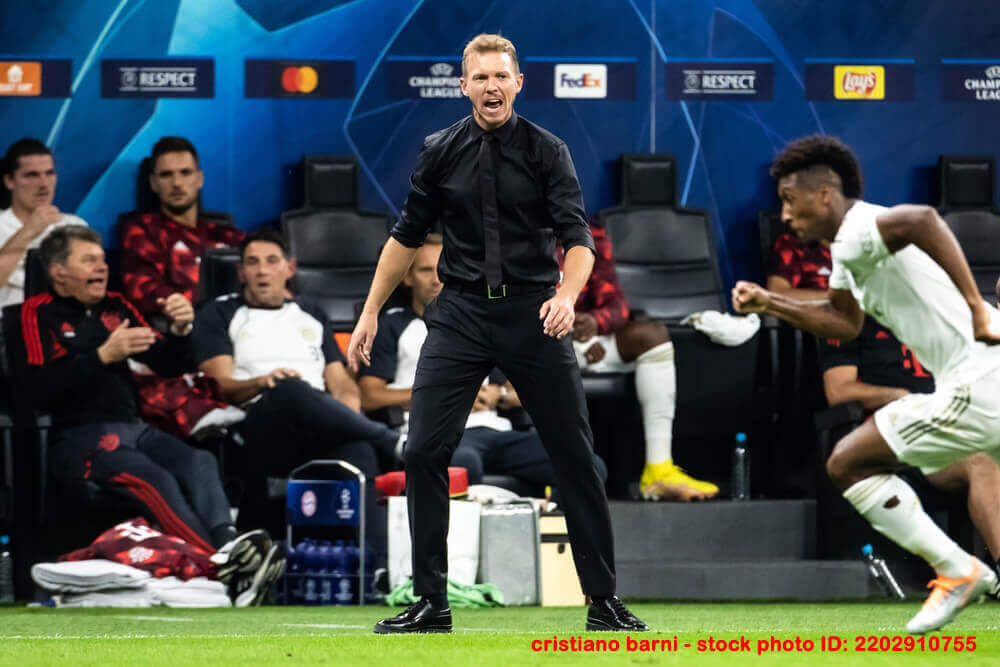
Julian Nagelsmann brings a distinct identity to the German national team setup. At 38 years old during the tournament, he remains one of the youngest coaches at the event – a detail that cuts both ways. His tactical intelligence is beyond question: the runs at Hoffenheim, RB Leipzig, and Bayern Munich all featured compact pressing systems, offensive positional structures, and an ability to develop young players faster than conventional methods would suggest.
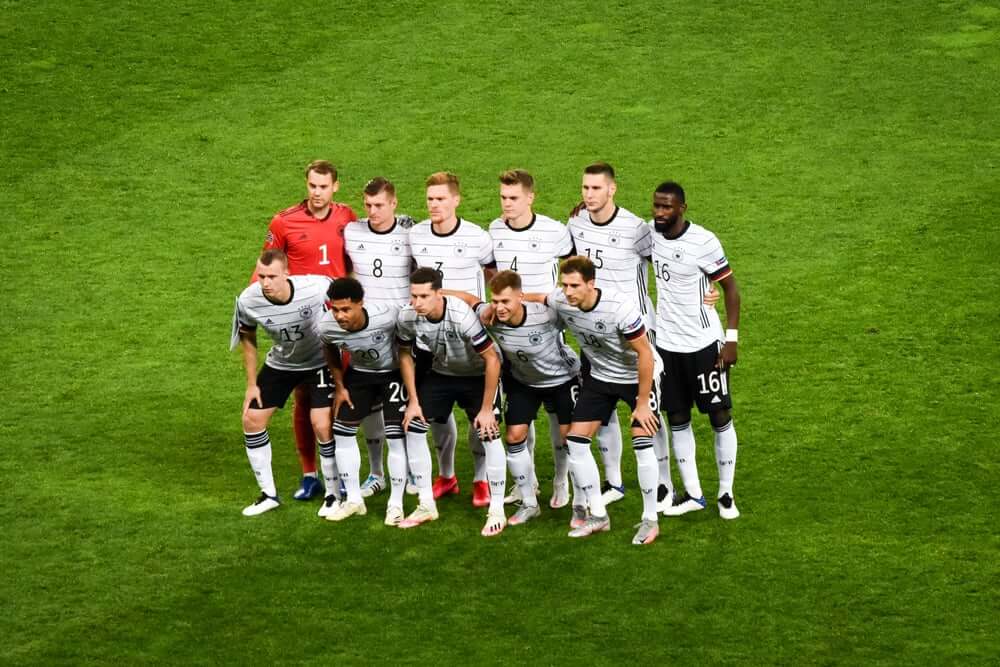
The preferred formation is a 4-2-3-1, with Joshua Kimmich operating at right back – a position choice that initially surprised observers but has proven effective, giving Nagelsmann a ball-playing, tactically intelligent presence on the right flank while freeing up the midfield. Nico Schlotterbeck and Jonathan Tah form the central defensive partnership, with Schlotterbeck’s left-footedness allowing natural diagonal coverage across the backline. The double pivot has typically featured Kimmich alongside either Aleksandar Pavlović or, when available, a more defensive option that frees the creative players ahead of them.
In attack, the 4-2-3-1 becomes something fluid and threatening. Florian Wirtz occupies the number-10 role, while Jamal Musiala has the freedom to drift and find space across the final third. The wide forwards are granted significant liberty to cut inside and combine, meaning the shape can shift to something resembling a 4-4-2 diamond when possession is established. This flexibility is one of Nagelsmann’s genuine assets – he can adapt without losing tactical cohesion.
The concern is well-documented: this system demands near-perfect execution to function under the specific pressure of World Cup knockout soccer. In the Euro 2024 run, Germany conceded in four of five matches, suggesting the high defensive line and aggressive press creates transitions that clinical opponents can exploit. Rival coaches will have studied that tournament extensively. How Nagelsmann adjusts the defensive structure against opponents with elite counter-attacking pace – and there are several in the knockout field – will likely define how far Germany advances.
Manuel Neuer has retired from international football. Oliver Baumann of Hoffenheim is now the established number one, with Alexander Nübel of Stuttgart serving as backup. Baumann, 35, started all six World Cup qualifiers and brings veteran composure to the position, even if he lacks Neuer’s global profile. Marc-André ter Stegen’s recurring injury issues have effectively removed him from contention.
Squad & Key Players
The German Germany squad World Cup 2026 is headlined by one of the most exciting creative partnerships in European soccer. Jamal Musiala and Florian Wirtz represent the kind of generational coincidence that national coaches dream about – two elite attacking midfielders who are comfortable playing together rather than competing for the same space.
Musiala, 22 during the tournament, is the player opposition coaches most fear. His ability to receive the ball under pressure, twist away from markers in tight areas, and deliver either the final pass or the finish himself makes him genuinely difficult to game-plan against. He suffered a broken leg at the FIFA Club World Cup last summer but has been working his way back toward full fitness. Nagelsmann has been careful managing his return – “It’s the World Cup that counts, not friendlies in March” – with the expectation that Musiala will be fully available and sharpened for June. His Euro 2024 performance, where he was Germany’s standout player across five matches, sets the benchmark for what the tournament needs from him.
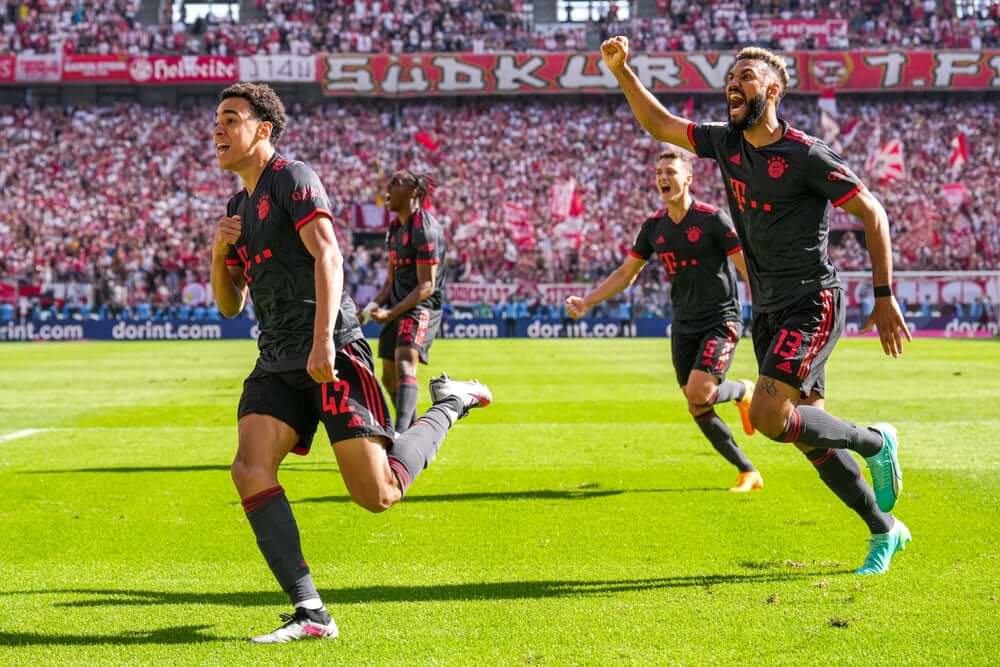
Wirtz has relocated from Bayer Leverkusen – where he was instrumental in the club’s historic unbeaten Bundesliga title in 2024 – to Liverpool, where adapting to the Premier League’s demands has taken time. With Germany, however, he consistently produces his best soccer. Ranked as one of the world’s top attacking midfielders, Wirtz in the number-10 role is where the system genuinely clicks. His partnership with Musiala dates to their youth academy days, and the intuitive understanding between them cannot be coached – it was built over years.
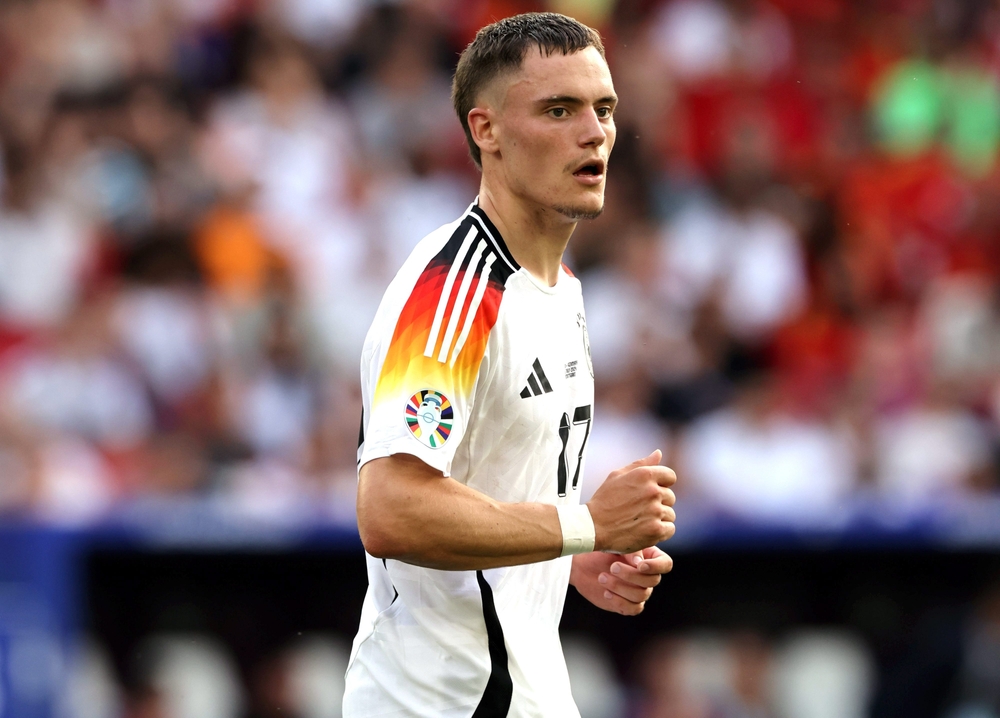
Kai Havertz has evolved significantly from the inconsistent talent who frustrated supporters at Chelsea. Now 27 and operating as Arsenal’s striker, he has found the positional role that unlocks his best qualities. His movement between the lines, ability to link with Musiala and Wirtz without crowding their space, and improved goal-scoring output – 8 goals in qualifying – make him the logical central striker choice. He is not a pure penalty-box forward, but Germany’s system does not require one.
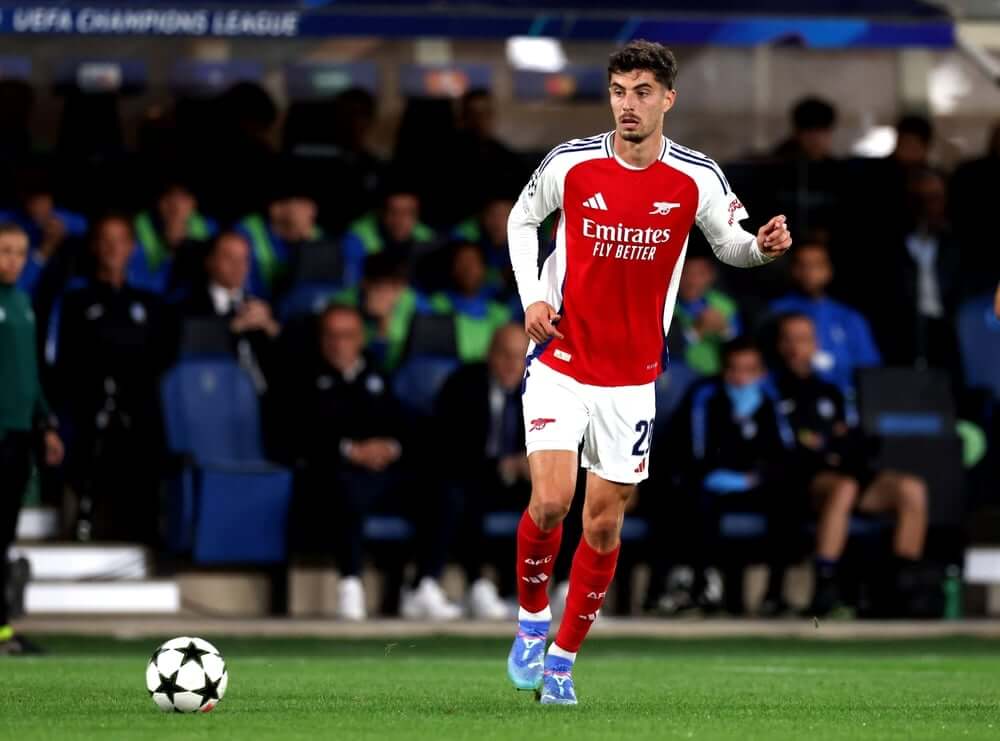
Antonio Rüdiger at 33 provides the defensive leadership that younger central defenders in the squad cannot yet match. His Champions League and LaLiga experience with Real Madrid – including multiple finals and title campaigns – gives him a competitive template that he transfers to the national team dressing room. Jonathan Tah, his likely central defensive partner, is technically accomplished but has occasionally shown vulnerability against physical, direct attackers. The partnership functions well in controlled possession phases; the test is how it holds up when Germany is forced to defend deeper for extended periods.
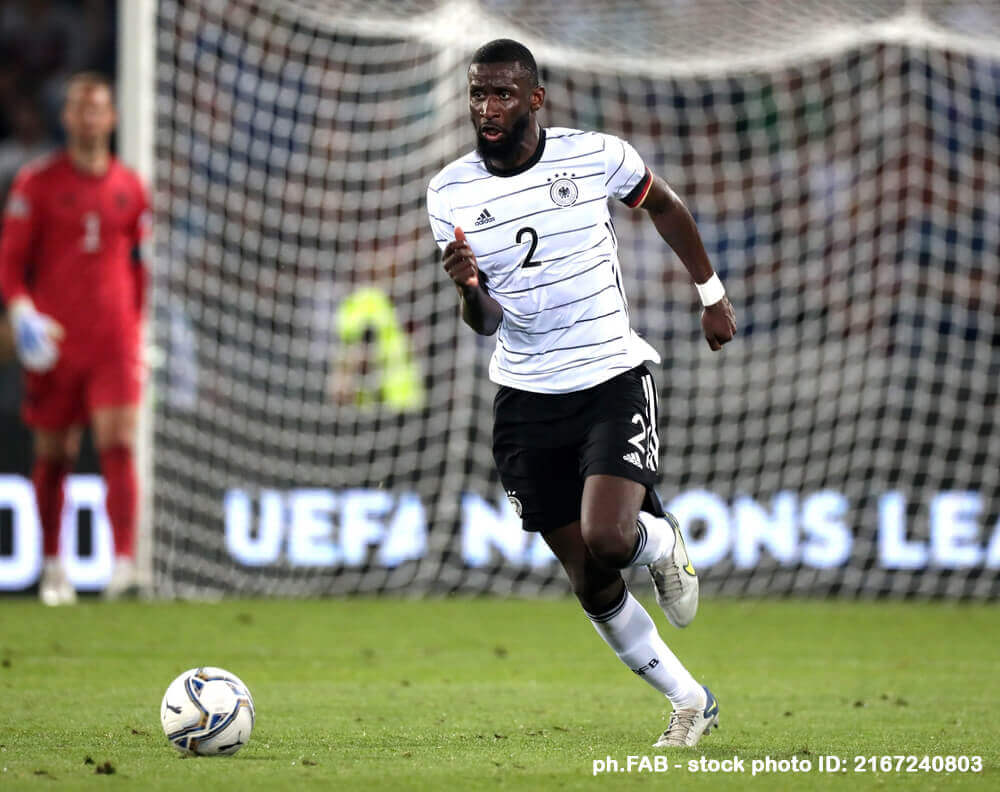
In midfield, Kimmich’s positioning at right back concentrates Germany’s creative build-up through the centre. Aleksandar Pavlović has emerged as a reliable presence in the double-pivot role, combining energy and positional discipline. Deniz Undav leads the Bundesliga scoring charts this season with 16 goals, giving Nagelsmann a clinical alternative at centre-forward who will push Havertz for minutes if form demands it.
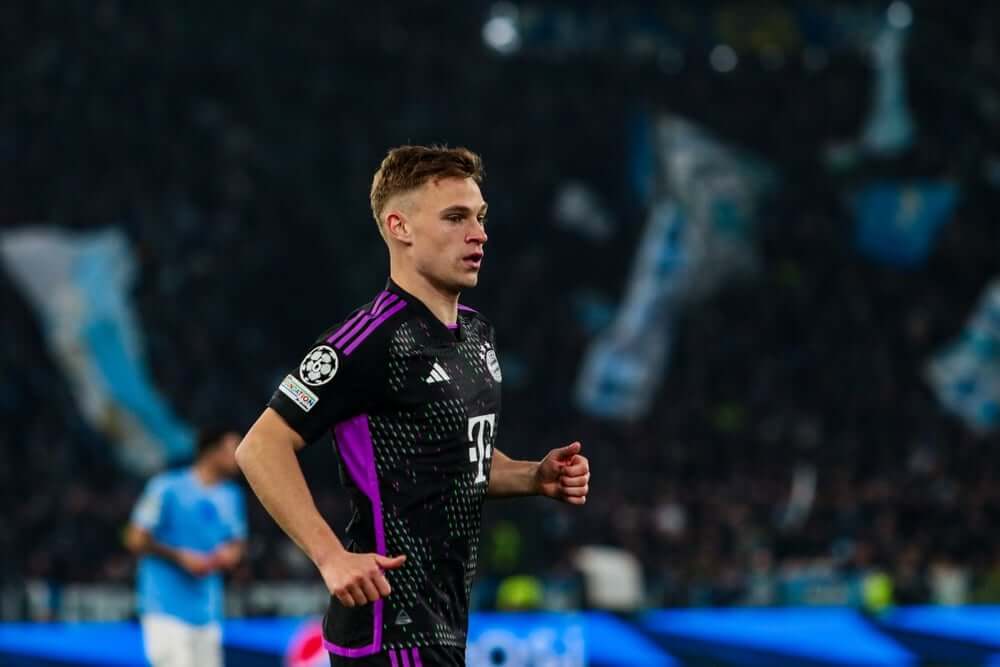
One genuine concern: the left back position. David Raum offers attacking thrust but defensive lapses; Maximilian Mittelstadt provides an alternative without resolving the underlying uncertainty. Against teams with dangerous right wingers – and Group E opponent Côte d’Ivoire has several – this flank will be tested early.
Strengths & Weaknesses
Germany’s primary strength is the creative axis through the centre: Musiala, Wirtz, and Havertz form an attacking triangle that no defensive setup neutralizes easily. When all three are healthy and in form simultaneously – which they have rarely been during Nagelsmann’s tenure – Germany produce a quality of attacking soccer that rivals any team at the tournament. The depth in midfield creative options, with Brandt, Gnabry, and others providing alternatives, means Nagelsmann has coverage if one of his starters underperforms.
The German youth pipeline also deserves acknowledgment. Under-17 world champions in 2023, with that age group now pushing into the senior setup, Germany have a depth of emerging talent that suggests the rebuild extends well beyond this summer. Players like Lennart Karl represent the next wave filtering through. That structural health gives Nagelsmann confidence in his selections and provides genuine competition for roster spots.
The weaknesses, however, are real and exploitable. Defensively, the high line creates transition exposure that opponents with pace will target. In Euro 2024, every team that scored against Germany did so primarily through quick transitions after German possession losses. That pattern will not disappear at a World Cup where knockout-stage opponents will identify and attack it ruthlessly.
The psychological burden of two consecutive group-stage exits is the factor that statistics cannot fully capture. Players like Kimmich and Rüdiger carry the memory of those failures into every competitive match. Whether that history fuels redemptive motivation or introduces hesitancy in high-pressure moments is genuinely uncertain. Nagelsmann has reportedly worked with performance psychologists to address this – but competitive soccer cannot be coached out of the mind in the same way tactics can be drilled on the training pitch.
Ver esta publicación en Instagram
How Germany Qualified
Germany qualified directly from UEFA Group A, finishing as comfortable group winners despite one stumble. The six-match campaign produced five wins and one defeat, with a goal difference of +13 and 15 points – enough to stay clear of Slovakia, who finished second with 12 points. Northern Ireland in third collected 9 points, while Luxembourg were winless across all six matches.
| Team | PJ | W | D | L | GD | Pts |
| 🇩🇪 Germany | 6 | 5 | 0 | 1 | +13 | 15 |
| 🇸🇰 Slovakia | 6 | 4 | 0 | 2 | -2 | 12 |
| 🇬🇧 Northern Ireland | 6 | 3 | 0 | 3 | +1 | 9 |
| 🇱🇺 Luxembourg | 6 | 0 | 0 | 6 | -12 | 0 |
The 6-0 demolition of Slovakia in Leipzig in November 2025 was the statement performance of the campaign, suggesting the attacking trio was clicking into genuine rhythm ahead of the tournament. The loss in Belfast to Northern Ireland, while concerning at the time, was an anomaly in an otherwise controlled qualification process.
Germany’s World Cup History
Germany’s World Cup record is, by any objective standard, the most consistent of any nation in tournament history. Four titles – 1954, 1974, 1990, and 2014 – stand alongside runner-up finishes in 1966, 1982, 1986, and 2002. The pattern of reaching deep into tournaments has been the defining characteristic of German soccer on the global stage, with semifinal appearances in 1958, 1970, 2006, and 2010 completing a picture of extraordinary top-level consistency.
That context makes the 2018 and 2022 exits so jarring. Germany became only the second defending champion – after Spain in 2014 – to exit in the group stage, then repeated the humiliation four years later in Qatar. The psychological weight of those failures has hung over the national team ever since.
The 2014 triumph in Brazil remains the most recent chapter of genuine glory: the 7-1 semifinal destruction of the host nation, followed by Mario Götze’s extra-time winner against Argentina in the final at the Maracanã. Of that championship roster, no player will feature in North America – the complete generational turnover that Nagelsmann has managed makes this truly a new chapter rather than a continuation of a winning cycle.
Germany have never failed to reach the World Cup. Their record of 20 consecutive qualification campaigns is a testament to structural football depth that no other European nation matches.
Ver esta publicación en Instagram
Group E Fixtures: The Road Out of the Group Stage
Germany’s Group E assignment – alongside Curaçao, Côte d’Ivoire, and Ecuador – represents a favourable but not guaranteed path. No team in the group reaches the standard of a top-eight World Cup contender, but Côte d’Ivoire and Ecuador both bring genuine quality and tactical sophistication that makes complacency dangerous.
The fixture order works well for Germany. Opening against Curaçao allows a comfortable points start and the opportunity to bed in the starting lineup before the more demanding fixtures. The Ecuador match – against a team coached by Sebastián Beccacece with Moisés Caicedo and Kendry Páez providing midfield quality – represents the group’s central test. Côte d’Ivoire, AFCON champions in 2024, have proven they can organize defensively and threaten on transition against European opposition.
Canadian fans attending matches in Toronto will see Germany’s group stage fixtures broadcast across TSN and CTV, with all times listed in Eastern Time below.
| Date | Fixture | Venue | ET Time |
| Sun, June 14 | Germany v Curaçao | Houston | 1:00 PM ET |
| Sun, June 14 | Côte d’Ivoire v Ecuador | Philadelphia | 7:00 PM ET |
| Sat, June 20 | Germany v Côte d’Ivoire | Toronto | 4:00 PM ET |
| Sat, June 20 | Ecuador v Curaçao | Kansas City | 10:00 PM ET |
| Thu, June 25 | Curaçao v Côte d’Ivoire | Philadelphia | 4:00 PM ET |
| Thu, June 25 | Ecuador v Germany | New York/New Jersey | 4:00 PM ET |
Projection: Germany finishes first in Group E with 7-9 points. The most interesting betting angles emerge from the Ecuador fixture, where Germany are expected to be favoured at around 1.60-1.70 but the match is genuinely competitive, particularly if Caicedo controls the midfield tempo and Páez finds space between Germany’s lines. The Côte d’Ivoire match in Toronto will be one of the tournament’s most atmospherically unique settings.
Ver esta publicación en Instagram
Germany World Cup Odds & Predictions
The Germany World Cup odds sit between 10.00 and 14.00 for the outright title – positioning them in a second tier behind Argentina, France, Spain, Brazil, and England. At those prices, the implied probability lands between 7-10%, which roughly aligns with my own model. The market is neither overrating nor significantly undervaluing Germany; the scepticism is proportionate to recent history.
The bet that offers the most compelling risk-adjusted value is Germany advancing to the semifinals at odds around 2.50-3.00. Historically, Germany have reached the semifinals in 13 of 20 World Cup appearances – a consistency rate that no other nation approaches. Even accounting for the two recent group-stage exits as genuine data points rather than statistical noise, a team of this talent level in a relatively accessible draw deserves better than 2.50 for a deep run.
For player props, Musiala’s odds to finish as top tournament scorer typically land around 15.00-20.00. If Germany advances through to the quarterfinals and beyond – a reasonable base case – those numbers represent genuine value. His role at the centre of the attacking system means touches, chances, and goal involvement will accumulate. Havertz in the 20.00-25.00 range for Golden Boot is the secondary option worth considering: his goal record in qualifying (8 in 6) established his credentials as a penalty-area presence when the system is functioning correctly.
One market to actively pursue: over 2.5 total goals in Germany’s group matches, typically priced at 1.65-1.80. Nagelsmann’s system is structurally open – the press creates chances in both directions, and Germany’s goals conceded rate in Euro 2024 (4 in 5 matches) suggests opponents will find ways to score. Curaçao is the obvious exception, but against Ecuador and Côte d’Ivoire this pattern should hold.
My overall call: Germany reaches the quarterfinals. The talent is sufficient, the group is navigable, and Nagelsmann has shown enough tactical adaptability to avoid the worst-case scenarios. A semifinal run is plausible if the bracket opens up. The title remains a stretch – the psychological and systemic gaps relative to Argentina, France, and Spain are real – but at 12.00, a small outright position as a diversifier in a tournament portfolio makes rational sense.
For the latest World Cup odds and live betting lines on Germany’s matches, the tournament’s biggest sportsbooks – bet365, FanDuel, and BetMGM – will all carry comprehensive coverage of every Group E fixture and the knockout rounds beyond. The Musiala top-scorer market in particular is worth monitoring as the tournament draws closer, since prices typically shorten once squad injury news clarifies.
Germany arrives at this World Cup at a crossroads that’s genuinely fascinating to analyse. Nagelsmann has rebuilt the culture, identified the core, and created a tactical framework with a real identity. Whether that identity translates into the kind of resilient, tournament-hardened soccer that wins in July is the question that makes watching Die Mannschaft in North America one of the summer’s most compelling storylines. Bet the process, not just the result – and the process, for the first time in years, is pointing in the right direction.