No country in World Cup history has achieved what Croatia has managed relative to its football infrastructure. A nation of four million people, playing only its seventh World Cup as an independent republic, has reached three semifinals and one final since 1998. That is not statistical noise – it is a pattern built on a specific combination of tactical intelligence, collective fighting spirit, and individual brilliance that Zlatko Dalić has channelled into results that defy conventional expectations about what small football nations can achieve. The Croatia World Cup 2026 edition arrives with Luka Modrić – 40 years old and still magnificent – leading what will almost certainly be his final major tournament. For Canadian bettors evaluating this squad, the question is not whether Croatia belong at the top table. Their record proves they do. The question is how much their generational transition affects the ceiling of what Dalić’s group can accomplish in North America.
Croatia’s Road to North America
Qualifying for 2026 produced Croatia’s most dominant European qualifying campaign in their history as an independent nation. Topping UEFA Group L with 22 points from eight matches – seven wins and one draw – they conceded a single goal across the opening six qualifiers, a defensive record that speaks directly to Dalić’s ability to organise a team that defends as a unit regardless of the attacking talent it possesses.
The principal qualifying challenge came from the Czech Republic, who finished second with 16 points. Notably, the Faroe Islands – ranked among Europe’s weakest national teams – produced results against other group opponents that initially created the impression of a tighter race than it actually was. Croatia never wavered. Their 7-1 aggregate record against Gibraltar and the 5-1 defeat of the Czech Republic were the group’s defining performances, establishing the qualification with two matches to spare.
Dalić’s squad management during qualifying reflected a coach preparing a deep roster rather than relying exclusively on his established starters. Modrić was carefully rotated – rested for the Faroe Islands match, then brought back for the decisive Czech Republic fixture – in a deliberate effort to protect the 40-year-old’s legs for the World Cup itself. That approach, managing minutes rather than playing starters regardless of fixture importance, demonstrates the tactical maturity that separates Dalić from less experienced tournament coaches. Croatia’s path through Group L at the 2026 World Cup will require that same disciplined approach.
Dalić’s Philosophy and Tactical Structure
Zlatko Dalić took charge of Croatia in October 2017 in the most dramatic of circumstances – inheriting a team that needed a playoff victory over Greece just to reach the 2018 World Cup, then transforming that same squad into World Cup finalists and one of the tournament’s most celebrated teams. His continuation through the 2022 Qatar campaign, where Croatia again reached the semifinals before losing to Argentina in the eventual champions’ run, cemented his status as the most important figure in Croatian football history.
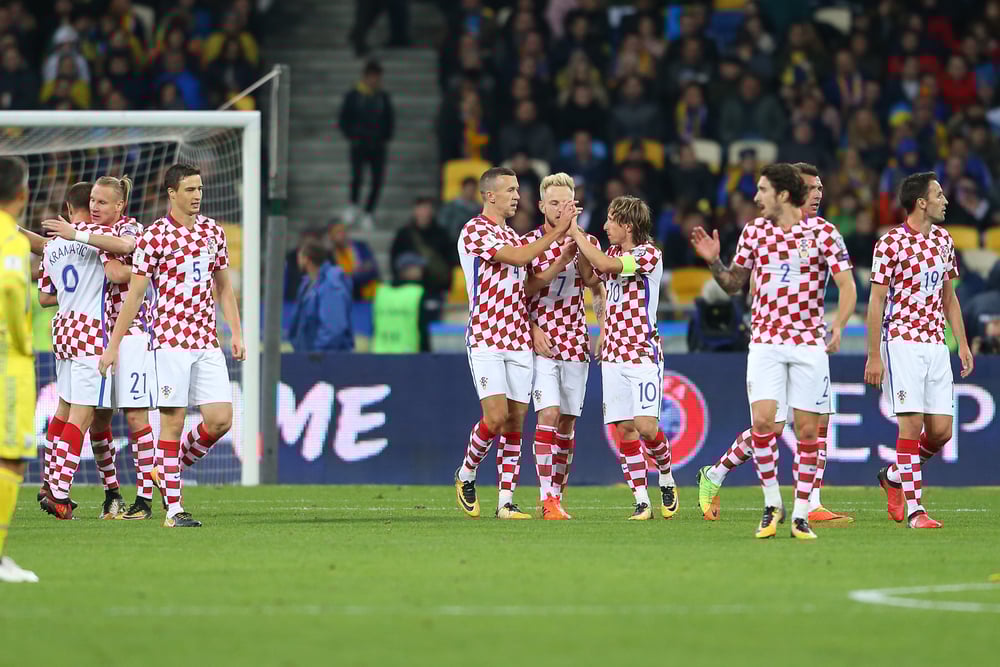
His third World Cup in charge arrives with the most significant generational question his tenure has faced. The squad that reached the 2018 final was built around a specific generation – Modrić, Rakitić, Mandžukić, Perišić – whose combined experience and tactical understanding created something greater than the sum of individual parts. That generation is aging: Modrić is 40, Perišić is 37. The question is whether the players who have grown up alongside and beneath them – Gvardiol, Kovačić, Stanišić, Vušković – have absorbed enough of that collective intelligence to function at the same level when the veteran influence is reduced.
Dalić’s tactical system alternates between a 4-2-3-1 and 4-3-3 depending on the game state and opponent characteristics. In both formations, the structural principles remain constant: high intensity pressing to recover possession quickly, vertical attacking transitions prioritized over extended possession sequences, and wide players who track back diligently to prevent numerical disadvantages in defense. This is physically demanding soccer – Croatia ask a lot of their wide players and full backs in terms of up-and-back running – which is why the squad depth across wide positions matters more for Croatia than for teams with more possession-oriented systems.
The specific challenge for Dalić at this tournament is the midfield transition. With Modrić in a reduced role – playing significant minutes but not the 90-minute anchor he was in 2018 – the creative burden shifts more toward Kovačić and the newer generation of central midfielders. Petar Sučić and Martin Baturina have been developed through the qualifying campaign specifically with this transition in mind, gaining experience while Modrić was managing his minutes.
Squad & Key Players
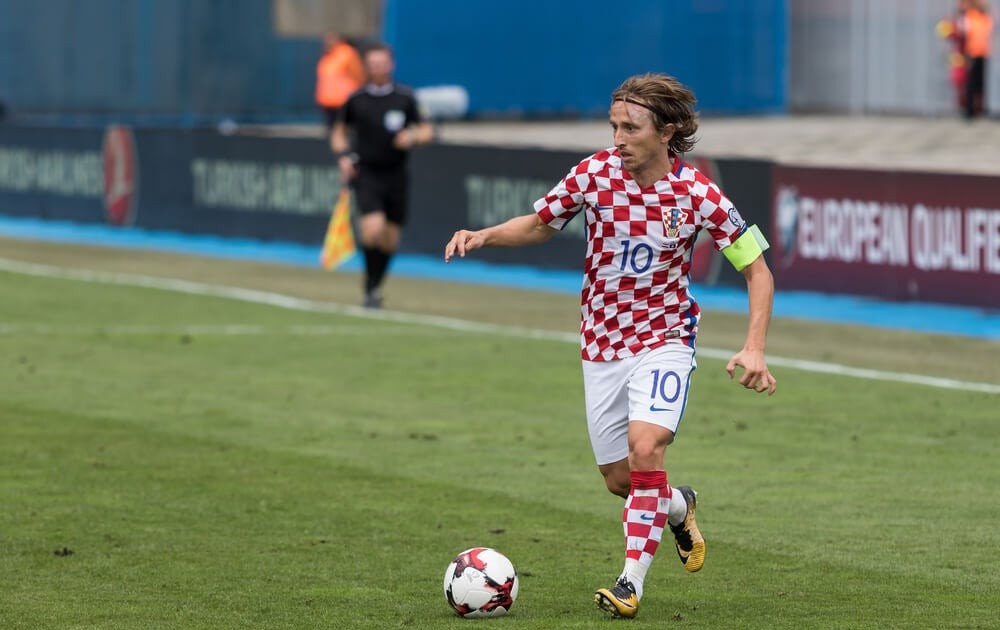
Luka Modrić remains the story, the captain, and – in his most effective moments – still the best player on the pitch regardless of who else is playing. At 40, the statistical decline is real: he cannot cover the same ground he could in 2018, and 90-minute performances draw on physical reserves he cannot replenish at the same rate. What has not diminished is the intelligence: his spatial awareness, the precision of his passing under pressure, the ability to read where the space will be half a second before everyone else perceives it. The Modric World Cup 2026 story is not about whether he can still perform – he can. It is about how Dalić manages the minutes to keep him available and effective when it matters most. This will be his fifth World Cup appearance, a testament to longevity that no Croatian player has approached.
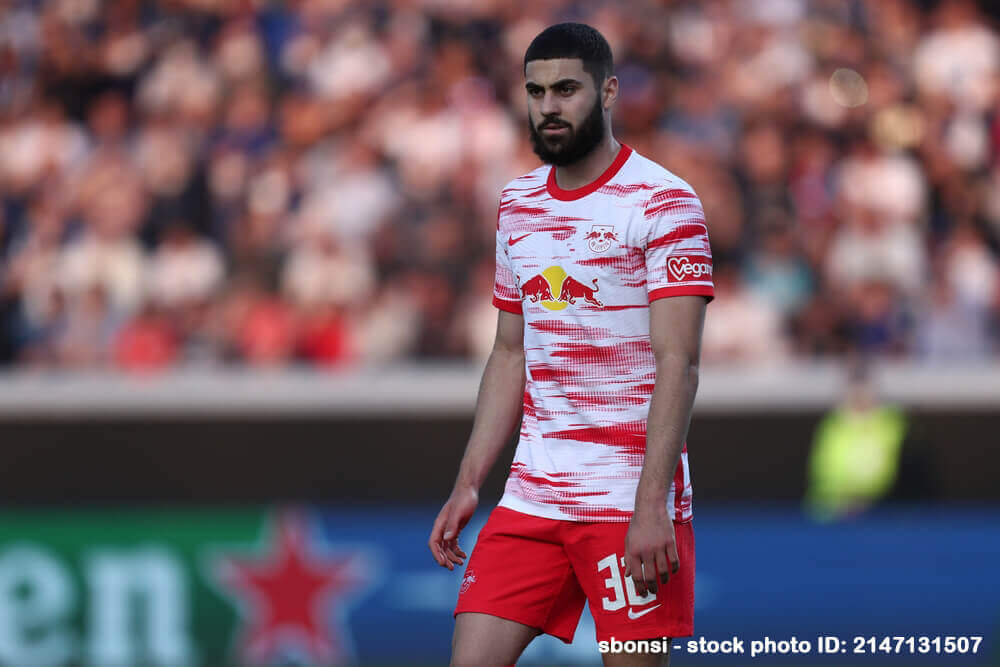
Joško Gvardiol at Manchester City has developed into one of the world’s elite left backs, ranked among the very best at his position globally. Technically sophisticated, composed on the ball, and defensively disciplined in ways that Premier League competition has sharpened further, Gvardiol is the player who best represents Croatia’s next-generation quality. He was injured for the March 2026 international window – a development worth monitoring for tournament fitness – but at 22 years old his recovery timelines are those of a player at peak physical condition. When fit, he gives Croatia a world-class presence at left back that transforms the defensive and attacking options on that flank.
Mateo Kovačić, Champions League winner with Manchester City, provides the midfield control that Croatia’s system requires when Modrić is managing his minutes. His ability to progress the ball through pressure, combine in tight spaces, and maintain positional discipline makes him the technical quality bridge between the veteran generation and the newer players. His injury absence during the Faroe Islands qualifier was a reminder of how much Croatia’s midfield quality depends on his presence.
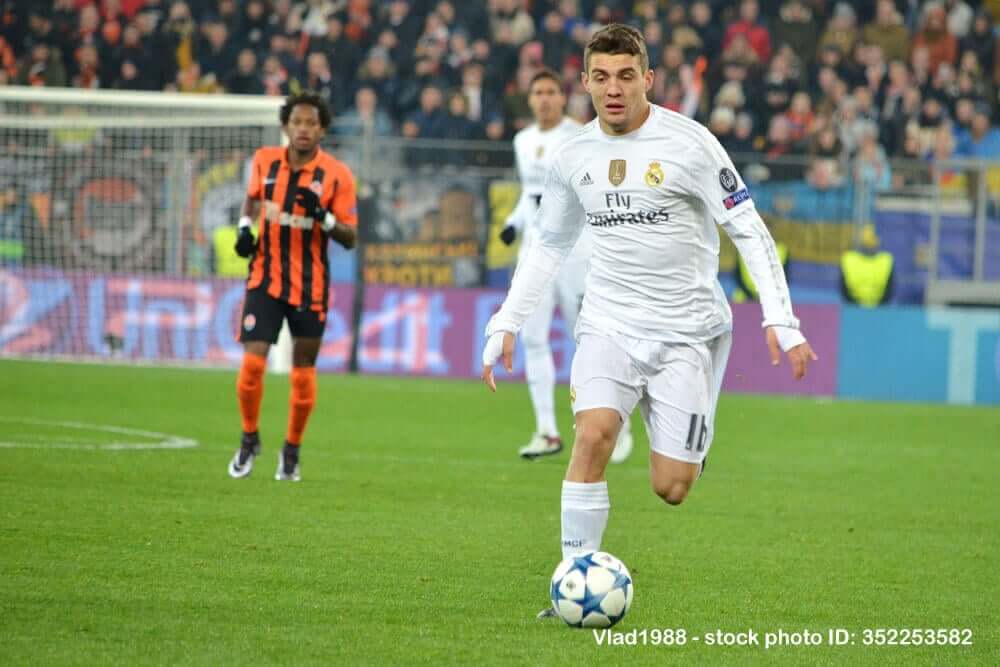
Josip Šutalo has emerged as a reliable centre-back option alongside the experienced Duje Ćaleta-Car. The pairing provides cover for both modern defending – aggressive pressing and high defensive line – and the more conservative approaches Dalić might deploy against technically superior opponents. Josip Stanišić at right back brings Bundesliga experience from Bayern Munich, covering for the attacking thrust that Gvardiol provides on the opposite flank.
Luka Vušković – 18 years old, 1.93m of central defensive presence – signed for Tottenham before this season and has already earned senior international minutes. His aerial dominance is complemented by genuine technical quality on the ball, a combination that has drawn comparisons to the previous generation’s defensive quality that helped Croatia reach finals. At this World Cup he plays a supporting role, but he is clearly being developed as a cornerstone of the 2030 cycle.
In attack, Andrej Kramarić provides the scoring instinct at centre forward – his experience and finishing technique are the kind of reliable threat that Dalić has consistently included in his squads regardless of the stylistic conversations happening around the system. Ivan Perišić at 37 is a veteran whose wide running and crossing quality still offers value from the bench or in lower-intensity group fixtures. Ante Budimir provides a direct physical alternative at striker when Croatia need to go long.
Strengths & Weaknesses
Croatia’s greatest strength is the very thing that statistics struggle to capture: collective tournament intelligence. Seven World Cups across their independent history, three semifinals, one final – these results were not achieved through luck. They reflect a cultural approach to knockout soccer that Dalić reinforces in every camp: belief in the process, resilience when results go against the team, and an ability to find the defensive organization in knockout matches that prevents the one catastrophic error that eliminates most teams.
The midfielder depth – even accounting for Modrić’s age – is Croatia’s strongest structural asset. Kovačić, Sučić, Baturina, Pašalić, and Modrić himself provide Dalić with a range of technical midfield profiles that he can rotate according to opponent and game state. This positional depth is the competitive advantage that historically allows Croatia to outlast opponents across five-to-seven match tournament runs.
Dominik Livaković in goal is the tournament goalkeeper that opponents least want to face in a penalty shootout – his Qatar 2022 performances, where Croatia defeated Japan and Brazil on penalties, established him as one of the world’s elite stoppers in those situations. That specific quality is worth noting in any evaluation of Croatia’s knockout potential.
The weaknesses begin at centre forward, where Croatia lack the elite goal-scoring threat that could change match dynamics on their own. Kramarić is effective but not dominant; Budimir is physical but not technically refined enough to create his own chances consistently. If Croatia’s midfield cannot generate the service that turns good movement into genuine scoring opportunities, the offensive output will be limited against organized opposition.
Modrić’s age and minutes management creates genuine tactical uncertainty. If Croatia advance deep into the tournament – as their history suggests they might – Modrić will be required to play significant minutes in the decisive matches. Managing his condition across the group stage while keeping him sharp for the knockout rounds is the camp’s central logistical challenge, and it has no clean solution.
How Croatia Qualified
Croatia’s UEFA Group L qualifying campaign was the most convincing in their history as an independent nation. Seven wins and one draw from eight matches, 22 points, and a goal difference of +22 – the concession of just one goal across the first six matches was the campaign’s defining defensive statistic. The Czech Republic at 16 points finished second, reflecting the gap between Croatia and their closest competitor.
| Team | PJ | W | D | L | GD | Pts |
| 🇭🇷 Croatia | 8 | 7 | 1 | 0 | +22 | 22 |
| 🇨🇿 Czech Republic | 8 | 5 | 1 | 2 | +10 | 16 |
| 🇫🇴 Faroe Islands | 8 | 4 | 0 | 4 | +2 | 12 |
| 🇲🇪 Montenegro | 8 | 3 | 0 | 5 | -9 | 9 |
| 🇬🇮 Gibraltar | 8 | 0 | 0 | 8 | -25 | 0 |
The Faroe Islands’ 12 points – a genuinely surprising return for a nation of that size – reflected some remarkable results against Montenegro and Gibraltar rather than any success against the group’s top two. Croatia’s own 7-0 aggregate victory over Gibraltar across two matches provided the goal difference foundation that kept the cushion comfortable throughout the campaign.
Croatia’s World Cup History
The numbers are simply extraordinary in the context of when Croatia began competing. As an independent nation from 1998 onward – a total of seven World Cups – Croatia have reached the semifinals three times (1998, 2018, 2022) and the final once (2018, where they lost to France). No other nation with comparable football infrastructure and FIFA member years has produced results at that consistent level.
The 1998 debut, when Davor Šuker won the Golden Boot and Croatia finished third in France, established the template. The 2018 campaign in Russia – defeating Argentina, England, and reaching the final against France – remains the generation’s defining chapter. The 2022 Qatar tournament added a third-place finish that included penalty shootout victories over Japan and Brazil, defeating teams with significantly larger talent pools and football infrastructure.
Modrić won the 2018 World Cup Golden Ball – the tournament’s best player award – and his performance across that month in Russia stands as the most decorated individual achievement by any Croatian player at any major tournament. His record of four consecutive World Cups – and now a fifth – maps the entire arc of modern Croatian football history.
Ver esta publicación en Instagram
Group L Fixtures and Schedule
Group L presents Croatia with England as the headline opponent and Panama and Ghana as the other fixtures. England, under Thomas Tuchel, carry the expectations of a nation that has not won the tournament since 1966. For Croatia, the England fixture carries particular historical resonance – the 2018 semifinal, where Ivan Perišić’s equalizer and Modrić’s composure in extra time eliminated England – and will generate the group’s most intense pre-match narrative.
Ghana and Panama represent winnable fixtures that Croatia must collect maximum points from to give themselves flexibility heading into the England match. All times are Eastern Time for Canadian viewers on TSN and CBC.
| Date | Fixture | Venue | ET Time |
| Wed, June 17 | England v Croatia | Dallas | 4:00 PM ET |
| Wed, June 17 | Ghana v Panama | Toronto | 7:00 PM ET |
| Tue, June 23 | England v Ghana | Boston | 4:00 PM ET |
| Tue, June 23 | Panama v Croatia | Toronto | 7:00 PM ET |
| Sat, June 27 | Panama v England | New York/New Jersey | 5:00 PM ET |
| Sat, June 27 | Croatia v Ghana | Philadelphia | 5:00 PM ET |
The Panama match in Toronto is one of the more accessible group stage tickets for Canadian fans, and Croatia are heavy favourites in that fixture. The England opener at Dallas – the group’s most anticipated match – will attract the largest global audience of Croatia’s group stage campaign.
Croatia World Cup Odds & Predictions
The Croatia World Cup odds for the outright title typically sit in the 40.00-66.00 range – long prices that reflect the realistic assessment that a squad of Croatia’s overall quality and size cannot consistently produce title-winning results. That is accurate. Croatia’s strength is tournament survival and knockout-round performance, not the kind of squad depth that sustains a seven-match run against the tournament’s elite teams without losing anyone key to injury or fatigue.
The value in Croatia’s market is the over 3.5 wins in the tournament – a market available at some books around 3.50-4.00 that implies Croatia reaching the quarterfinals. Given their history, this seems underpriced. In the seven World Cups they have participated in, they have finished in the top four three times and never exited before the round of 16. The base rate for Croatia reaching the quarterfinals is historically excellent.
The Group L winner market, with England as primary competitor, typically prices Croatia at 3.00-4.00. That represents fair value rather than genuine edge. England under Tuchel have the quality to top the group, but Croatia’s experience in high-stakes group fixtures – particularly against England specifically – means the gap is not as large as the price differential suggests. Croatia finishing second in the group at odds around 1.80-2.00 is the positioning bet that makes most sense before seeing the opening round of fixtures.
For individual player props, Kramarić scoring at any point in the tournament is typically priced around 3.50-4.50, which undervalues a striker with a consistent international goal record and guaranteed significant minutes across three group matches. Modrić’s specific markets – assists, key passes, man-of-the-match – offer the most interesting angles for bettors who want exposure to the tournament’s most sentimental storyline.
My overall prediction: Croatia reach the round of 16 comfortably, likely as Group L runners-up behind England. From the round of 16 onward, the knockout format where Livaković’s penalty expertise and Modrić’s tournament intelligence apply their maximum value – makes Croatia dangerous against any opponent they face. A quarterfinal exit is the most probable outcome; a semifinal run would be consistent with their historical pattern and entirely plausible if the bracket opens favourably.
For the latest World Cup odds on Croatia’s matches across all Canadian sportsbooks, monitor developments closely through May and June as Modrić’s fitness management and Gvardiol’s injury recovery timelines become clearer. Those two players are the key physical variables for any bet placed on Croatia in the knockout rounds.
What makes Croatia genuinely worth following at this World Cup goes beyond statistics and odds. This is a nation proving, for the fifth consecutive tournament, that collective intelligence and tactical sophistication can punch far above the weight that population size and football infrastructure would suggest. If Modrić has one final chapter to write, North America in the summer of 2026 is the stage for it.