Three million inhabitants. Two World Cup titles. A soccer culture so disproportionately outsized it defies demographic logic and continues producing generational talent on a cycle that larger nations envy but cannot replicate. Uruguay arrives at the 2026 World Cup navigating the most ambitious tactical experiment in their modern history – a full-scale Bielsa overhaul grafted onto a squad whose DNA carries the weight of history in every training session and every match. La Celeste’s Uruguay World Cup 2026 campaign unfolds in Group H against Spain – a fixture evoking historical clashes spanning nearly a century – alongside Saudi Arabia and Cabo Verde. Darwin Nunez and Federico Valverde lead the next generation; Marcelo Bielsa asks them all to run, press, and believe in a system that demands more from players than any previous Uruguayan coach has dared to request.
Uruguay’s Road: Embracing Bielsa’s Revolution
When Uruguay appointed Marcelo Bielsa in 2023, the announcement generated the particular mixture of excitement and anxiety that the Argentine coaching icon’s name always produces. El Loco had never previously managed a South American national team, and his methods – which demand physical and tactical commitment that few coaches attempt to impose in the compressed international calendar – raised legitimate questions about applicability at this level with a squad that includes veterans in their late thirties.
Three years later, the experiment is functioning – not perfectly, but convincingly enough to justify the appointment. Uruguay finished fourth in the South American qualifying table with 28 points, recording wins over Argentina (a 2-0 result that stunned the continent), Ecuador, and Paraguay among others. The losses – including defeats to Ecuador and Venezuela in matches the Celeste should have controlled – reflect the inconsistency that Bielsa’s high-press system hasn’t entirely eliminated, particularly when veteran players cannot sustain the required intensity for full 90-minute periods.
What Bielsa has genuinely transformed is the collective pressing architecture. The 2022 Uruguay and earlier iterations sat in organized blocks and waited for opponents to create space. The 2026 version presses high, recovers in rapid transition, and attempts to dominate possession phases – a fundamental shift in competitive identity that represents the most dramatic tactical evolution the Celeste has undergone in decades.
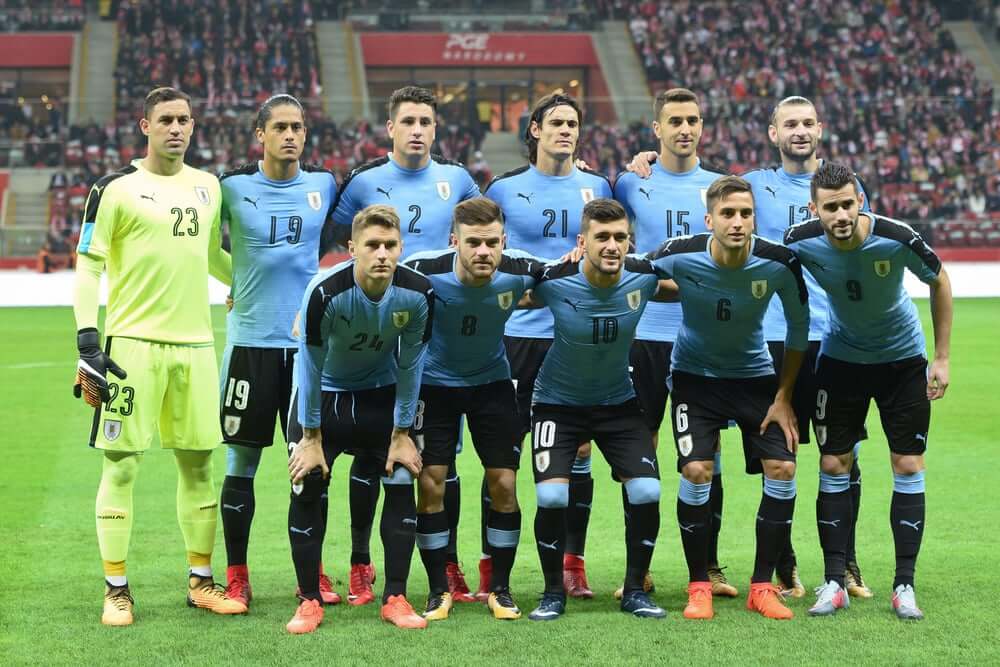
Marcelo Bielsa: El Loco’s La Celeste Experiment
Bielsa’s coaching philosophy has been analyzed so thoroughly over three decades that his name has become a methodology as much as a person. His fundamental ideas – coordinated positional press, vertical transitions when possession is won, absolute collective commitment to every defensive and offensive moment without individual exceptions – have influenced a generation of coaches who have cited him explicitly, including Pep Guardiola and Mauricio Pochettino. Managing these principles with international players who train together for a fraction of club preparation time is the central challenge of any bielsista national team project.
His solution in Uruguay has been phased implementation: pressing triggers and organizational principles introduced in the early months before intensity demands were raised to tournament levels. By qualifying’s midpoint, the structure had embedded itself sufficiently that individual positional errors – rather than systemic organizational failures – became the primary issue to address. That progression mirrors his early work at Athletic Bilbao and Marseille, where initial implementation timelines frustrated observers but produced more durable systems than rushed alternatives would have delivered.
The system Bielsa runs in Uruguay can be described as a high-press 4-3-3 that compresses into a tight 4-4-2 or 5-4-1 when possession is lost and the initial press bypassed. Federico Valverde provides the box-to-box energy that makes the press sustainable – he is simultaneously the player who initiates the press from midfield and the one who arrives late for shots after the press creates turnovers. Without Valverde functioning at maximum, the entire pressing architecture loses its effectiveness, which makes his fitness and form the most important tactical variable of this entire campaign.
The generational tension within the squad has been handled with pragmatism by Bielsa, who is direct about it: Suarez and Cavani are rotational options, not starters. Their role is to contribute from the bench while transmitting the experience and mentality that younger players need to absorb. The veterans accepted this with professionalism – they understand the transition is necessary and what Bielsa is building, even if the process requires patience they are less accustomed to needing.
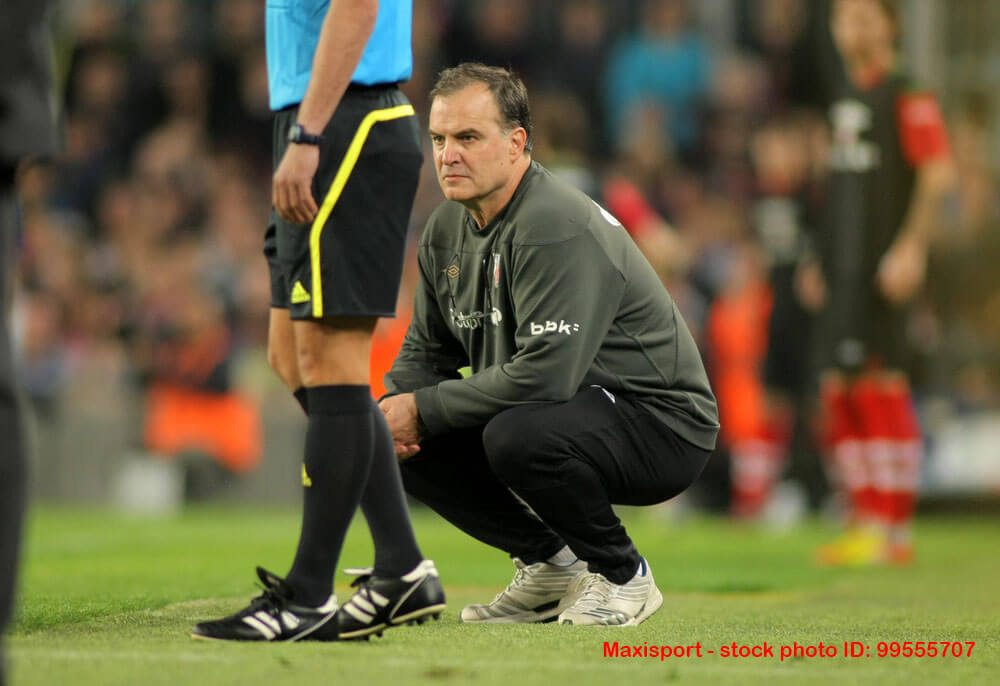
Uruguay 2026 Roster & Key Players
La Celeste’s 2026 roster deliberately bridges two generations – a bridge that Bielsa has constructed carefully, keeping the veterans present in supportive roles while systematically shifting on-pitch leadership to Nunez, Valverde, and Araujo’s generation.
Darwin Nunez – Present and Future of Uruguayan Attack
The Al-Hilal striker arrives at this Uruguay World Cup 2026 campaign as the undisputed focal point of Bielsa’s attack – a player whose physical profile, explosive pace, and improving finishing represent the ideal centre forward for a system built on pressing, vertical transition, and creating space through relentless movement. Six qualifying goals placed him among the campaign’s top individual scorers, but the number that matters more is his evolution as a complete forward.
The Nunez who arrived at Anfield (Liverpool) with legitimate concerns about his decision-making in front of goal is now a substantially more complete player with nearly 200 Premier League appearances sharpening his craft without costing him the raw speed and physicality that distinguish him. Against Spain’s back line, his combination of pace and aerial dominance will be Bielsa’s most dangerous attacking weapon.

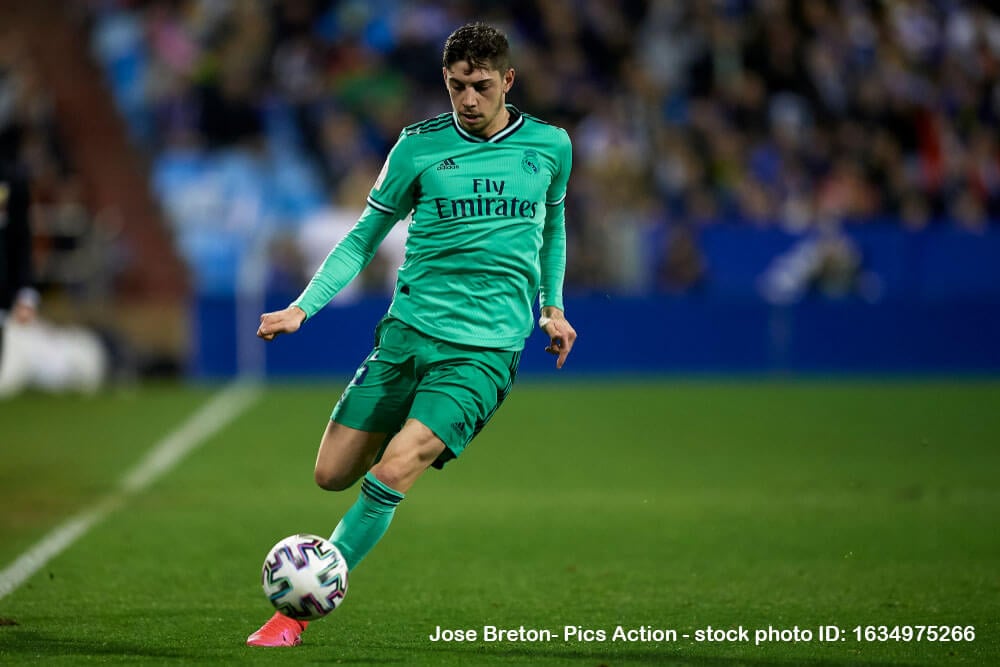
Federico Valverde – The Engine Room
The Real Madrid midfielder is, without exaggeration, the best Uruguayan outfield player since Enzo Francescoli – a comparison that is no longer hyperbolic but simply accurate. At 27, Valverde sits at the precise intersection of physical peak and technical maturity that produces a midfielder’s most complete version. Champions League and La Liga winner, press organizer, late runner, long-range shooter – he combines four high-level functions simultaneously, something most elite midfielders manage only one or two of at world-class level. Uruguay’s entire tactical system is built around maximizing Valverde’s output, which makes his fitness and form the single most important variable for La Celeste’s tournament success.
Ronald Araujo – The Centre Back Who Changes Everything
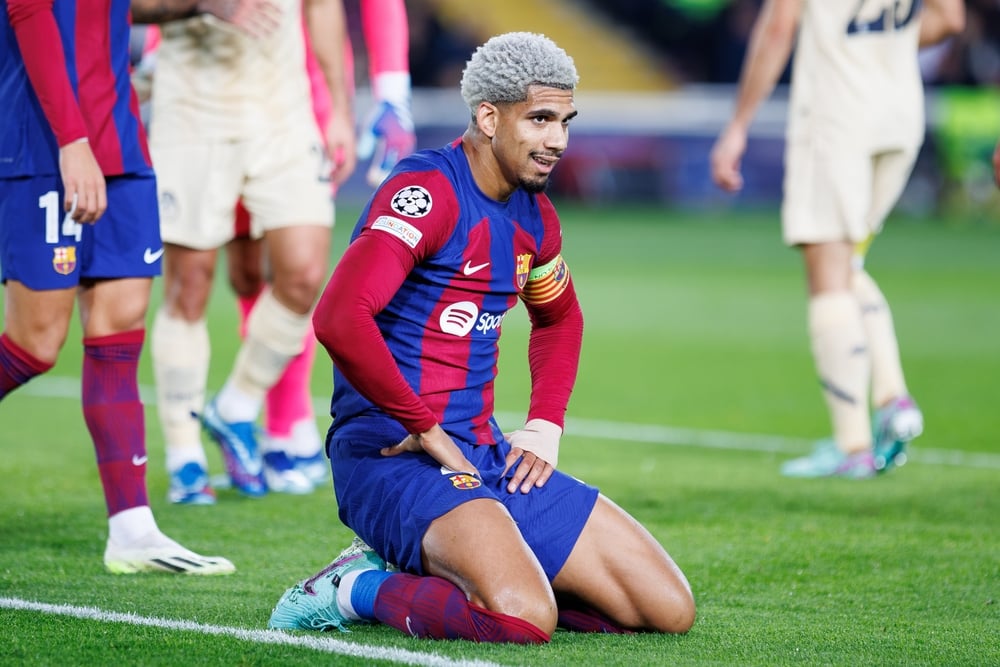
The Barcelona centre back is, on his best days, the finest defender in South American soccer. Physically dominant, technically accomplished in building from the back under pressure, imposing aerially at both ends of the pitch – he is precisely the Bielsa centre back type that allows high-press systems to function safely, covering the space that aggressive pressing leaves behind. The concern, legitimate and recurring, is availability. Ankle, thigh, and groin injuries have interrupted his Barcelona seasons repeatedly, and the same fragility creates genuine anxiety about his ability to complete seven matches at full tournament intensity. If Araujo is fit, Uruguay’s defensive ceiling rises significantly. If he is unavailable or limited, the questions increase proportionally.
Rodrigo Bentancur and Manuel Ugarte – The Midfield Complement
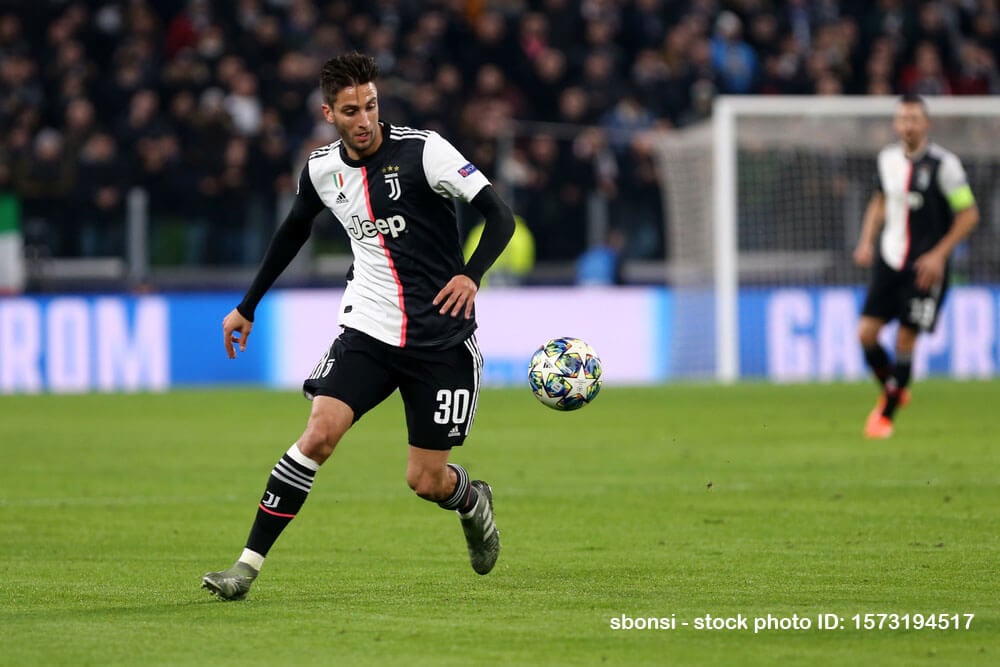
The Tottenham midfielder provides clean ball recovery and distribution that allows Valverde to press forward with freedom – a facilitator whose quiet, consistent work becomes visible only when he is absent. The Manchester United destroyer Ugarte offers a more physically confrontational alternative – a pure ball-winner who protects the back four when Bielsa needs to cancel the high press and place a defensive wall in front of the back line. Having both available gives Bielsa tactical flexibility at the position the system is most vulnerable to individual error.
Luis Suarez and Edinson Cavani – The Final Chapter
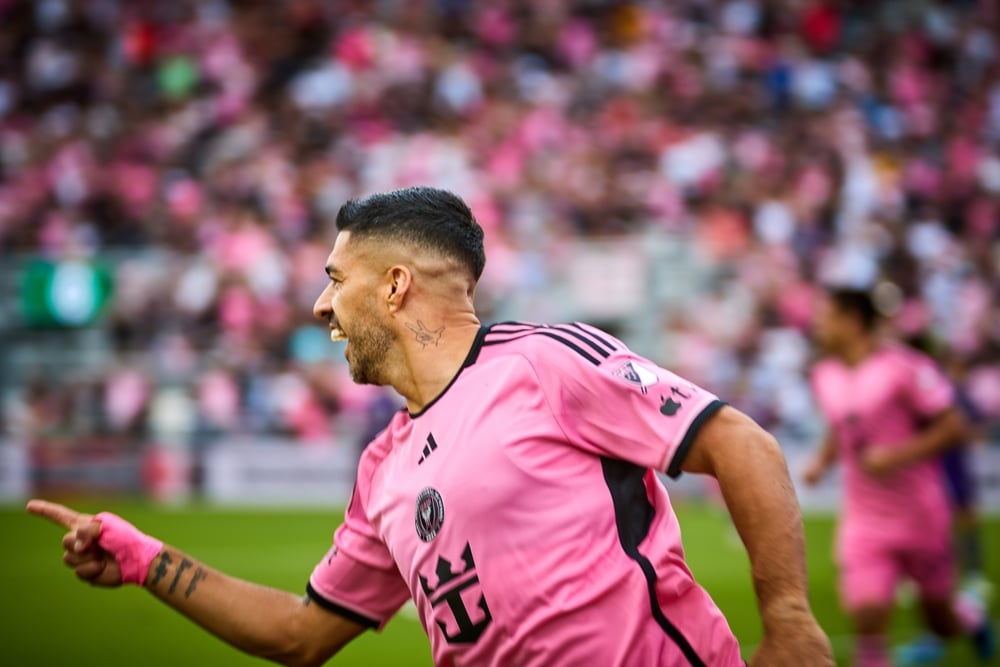
Suarez and Cavani at 39 are no longer starters – Bielsa has been publicly clear about this. Their value is not primarily tactical but experiential: players who have lived qualifying campaigns, knockout matches against world powers, and penalty shootouts under maximum pressure transmit composure by proximity in ways that cannot be coached into younger teammates. The younger players grew up watching these two define Uruguayan soccer. Having them present – even in reduced roles – changes the psychological climate of the dressing room in ways that are real even when invisible to external analysis.
Strengths & Weaknesses: La Celeste Assessed
Uruguay’s most significant competitive advantage is an intangible that statistical models consistently undervalue: the competitive mentality transmitted across generations that makes Uruguayan teams collectively more difficult to beat than their individual talent alone would suggest. The 2-0 qualifying victory over Argentina – a result no pre-match model would have predicted at greater than 15% probability – was the clearest demonstration of what Bielsa’s system produces at its absolute ceiling: tactically specific preparation, collective execution, and the refusal to accept defeat that the charruá culture has carried forward since 1930.
The structural strength that complements this mentality is Valverde’s simultaneous influence across multiple tactical phases. Pressing trigger, late runner, long-range shooter, organizational voice – four functions that most elite midfielders perform one or two of at world-class level. His involvement means Uruguay can attack with more than the three forwards, creating numerical advantages in transition that opponents sitting in defensive blocks cannot account for with standard defensive organization.
The primary weakness is Araujo’s availability and the defensive depth question that creates when he is absent or limited. Without him, Uruguay’s back line lacks the physical presence that keeps high-quality forwards away from their goalkeeper in one-on-one situations. Spain’s attacking movement is specifically designed to exploit space behind stepping centre backs – making the Araujo fitness question the most strategically significant health variable of La Celeste’s entire tournament preparation.
The secondary weakness is the pressing system’s physical demands over a compressed schedule. Bielsa’s approach requires sustained aerobic output that is difficult to maintain across five to seven matches in 30 days against progressively stronger opposition. Managing veterans’ workloads, particularly around Nunez’s pressing role and the transition between Suarez/Cavani introductions, will be tactically scrutinized from the first group match against Saudi Arabia.
Ver esta publicación en Instagram
CONMEBOL Qualifying: Fourth and Fighting
Uruguay’s South American qualifying campaign produced results that were competitive without being dominant – precisely the profile expected from a team in genuine tactical transition under a new and demanding coach. Twenty-eight points from 18 matches, fourth in the continental table, +10 goal differential (22 scored, 12 conceded) – the numbers describe a side that defended adequately and scored sufficiently rather than one that overwhelmed opponents consistently. The losses to Ecuador and Venezuela in matches the Celeste should have handled more decisively were frustrating evidence of the inconsistency Bielsa’s system has not yet fully resolved.
The defining positive result was the 2-0 victory over Argentina in qualifying – a result that sent continental shock waves and demonstrated what the system produces at maximum efficiency. Bielsa had prepared Uruguay specifically for that fixture with tactical patterns designed to deny Argentina’s centre backs clean first passes, and the application was precise throughout the match. It confirmed that Bielsa’s ceiling for this squad is genuinely elite – the challenge is sustaining it across a tournament’s full duration rather than in isolated high-preparation fixtures.
Notably, four CONMEBOL nations – Colombia, Uruguay, Brazil, and Paraguay – all finished qualifying on exactly 28 points. Uruguay’s fourth-place ranking was determined by tiebreakers – trailing Colombia on goals scored, ahead of Brazil and Paraguay on goal differential – a reminder of how fine-margined South American qualification is and how costly individual dropped points can be across an 18-match campaign.
| Pos | Team | P | W | D | L | GF | GA | GD | Pts |
| 1 | Argentina | 18 | 12 | 2 | 4 | 31 | 10 | +21 | 38 |
| 2 | Ecuador | 18 | 8 | 8 | 2 | 14 | 5 | +9 | 29 |
| 3 | Colombia | 18 | 7 | 7 | 4 | 28 | 18 | +10 | 28 |
| 4 | Uruguay | 18 | 7 | 7 | 4 | 22 | 12 | +10 | 28 |
| 5 | Brazil | 18 | 8 | 4 | 6 | 24 | 17 | +7 | 28 |
| 6 | Paraguay | 18 | 7 | 7 | 4 | 14 | 10 | +4 | 28 |
A World Cup Legacy Like No Other
The two stars on Uruguay’s badge are not decorative – they represent the most striking per-capita achievement in World Cup history. The inaugural 1930 title, won on home soil in Montevideo, established Uruguay as the world’s first champions. The 1950 Maracanazo – defeating Brazil in front of an estimated 200,000 spectators in Rio de Janeiro who had gathered to celebrate what they assumed was an inevitable Brazilian coronation – remains the most celebrated upset in the sport’s history and the founding trauma of Brazilian soccer that multiple generations still discuss with genuine emotional weight.
In the modern era, Uruguay’s tradition was validated at South Africa 2010: a semifinal and fourth-place finish with Diego Forlan winning the Golden Ball – a performance built on collective organization and individual excellence that the current generation grew up studying. Quarterfinals in 2014 and 2018 maintained Uruguay’s presence in the conversation about tournament-genuine sides. The 2022 Qatar exit in the group stage, painful and controversial, was the outlier that this 2026 campaign is specifically designed to correct.
What carries across every era – from Scarone in 1930 to Forlan in 2010 to Nunez and Valverde now – is the same fundamental competitive characteristic: Uruguay consistently outperforms the nominal expectation created by their population size and resource level. Bielsa’s job is to bottle that tradition and give it a modern tactical expression capable of winning seven matches across a compressed North American tournament.
Ver esta publicación en Instagram
Group H Fixtures & Match Schedule (All times Eastern Time)
Group H is Uruguay’s toughest draw in recent World Cup memory. Spain enter as one of the competition’s most technically complete sides, with a midfield generation – Pedri, Gavi, Rodri – that gives them a structural advantage in any sustained possession phase against any opponent at this tournament. Saudi Arabia carry the confidence of their 2022 victory over Argentina and bring an organized defensive structure that Bielsa’s pressing game finds most frustrating to break down consistently. Cabo Verde arrive as Africa’s debutant qualifier with the enthusiasm of a historic first appearance and the technical limitations of a team that is still a meaningful level below South American and European opposition.
Uruguay’s final group match – Spain in Guadalajara on June 26 at 9:00 PM ET – represents the defining fixture of this campaign’s group stage. That scheduling creates a scenario where Uruguay could arrive already qualified and managing their approach, or needing a specific result to advance depending on the Saudi Arabia outcome. Canadian fans watching on TSN will be tuned in regardless. Both Houston matches in this group convert to 9:00 PM ET, and the Atlanta and Miami matches play at 12:00 PM and 6:00 PM ET respectively – some of the tournament’s most viewer-friendly scheduling windows for Canadian audiences.
| Date | Time (ET) | Match | Venue |
| Mon, June 15 | 12:00 PM | Spain v Cabo Verde | Mercedes-Benz Stadium, Atlanta |
| Mon, June 15 | 6:00 PM | Saudi Arabia v Uruguay | Hard Rock Stadium, Miami |
| Sun, June 21 | 12:00 PM | Spain v Saudi Arabia | Mercedes-Benz Stadium, Atlanta |
| Sun, June 21 | 6:00 PM | Uruguay v Cabo Verde | Hard Rock Stadium, Miami |
| Fri, June 26 | 9:00 PM | Cabo Verde v Saudi Arabia | NRG Stadium, Houston |
| Fri, June 26 | 9:00 PM | Uruguay v Spain | Estadio Akron, Guadalajara |
Ver esta publicación en Instagram
Uruguay World Cup Odds & Our Prediction
Uruguay’s Uruguay World Cup odds to win the 2026 tournament range between 50.00 and 60.00 at Canadian sportsbooks – pricing that acknowledges an exceptional historical track record while reflecting the limitations of a squad that is competitive rather than elite by the standards of the current field’s top six or seven nations. My model assigns approximately 2% championship probability, which makes prices above 50.00 a theoretical positive-expected-value position – but one that requires Uruguay to win several tight matches against better-resourced opponents, including a positive result against Spain.
The most defensible bet in this section is Uruguay qualifying from Group H. Their odds to advance sit around 1.55-1.70 – fair pricing that incorporates the Spain challenge while reflecting that Uruguay should be collecting six points against Saudi Arabia and Cabo Verde in normal tournament circumstances. Uruguay have advanced from the group stage in 11 of their 14 World Cup appearances – a success rate that should anchor baseline expectations regardless of group difficulty. Even in a challenging draw, qualification is the expected outcome.
For the Uruguay v Spain fixture on June 26 at 9:00 PM ET, the “both teams to score” market in the 1.80-2.00 range offers genuine value. Bielsa’s Uruguay presses high and surrenders counter-attack opportunities; Spain’s possession game creates late-arriving runners. Goals in both nets is the most statistically consistent outcome when two teams who don’t park defensively meet in a match where both need a result. Darwin Nunez as a tournament scorer in the 25.00-30.00 range offers value if you believe Uruguay reaches the quarterfinals, where his pace and power create genuine mismatches against tiring defensive lines.
Avoid betting Uruguay in defensive markets. Bielsa’s press-oriented system generates the counter-attack vulnerabilities that produce goals-against at a rate of approximately one per game – a figure that against quality European attackers is unlikely to improve. “Uruguay clean sheet” markets against Spain and potentially Saudi Arabia overvalue a defensive record that is respectable but not elite under this system’s demands.
Prediction: Uruguay advance in second place from Group H behind Spain, reach the round of 16 against a challenging opponent, and exit in a match that confirms both the genuine promise and the real limitations of El Loco’s La Celeste experiment – setting up a very interesting question about the next cycle.
La Celeste’s 2026 story is ultimately about whether three years of Bielsa can produce tournament performance at the level that Uruguay’s extraordinary history demands. Nunez, Valverde, and Araujo-when-fit constitute a core of genuine quality. Whether the system delivers its ceiling or exposes its limitations against Spain-level opposition will determine how this chapter reads. Follow the complete 2026 World Cup hub and all World Cup 2026 groups coverage throughout the tournament.