Defending champions. The last team in history to win back-to-back World Cups was Brazil, in 1958 and 1962. No team in the six decades since has managed the feat. Argentina World Cup 2026 arrives with the explicit intent to become the first. La Albiceleste enters North America with the full weight of that ambition resting on the shoulders of Lionel Messi – playing what will almost certainly be the final World Cup of the greatest footballing career the sport has ever produced – and a generation of players who won in Qatar 2022 and have spent four years learning precisely what it takes to stay at the summit. The sportsbooks agree. At 4.50-5.50 for the title, Argentina are the co-favourite with France for a championship that would rewrite history. Here is our complete Argentina World Cup 2026 analysis.
Argentina’s Road to 2026: Dominance in South America
Argentina’s route to the 2026 World Cup through CONMEBOL qualifying was a statement of systematic dominance that separated them clearly from the rest of the continent. Across 18 matches, La Albiceleste accumulated 39 points from a possible 54 – an average of 2.17 per match that outpaced every other South American qualifier and secured their place in the tournament with four rounds to spare.
The numbers behind that campaign tell a story of controlled authority rather than fortunate results. Argentina conceded just 11 goals in 18 qualifying matches – a defensive average of 0.61 per game – while Emiliano Martínez recorded seven clean sheets. That defensive solidity was the foundation that allowed Scaloni to release his attacking players into transition with minimal risk of exposure on the counter. The goal differential of plus-21 was the best in CONMEBOL by a margin of seven over Brazil’s plus-14.
Individual qualifying results revealed Argentina’s capacity to win in different circumstances. The 1-0 victory in Brazil – on the Maracanã, against the one opponent South America most feared – demonstrated an ability to defend a lead and convert a single chance under maximum pressure. The 6-0 demolition of Bolivia at altitude in La Paz dismantled the longstanding narrative that Argentina cannot perform at 3,600 metres. The two results together paint a picture of a team with no remaining tactical mystery to solve before June 2026.
The Copa América 2024 title – won in the United States – provided additional validation. Argentina defeated Canada in the semifinal and won the final, making Scaloni’s team the reigning South American and World champions simultaneously. They arrive at the 2026 World Cup with back-to-back major tournament titles in the preceding two years, a momentum that no other team in the tournament field can match.
Lionel Scaloni: The Quiet Revolutionary
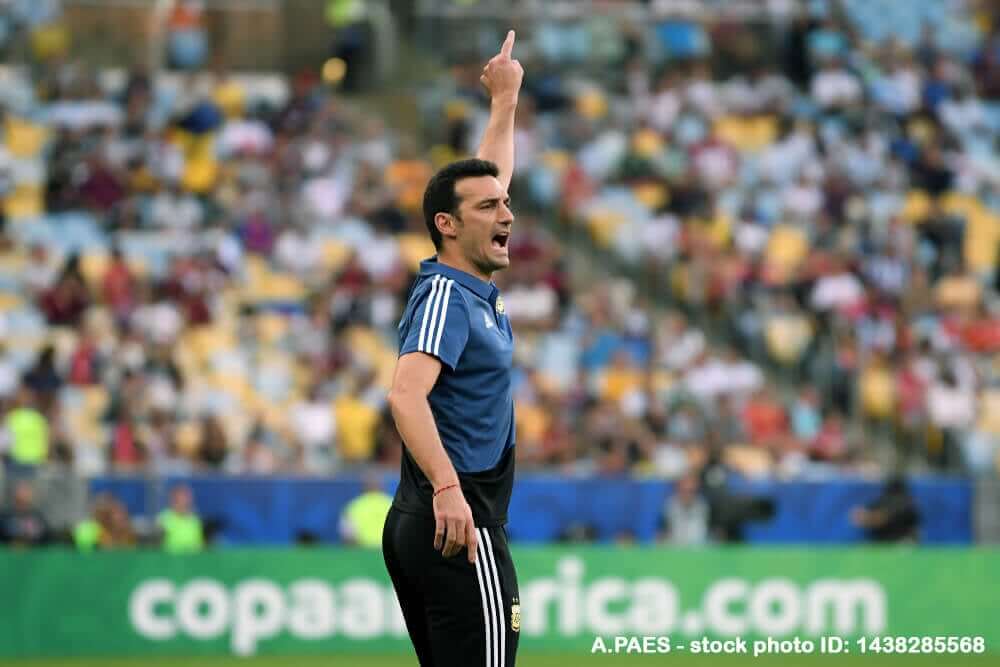
The story of how Lionel Scaloni became Argentina’s World Cup-winning coach deserves more attention than it receives outside South America. He was appointed on a caretaker basis in 2018 after the humiliation of Russia – a squad disintegrating in real time during a 3-0 loss to Croatia – with no head coaching experience whatsoever. What followed was one of the most remarkable transformations in international football history.
Scaloni’s genius was not in inventing a new tactical system. It was in creating an environment where exceptionally talented and occasionally difficult personalities could coexist, compete for places, and collectively produce performances greater than their individual contributions. He rebuilt the squad culture from the foundations upward, reinstated defensive accountability as a collective priority, and – crucially – found the tactical structure that finally allowed Messi to operate as the orchestrating force rather than the isolated saviour.
Tactically, Scaloni uses a 4-3-3 base that transforms based on phase of play. In possession, the shape shifts to a 3-2-5 – the two central midfielders drop to join the liberated fullback, while the three attacking players and the advancing midfielder create a five-man attacking structure in the opponent’s half. When pressing, the front three trigger coordinated disruption in the opponent’s build-up, forcing errors in the positions where Enzo Fernández or Mac Allister can capitalise immediately.
The sophistication of Scaloni’s in-game management was most clearly demonstrated at Qatar 2022, where substitutions changed the momentum of four separate knockout matches. His ability to read a game’s turning points and respond with the right personnel change – rather than the obvious one – is the clearest marker of elite coaching intelligence. For Argentina world cup 2026, the challenge is replicating that decisive management through seven rounds of competition, in a tournament format he has now experienced once. The experience advantage he carries this time around is significant.
Argentina’s 2026 World Cup Squad: A Generation at Its Peak
| Position | Player | Club | Age (June 2026) |
| GK | Emiliano Martínez | Aston Villa | 33 |
| RB | Nahuel Molina | Atlético de Madrid | 28 |
| CB | Cristian Romero | Tottenham Hotspur | 28 |
| CB | Lisandro Martínez | Manchester United | 28 |
| LB | Nicolás Tagliafico | Lyon | 33 |
| CM | Rodrigo De Paul | Atlético de Madrid | 32 |
| CM | Enzo Fernández | Chelsea | 25 |
| CM | Alexis Mac Allister | Liverpool | 27 |
| RW | Lionel Messi | Inter Miami | 38 |
| ST | Julián Álvarez | Atlético de Madrid | 26 |
| LW | Lautaro Martínez | Inter Milan | 28 |
Lionel Messi – The Last Chapter
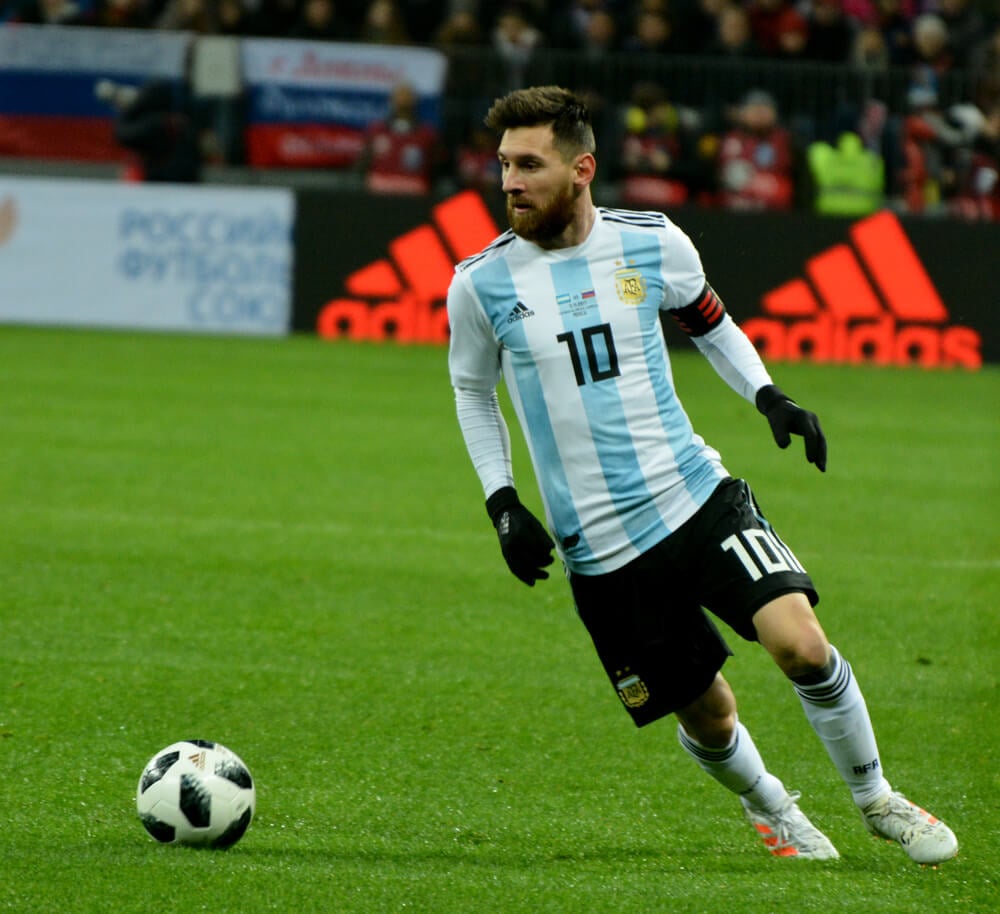
Every word written about Messi’s relationship with this World Cup carries the awareness that it is probably the last. At 38 years old – he turns 39 on June 24, 2026, during the final group stage matchday – Messi will become the first player in history to appear at six World Cups, sharing that milestone only with Cristiano Ronaldo. He holds the record for most appearances in World Cup history. He scored the goals, provided the assists, and ultimately lifted the trophy at Qatar 2022 to complete what had always been the one missing piece of his biography.
His role has evolved as his body has. Messi is no longer the winger who stretches and beats defenders over 40 metres. He is now the false nine – the player who drops into pockets between the lines, controls the tempo of the match with 87-plus touches per game at his best, and provides the creative assist or clinical finish that decides 1-0 matches with a single moment. At Inter Miami, operating without the elite pressing demands of European club competition, he has preserved the intelligence and touch that make him uniquely dangerous at his age. Whether that translates fully to the seven-game intensity of a World Cup will be the tournament’s most closely watched individual narrative. You can read the full messi world cup 2026 analysis at our dedicated page.
Julián Álvarez – The Heir Apparent
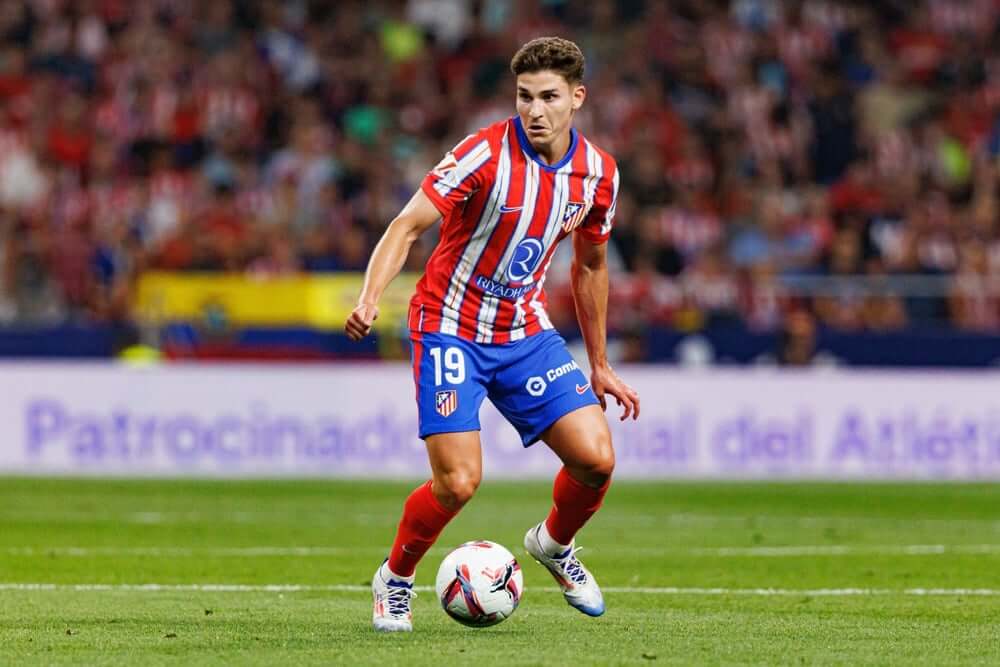
At 26, Álvarez has developed from the industrious second-striker option of Qatar 2022 into the undisputed first-choice forward of Scaloni’s system. His move to Atlético de Madrid after his formative years at Manchester City has hardened his positional game, improved his physicality in defensive pressing, and refined his finishing in the tight spaces where World Cup chances are won and lost. In qualifying, seven goals across 18 matches – including a hat-trick against Bolivia – demonstrated both his reliability and his ability to carry Argentina’s goalscoring weight when Messi operates in a deeper orchestrating role.
Enzo Fernández – The Most Complete Midfielder
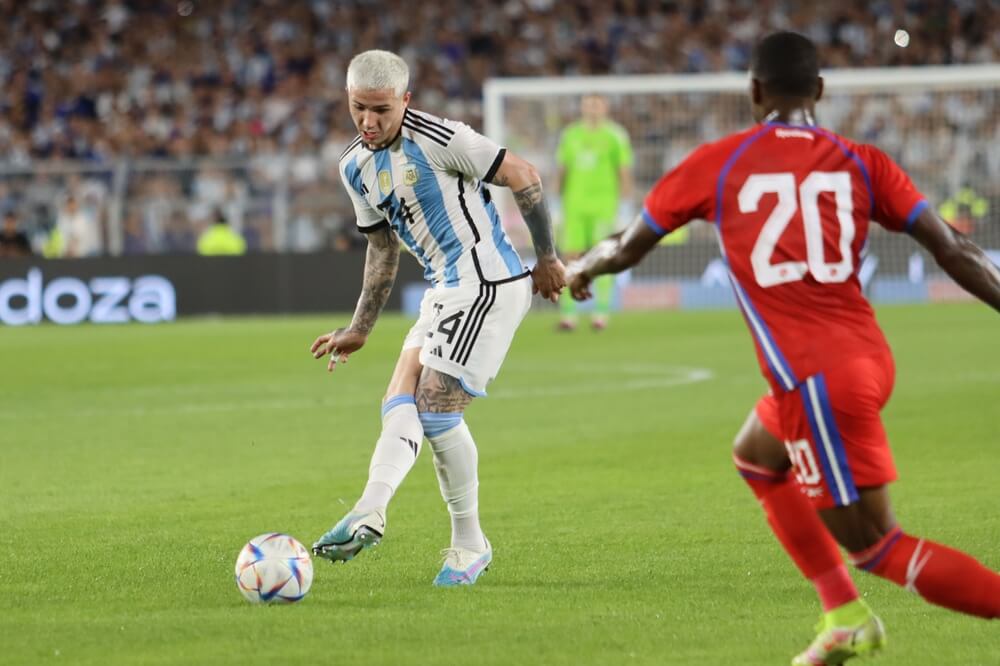
At Chelsea, Fernández has continued the development that made him the Qatar 2022 Young Player of the Tournament – adding range of passing, defensive positioning, and goalscoring runs from midfield to his already impressive foundation of pressing intensity and energy. At 25 years old, he is at the beginning of what looks like a 10-year run as one of the world’s best midfielders. His ability to switch the play with long diagonal passes opens space for Argentina’s wide attackers in ways that direct opponents find extremely difficult to prevent. For bettors tracking player performance markets, Fernández assists and goals represent consistent value across tournament rounds.
Franco Mastantuono – The Future Arriving Early
At 18 years old and already an option at Real Madrid, Mastantuono represents Argentina’s next generation arriving at precisely the right moment. Scaloni has included him in squad planning knowing that exposure to the 2026 World Cup environment – even in limited minutes – will accelerate his development into the player who will carry La Albiceleste for the following decade. His technical confidence and composure in high-pressure situations are already evident at club level; in 2026 he gets the largest stage in world sport to demonstrate them further.
Argentina’s Strengths and the One Question Mark
Championship DNA. The current Argentina squad contains more World Cup winners than any other team in the 2026 field. The psychological advantage of knowing exactly how to win a World Cup – managing momentum, handling pressure in knockout rounds, recovering from setbacks without panic – is not easily quantified but consistently appears as a competitive factor in tight tournament matches. Qatar 2022 showed a team that absorbed an early scare against Saudi Arabia and then won six consecutive knockout matches without losing further. That resilience is structural.
Defensive efficiency. Conceding 0.61 goals per game across 18 competitive qualifying matches, with Emiliano Martínez recording seven clean sheets, demonstrates a defensive solidity that makes Argentina extremely difficult to beat over 90 minutes. Cristian Romero’s aggression and Lisandro Martínez’s positional reading form the best central defensive partnership in South America, and the pressing system from the front reduces the volume of attempts on goal that Martínez must face.
Balanced squad depth. Lautaro Martínez – Argentina’s all-time top scorer in the Scaloni era with 31 goals – is available as a world-class substitute. Giovani Lo Celso offers creative midfield options from the bench. The depth at every position means Scaloni can rotate without weakening the team, a capacity that proves decisive across the seven matches a champion must win.
Question mark: Messi’s physical availability for seven matches. Messi at 38, playing in the MLS rather than Champions League football, may face intensity demands in the knockout rounds that accumulate differently than they did in 2022 when he was 35 at a European club. Managing his minutes across the group stage – protecting him for the knockout rounds while still winning matches – will be Scaloni’s most delicate decision-making challenge of the tournament.
CONMEBOL 2026 World Cup Qualifying – Final Standings
Argentina secured CONMEBOL qualification with four rounds to spare, finishing the 18-game round-robin as the clear group leader. The table below reflects the final standings across all ten South American nations.
| Pos | Team | GP | W | D | L | GD | Pts |
| 1 | Argentina | 18 | 12 | 2 | 4 | +21 | 38 |
| 2 | Ecuador | 18 | 8 | 8 | 2 | +9 | 29 |
| 3 | Colombia | 18 | 7 | 7 | 4 | +10 | 28 |
| 4 | Uruguay | 18 | 7 | 7 | 4 | +10 | 28 |
| 5 | Brazil | 18 | 8 | 4 | 6 | +7 | 28 |
| 6 | Paraguay | 18 | 7 | 7 | 4 | +4 | 28 |
Argentina’s World Cup History: From Menotti to Messi
Argentina’s World Cup history is written in some of the most dramatic chapters the competition has produced. From the title in Buenos Aires in 1978 under César Luis Menotti to Diego Maradona’s hand and genius carrying the trophy in Mexico 1986, to the painful defeats in 1990 (to West Germany), 2014 (to Germany in extra time), and 2022’s semifinal-and-beyond run that culminated in the Lusail final – the argentina world cup history is inseparable from the sport’s most important moments.
The 2022 title at Qatar was the third World Cup championship for the nation, following 1978 and 1986. It ended a 36-year wait that had generated an entire national mythology around whether Messi would ever lift the trophy his talent demanded he receive. That wait is over. What drives this squad into 2026 is not hunger for a first title but the far rarer ambition of a second consecutive championship – the goal that has defeated every defending champion in 64 years of trying.
Ver esta publicación en Instagram
Group J: Argentina, Algeria, Austria, Jordan
Argentina heads Group J as the defending world champions and the highest-ranked team in the draw, facing Algeria, Austria, and Jordan. The calendar is kind: a debut against Algeria in Kansas City, the sternest tactical test against Austria in the second match, and a presumed dead-rubber against Jordan to close out – allowing Scaloni to manage his senior players’ workload ahead of the knockout rounds.
Austria present the most genuine challenge. Ralf Rangnick’s team uses ultra-high pressing intensity that has troubled stronger European opponents during qualifying, and Marcel Sabitzer provides a focal point for transition moments that Scaloni’s defensive line will need to monitor carefully. The Group J-defining match may be Argentina vs Austria, where the tactical contrast – Rangnick’s pressing energy against Scaloni’s possession intelligence – produces the competition’s most interesting coaching duel in the group stage.
Algeria qualified impressively through the CAF process, beating Senegal and Egypt en route, and their collective defensive organisation means Argentina will need patience rather than urgency to find the goals their quality should eventually produce. Jordan are the group’s lowest-ranked team by FIFA position and, on paper, the most straightforward obstacle – but the history of World Cup “trap games” against Asian opposition means Scaloni will prepare them with the same seriousness as Algeria.
| Date | Time (ET) | Match | Venue |
| Tuesday, June 16 | 10:00 PM ET | Argentina vs Algeria | Kansas City Stadium |
| Wednesday, June 17 | 3:00 AM ET | Austria vs Jordan | SF Bay Area Stadium |
| Monday, June 22 | 2:00 PM ET | Argentina vs Austria | Dallas Stadium |
| Tuesday, June 23 | 2:00 AM ET | Jordan vs Algeria | SF Bay Area Stadium |
| Saturday, June 27 | 11:00 PM ET | Algeria vs Austria | Kansas City Stadium |
| Saturday, June 27 | 11:00 PM ET | Jordan vs Argentina | Dallas Stadium |
All times are Eastern Time (ET). Argentine group stage matches will be available on TSN and DAZN for Canadian viewers.
Ver esta publicación en Instagram
Argentina World Cup Odds and Our 2026 Predictions
Argentina world cup odds at leading Canadian sportsbooks – bet365, BetMGM, FanDuel Canada, Betway Canada – position La Albiceleste as co-favourites alongside France at approximately 4.50-5.50 for the outright title. That price, lower than any other team in the field, reflects the defending champion’s structural advantages: experience, defensive solidity, Messi’s tournament record, and Scaloni’s proven ability to manage a squad through seven competitive rounds.
| Market | Approximate Odds |
| Argentina to win the World Cup | 4.50 – 5.50 |
| Argentina to advance from Group J | 1.05 – 1.10 |
| Argentina to reach the final | 2.20 – 2.80 |
| Argentina to win consecutive titles | 4.50 – 5.50 |
| Messi anytime goalscorer vs Algeria | 1.80 – 2.20 |
Odds are indicative. Verify current prices at your preferred Canadian sportsbook before placing any wager.
The case for backing Argentina at these prices rests on three pillars: Scaloni’s tournament management experience (a proven commodity, not a projection), the defensive structure that makes Argentina extremely difficult to beat in short-series knockout formats, and the psychological advantage of a squad that has already won together under the highest possible pressure. Against those factors, the counter-argument is simply the historical record: no defending champion has won back-to-back since 1962. That is a pattern that deserves respect even if no single causal mechanism fully explains it.
Our prediction: Argentina advances from Group J with maximum or near-maximum points, reaches the semifinals, and is Argentina defending champions entering the final. Whether the title follows depends on the semi-final draw and whether Messi has the physical capacity to produce his best football for 90 minutes in a knockout. At 4.50-5.50, backing Argentina as part of a balanced World Cup betting approach is the most defensible title wager in the field.
Follow the complete Argentina World Cup 2026 story – live odds, squad news, and match analysis – throughout the tournament at our World Cup 2026 hub. For current betting prices across all Canadian sportsbooks, visit our World Cup odds page. For all group stage coverage, see our complete groups guide.
Sixty-two years of history says no defending champion repeats. Argentina says: watch us try. With Messi turning 39 at the group stage and the most experienced winning squad in the tournament, La Albiceleste is not here to participate. They are here to answer a question that six decades of World Cup football have left open.