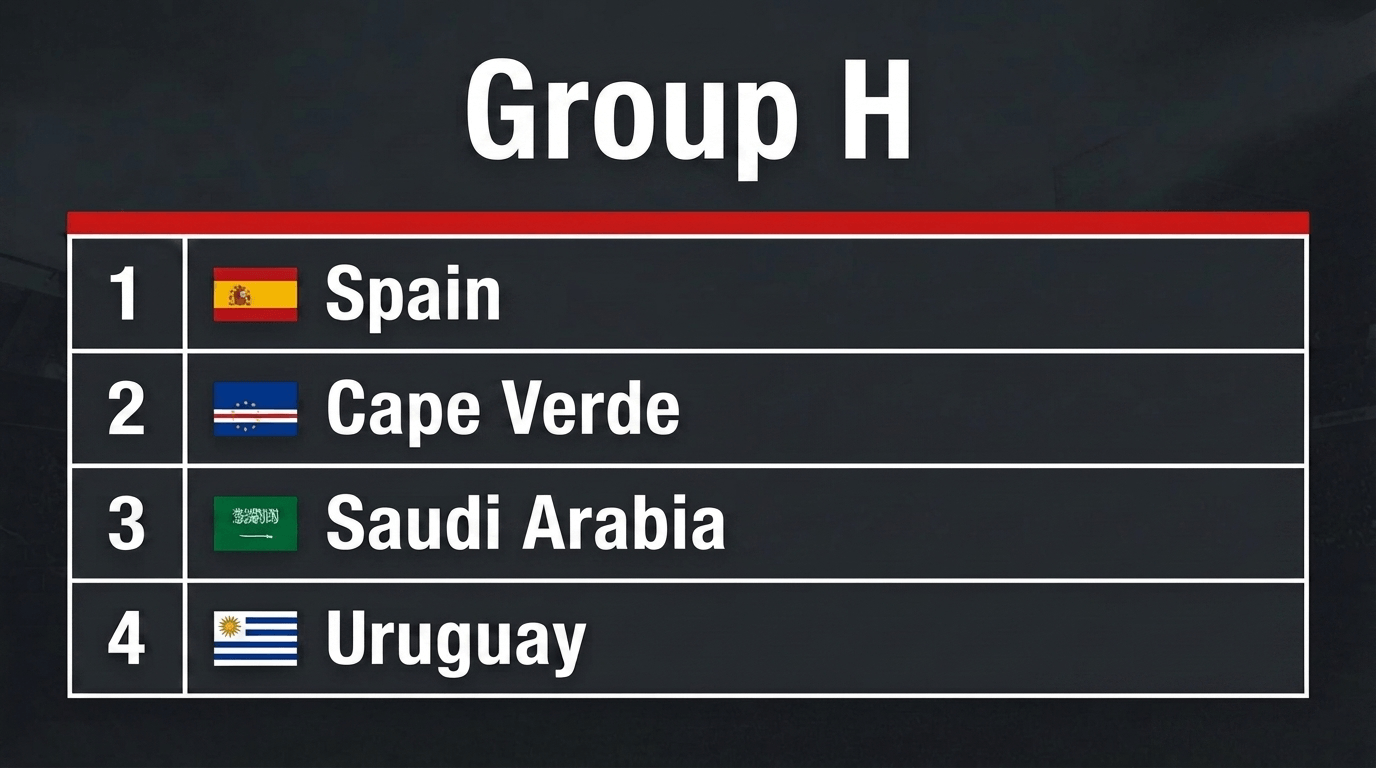
World Cup 2026 Group H is headlined by Spain, the reigning European champions, who arrive in North America as one of the tournament’s strongest overall contenders. Alongside them: Uruguay, reshaped in Marcelo Bielsa’s relentlessly competitive image and qualifying via three goal-laden victories in the final stretch of CONMEBOL; Saudi Arabia, rebuilt under Hervé Renard into a more disciplined defensive unit than the one that famously stunned Argentina in Qatar; and Cape Verde, appearing in their first-ever World Cup and bringing the maturity and set-piece discipline of a team whose average age of 30.7 years during qualifying makes them anything but a naive debutant. Group H fixtures run through Atlanta, Miami, Houston, and Guadalajara – and the final matchday will see these four sides decide two futures simultaneously.
Group H Overview
Of all the World Cup 2026 groups, Group H offers the most straightforward top-line narrative alongside the most unexpectedly complex second-place race. Spain, co-holders of the European Championship title and with 17 World Cup appearances to their name, qualified – eventually – courtesy of a draw against Turkey in Sevilla that earned them their 13th consecutive tournament berth. They are the prohibitive group winners favourites, and rightly so. But below the Spanish frontrunner story, the group h standings picture is genuinely unclear. Uruguay, under Bielsa’s pressing-intensive 4-2-3-1, bring experience, a competitive edge that borders on ferocity, and a goal differential of 22-12 across 18 CONMEBOL qualifying matches. Saudi Arabia, resurrected by Hervé Renard in a second coaching stint that secured their place on October 14, have improved structurally even if their offensive output (seven qualifying goals in the final phase) raises legitimate doubts.
Cape Verde, writing history as first-time World Cup participants, carry the tournament’s most experienced average squad and a defensive record of just eight goals conceded in qualifying. All three co-hosts – Canada, Mexico, and the United States – are part of this expanded 48-team field; the tournament they are staging has produced a Group H that deserves close attention from the first kickoff in Atlanta.
Spain: European Champions, Renovated Identity, Full Intensity
The Spain of Luis de la Fuente is not the Spain that dominated world football from 2008 to 2012 through suffocating possession and relentless tiki-taka. It is something arguably more dangerous: a team that still controls the ball as well as anyone on earth – 70.1% possession in qualifying, trailing only England, Germany, and Portugal among UEFA nations – but has traded the patience of perpetual passing for the incisiveness of vertical attack. The tiki-taka era was about wearing opponents down through volume. This iteration is about using possession as a launch pad, then striking through channels at pace before defensive structures can reset.
The tactical evidence from qualifying is compelling. Spain’s PPDA of 9.76 places them among Europe’s most aggressively pressing sides, meaning the ball is quickly recovered and immediately deployed forward rather than retained for positional cycling. The wide forwards are explicitly vertical – their brief is to unsettle defensive lines and receive in behind rather than to combine laterally – and the combination sequences that do occur are delivered at a tempo that previous Spanish sides rarely matched. De la Fuente has kept the technical brilliance and discarded the complacency that can accompany ball retention as a philosophy.
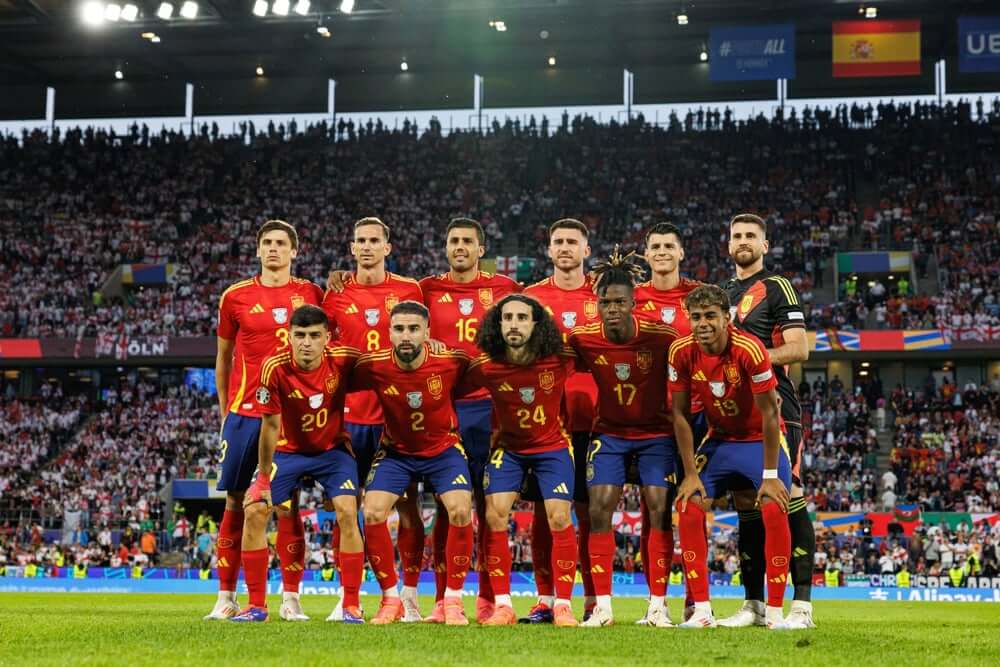
Spain qualified with a degree of late-stage anxiety – a final-matchday draw against Turkey in Sevilla was required to confirm their place – but the margin for error was always controlled. A heavy defeat was the only scenario that would have blocked them, and that was never a realistic outcome. For group h world cup 2026 analysis, Spain are the group’s dominant force and the tournament’s most complete team alongside Argentina. Their Matchday 1 opener against Cape Verde in Atlanta at noon ET is the group’s softest theoretical opening, which should allow De la Fuente to field a high-intensity pressing lineup that establishes the group stage tone immediately. The Matchday 3 finale against Uruguay in Guadalajara at 9:00 PM ET, however, could be a genuinely spiky encounter if both sides have already advanced – Bielsa against De la Fuente is a matchup tacticians will study regardless of the stakes.
Uruguay: Bielsa, With Uncommon Restraint
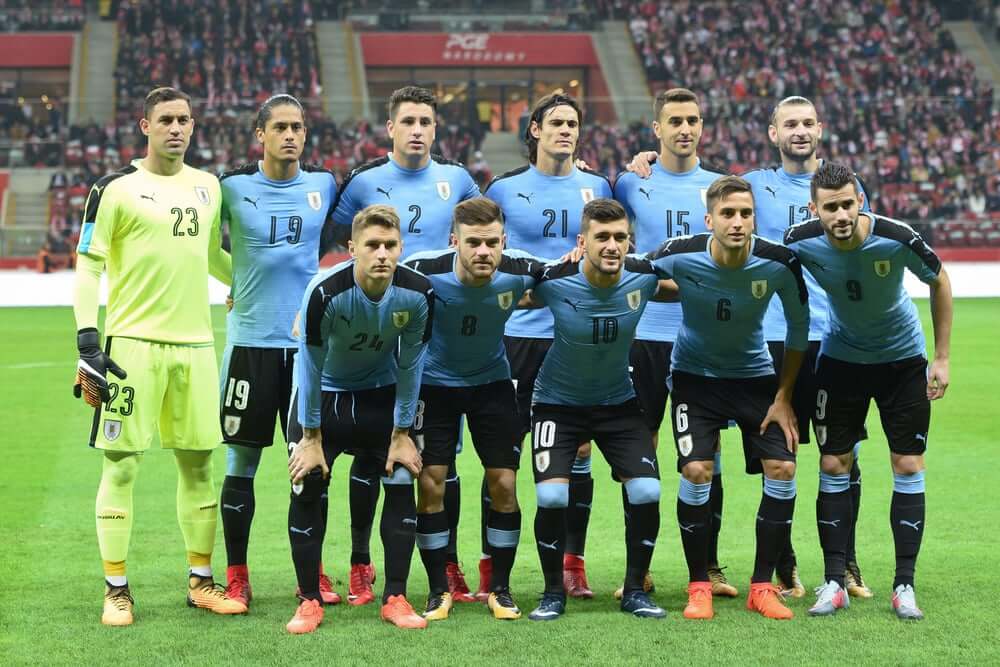
Marcelo Bielsa’s teams are defined by certain immutable characteristics: direct, aggressive, pressing from the front, winning the ball back immediately through man-to-man marking structures, and playing without tactical hesitation even when the scoreline demands it. Uruguay’s 2026 qualification campaign delivered all of these elements – and then offered something unexpected: a goal differential of 22-12 across 18 matches that is, by Bielsa standards, almost moderate. A coach whose teams historically score frequently and concede frequently produced a side that remained competitive for every point without descending into the controlled chaos that sometimes defines his work.
The data confirms the diagnosis. Uruguay led CONMEBOL qualifying in both blocked shots (69) and ball recoveries (839) – the latter figure represents an extraordinary volume of defensive interventions across the 18-match cycle, driven by the man-marking press that forces opposition errors and generates transition opportunities immediately after winning possession. Rodrigo Aguirre, Giorgian De Arrascaeta, and Federico Viñas each contributed in a 3-0 qualifying win over Peru that confirmed Uruguay’s fifth consecutive World Cup appearance, illustrating the squad depth available to Bielsa across forward positions. The 4-2-3-1 is the structural foundation, though the aggressive pressing converts it into something closer to a 4-4-2 press-trap in out-of-possession phases.
For group h predictions, Uruguay represent the most realistic challenger to Spain for first place and the most credible second-place team. Their Matchday 1 fixture against Saudi Arabia in Miami at 6:00 PM ET is a must-win – Bielsa’s pressing system should generate enough pressure on Saudi Arabia’s defensive structure to secure three points. The Matchday 3 clash with Spain in Guadalajara at 9:00 PM ET, with advancement potentially already secured for both, is the group’s final narrative pivot point. Uruguay’s group h odds to qualify reflect their status as clear second favourites, and that assessment is well-founded in both the data and the coaching pedigree.
Saudi Arabia: Renard Returns, but the Goals Remain Elusive
Hervé Renard’s relationship with Saudi Arabian football has been long, productive, and occasionally turbulent. His return for a second stint as national team coach – following the mid-campaign departure of Roberto Mancini as qualification faltered – produced the structural improvement required to secure first place in AFC Group C and a World Cup berth confirmed on October 14. Renard’s organizational discipline is evident: the defensive shape is more coherent, the midfield transitions are better timed, and the team’s out-of-possession behavior has measurably improved.
The attacking problem has not been solved. Seven goals in the final qualifying phase is a modest return for a team with Renard’s technical resources and regional ambition, and the coach has struggled to identify a consistently effective forward combination that functions as a cohesive unit. To compensate, Renard has oriented the team’s offensive production through central midfield incursions: Saudi Arabia’s central midfielders recorded the second-highest volume of penalty area touches (449) among all qualified Asian nations – a deliberate strategic choice to generate forward momentum through runners rather than a dominant striker. The 4-3-3 or 4-2-3-1 system provides the structural platform; the execution of the offensive third remains the critical unresolved question.
For world cup group h analysis, Saudi Arabia’s realistic objective is the Europa League equivalent of a group stage performance – compete, be difficult to beat, accumulate enough to potentially advance as a best third-placed team while managing the gap against Spain and Uruguay. The Qatar 2022 win over Argentina established that Saudi Arabia are capable of upsets at this level, and Renard’s second stint has rebuilt some of the defensive solidity that was compromised under Mancini. Their Matchday 1 clash against Uruguay in Miami at 6:00 PM ET will reveal immediately how this Saudi Arabia performs under genuine pressure from a physically aggressive and tactically relentless opponent.
Cape Verde: A Historic Debut from the Tournament’s Most Experienced Debutant
Cape Verde arrive at their first World Cup having done something that very few debutants manage: qualify with an identity fully formed and a squad old enough to know what they are doing. With an average age of 30.7 years during the qualifying phase, Pedro Leitão’s side is the tournament’s oldest squad – a fact that cuts both ways. The experience is real. The Sharks navigated Africa qualifying with eight goals conceded, claiming top spot in their group ahead of Cameroon after a decisive 3-0 victory over Eswatini confirmed their historic place in the 2026 field.
The tactical profile is compact and coherent. Leitão’s 4-3-3 absorbs opposition pressure with disciplined positioning and collective shape, rather than attempting to press high against teams with superior technical quality. When possession is won, the ball moves quickly to a forward line that is incisive, physically direct, and capable of executing 1v1 situations with the confidence of players who have competed at European club level for a decade. The set-piece organization is strong – consistent with a squad whose experience of high-leverage moments has been accumulated over years rather than emerging suddenly in tournament play. The maturity and composure with which Cape Verde manage critical moments makes them an unusually difficult debutant to underestimate.
Leitão’s side will not win Group H. They will not threaten Spain’s advancement or meaningfully challenge Uruguay for second place. What they may do – and this is the real Cape Verde storyline in the group h standings – is cause problems for Saudi Arabia in the Matchday 3 Houston clash at 9:00 PM ET. A team that conceded only eight goals in qualifying, plays with tactical maturity, and possesses real physical quality in the forward line is not a straightforward opponent for any team at this tournament. Cape Verde’s debut at the 2026 World Cup deserves genuine respect, and their Matchday 3 fixture against Saudi Arabia may decide who, if anyone, joins the top two from an unexpected angle.
Group H Fixtures: Complete Schedule in Eastern Time (ET)
All six group h fixtures at the 2026 World Cup are shown below in Eastern Time (ET). Atlanta and Miami are both Eastern Time venues, meaning Group H’s first two matchdays offer the most accessible kickoff times of any group stage. Watch every match on TSN, CTV, CBC, and RDS in French.
| Matchday | Date | Match | Time (ET) | Venue |
| MD 1 | Mon, June 15 | Spain vs Cape Verde | 12:00 PM ET | Mercedes-Benz Stadium, Atlanta |
| MD 1 | Mon, June 15 | Saudi Arabia vs Uruguay | 6:00 PM ET | Hard Rock Stadium, Miami |
| MD 2 | Sun, June 21 | Spain vs Saudi Arabia | 12:00 PM ET | Mercedes-Benz Stadium, Atlanta |
| MD 2 | Sun, June 21 | Uruguay vs Cape Verde | 6:00 PM ET | Hard Rock Stadium, Miami |
| MD 3 | Fri, June 26 | Cape Verde vs Saudi Arabia | 9:00 PM ET | NRG Stadium, Houston |
| MD 3 | Fri, June 26 | Uruguay vs Spain | 9:00 PM ET | Estadio Akron, Guadalajara |
Group H offers Canadian fans two of the tournament’s most viewer-friendly scheduling slots: noon ET on June 15 for Spain vs Cape Verde and 6:00 PM ET on the same day for Saudi Arabia vs Uruguay. The Matchday 3 simultaneous kickoffs at 9:00 PM ET on June 26 – Cape Verde vs Saudi Arabia and Uruguay vs Spain – land at a comfortable evening hour for audiences across Canadian time zones.
World Cup 2026 Group H Odds: Spain Are the Class of the Group
The World Cup 2026 odds for group h world cup 2026 reflect the clear hierarchy in this group, with Spain priced as heavy group winners and Uruguay as solid second-place value. Here are approximate group h odds from major Canadian sportsbooks:
| Team | To Win Group H | To Qualify (Top 2) |
| Spain | -350 | -800 |
| Uruguay | +280 | -185 |
| Saudi Arabia | +900 | +250 |
| Cape Verde | +2200 | +550 |
Spain’s -350 odds to win the group represent strong market confidence in a squad that is genuinely well-constructed for tournament football: high pressing, technically elite, with sufficient depth across all positions to handle rotation. De la Fuente’s side has the best mix of individual quality and collective organization of any team in Group H. The European Championship title was not a statistical anomaly – it was the product of a coherent footballing philosophy applied consistently at the highest level, and it directly informs the group h predictions for this group stage.
Uruguay at -185 to qualify is the group’s most defensible second-line bet. Bielsa’s pressing-intensive style generates high recovery volumes, the squad carries genuine individual quality in the attacking third, and 22 qualifying goals demonstrate the offensive output is there even with the unusual defensive stability. Five consecutive World Cup appearances reflects the structural quality of Uruguayan football that does not evaporate between tournaments. For who will qualify from group h, Spain first and Uruguay second is the consensus – and the data supports it.
Saudi Arabia at +250 to qualify is the group’s most speculative secondary position, but not without logic: Renard’s defensive improvements are real, the second-highest penalty area touch volume among Asian qualifiers shows offensive intent, and the memory of Qatar 2022’s Argentina upset confirms this team is capable of producing on the biggest occasions. Cape Verde at +550 to qualify should not be dismissed without genuine consideration – eight goals conceded in qualifying, tactical maturity, and a Matchday 3 clash against Saudi Arabia that could genuinely go either way. For all group h standings updates, live match analysis, and odds movements through the group stage, visit our World Cup 2026 hub and check the most current group h table and predictions as the tournament unfolds.