The generation that conquered Euro 2024 in Germany arrives at the FIFA World Cup 2026 – co-hosted by Canada, the United States and Mexico – not as a project in development but as a finished article that has already beaten the continent’s best. Spain’s only World Cup title came in South Africa in 2010, when a different golden generation – Villa, Xavi, Iniesta, Casillas – made the country the undisputed masters of global soccer. Sixteen years on, a younger, faster and arguably more dangerous version of La Roja enters the 2026 edition with the tactical foundation, the individual quality and the winning mentality to reclaim that status. Spain World Cup 2026 odds at Canadian sportsbooks range from 7.00 to 9.00 – a price that may undervalue a team with fewer vulnerabilities than the outright market currently reflects.
Spain’s Road – How La Roja Built Their 2026 Momentum
La Roja navigated European qualifying with commanding authority that belied the difficulty of running back-to-back major tournament titles. In Group E, Spain dropped only two points across six matches – a single draw against Turkey – accumulating 16 points with a goal difference of +16 that overwhelmed the competition. The defensive record was particularly striking: five goals conceded across six matches while scoring 21, an average that signals a team pressing high, recycling possession efficiently and suffocating opponents before they can generate genuine danger.
What makes the qualifying campaign more impressive than the raw numbers suggest is the context surrounding it. Spain arrived at these matches not as a hungry underdog with something to prove but as reigning European champions carrying the target every other nation aims at. Managing expectations, rotating intelligently and maintaining competitive intensity without the desperation that drives underdog teams – that is a more difficult challenge than it appears, and de la Fuente’s squad handled it with maturity.
Turkey, finishing second in Group E with 13 points, provided Spain’s stiffest test. The Turks pushed La Roja to a draw and demonstrated the pressing intensity that disrupts Spain’s preferred positional game. Georgia and Bulgaria filled the remaining spots with identical three-point tallies, providing baseline victories that allowed Spain to experiment with rotation without losing points. By the time qualifying concluded, Spain had not lost a competitive match in over 18 months – a run encompassing Euro 2024 and the full qualifying campaign. That unbeaten record is the quiet backbone underpinning their 2026 credentials.
De la Fuente’s Masterplan – Tactics, Trust and a New Spain
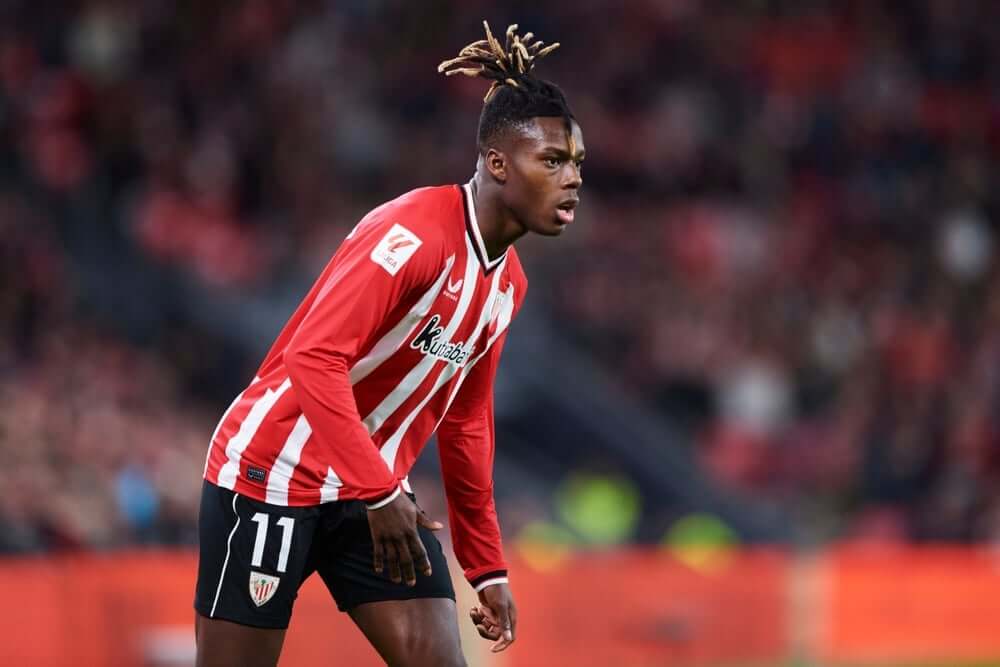
Luis de la Fuente’s greatest achievement as Spain’s coach is not tactical – it is psychological. He took charge of a program that had just endured a dismal 2022 World Cup group stage exit and immediately chose to trust youth when most coaches in his position would have reached for the security of experience. Lamine Yamal debuted at 16. Pedri was handed responsibility before he had turned 20. Nico Williams exploded into international consciousness under de la Fuente’s direct encouragement. The results validated every decision.
Tactically, de la Fuente has evolved the tiki-taka legacy without abandoning it. The possession percentages remain elite – an average of 62% in competitive matches – but the system now accelerates vertically when space appears rather than circulating the ball sideways indefinitely. Spain under de la Fuente retains the ball with purpose and moves forward with conviction. The wide forwards, crucially, receive the ball in advanced positions and are trusted to take opponents on directly rather than being asked to recycle into safer areas.
The formation oscillates between a 4-3-3 and a 4-2-3-1, with Rodri anchoring either shape as a non-negotiable starting point. When Rodri sits in front of the backline, the fullbacks are freed to support wide attacks. When the match situation requires more defensive caution – against opponents with dangerous counter-attacking pace – de la Fuente trusts the system’s positional discipline to reduce exposure without sacrificing identity.
Defensively, Spain press from the front when they can and drop into a mid-block when they cannot. The intensity of the press fluctuates by opponent and game state, which requires players who read tactical situations exceptionally quickly. Yamal, Williams, Pedri and Rodri all fit that profile. The team’s only genuine defensive vulnerability is the transition from committed attack to recovery – a window that mobile opponents with pace in behind can target. France, Germany and England all possess forwards quick enough to exploit that window if Spain are caught high up the pitch. De la Fuente knows this and manages it by varying the tempo of the press rather than committing to a permanent high line.
Ver esta publicación en Instagram
Spain Squad World Cup 2026: The Players Who’ll Carry La Roja
The Spain squad World Cup 2026 represents arguably the most exciting collection of attacking talent assembled under a single national flag since Brazil’s 1970 edition. The difference is that Spain’s talent is not concentrated in two or three legendary figures – it is distributed across an entire generation of technically elite players who have grown up together and understand each other’s tendencies instinctively.
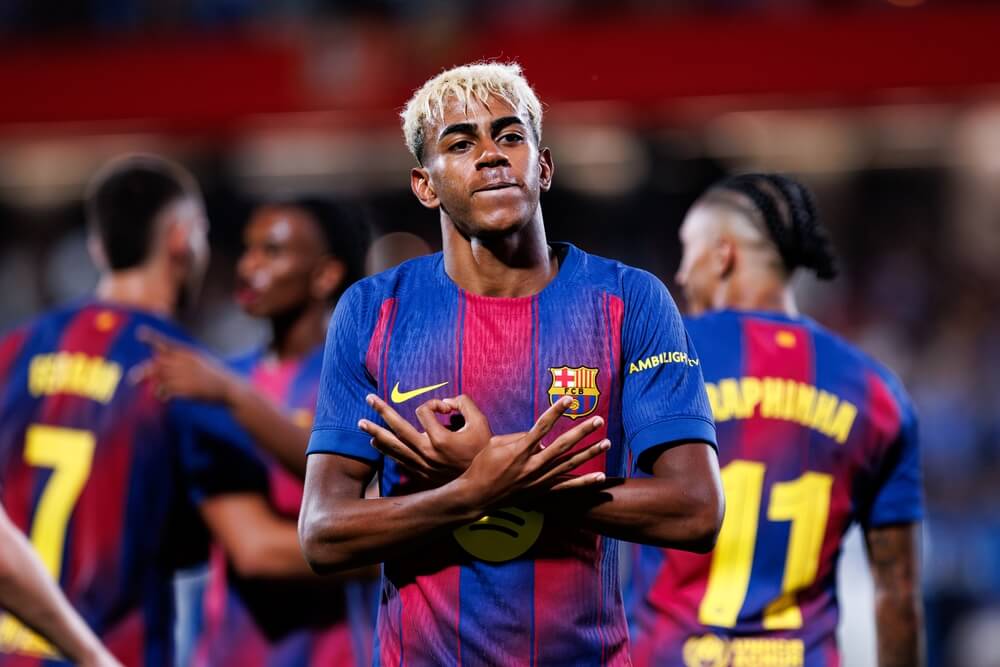
Lamine Yamal will be 18 years old at the start of the 2026 tournament – and already considered one of the ten best players on the planet. The Barcelona winger combines an almost supernatural technical dribbling ability with the tactical intelligence of a veteran. He does not rely exclusively on pace or trickery to beat opponents. He reads defensive positioning, knows when to accelerate and when to play quickly, and executes crossing and shooting with equal quality off his stronger left foot. In Euro 2024, named the tournament’s best young player, he produced the kind of performances that analysts still cite months later as examples of generational talent fully realised. For Yamal World Cup 2026, this tournament represents confirmation, not introduction.
Nico Williams provides the complementary force on the opposite flank. The Athletic Club forward, son of Ghanaian immigrants, represents the multicultural evolution of Spanish soccer – and he plays with the electric directness his profile suggests. His improvement in one-on-one situations and his clinical finishing in the Euro 2024 final against England underlined that he is not merely a gifted dribbler but a complete wide forward capable of winning important matches by himself. The Yamal-Williams pairing, with a creative midfielder distributing between them, is the most dangerous wide combination in international soccer right now.
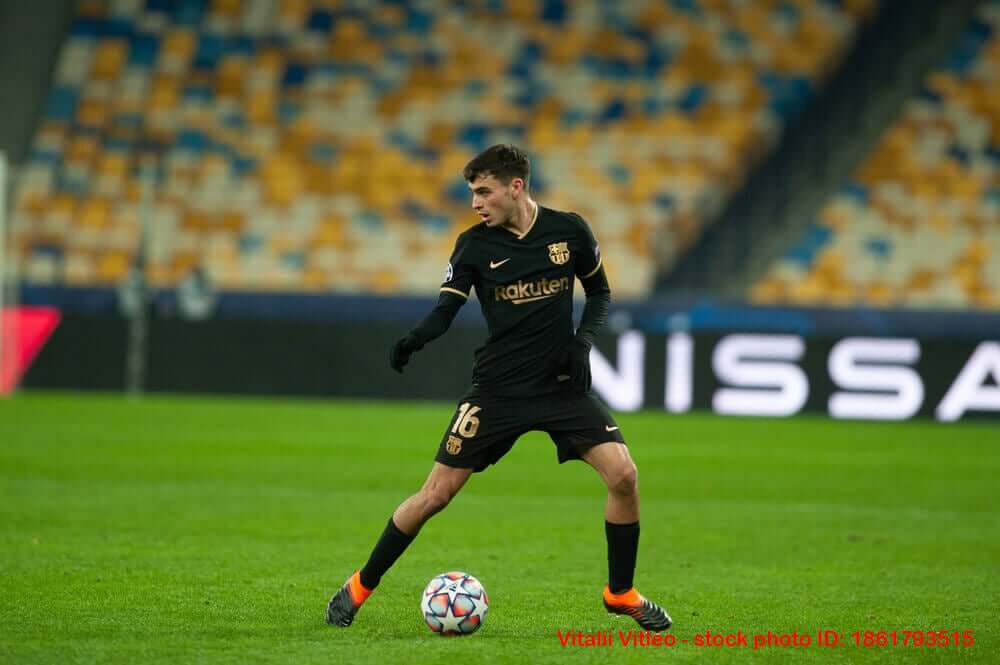
Pedri operates as the creative intelligence at the centre of Spain’s attacking structure. The Barcelona midfielder, already a veteran of two major tournaments at 23, dictates the tempo with passes that other players simply cannot execute under pressure. His ability to receive the ball between defensive lines, turn and thread incisive passes into dangerous areas sets him apart from every other number 10 in European international soccer. Injuries have been his enemy – his knees have protested against the relentless schedule of elite-level football at a young age – but when available, no midfielder in the tournament approaches his level of influence.
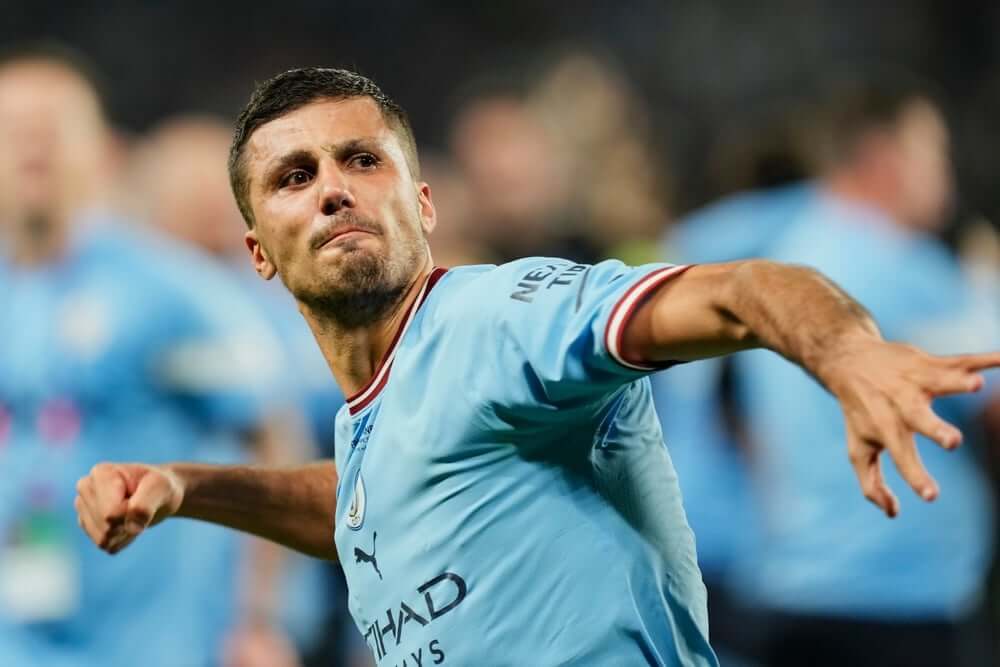
Rodri is the spine of the entire operation. The Manchester City midfielder and 2024 Ballon d’Or winner anchors the midfield with an authority that permeates every aspect of Spain’s game. His positional reading eliminates danger before it materialises. His passing range links defence to attack across all distances. His composure in possession – particularly when opponents press aggressively – provides the stability that allows everyone around him to take creative risks. At 28 during the World Cup, Rodri arrives at his peak.
Álvaro Morata leads the attacking line in a role that suits him precisely because it requires intelligent movement rather than isolated individual brilliance. He creates space for Yamal and Williams to operate, combines effectively with Pedri in narrow areas and brings the goal-scoring efficiency in the penalty area that Spain’s wide-dominated system demands from its central striker. He is not the tournament’s most spectacular player – but within this system he is arguably the most functional.
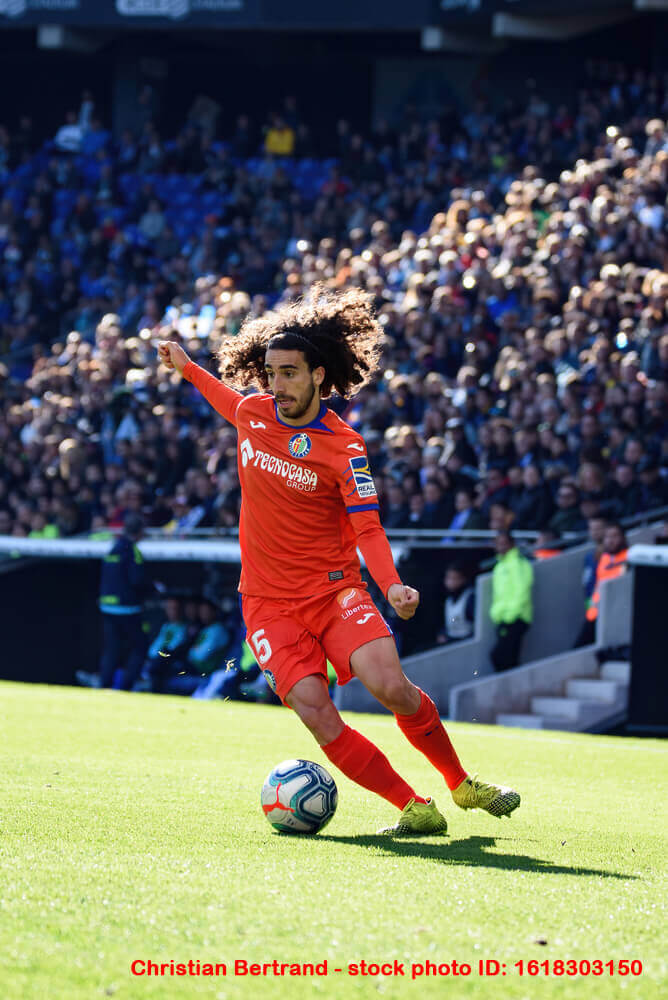
The defensive structure features Dani Carvajal at right back – when fit, still the position’s world standard – and Marc Cucurella providing defensive reliability and measured attacking support from the left. Robin Le Normand and Aymeric Laporte form a composed if unspectacular central defensive partnership. Unai Simón provides security in goal with strong distribution that supports Spain’s build-up from deep. The bench – featuring Ferran Torres, Dani Olmo, Mikel Merino and Alejandro Grimaldo – maintains quality across all seven potential matches of a World Cup run.
Spain’s Greatest Strengths and Most Pressing Concerns
La Roja’s primary strength is systemic coherence. Spain does not depend on any single player performing at their absolute best to function effectively – the system creates enough structure that multiple players can underperform on a given day without the team collapsing. That resilience was demonstrated throughout Euro 2024, where Spain won matches when Yamal was quiet, when Morata missed chances and when the backline was exposed. The collective always found a way.
The squad depth is a secondary strength that extended knockout tournament runs reward. De la Fuente can rotate two or three positions per match without a perceptible drop in quality – a luxury that coaches of smaller squads simply do not have as the tournament progresses through the humid North American summer.
Spain’s main weakness is defensive vulnerability in transition. The commitment to attacking with numbers means that defensive recovery when possession is lost can be slow. Opponents with pace behind the defensive line – and France, England or Brazil all possess those threats – can generate high-quality counter-attacking opportunities. Carvajal’s age and fitness history add a personnel risk at right back that the squad cannot fully insure against with the options behind him.
The experience gap in World Cup knockout rounds is also worth noting. Rodri, Carvajal and Morata have Champions League final experience. Yamal and Williams won a European Championship. But the specific psychological pressure of a World Cup elimination-round match – where an entire nation’s focus narrows to 90 minutes – is different from anything this generation has faced.
Ver esta publicación en Instagram
European Qualifying – Spain’s Numbers Before the World Cup
Spain’s route through UEFA European qualifying for the 2026 World Cup was as clean as any La Roja campaign in recent memory. Placed in Group E alongside Turkey, Georgia and Bulgaria, Spain won five matches and drew one – the single dropped points coming against a Turkey side that proved their quality by finishing second in the group ahead of two other UEFA nations.
The goal difference of +16 across six matches – 21 scored, five conceded – placed Spain among the most dominant qualifying performers across all UEFA groups. No other group in European qualifying produced a team with a superior attacking record across the same number of matches. The numbers reflect a squad that treated qualifying not as an obligation to fulfil but as preparation to build upon.
| Pos | Team | PJ | G | E | P | DG | Pts |
| 1 | Spain | 6 | 5 | 1 | 0 | +16 | 16 |
| 2 | Turkey | 6 | 4 | 1 | 1 | +5 | 13 |
| 3 | Georgia | 6 | 1 | 0 | 5 | -8 | 3 |
| 4 | Bulgaria | 6 | 1 | 0 | 5 | -16 | 3 |
Spain’s World Cup History – One Title and the Pressure to Add to It
Spain’s relationship with the FIFA World Cup is a study in alternating ambition and frustration. For decades, La Roja were considered talented underperformers – a nation stocked with elite club players who never replicated their form in the yellow and red of the national team when the tournament stakes were highest.
That narrative changed definitively in South Africa in 2010. Under Vicente Del Bosque, Spain defeated Holland 1-0 in extra time through Andrés Iniesta’s immortal extra-time finish – the country’s first and only World Cup title. The win completed a unprecedented international trophy triple: European Championship in 2008, World Cup in 2010, European Championship in 2012.
The decade that followed was painful. A 2014 group stage exit, a 2018 Round of 16 defeat to Russia on penalty kicks, a 2022 quarterfinal exit – again on penalties, this time to Morocco. Yet the 2024 European Championship triumph signalled that Spain had rediscovered the collective identity that made them world champions. The current generation has already won a major international trophy together. The World Cup is the next, and ultimate, step. Browse the World Cup 2026 hub for the complete historical context across all competing nations.
Ver esta publicación en Instagram
Group H Fixtures – The Uruguay Test and Three Points to Bank
Spain’s World Cup 2026 group stage assignment places them in Group H alongside Uruguay, Saudi Arabia and Cabo Verde. The draw was favourable without being generous: Uruguay represent a genuine test against quality South American opposition, Saudi Arabia demonstrated in Qatar 2022 that no team should be underestimated, and Cabo Verde make their World Cup debut as a historic qualifier from Africa. Explore all group-stage assignments at our World Cup 2026 groups page.
The Spain-Uruguay fixture is the group’s centrepiece. Uruguay arrive with attacking weapons of their own – Darwin Núñez, Rodrigo Bentancur and Federico Valverde lead a technically accomplished roster – and the defensive discipline that has made the Celeste one of South America’s most durable tournament teams for over a century. This match will test whether Spain can impose their positional game against disciplined South American opposition, or whether Uruguay’s physicality disrupts Spain’s rhythm enough to take points. Odds on a Spain win will likely sit around 1.70-1.90.
Against Saudi Arabia, Spain must manage the concentration required to avoid a Qatar-style shock against lower-ranked opposition. The Saudis defeated Argentina in their 2022 opener, a result that serves as a permanent reminder of what overconfidence produces. De la Fuente will not allow that mistake; his squad preparation has always emphasised respect for all opponents regardless of ranking.
Cabo Verde, making their World Cup debut, provide Spain’s clearest three-point opportunity. The contest should offer minutes for fringe players and a platform to establish attacking rhythms before the tougher tests arrive.
| Date | Time (ET) | Match | Venue |
| Mon, June 15, 2026 | 12:00 | Spain v Cabo Verde | Mercedes-Benz Stadium, Atlanta |
| Mon, June 15, 2026 | 18:00 | Saudi Arabia v Uruguay | Hard Rock Stadium, Miami |
| Sun, June 21, 2026 | 12:00 | Spain v Saudi Arabia | Mercedes-Benz Stadium, Atlanta |
| Sun, June 21, 2026 | 18:00 | Uruguay v Cabo Verde | Hard Rock Stadium, Miami |
| Fri, June 26, 2026 | 20:00 | Cabo Verde v Saudi Arabia | NRG Stadium, Houston |
| Fri, June 26, 2026 | 20:00 | Uruguay v Spain | Estadio Guadalajara |
Spain World Cup Odds and Where the Betting Value Lives
Spain World Cup odds at Canadian sportsbooks – ranging from 7.00 to 9.00 for the title – position La Roja as fourth or fifth favourite in the outright market. Our model assigns a 12-14% probability of Spain winning the tournament, meaning odds above 7.50 represent genuine value for informed bettors. The market appears to underweight Spain’s structural advantages: a settled coach, a deep roster, proven tournament chemistry and the specific experience of winning Euro 2024 under equivalent pressure.
The “Spain reaches the semifinals” market at 2.20-2.50 presents the clearest value proposition. La Roja’s group is navigable, their squad depth allows for rotation without quality loss across seven potential matches, and the knockout path, while difficult, does not guarantee an early meeting with the tournament’s absolute heavyweights. This is the market where the combination of likely outcome and reasonable odds creates the best risk-adjusted return.
For player-level markets, Lamine Yamal for tournament top scorer at 18.00-22.00 deserves consideration if Spain advance deep. He will take free kicks, he is trusted in one-on-one finishing situations and his direct attacking role generates double-digit shot-creating actions per match. Nico Williams at 25.00-30.00 offers larger odds with similar underlying logic as a wide forward directly involved in all attacking sequences.
Avoid “Spain win to nil” markets against Uruguay. De la Fuente’s system creates openings defensively in transition – it happened in Euro 2024 against France and Germany – and Uruguay’s Darwin Núñez and Federico Valverde provide exactly the counter-attacking threat that exploits those moments. A Spain win is highly likely; a Spain clean sheet in that specific match is not.
For live-betting Canadians, Spain offers a predictable tempo pattern worth tracking. La Roja typically builds possession through the opening 20 minutes, evaluating the opponent’s defensive structure before accelerating. Goals in the 25-45 minute window are their most frequent scoring period. If Spain are level at halftime in any group match, back them on the “Spain to win” half-time/full-time market – their second-half performance in competitive matches this cycle has been consistently superior. Track all available Spain lines at our World Cup 2026 odds page.
Spain World Cup 2026 represents the tournament’s most coherent combination of individual brilliance and collective identity. Yamal, Williams, Pedri and Rodri form a core capable of defining the next decade of international soccer – and this World Cup, staged partly on Canadian soil for the first time, is their first genuine opportunity to prove it at the game’s highest level. The odds are fair; the potential is extraordinary.