Sixty years. No nation in world soccer carries a heavier championship burden across a longer stretch of time. England won the FIFA World Cup once – on home soil at Wembley in 1966, 4-2 against West Germany – and has spent every tournament since in the shadow of that single, ageing achievement. Thomas Tuchel’s Three Lions enter the 2026 edition, co-hosted by Canada, the United States and Mexico, with credentials that justify genuine belief: a perfect eight-from-eight European qualifying record, a squad that would challenge for a title in any era and a German coach whose résumé in elite-level knockout competition is as strong as anyone on the World Cup touchline. England World Cup 2026 odds at Canadian sportsbooks fall between 8.00 and 11.00 – a range that reflects both the roster’s quality and the stubborn suspicion that England always find a way to complicate the uncomplicated.
England’s Road – A Perfect Qualifying Record Demands Attention
England’s route to the 2026 World Cup is the cleanest of any major nation in the entire global qualifying process. In UEFA Group K, Thomas Tuchel’s side won all eight completed fixtures without conceding a single goal – 22 goals scored, zero against, 24 points from a possible 24. Those numbers do not exist at international level without a combination of quality and competitive seriousness that deserves more credit than England routinely receive in pre-tournament analysis.
The group contained Serbia and Albania, two nations with genuine UEFA competition pedigree, along with Latvia and Andorra at lower levels. England’s clean sheet across all eight matches – including against Serbia, who finished second with 13 points after beating Albania and Latvia – signals that Tuchel’s tactical organisation is not merely functional but elite. Conceding nothing across eight international matches at any level is exceptional; doing it while scoring 22 against teams that will defend with discipline against England’s name is the foundation of legitimate tournament credibility.
England were confirmed as the first European nation to qualify for the 2026 World Cup, securing their place in October 2025 with two matches still to play – a milestone that speaks to the relentlessness of the campaign rather than the weakness of opponents. This will be England’s 17th World Cup and their eighth consecutive tournament appearance, a consistency that ensures the infrastructure, experience and preparation around the squad is as well-developed as anywhere in the competition.
Tuchel’s England – German Precision Applied to the Three Lions
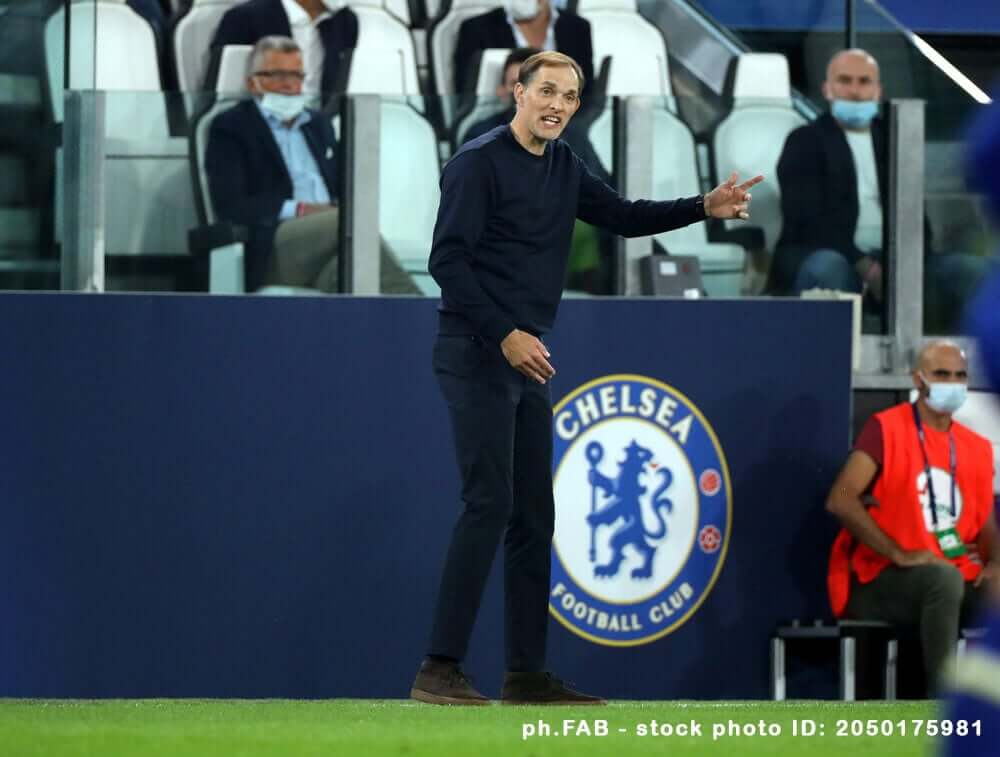
Thomas Tuchel arrived as England coach in January 2025 carrying both enormous credibility and enormous scepticism. Credibility: Champions League winner with Chelsea in 2021, transformative tenures at Paris Saint-Germain and Borussia Dortmund, tactically among the most innovative coaches in European soccer. Scepticism: an outsider – only the third non-English coach in the national team’s history – taking England’s most scrutinised job during a fragile post-Southgate transitional period. Only results would settle the argument.
Twelve matches into his tenure, Tuchel England World Cup 2026 preparations have produced mixed individual performances but impressive collective outcomes. The style is recognisably different from the Southgate era: more direct when in possession, less concerned with high defensive blocks, more willing to press aggressively from the front. Tuchel does not collect possession for its own sake. He wants the ball moved quickly toward the opponent’s goal, and he wants the spaces behind opposition defensive lines attacked with pace and directness. England’s forwards – Kane through the middle, Saka and Bellingham from wide and deep positions – thrive in exactly that environment.
His man-management has been the most discussed element of the role. The Jude Bellingham situation illustrated Tuchel’s willingness to exclude even the squad’s most celebrated talent when he felt collective needs outweighed individual prestige. Bellingham missed an October camp, returned with a public warning about team over-individual from his coach, and responded with the performances that reasserted his indispensability. That dynamic – the coach willing to challenge the biggest names, the player responding positively – is the kind of healthy tension that produces tournament-winning teams.
Tactically, Tuchel’s preferred system is a 4-2-3-1 or 4-3-3 depending on the opponent’s shape. Declan Rice and a holding partner – often Elliot Anderson of Nottingham Forest, whose form has been extraordinary – provide defensive cover while the advanced midfielder (Bellingham or Morgan Rogers) links the lines. Against opponents who defend deep, England will build through the midfield and look to manufacture space for Saka’s dribbling and Kane’s movement. Against teams who press high, England will bypass the first line quickly and attack the space behind it.
England Squad World Cup 2026: The Players Tuchel Will Depend On
The England squad World Cup 2026 contains more guaranteed-quality depth than any Three Lions roster in living memory – possibly ever. The challenge Tuchel faces is not finding quality but allocating roles in a system that cannot accommodate every player’s preferred position simultaneously.
Harry Kane arrives as England captain and the nation’s all-time leading scorer – a record he extended to a margin that will stand for decades. At Bayern Munich, the Tottenham academy product finally discovered the winning mentality that club trophies forge. He enters the World Cup having competed at the peak of European club football, and his combination of technical finishing, intelligent movement and aerial threat gives England a striker other favourites cannot match at his specific position. Kane World Cup 2026 is the focal point around which England’s entire attacking system is organised. His hold-up play releases Bellingham and Saka into the spaces they exploit most dangerously.

Jude Bellingham is England’s most complete midfielder and, at 22 during the tournament, potentially the most important young player in global soccer outside of Lamine Yamal. His Real Madrid career has produced Champions League-winning performances, and his ability to operate as both an 8 and a 10 gives Tuchel tactical flexibility that a more positionally rigid player cannot provide. The Bellingham World Cup 2026 narrative carries expectations of individual brilliance – he delivered them in glimmers at Euro 2024 with his famous overhead kick – but in Tuchel’s system he is most valuable as a facilitator who creates as much as he scores. His re-integration after the October absence, followed by two consecutive strong performances, suggests a player who has accepted the coach’s framework and committed to it.

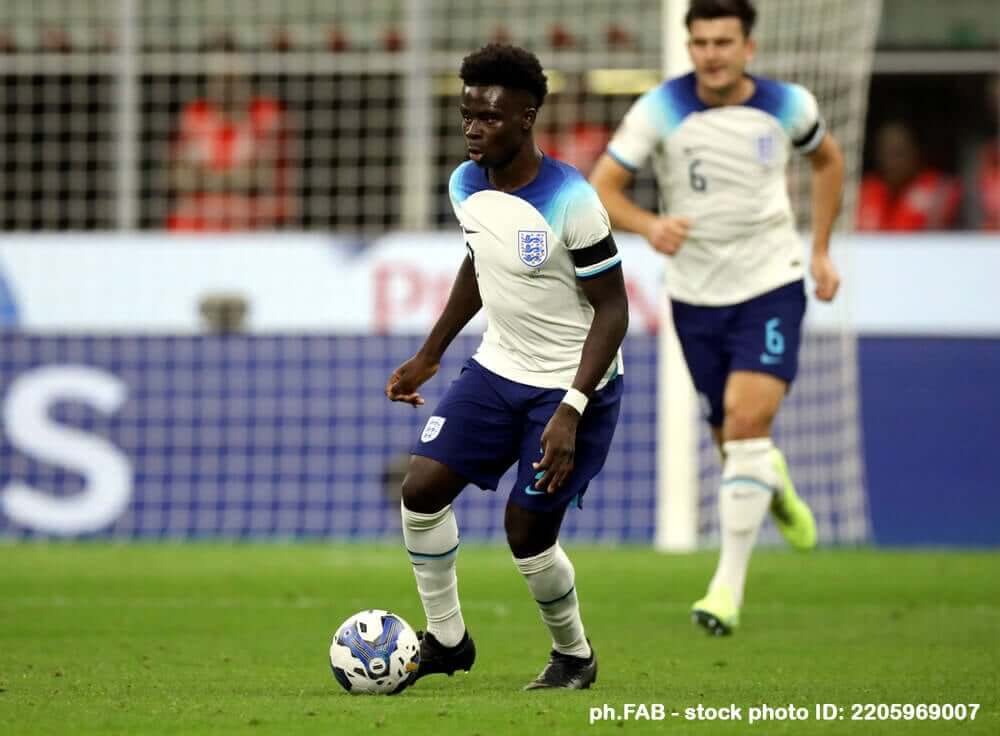
Bukayo Saka is the squad’s most consistent performer regardless of opponent or context. The Arsenal winger has been England’s best player across the past three major tournaments and shows no signs of plateauing. His direct dribbling, crossing quality and improving goal-scoring record – combined with a composure under pressure rare for a player still only 24 – make him perhaps the closest thing to a certain starter Tuchel possesses.
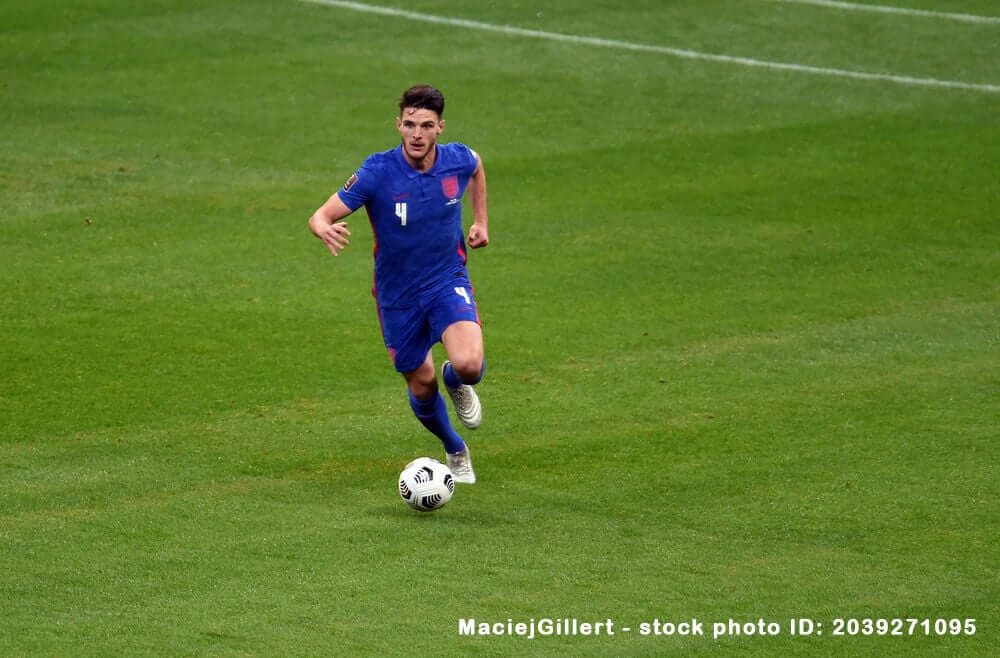
Declan Rice anchors the midfield with physical authority and technical quality that has expanded since his Arsenal move. He provides defensive cover that allows England’s attacking players to commit forward freely, and his set-piece delivery has become an additional weapon under Tuchel’s system. His partnership with Elliot Anderson – the Nottingham Forest midfielder who has emerged as the tournament’s most compelling English revelation story – gives England a midfield engine room that can control games against any level of opposition.
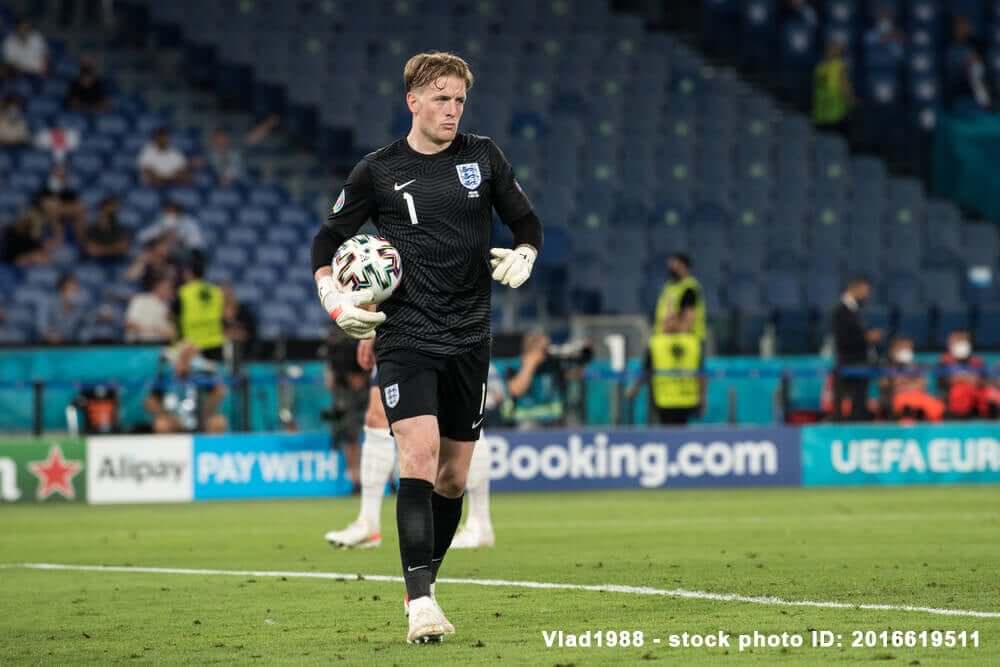
Jordan Pickford remains England’s first-choice goalkeeper through the sheer weight of his reputation, performances in critical penalty-shootout moments and the trust built across multiple major tournaments. His eccentricity is well-documented and entirely forgiven given the results it has produced in high-pressure situations.
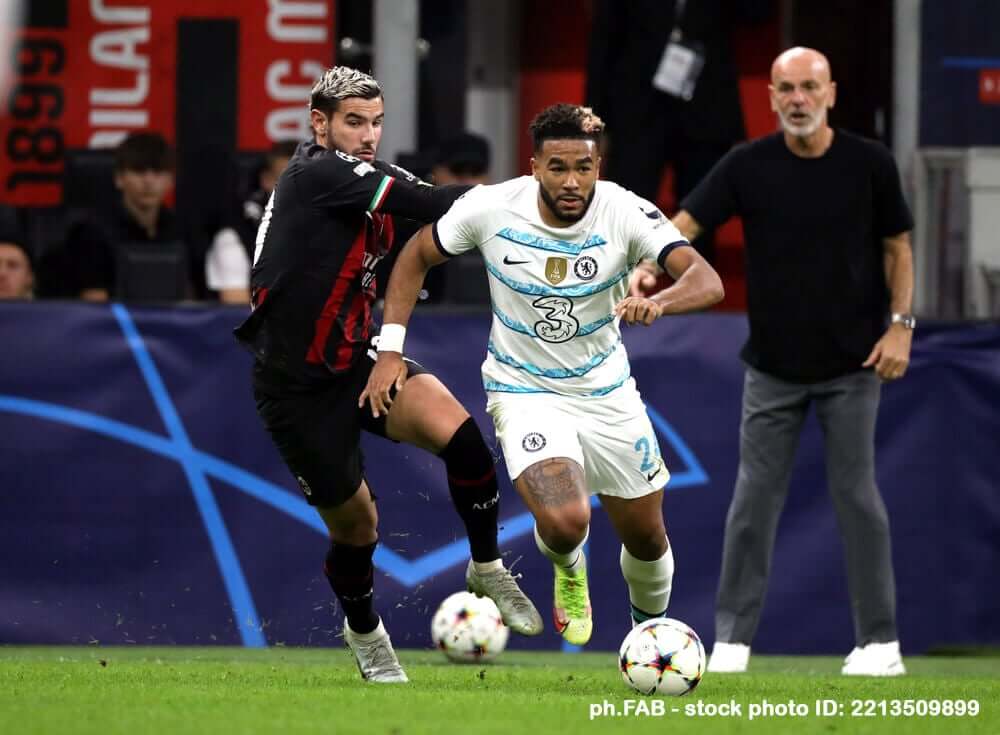
Reece James at right back was personally developed by Tuchel during the German’s Chelsea tenure – a pre-existing coaching relationship that gives James a positional security few others in the squad can claim. His combination of defensive solidity and attacking quality from the wide right channel suits England’s system perfectly. Marc Guehi, who impressed significantly after joining Manchester City from Crystal Palace, brings pace and composure to the central defensive partnership. Ezri Konsa of Aston Villa provides the fastest recovery pace among England’s central defenders – a crucial quality against sides who threaten in behind. Morgan Rogers, also from Villa, has made the number 10 role his own with a willingness to take on defensive responsibility that more gifted players in his position often resist, complicating matters for Bellingham’s role when both are available.
The Cole Palmer situation remains the most discussed squad uncertainty. The Chelsea midfielder possesses technical quality that places him among the top five players in the Premier League – but his place in Tuchel’s squad is not guaranteed, as the coach builds around character and system-fit alongside raw ability. Whether Palmer makes the final roster will be the most debated selection call of England’s entire 2026 preparation cycle.
World-Class Ceiling, Mental Ceiling – England’s Honest Assessment
England’s principal strength is roster depth that survives significant individual absences without meaningful quality decline. If Saka picks up a muscle injury in the group stage, Tuchel has replacements who would start for most other nations in the tournament. If Bellingham has a quiet match, Rogers or Palmer can step in. The safety net beneath England’s first-choice selections is the broadest it has ever been in the modern era.
The second strength is Tuchel himself. His record in knockout competition – Champions League wins, deep tournament runs across three major European leagues – proves that he elevates players in the matches that matter most. England have not had a coach with that specific pedigree since they last won the thing in 1966.
The weakness is psychological, not technical, and it is England’s most enduring and frustrating characteristic. The weight of expectation – 60 years of hurt, a national media that builds and then destroys, a public that cycles between euphoria and despair – creates a specific psychological environment that no amount of tactical preparation fully counteracts. England have reached two semifinal stages in the past decade (2018 and Euro 2020 and Euro 2024) but have not converted that progress into a final, let alone a title. The pattern is consistent enough to be structural rather than coincidental.
Tuchel cannot fix the history, but he can – and apparently does – create an internal environment that insulates players from external pressure. The perfect qualifying record, secured quickly and without drama, is the most concrete evidence that the environment has changed. Whether it holds when the knockout rounds begin on North American soil – including, potentially, in Canadian venues – is the question every England fan is genuinely afraid to ask.
Ver esta publicación en Instagram
European Qualifying – Eight Wins and a Blank Sheet
No other UEFA nation produced a qualifying record as dominant as England’s in the road to the 2026 World Cup. Tuchel’s first major task was demonstrating that his squad could handle the predictable and essential work of qualifying without losing focus – and they did it with a comprehensiveness that silenced early doubts about the appointment.
The 22-0 goal difference across eight matches represents not just defensive organisation but attacking clinical finishing against opponents who defended with discipline. England did not merely win these matches – they dominated them statistically and on the scoreboard in a way that comfortable qualifications often do not reflect. Serbia finished second in Group K with 13 points, a creditable haul that gives context to England’s eight-point lead at the summit.
| Pos | Team | PJ | G | E | P | GF | GC | DG | Pts |
| 1 | England | 8 | 8 | 0 | 0 | 22 | 0 | +22 | 24 |
| 2 | Albania | 8 | 4 | 2 | 2 | 7 | 5 | +2 | 14 |
| 3 | Serbia | 8 | 4 | 1 | 3 | 9 | 10 | -1 | 13 |
| 4 | Latvia | 8 | 1 | 2 | 5 | 5 | 15 | -10 | 5 |
| 5 | Andorra | 8 | 0 | 1 | 7 | 3 | 16 | -13 | 1 |
England World Cup History – 1966 and the Sixty-Year Wait
England have participated in 17 FIFA World Cups, with 2026 representing their eighth consecutive tournament appearance – a run of consistency that confirms the program’s reliability without resolving its inability to translate that consistency into championship glory. The single title, won at Wembley in 1966 with Bobby Moore lifting the Jules Rimet Trophy against West Germany, remains the defining moment of English soccer history precisely because nothing has come close to matching it in the 60 years since.
The near-misses are almost as famous as the win itself. Gazza’s tears in Turin at Italia ’90, the penalty shootout elimination in the semifinal against West Germany. England’s 2018 semifinal run in Russia under Gareth Southgate – the best tournament result since 1966 – provided genuine hope that the psychological barrier had finally been identified and partially dismantled. Euro 2020 (played in 2021) and Euro 2024 both ended in penalty-shootout finals, establishing England as consistent finalists who cannot complete the conversion. The England World Cup history section of any analysis is ultimately the story of a nation with the resources to win and the habit of falling short.
Visit the World Cup 2026 hub for a full breakdown of all 48 nations’ historical records and tournament previews.
Ver esta publicación en Instagram
Group L Fixtures – England’s Path Through the 2026 Opening Phase
England’s Group L assignment places them against Croatia, Ghana and Panama – a draw that is genuinely manageable while carrying historical weight in one fixture and physical unpredictability in another. For the full picture of how England’s group compares to the rest of the field, our World Cup 2026 groups page has every bracket analysed in detail.
Croatia represent the group’s most psychologically loaded fixture. The nations share a painful recent history: England lost to Croatia in the Euro 2020 group stage (playing in front of a hostile Wembley crowd who somehow made the stadium feel hostile for England themselves) and were defeated by Croatia in the 2018 World Cup semifinal. Modric and the golden generation have aged, but Croatia’s tactical discipline and collective organisation persist regardless of individual names. England should have enough individual quality to win comfortably – but history suggests comfortably is not how England-Croatia matches are resolved.
Ghana provide pace and physicality through a talented roster built around Premier League regulars. They will press high, look to disrupt England’s build-up and exploit any hesitation in Tuchel’s defensive line. England’s pace at the back – Guehi and Konsa are both quick – should handle Ghana’s transitions, but the match requires early goals to prevent the kind of compact defensive block that frustrated England across multiple tournaments under Southgate.
Panama qualified from CONCACAF and represent England’s most straightforward three-point opportunity. Tuchel will use this fixture to rotate and distribute minutes to squad players who need match fitness before the knockout rounds.
| Date | Time (ET) | Match | Venue |
| Wed, June 17, 2026 | 16:00 | England v Croatia | AT&T Stadium, Dallas |
| Wed, June 17, 2026 | 19:00 | Ghana v Panama | BMO Field, Toronto |
| Tue, June 23, 2026 | 16:00 | England v Ghana | Gillette Stadium, Boston |
| Tue, June 23, 2026 | 19:00 | Panama v Croatia | BMO Field, Toronto |
| Sat, June 27, 2026 | 17:00 | Panama v England | MetLife Stadium, New York/New Jersey |
| Sat, June 27, 2026 | 17:00 | Croatia v Ghana | Lincoln Financial Field, Philadelphia |
Note for Canadian fans: Ghana v Panama and Panama v Croatia are scheduled at BMO Field in Toronto – putting Group L action on Canadian soil. England supporters in Canada have a rare opportunity to watch their nation’s group play out partially in their own country as co-host of the 2026 World Cup.
Ver esta publicación en Instagram
England World Cup Odds and Our Predictions
England World Cup 2026 odds at Canadian sportsbooks – ranging from 8.00 to 11.00 for the title – position the Three Lions as third or fourth favourites depending on the book. Our model assigns England a 10-12% championship probability, meaning odds of 9.00 or above represent value for bettors willing to accept England’s psychological risk profile alongside the genuine quality in the roster.
The most interesting market for England is “reaches the final,” currently available around 3.50-4.50 at most Canadian sportsbooks. Getting there requires wins against two likely knockout opponents before the final – plausible paths exist given England’s draw position – and at those odds, a successful run represents meaningful returns. Backing England to reach the final rather than win it acknowledges the step-up in quality the final itself represents while still capturing the positive tournament run.
Kane World Cup 2026 for top scorer at 14.00-18.00 is worth a speculative position. He will take penalties, he is central to England’s attacking structure and his movement in the penalty area generates the close-range opportunities that produce tournament golden boot races. If England advance to the quarterfinals and beyond, Kane’s goal tally will compound meaningfully.
The “Bellingham to score anytime” market in the Croatia fixture at roughly 2.75-3.00 reflects the historical significance of the match-up and Bellingham’s demonstrated ability to produce defining moments against historically meaningful opponents. It is not a systematic market but a contextual one worth considering for the opener.
Avoid backing England on “win to nil” in the Croatia fixture specifically. Tuchel’s England allow counter-attacking opportunities – the perfect qualifying record came against teams unable to expose those moments, but Croatia’s Modric-era transitional intelligence can exploit them. A win is likely; a clean sheet is not the most probable outcome in that specific match. Track the latest England lines at our World Cup 2026 odds page as roster news emerges.
England World Cup 2026 is the most credible Three Lions challenge since 1966 – and the most analytically uncertain for exactly the same reason. The talent is there. The coach is there. The question mark that has always been there remains. Canadian fans watching from home or from Toronto’s BMO Field will find England’s tournament either the most rewarding or the most characteristically exasperating viewing experience in the field. Either way, it will be compelling.